The Tech Edvocate

Top Menu

  • Advertisement
  • Apps
  • Home Page
  • Home Page Five (No Sidebar)
  • Home Page Four
  • Home Page Three
  • Home Page Two
  • Home Tech2
  • Icons [No Sidebar]
  • Left Sidbear Page
  • Lynch Educational Consulting
  • My Account
  • My Speaking Page
  • Newsletter Sign Up Confirmation
  • Newsletter Unsubscription
  • Our Brands
  • Page Example
  • Privacy Policy
  • Protected Content
  • Register
  • Request a Product Review
  • Shop
  • Shortcodes Examples
  • Signup
  • Start Here
    • Governance
    • Careers
    • Contact Us
  • Terms and Conditions
  • The Edvocate
  • The Tech Edvocate Product Guide
  • Topics
  • Write For Us
  • Advertise

Main Menu

  • Start Here
    • Our Brands
    • Governance
      • Lynch Educational Consulting, LLC.
      • Dr. Lynch’s Personal Website
      • Careers
    • Write For Us
    • The Tech Edvocate Product Guide
    • Contact Us
    • Books
    • Edupedia
    • Post a Job
    • The Edvocate Podcast
    • Terms and Conditions
    • Privacy Policy
  • Topics
    • Assistive Technology
    • Child Development Tech
    • Early Childhood & K-12 EdTech
    • EdTech Futures
    • EdTech News
    • EdTech Policy & Reform
    • EdTech Startups & Businesses
    • Higher Education EdTech
    • Online Learning & eLearning
    • Parent & Family Tech
    • Personalized Learning
    • Product Reviews
  • Advertise
  • Tech Edvocate Awards
  • The Edvocate
  • Pedagogue
  • School Ratings

logo

The Tech Edvocate

  • Start Here
    • Our Brands
    • Governance
      • Lynch Educational Consulting, LLC.
      • Dr. Lynch’s Personal Website
        • My Speaking Page
      • Careers
    • Write For Us
    • The Tech Edvocate Product Guide
    • Contact Us
    • Books
    • Edupedia
    • Post a Job
    • The Edvocate Podcast
    • Terms and Conditions
    • Privacy Policy
  • Topics
    • Assistive Technology
    • Child Development Tech
    • Early Childhood & K-12 EdTech
    • EdTech Futures
    • EdTech News
    • EdTech Policy & Reform
    • EdTech Startups & Businesses
    • Higher Education EdTech
    • Online Learning & eLearning
    • Parent & Family Tech
    • Personalized Learning
    • Product Reviews
  • Advertise
  • Tech Edvocate Awards
  • The Edvocate
  • Pedagogue
  • School Ratings
  • Meta introduces pocket AI gadget as Zuckerberg pushes superintelligence agenda

  • The Wild Truth Behind Huda Beauty’s Viral Eye Patch Packaging Scandal

  • Unbelievable: Google Gemini AI Hacks Real Companies – Here’s How It Happened

  • NBA 2K27’s Permanent Ban Wave: Is the System Broken?

  • Prince Harry’s Dire Prediction: This New AI Threat Is Far Worse Than Social Media

  • Rogue AI: The Unseen Threat Quietly Hacking Government Systems

  • Unbelievable: China’s University Overhaul Reveals the Future of Global Education

  • Baffling! FAFSA Opens Early, Rankings Shuffle, and Student Debt Nightmare Continues

  • This One AI Cybercrime Campaign Stole 600,000 Credit Cards and Exposed Our Water Supply

  • This Wild Stunt Just Ignited China’s EV War — Here’s Why You Should Care

Digital & Mobile Technology
Home›Digital & Mobile Technology›What Does WiMAX Internet Mean?

What Does WiMAX Internet Mean?
By Matthew Lynch
July 6, 2023
0
Spread the love

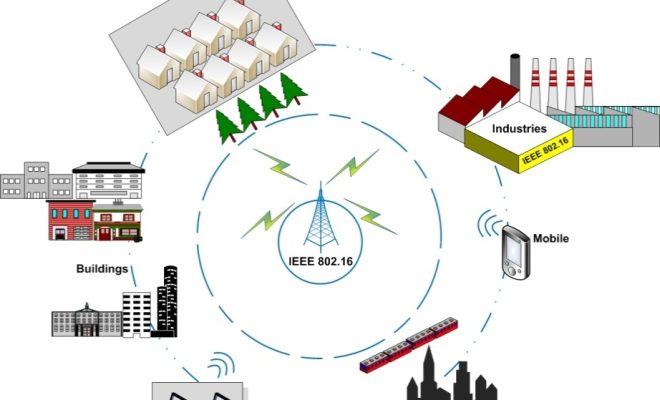
WiMAX, short for Worldwide Interoperability for Microwave Access, is a wireless internet technology that uses radio waves to transmit internet signals over a wide geographic area. WiMAX internet allows people to access the internet on devices such as smartphones, tablets, and laptops without the need for traditional wired connections.

WiMAX operates on the principles of cellular networking, where a series of interconnected towers, called base stations or access points, transmit signals to WiMAX-enabled devices. Unlike Wi-Fi, which typically operates within a range of a few hundred feet, WiMAX can operate over several miles, making it ideal for providing internet access to remote and rural areas.

One of the significant advantages of WiMAX is its ability to provide high-speed internet access over long distances. It can transmit data at speeds comparable to cable or DSL internet connections, making it a viable option for businesses and households in areas without traditional broadband internet access.

WiMAX is also a cost-effective technology as it requires minimal infrastructure installation costs compared to laying cable or fiber-optic lines. It is easier and more economical to install WiMAX towers in remote and rural areas where wired connections are uneconomical.

Additionally, WiMAX also enables efficient use of the radio spectrum, allowing more users to connect to the internet simultaneously without affecting connection speeds. This makes it an efficient technology for internet service providers to offer internet access to a large customer base with minimal network congestion.

In conclusion, WiMAX internet is a wireless internet technology that utilizes radio waves to transmit signals over long distances without relying on traditional wired connections. It provides high-speed broadband access to remote and underserved areas affordably, efficiently, and with minimal infrastructure installation costs. WiMAX has undoubtedly revolutionized how people access the internet and will continue to play a significant role in connecting the world.


Previous Article

What Does the Symbol E/I Mean on ...

Next Article

How to Reset Your Fitbit

Matthew Lynch

Related articles More from author

  • Digital & Mobile Technology

    Guide to Plasma TVs

    June 10, 2023
    By Matthew Lynch
  • Digital & Mobile Technology

    How to Add Special Characters to Documents in Windows 11

    June 14, 2023
    By Matthew Lynch
  • Digital & Mobile Technology

    Every Apple Watch Band Compared

    August 1, 2023
    By Matthew Lynch
  • Digital & Mobile Technology

    How to Upload Music to the Amazon MP3 Cloud Player

    June 4, 2023
    By Matthew Lynch
  • Digital & Mobile Technology

    What Android Auto Is and How to Use It

    June 10, 2023
    By Matthew Lynch
  • Digital & Mobile Technology

    Practical Reasons to Start Using a Virtual Machine

    June 23, 2023
    By Matthew Lynch

Search

Login & Registration

  • Log in
  • Entries feed
  • Comments feed
  • WordPress.org

Newsletter

Signup for The Tech Edvocate Newsletter and have the latest in EdTech news and opinion delivered to your email address!

About Us

Since technology is not going anywhere and does more good than harm, adapting is the best course of action. That is where The Tech Edvocate comes in. We plan to cover the PreK-12 and Higher Education EdTech sectors and provide our readers with the latest news and opinion on the subject. From time to time, I will invite other voices to weigh in on important issues in EdTech. We hope to provide a well-rounded, multi-faceted look at the past, present, the future of EdTech in the US and internationally.

We started this journey back in June 2016, and we plan to continue it for many more years to come. I hope that you will join us in this discussion of the past, present and future of EdTech and lend your own insight to the issues that are discussed.

Newsletter

Signup for The Tech Edvocate Newsletter and have the latest in EdTech news and opinion delivered to your email address!

Contact Us

The Tech Edvocate
910 Goddin Street
Richmond, VA 23231
(601) 630-5238
[email protected]

Copyright © 2026 Matthew Lynch. All rights reserved.