The Tech Edvocate

Top Menu

  • Advertisement
  • Apps
  • Home Page
  • Home Page Five (No Sidebar)
  • Home Page Four
  • Home Page Three
  • Home Page Two
  • Home Tech2
  • Icons [No Sidebar]
  • Left Sidbear Page
  • Lynch Educational Consulting
  • My Account
  • My Speaking Page
  • Newsletter Sign Up Confirmation
  • Newsletter Unsubscription
  • Our Brands
  • Page Example
  • Privacy Policy
  • Protected Content
  • Register
  • Request a Product Review
  • Shop
  • Shortcodes Examples
  • Signup
  • Start Here
    • Governance
    • Careers
    • Contact Us
  • Terms and Conditions
  • The Edvocate
  • The Tech Edvocate Product Guide
  • Topics
  • Write For Us
  • Advertise

Main Menu

  • Start Here
    • Our Brands
    • Governance
      • Lynch Educational Consulting, LLC.
      • Dr. Lynch’s Personal Website
      • Careers
    • Write For Us
    • The Tech Edvocate Product Guide
    • Contact Us
    • Books
    • Edupedia
    • Post a Job
    • The Edvocate Podcast
    • Terms and Conditions
    • Privacy Policy
  • Topics
    • Assistive Technology
    • Child Development Tech
    • Early Childhood & K-12 EdTech
    • EdTech Futures
    • EdTech News
    • EdTech Policy & Reform
    • EdTech Startups & Businesses
    • Higher Education EdTech
    • Online Learning & eLearning
    • Parent & Family Tech
    • Personalized Learning
    • Product Reviews
  • Advertise
  • Tech Edvocate Awards
  • The Edvocate
  • Pedagogue
  • School Ratings

logo

The Tech Edvocate

  • Start Here
    • Our Brands
    • Governance
      • Lynch Educational Consulting, LLC.
      • Dr. Lynch’s Personal Website
        • My Speaking Page
      • Careers
    • Write For Us
    • The Tech Edvocate Product Guide
    • Contact Us
    • Books
    • Edupedia
    • Post a Job
    • The Edvocate Podcast
    • Terms and Conditions
    • Privacy Policy
  • Topics
    • Assistive Technology
    • Child Development Tech
    • Early Childhood & K-12 EdTech
    • EdTech Futures
    • EdTech News
    • EdTech Policy & Reform
    • EdTech Startups & Businesses
    • Higher Education EdTech
    • Online Learning & eLearning
    • Parent & Family Tech
    • Personalized Learning
    • Product Reviews
  • Advertise
  • Tech Edvocate Awards
  • The Edvocate
  • Pedagogue
  • School Ratings
  • A Visitor’s Guide to Fresno (CA), United States

  • A Visitors Guide to New Orleans (LA), United States

  • A Visitors Guide to Sacramento (CA), United States

  • A Visitors Guide to Lyon, France

  • JisuLife Ultra2 Portable Fan: A Powerful Multi-Function Cooling Solution

  • A Visitors Guide to Viña del Mar, Chile

  • A Visitors Guide to Århus, Denmark

  • A Visitors Guide to Bakersfield (CA), United States

  • A Visitors Guide to Aurora (CO), United States

  • A Visitor’s Guide to Toledo (OH), United States

Assistive Technology
Home›Assistive Technology›Ways to Check If Your Windows 11 PC Supports Miracast

Ways to Check If Your Windows 11 PC Supports Miracast
By Matthew Lynch
June 22, 2023
0
Spread the love

Miracast is a wireless display standard that allows you to stream content from your Windows 11 PC to another device like a TV or a projector. However, not all Windows 11 PCs support Miracast, so it’s important to know whether your device has this capability before attempting to use it. In this article, we’ll explore some ways to check if your Windows 11 PC supports Miracast.

  1. Check your PC’s specifications

The simplest way to check if your PC supports Miracast is to look at its specifications. You can find this information in the device manual or on the manufacturer’s support website. Look for “Miracast support” or “Wi-Fi Direct” under wireless connectivity. If your PC has these features, it likely supports Miracast.

  1. Check your Windows 11 version

Make sure you’re running the latest version of Windows 11, as earlier versions may not support Miracast. To check your Windows 11 version, go to Settings > System > About and look for the “Windows specification” section. Your PC must be running Windows 11 version 1607 or later to support Miracast.

  1. Check your wireless adapter

Miracast requires a compatible wireless adapter to stream content. To check if your PC has a Miracast-compatible adapter, open Device Manager by pressing Windows key + X, then select “Device Manager.” Under “Network adapters,” look for “Wireless adapter” or “Wi-Fi” and expand the menu. If you see “Microsoft Wi-Fi Direct Virtual Adapter” listed, your adapter is Miracast-compatible.

  1. Check for a Miracast-enabled TV or projector

Once you’ve confirmed that your PC supports Miracast, make sure your TV or projector also supports this feature. Most modern TVs have Miracast built-in, so check your TV’s manual or support website to confirm this. If your TV does not support Miracast, you can purchase a Miracast adapter that plugs into your TV’s HDMI port.

  1. Check your PC’s display settings

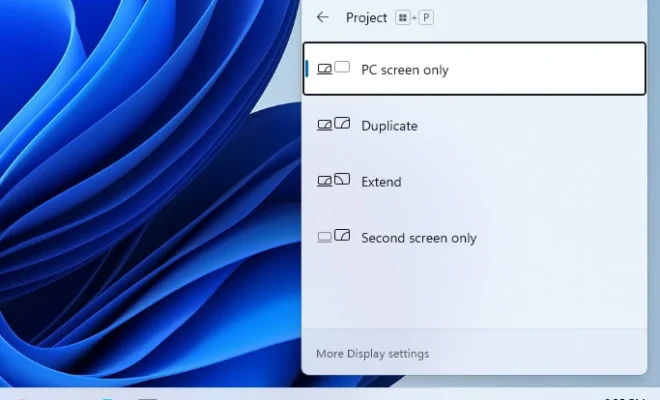
If you’ve confirmed that both your PC and TV support Miracast, you can check your PC’s display settings to begin streaming content. To do this, go to Settings > System > Display and look for “Project to this PC.” Click on “Add a wireless display” to begin searching for nearby Miracast-enabled devices. Select your TV or projector from the list of available devices, and your PC will begin streaming content wirelessly.


Previous Article

How to Fix Zoom Error Code 1132 ...

Next Article

Ways Microsoft Has Made the Xbox Series ...

Matthew Lynch

Related articles More from author

  • Assistive Technology

    How to Detect a Hidden Camera Using Android Phones

    June 8, 2023
    By Matthew Lynch
  • Assistive Technology

    How to Remove the Grey Home Bar at the Bottom of an iPhone

    June 10, 2023
    By Matthew Lynch
  • Assistive Technology

    Ways to Fix the Activation Error Code 0xC004F074 on Windows

    June 13, 2023
    By Matthew Lynch
  • Assistive Technology

    How to Identify Bull and Bear Flags When Trading Crypto

    June 23, 2023
    By Matthew Lynch
  • Assistive Technology

    How to Adjust Your Ring Motion Sensor Range

    June 10, 2023
    By Matthew Lynch
  • Assistive Technology

    How to Fix It When Sound Isn’t Working on Instagram

    June 6, 2023
    By Matthew Lynch

Search

Login & Registration

  • Register
  • Log in
  • Entries feed
  • Comments feed
  • WordPress.org

Newsletter

Signup for The Tech Edvocate Newsletter and have the latest in EdTech news and opinion delivered to your email address!

About Us

Since technology is not going anywhere and does more good than harm, adapting is the best course of action. That is where The Tech Edvocate comes in. We plan to cover the PreK-12 and Higher Education EdTech sectors and provide our readers with the latest news and opinion on the subject. From time to time, I will invite other voices to weigh in on important issues in EdTech. We hope to provide a well-rounded, multi-faceted look at the past, present, the future of EdTech in the US and internationally.

We started this journey back in June 2016, and we plan to continue it for many more years to come. I hope that you will join us in this discussion of the past, present and future of EdTech and lend your own insight to the issues that are discussed.

Newsletter

Signup for The Tech Edvocate Newsletter and have the latest in EdTech news and opinion delivered to your email address!

Contact Us

The Tech Edvocate
910 Goddin Street
Richmond, VA 23231
(601) 630-5238
[email protected]

Copyright © 2025 Matthew Lynch. All rights reserved.