Fuel Prices Skyrocket: Geopolitical Tensions Drive Oil Above $100
“`html
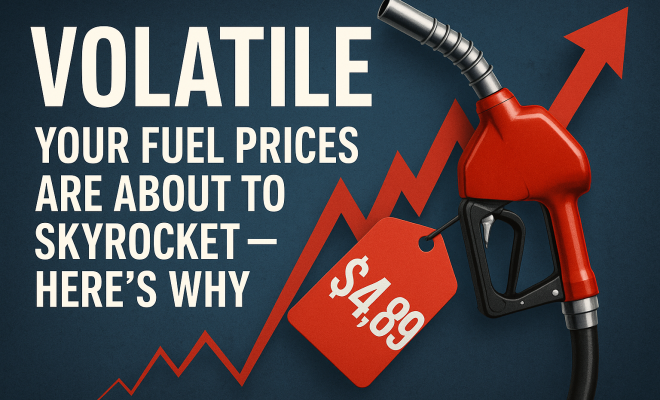
You’re feeling it at the pump, aren’t you? That familiar ache in your wallet as the numbers on the gas station sign tick ever higher. It’s not just a feeling; it’s a stark reality, and it’s tied to a rapidly unfolding drama on the global stage. Oil prices have breached the psychological barrier of $100 a barrel, a level not seen since May, and the implications are far more profound than just a more expensive commute. We’re teetering on the edge of a significant oil supply crisis, driven by geopolitical tremors that threaten to upend global stability and ignite a fresh wave of inflation.
The immediate catalyst? A deeply concerning escalation in the Middle East, particularly the simmering tensions between Iran and the United States. This isn’t just saber-rattling; it’s a situation fraught with the potential for direct military confrontation. Reports suggest that President Donald Trump is actively weighing a “massive attack” on Iran, a prospect that has sent shivers through financial markets and oil traders alike. Think about the ripple effect: any direct military engagement in such a volatile region would immediately jeopardize critical shipping lanes, turning economic arteries into potential theaters of war. The Strait of Hormuz and the Bab al-Mandeb, two choke points crucial for global oil transit, are now viewed through this unsettling lens, and the world’s already thin oil buffer is shrinking by the day.
The Middle East’s Powder Keg: A Deep Dive into Geopolitical Risk
The Middle East has always been a hotbed of geopolitical intrigue, but the current situation feels different, more precarious. The long-standing rivalry between Iran and the US, exacerbated by a complex web of regional proxies and historical grievances, has reached a fever pitch. Iran’s strategic location, bordering the Persian Gulf and controlling the Strait of Hormuz, gives it immense leverage over global oil supplies. Roughly a fifth of the world’s total oil consumption, about 21 million barrels per day, passes through this narrow waterway. Any disruption, even a temporary one, would send shockwaves through the global economy.
Consider the potential scenarios. A “massive attack” on Iran, whether targeting military installations or economic infrastructure, would almost certainly provoke a retaliatory response. Iran possesses the capability to disrupt shipping in the Strait, either through naval mines, fast-attack boats, or anti-ship missiles. Even if such actions were short-lived, the psychological impact on markets would be immense. Insurers would hike premiums for vessels traversing the region, some shipping companies might reroute, and the sheer uncertainty would drive crude prices sky-high. We’re not just talking about a few dollars a barrel; we’re talking about a potential surge that could easily push oil well past $120, $150, or even higher, fundamentally altering the global economic landscape.
The Strait of Hormuz and Bab al-Mandeb: Choke Points on the Brink
These two waterways are more than just lines on a map; they are the jugular veins of the global energy system. The Strait of Hormuz, connecting the Persian Gulf to the Arabian Sea, is arguably the most strategically important oil transit choke point in the world. It’s bordered by Iran to the north and Oman and the UAE to the south. Any military action here would directly impact Saudi Arabia, Iraq, UAE, Kuwait, and Qatar – all major oil and gas producers that rely on the Strait for their exports.
Then there’s the Bab al-Mandeb Strait, located between Yemen on the Arabian Peninsula and Djibouti and Eritrea in the Horn of Africa. This strait connects the Red Sea to the Gulf of Aden and the Indian Ocean, serving as a critical gateway for ships transiting to and from the Suez Canal. While it doesn’t carry as much oil as Hormuz, it’s still significant, handling around 6.2 million barrels per day in 2023. The ongoing conflict in Yemen, with its Houthi rebels (backed by Iran) often targeting shipping in the Red Sea, means Bab al-Mandeb is already a high-risk zone. If the broader conflict escalates, both these waterways could become effectively impassable or prohibitively expensive to navigate, leading to a severe oil supply crisis.
Shrinking Global Oil Buffer: Running on Borrowed Time
What makes this situation particularly alarming is the world’s dwindling oil buffer. Think of this buffer as the spare capacity that oil-producing nations, primarily OPEC+, can bring online quickly to stabilize markets in case of a supply disruption. It’s like a safety net, but right now, that net has significant holes.
Years of underinvestment in new production capacity, coupled with geopolitical instability, have eroded this crucial cushion. Major producers like Saudi Arabia and the UAE hold most of the world’s remaining spare capacity, but even their reserves aren’t limitless. If a significant portion of Middle Eastern oil, say 3-5 million barrels per day, were taken offline due to conflict, there simply isn’t enough readily available spare capacity elsewhere in the world to compensate. The US shale industry, while robust, can’t ramp up production overnight to fill such a massive void, especially given the lead times required for drilling and infrastructure. This means that any substantial disruption quickly translates into a severe oil supply crisis, leading to price spikes and economic pain across the globe. For more on this, see Alaska's education funding.
The Diesel Dilemma: A Looming Crisis for Agriculture and Industry
While crude oil prices grab the headlines, the derivative products often tell an even more immediate story of economic distress. Wholesale diesel futures, for instance, have seen a staggering 26% jump in July alone. This isn’t just about trucking costs; it’s about the very engine of the global economy. Diesel is the lifeblood of agriculture, powering tractors, harvesters, and irrigation systems. It fuels construction equipment, freight trains, and ships. It’s also critical for backup generators in hospitals and essential infrastructure.
A diesel crisis, therefore, isn’t just an inconvenience; it’s a direct threat to food security and industrial output. Farmers, already grappling with rising input costs, would face unbearable pressure. Higher diesel prices mean higher costs for planting, harvesting, and transporting food, which inevitably translates into higher grocery bills for consumers. We’ve seen glimpses of this before, but the current situation, with US refinery utilization hitting 96.2% — meaning they’re already running near maximum capacity to meet demand — suggests there’s little room to maneuver. If crude oil supplies are disrupted, the crunch on diesel will be immediate and severe, impacting everything from your local supermarket to global supply chains. (See: Middle East tensions and oil prices.)
Inflationary Pressures: Central Banks on Edge
Central banks around the world have been working diligently to tame inflation, often through aggressive interest rate hikes. Just as it seemed some progress was being made, this escalating oil supply crisis threatens to throw a wrench into their efforts. Energy costs are a primary driver of inflation because they feed into almost every sector of the economy. Higher fuel prices mean higher transportation costs for goods, higher manufacturing costs, and ultimately, higher prices for consumers.
If oil prices remain elevated or continue to surge, central banks will face an agonizing dilemma. Do they continue raising rates to combat this new inflationary surge, risking a deeper recession? Or do they pause, accepting higher inflation in the hope that the energy shock is temporary? Neither option is appealing, and the uncertainty surrounding the conflict’s duration and its potential to trigger further inflation is causing significant concern among monetary policymakers and investors globally. It’s a cruel twist, as energy shocks are notoriously difficult for central banks to control through conventional tools.
Impact on Global Financial Markets and Investment Strategies
The financial markets hate uncertainty, and right now, uncertainty is the only constant. The escalating tensions have already sent shockwaves through equity markets, with investors flocking to safe-haven assets like gold and government bonds. The volatility in oil prices creates a challenging environment for businesses and investors alike.
For businesses, particularly those in energy-intensive sectors like transportation, manufacturing, and logistics, budgeting becomes a nightmare. Profit margins are squeezed, and investment decisions become riskier. For investors, the landscape shifts rapidly. Energy stocks might see short-term gains, but the broader market faces headwinds from inflation and potential economic slowdowns. Diversification, careful risk management, and a keen eye on geopolitical developments become paramount. We’re entering a period where the traditional rules of investing might be temporarily suspended as markets react more to headlines from the Middle East than to economic fundamentals.
Beyond the Barrel: The Wider Economic Fallout
An oil supply crisis isn’t just about the price of crude; it’s about a cascading series of economic impacts. Think about the airline industry: higher jet fuel costs directly translate to higher ticket prices and reduced profitability. Shipping companies face similar pressures, potentially leading to increased costs for imported goods.
Consumers, already dealing with the lingering effects of previous inflationary cycles, will see their disposable incomes further eroded. This can lead to reduced spending on non-essentials, slowing economic growth. Governments, too, will feel the pinch. Higher energy costs can strain national budgets, particularly for countries that are net energy importers. There’s also the potential for social unrest, as rising costs of living disproportionately affect lower-income households. The ripple effects are truly global and touch every aspect of daily life, from the cost of your groceries to the price of your next vacation.
The Role of Renewable Energy and Energy Transition in Mitigating Future Crises
While the immediate focus is on managing the current oil supply crisis, this situation also highlights the long-term imperative of transitioning to renewable energy sources. Dependence on fossil fuels, particularly from geopolitically unstable regions, exposes global economies to immense vulnerability. Investments in solar, wind, hydropower, and geothermal energy aren’t just about climate change; they’re increasingly about national and economic security.
Imagine a future where a significant portion of our energy needs are met by domestic, renewable sources. The impact of Middle Eastern conflicts on global oil prices would be significantly diminished. This isn’t a quick fix – energy transitions take decades – but every crisis underscores the urgency. Governments and private sectors are pouring billions into green technologies, not just for environmental reasons, but to insulate their economies from the very kind of shocks we’re seeing now. Companies that innovate in battery storage, smart grids, and renewable energy production will become increasingly vital players in stabilizing future energy landscapes. The current volatility serves as a powerful reminder that energy independence, or at least diversity, is a strategic asset.
Strategic Petroleum Reserves (SPRs): A Temporary Lifeline?
Many major industrial nations maintain Strategic Petroleum Reserves (SPRs) as a buffer against severe supply disruptions. The United States, for example, holds the largest government-owned emergency crude oil stock in the world. In times of crisis, these reserves can be tapped to release crude oil into the market, theoretically helping to stabilize prices and ensure supply.
However, the effectiveness of SPR releases has limitations. First, they are intended for emergencies and are finite. Frequent use depletes them, reducing their utility for a truly catastrophic event. Second, the amount released, while substantial, might not be enough to offset a massive, sustained disruption from a critical choke point like the Strait of Hormuz. For instance, if 5 million barrels per day were taken offline for weeks, even a large SPR release would only provide temporary relief. The perception of SPRs as a “get out of jail free” card can also be misleading. While they buy time, they don’t solve the underlying problem of insufficient global spare capacity or the geopolitical drivers of an oil supply crisis. Their role is more akin to a tourniquet, not a cure.
The Human Cost: Beyond Economic Figures
It’s easy to get lost in the economic jargon and market movements, but let’s not forget the human element. An oil supply crisis directly impacts people’s daily lives in tangible ways. For low-income families, even a modest increase in gas prices can mean choosing between filling up their tank to get to work or buying groceries. Heating costs in winter become a source of anxiety. Businesses might have to lay off workers if their operating costs become unsustainable. This isn’t just about abstract numbers; it’s about real families struggling, small businesses closing their doors, and a general erosion of living standards. (See: U.S.-Iran relations and military actions.)
In developing nations, the impact can be even more severe. Many depend on imported oil for energy, and skyrocketing prices can destabilize entire economies, leading to food shortages, power outages, and social unrest. The “Arab Spring” uprisings, for instance, were partly fueled by rising food and fuel prices. The human cost of an oil supply crisis is a stark reminder that energy security is deeply intertwined with social stability and human well-being.
Expert Perspectives: What Analysts Are Saying
Leading energy analysts and geopolitical strategists are sounding increasingly alarmist notes. Many point to the confluence of factors – dwindling spare capacity, heightened geopolitical risk, and persistent demand – as creating a “perfect storm.” Analysts from major investment banks like Goldman Sachs and JPMorgan have revised their oil price forecasts upwards, with some suggesting that a full-blown conflict could see oil hit $150-$200 a barrel. Energy consultancy Wood Mackenzie recently highlighted the fragility of the global energy system, noting that even minor disruptions could have outsized impacts given the current tightness in the market.
Geopolitical experts, particularly those focused on the Middle East, emphasize the unpredictable nature of the current tensions. They stress that miscalculation on any side could quickly escalate the situation beyond control. The consensus seems to be that the world is in a highly vulnerable position, and while predictions vary on the exact trajectory, the risk of a severe oil supply crisis is now considered higher than it has been in decades. This isn’t just market speculation; it’s a sobering assessment based on deep analysis of supply-demand fundamentals and geopolitical realities.
Comparison with Past Oil Shocks: Lessons Learned?
The world has experienced several major oil shocks in the past – the 1973 Arab oil embargo, the 1979 Iranian Revolution, the 1990 Gulf War. Each of these events caused significant economic disruption, recessions, and shifts in global power dynamics. There are both similarities and crucial differences with the current situation.
Similarities include the role of Middle Eastern instability and the immediate impact on global oil prices. However, today’s global economy is far more interconnected and dependent on efficient supply chains. The rise of just-in-time inventory systems means there’s less buffer in the supply chain to absorb shocks. Also, while the US is now a major oil producer, its ability to fully offset a large, sustained disruption from the Middle East is questionable. Past shocks led to greater investment in energy efficiency and alternative energy, but the lessons seem to fade over time. The key difference now is the extremely low spare capacity and the simultaneous pressure of an ongoing energy transition, which complicates investment in traditional oil production. We might be entering an era where the responses to oil shocks need to be fundamentally different, balancing immediate supply needs with long-term decarbonization goals.
FAQ: Understanding the Oil Supply Crisis
Q1: What exactly is an “oil supply crisis”?
An oil supply crisis happens when the global availability of crude oil significantly drops below demand, leading to sharp price increases, economic instability, and potential shortages. This can be caused by geopolitical conflicts, natural disasters, or major infrastructure failures affecting oil production or transportation.
Q2: Why are the Strait of Hormuz and Bab al-Mandeb so critical?
These are narrow waterways, known as “choke points,” through which a massive amount of the world’s oil supply must pass. The Strait of Hormuz handles about 21% of global oil consumption, primarily from major Persian Gulf producers. Bab al-Mandeb is a key route for oil transiting to and from the Suez Canal. Any disruption in these areas could severely restrict global oil flows.
Q3: What is “spare capacity” and why is it shrinking?
Spare capacity refers to the volume of oil production that can be brought online within 30 days and sustained for at least 90 days. It’s the world’s emergency buffer. It’s shrinking due to years of underinvestment in new oil fields and infrastructure, as well as geopolitical instability that limits the ability of some countries to produce at their full potential. When spare capacity is low, any disruption has a much larger impact on prices and supply.
Q4: How does an oil supply crisis impact inflation?
Energy costs are a fundamental input for almost all goods and services. When oil prices surge, the cost of transportation, manufacturing, and even agriculture goes up. Businesses pass these higher costs onto consumers, leading to broad-based price increases across the economy, which is what we call inflation. This makes it harder for central banks to manage economic stability.
Q5: Can the US shale industry prevent an oil supply crisis?
While the US shale industry has significantly boosted domestic oil production, it can’t ramp up fast enough to offset a massive, sudden disruption of several million barrels per day from the Middle East. Shale production also has its own logistical and investment lead times. It provides some resilience, but it’s not a complete shield against a severe global oil supply crisis.
Q6: What role do Strategic Petroleum Reserves (SPRs) play?
SPRs are government-held emergency stockpiles of crude oil. They can be released into the market during severe supply disruptions to help stabilize prices and ensure temporary supply. However, they are finite and intended for short-term emergencies; they can’t solve long-term supply deficits or geopolitical conflicts.
Q7: How does an oil crisis affect renewable energy transition?
An oil crisis often accelerates interest and investment in renewable energy. It highlights the vulnerability of relying on fossil fuels, especially from volatile regions, and underscores the strategic importance of energy independence and diversified energy sources. However, in the short term, the immediate need for energy can sometimes distract from long-term transition goals.
Q8: What are the potential “worst-case scenarios” for an oil supply crisis?
A worst-case scenario would involve a full-scale regional conflict severely disrupting oil flows through major choke points like the Strait of Hormuz for an extended period. This could lead to unprecedented oil price surges, widespread energy shortages, a global recession, and significant social unrest in many countries.
What Happens Next: Scenarios and Outlook
Predicting the future in such a volatile situation is a fool’s errand, but we can consider a few scenarios. In a best-case scenario, diplomatic efforts intensify, tensions de-escalate, and military action is averted. This would likely lead to a temporary relief in oil prices, though the underlying geopolitical fragility would remain.
A more concerning scenario involves limited military strikes and retaliations, perhaps targeting specific oil infrastructure or shipping. This would likely lead to sustained high oil prices, increased volatility, and a prolonged period of economic uncertainty. The worst-case scenario, of course, is a full-scale regional conflict that severely disrupts oil flows through the Strait of Hormuz for an extended period. This would trigger an unprecedented oil supply crisis, potentially pushing crude prices into truly uncharted territory and sparking a global recession.
Ultimately, the world is holding its breath. The interconnectedness of global energy markets means that a conflict in one region has far-reaching consequences for everyone. The shrinking oil buffer leaves us with little room for error, and the stakes couldn’t be higher for global stability and economic prosperity. We’re truly running on borrowed time, and how leaders navigate these treacherous waters will determine the economic health of the planet for years to come.
“`
Trending Now
Frequently Asked Questions
Why are fuel prices increasing?
Fuel prices are rising due to a surge in oil prices, which have surpassed $100 a barrel. This increase is largely driven by geopolitical tensions, particularly between Iran and the United States, which threaten global oil supply and stability.
What geopolitical events are affecting oil prices?
Escalating tensions in the Middle East, especially between Iran and the US, are impacting oil prices. Potential military confrontations could disrupt critical shipping lanes, significantly affecting oil supply and prices worldwide.
How does the Middle East influence global oil supply?
The Middle East, particularly Iran's control over the Strait of Hormuz, plays a crucial role in global oil supply. Any instability in this region can lead to significant disruptions, impacting oil prices and availability on a global scale.
What are the implications of rising oil prices?
Rising oil prices can lead to increased fuel costs for consumers, contributing to inflation and economic strain. Additionally, geopolitical tensions can further exacerbate these price hikes, creating a cycle of instability.
What is the significance of the Strait of Hormuz?
The Strait of Hormuz is a vital chokepoint for global oil transit, with about 21% of the world's oil passing through it. Any conflict in this area could severely disrupt oil supply, leading to skyrocketing prices worldwide.
What did we miss? Let us know in the comments and join the conversation.