The Tech Edvocate

Top Menu

  • Advertisement
  • Apps
  • Home Page
  • Home Page Five (No Sidebar)
  • Home Page Four
  • Home Page Three
  • Home Page Two
  • Home Tech2
  • Icons [No Sidebar]
  • Left Sidbear Page
  • Lynch Educational Consulting
  • My Account
  • My Speaking Page
  • Newsletter Sign Up Confirmation
  • Newsletter Unsubscription
  • Our Brands
  • Page Example
  • Privacy Policy
  • Protected Content
  • Register
  • Request a Product Review
  • Shop
  • Shortcodes Examples
  • Signup
  • Start Here
    • Governance
    • Careers
    • Contact Us
  • Terms and Conditions
  • The Edvocate
  • The Tech Edvocate Product Guide
  • Topics
  • Write For Us
  • Advertise

Main Menu

  • Start Here
    • Our Brands
    • Governance
      • Lynch Educational Consulting, LLC.
      • Dr. Lynch’s Personal Website
      • Careers
    • Write For Us
    • The Tech Edvocate Product Guide
    • Contact Us
    • Books
    • Edupedia
    • Post a Job
    • The Edvocate Podcast
    • Terms and Conditions
    • Privacy Policy
  • Topics
    • Assistive Technology
    • Child Development Tech
    • Early Childhood & K-12 EdTech
    • EdTech Futures
    • EdTech News
    • EdTech Policy & Reform
    • EdTech Startups & Businesses
    • Higher Education EdTech
    • Online Learning & eLearning
    • Parent & Family Tech
    • Personalized Learning
    • Product Reviews
  • Advertise
  • Tech Edvocate Awards
  • The Edvocate
  • Pedagogue
  • School Ratings

logo

The Tech Edvocate

  • Start Here
    • Our Brands
    • Governance
      • Lynch Educational Consulting, LLC.
      • Dr. Lynch’s Personal Website
        • My Speaking Page
      • Careers
    • Write For Us
    • The Tech Edvocate Product Guide
    • Contact Us
    • Books
    • Edupedia
    • Post a Job
    • The Edvocate Podcast
    • Terms and Conditions
    • Privacy Policy
  • Topics
    • Assistive Technology
    • Child Development Tech
    • Early Childhood & K-12 EdTech
    • EdTech Futures
    • EdTech News
    • EdTech Policy & Reform
    • EdTech Startups & Businesses
    • Higher Education EdTech
    • Online Learning & eLearning
    • Parent & Family Tech
    • Personalized Learning
    • Product Reviews
  • Advertise
  • Tech Edvocate Awards
  • The Edvocate
  • Pedagogue
  • School Ratings
  • Nočno sijajanje zaslonov: estetski pregled spletne igralniške izkušnje

  • This Nordstrom Fall Beauty Product Delivers a ‘Filter Effect’ — Without the Filter

  • Your Smart Devices ARE Listening: The Multi-Million Dollar Deception Revealed

  • The Shocking Truth About AquaHarvest’s Water Footprint in Our Deserts

  • MindLink’s BCI Scandal: 10 Urgent Questions About Your Brain Data

  • Level-5’s AI Apology: Why Fans Are Furious Over One Small Detail

  • This Crucial New Law Just Changed Everything for Kids Online

  • Humanity’s Reckoning? This Viral AI Extinction Warning Ignited a Firestorm

  • Unveiling the Battle: Why Teachers Unions in New York Are Fighting This Federal Program

  • Unbelievable: This Private School Twitter Challenge Is Sparking Outrage

Digital & Mobile Technology
Home›Digital & Mobile Technology›USB Physical Compatibility Chart

USB Physical Compatibility Chart
By Matthew Lynch
June 12, 2023
0
Spread the love

As technology constantly evolves, devices are becoming more advanced, compact, and versatile. One of the convenient ways for devices to connect and communicate with each other is through the Universal Serial Bus or USB. USB has been a standard interface technology for over two decades, allowing devices like smartphones, computers, cameras, and countless other gadgets to transfer data, connect to the internet, and even power up. However, with the many iterations of USB, it can be confusing to determine which USB connector can work with your device. That’s where the USB Physical Compatibility Chart comes in handy.

A USB Physical Compatibility Chart is a reference guide that shows the various types of USB connectors and their corresponding specifications per version. This chart is especially helpful for people who may have older devices or those who are using the latest models of technology. By checking the chart, you can quickly identify which USB connector type your device uses and which is compatible with it.

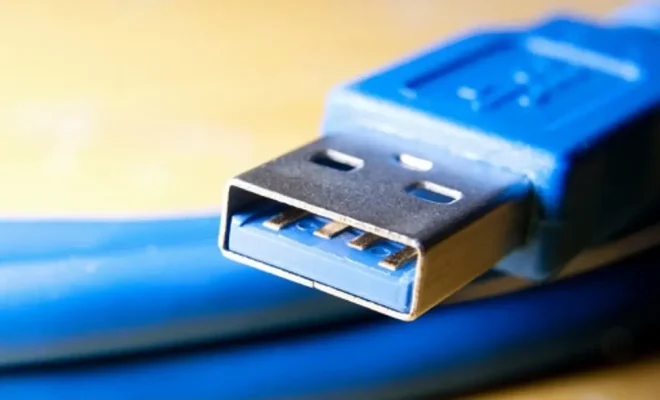
The chart usually categorizes the USB connectors per version, from the earliest USB 1.0/1.1 to the latest USB 3.2. USB 1.0/1.1 typically features type-A and type-B connectors and has a data transfer rate of up to 12 Mbps. USB 2.0, which is by far the most common version found on devices today, includes types A, B, Mini-B, and Micro-B connectors. USB 2.0 can transfer data up to 480 Mbps, and its compatibility with older USB standards makes it ideal for backward compatibility. USB 3.0 introduced the type-A connector with blue inserts, a type-B connector with a partial blue insert, and a new connector type called the type-B SuperSpeed. USB 3.0 can transmit data up to 5Gbps, ten times faster than USB 2.0.

As technology advances, so does the USB version, and with each upgrade comes new connector types. USB Type-C is the latest breakthrough regarding USB connectors, and it’s compatible with the USB 3.1 standard. It is a compact, reversible connector that can deliver data transfer speeds up to 10Gbps, supports higher power outputs for charging, and can even deliver video signals to external displays. However, due to its relatively new standard, not all devices can be compatible with Type-C, and that’s where the USB Physical Compatibility Chart comes in handy.

In conclusion, the USB Physical Compatibility Chart is an essential tool in determining which USB connector is compatible with one’s device. It helps avoid mix-ups, damage, and saves time and effort in looking for the right connector type. With the many USB versions and connector types available today, having a physical compatibility chart is a must-have for anyone who values convenience, efficiency, and productivity.


Previous Article

RCA vs. Coaxial vs. Optical: How to ...

Next Article

What Do All the Cameras on the ...

Matthew Lynch

Related articles More from author

  • Digital & Mobile Technology

    Ways to Fix Android Apps Crashing

    June 6, 2023
    By Matthew Lynch
  • Digital & Mobile Technology

    WhatsApp vs. WhatsApp Business: What’s the Difference?

    September 7, 2023
    By Matthew Lynch
  • Digital & Mobile Technology

    What Is a Sound Bar?

    July 31, 2023
    By Matthew Lynch
  • Digital & Mobile Technology

    How to Install Python in Ubuntu

    August 5, 2023
    By Matthew Lynch
  • Digital & Mobile Technology

    Best Online Notepads You Can Use to Jot Down Your Thoughts

    June 15, 2023
    By Matthew Lynch
  • Digital & Mobile Technology

    Facebook Privacy Settings You Should Change Now

    June 12, 2023
    By Matthew Lynch

Search

Login & Registration

  • Log in
  • Entries feed
  • Comments feed
  • WordPress.org

Newsletter

Signup for The Tech Edvocate Newsletter and have the latest in EdTech news and opinion delivered to your email address!

About Us

Since technology is not going anywhere and does more good than harm, adapting is the best course of action. That is where The Tech Edvocate comes in. We plan to cover the PreK-12 and Higher Education EdTech sectors and provide our readers with the latest news and opinion on the subject. From time to time, I will invite other voices to weigh in on important issues in EdTech. We hope to provide a well-rounded, multi-faceted look at the past, present, the future of EdTech in the US and internationally.

We started this journey back in June 2016, and we plan to continue it for many more years to come. I hope that you will join us in this discussion of the past, present and future of EdTech and lend your own insight to the issues that are discussed.

Newsletter

Signup for The Tech Edvocate Newsletter and have the latest in EdTech news and opinion delivered to your email address!

Contact Us

The Tech Edvocate
910 Goddin Street
Richmond, VA 23231
(601) 630-5238
[email protected]

Copyright © 2026 Matthew Lynch. All rights reserved.