Unprecedented: Hackers Delete Stolen Bank Data After Ransomware Attack — What This Means For You
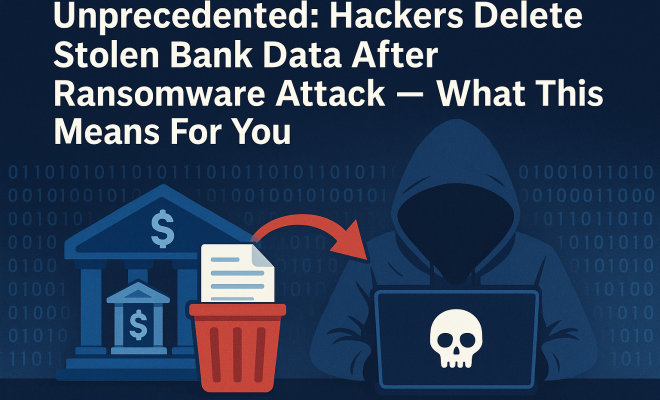
Imagine waking up to news that your bank, a cornerstone of financial trust, has been hit by a ransomware attack. Now, imagine that the criminals, after extracting sensitive data, have actually deleted it. This isn’t some far-fetched plot from a Hollywood thriller; it’s a stark reality for customers of River Bank & Trust. On August 3, 2026, River Financial Corporation, the holding company overseeing the bank, confirmed that data stolen during a June 16 ransomware attack has indeed been wiped clean by the very hackers who exfiltrated it. This development isn’t just a headline; it’s a chilling case study in the evolving, often brutal, landscape of cybercrime, forcing us to confront uncomfortable truths about digital security and the lengths companies go to protect our most personal information.
The incident at River Bank & Trust serves as a potent reminder that a ransomware attack isn’t just about encrypting files and demanding money to unlock them. It’s often a multi-faceted assault that includes data exfiltration – stealing copies of sensitive information before encryption. In this particular scenario, the bank found itself in the agonizing position of negotiating with cybercriminals, likely involving a significant ransom payment, not just to restore systems, but to ensure the stolen data was destroyed. This raises profound questions about the ethics, effectiveness, and long-term implications of paying off digital extortionists. What does it really mean for a bank to trust a criminal’s word? And what assurances do customers truly have when their data has been in the hands of bad actors?
The Anatomy of a Devastating Ransomware Attack
Let’s break down what happened at River Bank & Trust. The initial breach occurred on June 16, 2026. This wasn’t a subtle, slow infiltration; it involved the deployment of ransomware across significant portions of the bank’s server environment. Think of it like a digital virus spreading rapidly, locking down critical systems and making data inaccessible. But the ransomware itself was only part of the problem. The attackers managed to compromise administrative accounts, which are essentially the keys to the kingdom. With these elevated privileges, they weren’t just able to encrypt files; they could also access, copy, and steal vast amounts of sensitive information.
The term ‘server environment’ often sounds abstract, but for a bank, this means databases containing customer names, addresses, Social Security numbers, account details, and potentially even loan applications or transaction histories. The attackers, having gained control, likely spent time siphoning off this data before initiating the encryption phase. This ‘double extortion’ tactic – encrypting data AND threatening to publish stolen data – has become standard operating procedure for many ransomware groups. It puts immense pressure on victims, forcing them to consider paying not just for data recovery, but for reputational damage control and the protection of their customers’ privacy.
The confirmation on August 3, 2026, that the data had been deleted by the hackers, implies a complex and likely protracted negotiation process. It means the bank engaged directly with the perpetrators, which is a contentious decision in the cybersecurity community. While the immediate goal was to prevent the public release or further sale of customer data, it also implicitly validates the criminals’ business model and potentially fuels future attacks. This situation underscores the no-win scenarios that organizations face when caught in the crosshairs of a sophisticated ransomware attack.
The Controversial Choice: Negotiating with Cybercriminals
When a company like River Bank & Trust faces a ransomware attack, especially one involving data exfiltration, the decision to negotiate with criminals is never taken lightly. It’s a high-stakes gamble fraught with ethical dilemmas and practical risks. On one hand, law enforcement agencies, including the FBI, generally advise against paying ransoms. Their reasoning is sound: paying incentivizes more attacks, funds criminal enterprises, and offers no guarantee that data will be restored or deleted. It’s a bit like paying a kidnapper – you might get your loved one back, but you’ve also shown future kidnappers that the tactic works.
However, the reality for a financial institution is far more nuanced. The potential fallout from a public data leak can be catastrophic. Think about the immediate damage: customer lawsuits, regulatory fines, a complete erosion of trust, and a potential exodus of clients. For a bank, trust is its most valuable asset. If customers believe their financial data is openly available on the dark web, they will move their money elsewhere. In such a scenario, the cost of a ransom payment, while substantial, might be perceived as less damaging than the long-term economic and reputational costs of a data breach.
River Bank & Trust’s decision to engage and, presumably, pay, highlights this brutal calculus. Their priority shifted from simply recovering encrypted files to ensuring the complete destruction of the stolen data. This implies a belief, perhaps desperate, that the criminals would honor their word. It’s a disturbing thought: trusting a trustless entity with the fate of your customers’ most sensitive information. This specific outcome – the hackers claiming deletion – adds a layer of complexity. Is it truly gone? Can we ever really be sure? The digital world offers no true guarantees once data leaves secure perimeters. (See: CDC Cybersecurity Resources.) Related reading: new era of cybercrime.
The Lingering Threat: What Happens After a Ransomware Attack?
Even with the hackers claiming deletion, the ramifications of this ransomware attack are far-reaching and long-lasting. For River Bank & Trust, the immediate aftermath involves extensive forensic analysis to understand the full scope of the breach, identify vulnerabilities, and rebuild their security posture. This is an expensive, time-consuming process that often requires external cybersecurity experts.
Then there’s the legal fallout. The source material explicitly mentions ‘subsequent lawsuits against the company.’ This is an almost inevitable consequence in today’s litigious environment, especially when sensitive financial data is involved. Customers who feel their privacy has been violated, or who later experience identity theft, will seek recompense. These lawsuits can drag on for years, incurring massive legal fees and further damaging the bank’s reputation. Regulatory bodies, like the Federal Reserve or state banking commissions, will also launch investigations, potentially leading to fines and mandatory compliance upgrades.
For the customers, the threat persists. While the bank is working to understand the ‘full scope of personal information exfiltrated,’ that information was, at one point, in the hands of criminals. Even if deleted, there’s always a lingering doubt. Was it truly deleted everywhere? Did the criminals make copies before deletion? The risk of identity theft, phishing scams, and other forms of fraud remains elevated for anyone whose data was compromised. This necessitates vigilance from affected individuals for years to come, emphasizing the need for credit monitoring, identity theft protection services, and heightened awareness of suspicious communications.
The Financial Sector: A Prime Target for Cybercriminals
The financial services industry has always been a prime target for cybercriminals, and for obvious reasons. Banks, investment firms, and credit unions hold the keys to immense wealth and highly sensitive personal data. A successful ransomware attack on a financial institution offers a tantalizing combination for attackers: direct financial gain through ransom payments, and the potential to sell exfiltrated data on dark web markets for even more profit. The regulatory pressure and reputational risks faced by banks also make them more likely to pay ransoms quickly to avoid public disclosure and mitigate damage.
This isn’t an isolated incident. Reports from cybersecurity firms consistently highlight the financial sector as one of the most frequently attacked industries. Attackers are drawn to the high value of data, the critical nature of services (meaning downtime is costly and unacceptable), and the generally high levels of available funds for ransom payments. Furthermore, the interconnectedness of financial systems means that a breach in one area can have ripple effects across the entire ecosystem, making robust, multi-layered security absolutely paramount.
The sophistication of these attacks is also increasing. It’s no longer just about exploiting simple vulnerabilities. Attackers use advanced persistent threats (APTs), social engineering tactics, zero-day exploits, and highly organized operations that mimic legitimate businesses. They often spend weeks or months inside a network, mapping it out, escalating privileges, and exfiltrating data before deploying the final ransomware payload. This makes detection incredibly challenging and emphasizes the need for continuous monitoring, threat intelligence, and proactive defense strategies.
The Broader Implications of a Ransomware Attack on Trust
Beyond the immediate financial and operational impact, a ransomware attack like the one on River Bank & Trust erodes a fundamental pillar of our society: trust in institutions. When a bank, an entity we rely on to safeguard our money and personal information, fails to do so, it shakes public confidence. This isn’t just about one bank; it contributes to a broader sense of unease about digital security in general.
If financial institutions, with their massive security budgets and regulatory oversight, can fall victim, what does that say for smaller businesses or individuals? It fosters a climate of fear and suspicion, where individuals become more wary of online transactions, digital services, and sharing personal data. This collective erosion of trust can have significant economic consequences, potentially slowing the adoption of new technologies and digital transformation initiatives if people don’t feel safe participating.
Moreover, the controversy surrounding ransom payments further complicates this. If the public perceives that banks are secretly paying criminals to cover up breaches, it can breed cynicism. Transparency, while difficult in such sensitive situations, becomes critical. How banks communicate these incidents, what measures they take, and how they support affected customers, will play a huge role in either rebuilding or further damaging that essential trust. (See: New York Times on Ransomware Attacks.)
Protecting Yourself: Practical Steps in a Post-Ransomware World
Given the escalating threat of a ransomware attack and data breaches, what can you, as an individual, do to protect yourself? While banks bear the primary responsibility for securing your data, a proactive approach to personal cybersecurity is more crucial than ever. Here are some actionable steps:
- Monitor Your Accounts Relentlessly: Regularly check your bank statements, credit card activity, and credit reports. Look for any suspicious transactions, even small ones. Services like annualcreditreport.com allow you to get free reports from the three major credit bureaus (Equifax, Experian, TransUnion) once a year. Consider staggering them to review one every four months.
- Enable Multi-Factor Authentication (MFA): This is your strongest defense against compromised credentials. Always enable MFA on your banking apps, email accounts, social media, and any other critical online service. Even if a hacker gets your password, they won’t be able to log in without the second factor (e.g., a code from your phone).
- Be Wary of Phishing Attempts: Cybercriminals often use information gleaned from breaches (even partial ones) to craft highly convincing phishing emails or texts. They might know your bank’s name, your name, or even recent transactions. Always double-check the sender, look for inconsistencies, and never click on suspicious links or download attachments from unknown sources. If in doubt, go directly to the bank’s official website or call them using a verified number.
- Strong, Unique Passwords: Use a password manager to create and store complex, unique passwords for every online account. Reusing passwords means that if one service is breached, all your accounts are vulnerable.
- Consider Identity Theft Protection: While not a silver bullet, these services can provide an early warning system for suspicious activity related to your identity, such as new credit accounts opened in your name or changes to public records.
- Freeze Your Credit: If you’re particularly concerned after a breach, or just as a general best practice, you can freeze your credit with all three major credit bureaus. This prevents new credit from being opened in your name without your explicit permission, making it much harder for identity thieves to succeed.
- Educate Yourself: Stay informed about the latest cybersecurity threats and best practices. The more you know, the better equipped you are to recognize and avoid potential dangers.
The Regulatory Response to Cybercrime in Finance
The financial sector is heavily regulated, and a ransomware attack like this inevitably triggers intense scrutiny from regulatory bodies. Agencies such as the Federal Reserve, the Office of the Comptroller of the Currency (OCC), and state banking departments have strict guidelines for cybersecurity, incident response, and customer notification. When a breach occurs, banks are required to report it promptly and demonstrate that they are taking appropriate measures to mitigate harm and prevent future incidents.
The increasing frequency and sophistication of these attacks are also prompting regulators to consider even tougher rules. This could include mandates for specific security technologies, more frequent audits, stricter protocols for third-party vendors (as many breaches originate through supply chain vulnerabilities), and even penalties for inadequate cybersecurity hygiene. The goal is to force institutions to elevate their defenses to match the evolving threat landscape, ultimately protecting consumers and maintaining the stability of the financial system.
However, regulation alone isn’t enough. There’s a constant cat-and-mouse game between attackers and defenders. Regulators face the challenge of creating rules that are effective without stifling innovation or imposing impossible burdens on smaller institutions. The River Bank & Trust incident will undoubtedly contribute to ongoing discussions about the adequacy of current regulations and the need for more robust, proactive measures across the entire financial ecosystem.
The Ethical Minefield of Data Deletion by Criminals
The most unique and unsettling aspect of the River Bank & Trust incident is the claim by the hackers that they deleted the stolen data. This introduces an ethical and practical quandary that few organizations are equipped to handle. Can you truly trust a criminal’s word? The cybersecurity community is largely skeptical. While it’s possible the attackers, having received a payment, honored their agreement, there’s no way to independently verify such a claim with 100% certainty. Digital deletion isn’t always absolute; data can be copied, archived, or even sold to other criminal groups before the ‘deletion’ takes place.
This situation puts the victim organization in an incredibly difficult position. They are essentially relying on the ‘honor among thieves’ principle, which is a dangerous precedent. It also raises questions about accountability. If data later surfaces, who is responsible? The bank for trusting the criminals, or the criminals for breaking their word? This ambiguity leaves customers in a precarious state, where the ‘deletion’ might offer a false sense of security.
It also highlights the psychological warfare inherent in modern ransomware attacks. The promise of data deletion is a powerful lever for criminals to extract payment. It preys on the victim’s fear of public exposure and regulatory penalties. For companies, weighing the immediate relief of a promised deletion against the long-term uncertainty and the moral implications of funding criminal enterprises is a truly unenviable decision.
The Evolving Landscape of Ransomware and Cyber Insurance
The River Bank & Trust case also brings into sharp focus the role of cyber insurance. Many organizations, especially those in high-risk sectors like finance, invest in cyber insurance policies to mitigate the financial impact of a breach. These policies often cover costs associated with incident response, legal fees, notification expenses, credit monitoring for affected customers, and sometimes even ransom payments. (See: WHO on ICT and Security.)
However, the cyber insurance market itself is undergoing significant changes. Insurers are facing massive payouts due to the surge in ransomware attacks, leading to increased premiums, stricter underwriting requirements, and sometimes even exclusions for certain types of attacks or specific industries. Companies are finding that securing comprehensive cyber insurance is becoming more challenging, and insurers are increasingly demanding higher levels of cybersecurity maturity from their clients. This includes requirements for multi-factor authentication, robust backup strategies, and regular security audits.
The question of whether cyber insurance should cover ransom payments is also a subject of intense debate. Some argue it creates a moral hazard, effectively funding criminal activity. Others contend that it provides a vital safety net for businesses facing an impossible choice, allowing them to recover and continue operations. As ransomware attacks continue to evolve, so too will the cyber insurance industry, adapting to new threats and the ever-present demand for financial protection against digital catastrophe.
Beyond the Headlines: A Call for Collective Resilience
The ransomware attack on River Bank & Trust, and the subsequent claim of data deletion, is a wake-up call for everyone. For financial institutions, it’s a stark reminder that cybersecurity isn’t just an IT department’s concern; it’s a board-level issue demanding continuous investment, proactive strategies, and a culture of security awareness. For regulators, it underscores the urgency of creating effective frameworks that protect consumers without stifling innovation. And for individuals, it’s an urgent plea to take personal responsibility for our digital hygiene and remain vigilant against ever-present threats.
This incident is more than just a single bank’s misfortune; it’s a microcosm of the global cybersecurity challenge. As our lives become increasingly digital, the stakes grow higher. Building collective resilience against these sophisticated threats requires collaboration between governments, businesses, and individuals. We need better information sharing, international cooperation to prosecute cybercriminals, and a universal commitment to elevating our digital defenses. Only then can we hope to navigate the treacherous waters of cybercrime and safeguard the trust that underpins our digital economy.
The story of River Bank & Trust isn’t over. The long-term implications for its customers and the banking industry as a whole will unfold over months and years. It’s a harsh lesson in the fragility of digital security and the often-disturbing choices organizations are forced to make when facing down determined cyber adversaries.
Trending Now
Frequently Asked Questions
What happened in the River Bank & Trust ransomware attack?
In June 2026, River Bank & Trust experienced a significant ransomware attack where hackers not only encrypted the bank's files but also stole sensitive customer data. In a surprising turn, the cybercriminals deleted the stolen data after negotiations, raising serious concerns about digital security and the ethics of paying ransoms.
Why would hackers delete stolen bank data?
Hackers may delete stolen data after a ransomware attack to demonstrate control and potentially to ensure that the data cannot be used against them or exposed to the public. This act complicates the situation for the affected bank and its customers, as it raises questions about trust and the effectiveness of paying ransoms.
What are the implications of paying a ransom to hackers?
Paying a ransom can provide temporary relief, but it raises ethical concerns and does not guarantee that the hackers won't attack again. It also poses risks regarding trust, as the bank must rely on criminals' assurances that no further data will be leaked or misused.
How can customers protect themselves after a bank ransomware attack?
Customers should monitor their accounts closely for unusual activity, change passwords, and consider enrolling in identity theft protection services. It's also important to stay informed about the bank's response and any measures being taken to enhance security after such incidents.
What should banks do to prevent ransomware attacks?
Banks should implement robust cybersecurity measures, including regular system updates, employee training on phishing awareness, and incident response plans. Additionally, investing in advanced threat detection and response technologies can help mitigate the risk of ransomware attacks. See also 2026 data breach insights.
Have you experienced this yourself? We'd love to hear your story in the comments.