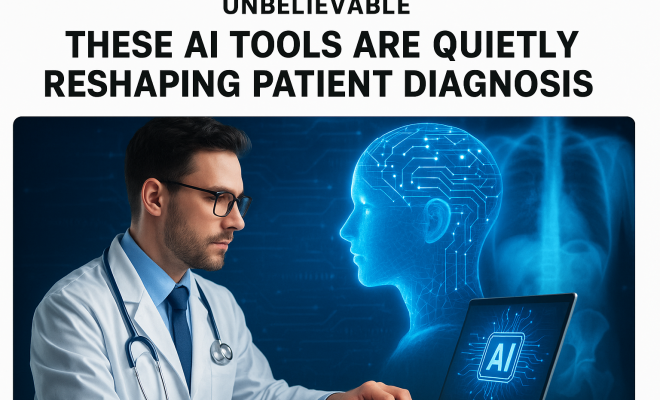
Unbelievable: These AI Tools Are Quietly Reshaping Patient Diagnosis
“`html
Artificial intelligence in healthcare isn’t just a futuristic pipe dream anymore; it’s a rapidly evolving reality that’s already transforming how doctors diagnose and treat patients. While the promise of AI in medicine is immense, with the potential to catch diseases earlier and personalize treatments, it also brings a hefty dose of debate and concern. We’re talking about a landscape where the Trump administration pushed for a ‘responsible, evidence-based approach’ to AI, even as the Department of Health and Human Services accelerated projects to integrate it across diagnostics, therapy, and medication management. This rapid deployment, as some officials have pointed out, raises valid questions about whether we’re moving too fast without enough data on safety and effectiveness. Acting FDA Commissioner Kyle Diamantas himself underscored the critical need for the U.S. to lead in developing and using AI safely and responsibly, and the FDA is actively seeking public input on how to regulate these generative AI-enabled medical devices, focusing heavily on risk assessment and post-market monitoring. It’s a complex, emotionally charged issue, especially when patient safety and ethical dilemmas surrounding AI’s role in critical medical decisions are on the line. But amidst all this, some truly groundbreaking AI tools for patient diagnosis are emerging, offering a glimpse into a future where medical errors might be significantly reduced and diagnoses become far more precise. Let’s explore some of the best AI tools for patient diagnosis that are making waves right now.
1. PathAI: Revolutionizing Pathology with Precision
When we talk about the best AI tools for patient diagnosis, PathAI is often one of the first names that comes up, and for good reason. This Boston-based company is at the forefront of applying AI to pathology, a field traditionally reliant on highly skilled human eyes examining tissue samples under a microscope. PathAI’s technology aims to improve the accuracy and efficiency of diagnosing diseases like cancer by analyzing whole slide images with sophisticated algorithms. Think about the sheer volume of slides a pathologist has to review in a day, each one a potential life-or-death decision. Human fatigue, even among the most dedicated professionals, is a real factor. That’s where AI steps in, offering a tireless, objective second opinion.
What PathAI does is quite remarkable: it uses deep learning models trained on vast datasets of annotated pathology images to detect subtle patterns and anomalies that might be missed by the human eye, or at least take significantly longer to identify. For instance, in cancer diagnosis, PathAI can quantify tumor characteristics, assess treatment response, and predict patient outcomes with a level of detail and consistency that’s incredibly difficult for humans to achieve manually. This doesn’t mean replacing pathologists; rather, it augments their capabilities, allowing them to focus on the most complex cases and make more confident diagnoses, ultimately leading to better patient care. The company has secured significant funding and partnerships, indicating strong confidence in its technology’s potential.
2. Google Health’s DeepMind AI: Eyeing Early Disease Detection
Google’s venture into healthcare through its DeepMind AI division has yielded some truly impressive advancements, particularly in areas like ophthalmology. One of the standout applications has been in detecting eye diseases such as diabetic retinopathy and age-related macular degeneration (AMD) from retinal scans. These conditions, if caught late, can lead to irreversible blindness, making early and accurate diagnosis absolutely crucial. Traditional screening methods require specialists, and often there’s a backlog of patients waiting for appointments, delaying vital interventions.
DeepMind’s AI, working in collaboration with Moorfields Eye Hospital in London, has developed algorithms capable of analyzing optical coherence tomography (OCT) scans – 3D images of the back of the eye – to identify signs of disease with an accuracy comparable to, and sometimes exceeding, that of human experts. This isn’t just about identifying a problem; the AI can also prioritize urgent cases, helping clinicians manage their workload more effectively and ensure that patients who need immediate attention get it without delay. The implications for global health are enormous, especially in regions with limited access to specialized eye care. It’s a prime example of how the best AI tools for patient diagnosis can democratize access to high-quality healthcare.
3. IBM Watson Health: Cognitive Computing in Oncology
IBM Watson Health has been a significant player in the AI in healthcare space for years, particularly with its focus on oncology. While its journey hasn’t been without its challenges and criticisms, the ambition behind Watson’s application in cancer diagnosis and treatment planning is undeniably groundbreaking. The idea was to leverage Watson’s cognitive computing capabilities to sift through an immense volume of medical literature, patient records, clinical trials, and guidelines to assist oncologists in making more informed decisions.
Imagine an AI that can read millions of scientific papers, textbooks, and patient data points in seconds, then present a doctor with evidence-based treatment options tailored to a specific patient’s unique genetic profile and medical history. That’s the promise of Watson for Oncology. While integrating such a complex system into the clinical workflow and achieving consistent, reliable results has proven harder than initially anticipated, the underlying concept of using AI to synthesize vast amounts of medical knowledge for personalized medicine remains incredibly powerful. When refined, tools like Watson could dramatically enhance an oncologist’s ability to diagnose rare cancers or identify optimal treatment pathways, making it a contender for the best AI tools for patient diagnosis in complex cases.
4. Zebra Medical Vision: AI-Powered Medical Imaging Analysis
Zebra Medical Vision, now part of Nanox, specializes in using AI to analyze medical imaging scans – X-rays, CTs, MRIs – to detect various conditions. Radiologists are under immense pressure, reviewing hundreds of images daily, and the subtle signs of disease can sometimes be elusive. Zebra-Med’s AI acts as an intelligent assistant, flagging potential abnormalities for radiologists to review, thereby increasing both the speed and accuracy of diagnosis. (See: NIH initiative on AI in healthcare.)
Their algorithms are designed to identify a wide range of conditions, from early signs of osteoporosis (a silent killer often missed until a fracture occurs) to fatty liver disease, breast cancer, and even collapsed lungs. What’s particularly compelling is the potential for incidental findings – spotting a condition in a scan ordered for something else entirely. For instance, a CT scan of the abdomen for digestive issues might inadvertently reveal early signs of cardiovascular disease in the aorta. Zebra-Med’s AI can automatically detect these findings, ensuring they don’t go unnoticed. This proactive approach to diagnosis, catching diseases before they become critical, makes their platform one of the most promising AI tools for patient diagnosis in preventive medicine.
5. DeepMind’s AlphaFold: Unlocking Protein Folding for Disease Understanding
While not a direct patient diagnostic tool in the same way as imaging analysis or pathology AI, DeepMind’s AlphaFold deserves a spot on this list because it’s fundamentally changing our ability to understand diseases at a molecular level, which in turn will profoundly impact diagnosis and treatment development. AlphaFold is an AI system that predicts the 3D structure of proteins from their amino acid sequence with unprecedented accuracy. Why is this a big deal? Proteins are the workhorses of life; their shapes dictate their functions, and misfolded proteins are implicated in a vast array of diseases, from Alzheimer’s and Parkinson’s to cystic fibrosis and many cancers.
For decades, determining protein structures experimentally was a laborious, expensive, and often impossible task. AlphaFold has cracked this ‘grand challenge’ of biology, providing scientists with a treasure trove of structural information. This breakthrough means researchers can now rapidly identify how mutations affect protein function, how drugs might bind to specific proteins, and ultimately, gain a deeper insight into the molecular mechanisms of disease. This foundational understanding is critical for developing new diagnostic biomarkers and targeted therapies, making it an indirect but incredibly powerful contributor to the future of the best AI tools for patient diagnosis.
6. Viz.ai: Speeding Up Stroke Diagnosis and Treatment
In cases like stroke, every second counts. The difference between full recovery and permanent disability often hinges on how quickly a patient receives appropriate treatment. Viz.ai has developed an AI-powered platform specifically designed to accelerate the diagnosis and treatment of acute stroke. Their technology uses deep learning to analyze medical images, primarily CT scans, for signs of large vessel occlusion (LVO) strokes, which are among the most severe.
Here’s how it works: when a patient presents with suspected stroke symptoms and undergoes a CT scan, Viz.ai’s algorithms immediately analyze the images. If an LVO is detected, the AI automatically alerts the stroke team – neurologists, neurosurgeons, interventional radiologists – via their mobile devices, often before the human radiologist has even completed their initial review. This real-time, coordinated communication dramatically reduces the time from scan to treatment, which is critical for administering clot-busting drugs or performing thrombectomy procedures. By streamlining this entire workflow, Viz.ai is proving to be an indispensable tool, significantly improving patient outcomes in a time-sensitive medical emergency. It’s a clear example of how the best AI tools for patient diagnosis can literally save lives and improve quality of life.
7. Aidoc: AI for Radiology Workflow Optimization
Similar to Zebra Medical Vision, Aidoc focuses on enhancing radiology workflows through AI, but with a particular emphasis on flagging critical findings and improving efficiency across various conditions. Radiologists are often overwhelmed with the sheer volume of images they need to interpret, leading to potential delays in diagnosis, especially for non-urgent but significant findings. Aidoc’s AI acts as a sophisticated triage system, ensuring that the most critical cases get immediate attention.
The platform integrates seamlessly into existing radiology systems, continuously analyzing incoming CT scans for conditions like intracranial hemorrhage, pulmonary embolism, cervical spine fractures, and incidental findings of aortic dissection. When the AI detects a suspected critical condition, it sends an immediate alert to the radiologist, often highlighting the area of concern on the image. This allows radiologists to prioritize their workload, review critical cases faster, and potentially intervene earlier. By reducing diagnostic turnaround times and minimizing the risk of missed diagnoses, Aidoc enhances patient safety and operational efficiency, making it a powerful contender among the best AI tools for patient diagnosis, especially in busy emergency departments.
8. Freenome: Early Cancer Detection Through Blood Tests
Freenome is tackling one of medicine’s holy grails: early cancer detection using liquid biopsies. The idea is to find cancer when it’s most treatable, often before symptoms even appear, by analyzing fragments of DNA and other biomarkers released by tumors into the bloodstream. This non-invasive approach has the potential to revolutionize cancer screening, moving beyond traditional methods that can be invasive, costly, or less sensitive for early-stage disease.
Freenome’s AI platform combines expertise in machine learning, genomics, and molecular biology to analyze vast amounts of data from blood samples. They look for specific patterns in circulating tumor DNA (ctDNA), proteins, and other indicators that signify the presence of cancer. Their initial focus has been on colorectal cancer, a disease where early detection significantly improves survival rates. By identifying individuals at high risk or those with early-stage disease, Freenome’s technology could enable earlier intervention, potentially saving countless lives. This innovative use of AI in diagnostics represents a significant leap forward in personalized and preventive medicine, making it one of the most exciting AI tools for patient diagnosis in the oncology space. (See: FDA guidance on AI medical devices.)
9. Tempus: Precision Medicine and Genomic Data Analysis
Tempus is building an operating system for precision medicine, using AI to analyze large datasets of clinical and molecular data to help physicians make more informed treatment decisions, particularly in cancer. Their platform integrates vast amounts of information, including genomic sequencing data, clinical notes, pathology reports, and treatment outcomes, all anonymized and aggregated to create a comprehensive picture of disease.
For a patient diagnosed with cancer, Tempus can sequence their tumor and normal tissue, then use AI to compare that genomic profile against a massive database of similar cases and known treatment responses. This allows oncologists to identify specific mutations that might be targetable by certain drugs, predict how a patient might respond to different therapies, or even identify eligible clinical trials. By providing physicians with actionable insights derived from real-world data, Tempus aims to move beyond a one-size-fits-all approach to cancer care towards truly personalized medicine. This data-driven diagnostic approach makes Tempus a leader in leveraging AI for complex patient diagnosis and treatment stratification.
10. ConcertAI: Real-World Evidence for Clinical Decision Support
ConcertAI focuses on generating real-world evidence (RWE) through AI and machine learning to accelerate drug development and improve patient care. While not a direct diagnostic tool in the sense of analyzing scans, its work directly impacts the diagnostic landscape by providing deeper insights into disease progression and treatment effectiveness based on actual patient outcomes. This is critical for understanding how diseases manifest in diverse populations and how treatments perform outside of controlled clinical trial settings.
By using AI to analyze de-identified data from electronic health records, claims data, and other sources, ConcertAI can identify patterns, predict patient responses, and even help design smarter clinical trials. This RWE can inform diagnostic criteria, highlight the need for specific diagnostic tests in certain patient populations, and guide physicians in selecting the most effective therapies for individual patients. In essence, ConcertAI’s platform helps refine our understanding of diseases and treatments in the real world, thereby indirectly but powerfully enhancing the accuracy and utility of various AI tools for patient diagnosis by providing a more robust evidence base for medical decisions.
The Evolving Role of AI in Primary Care Diagnostics
While many of the discussed AI tools excel in specialized fields like oncology or radiology, their impact is increasingly trickling down to primary care. Think about the general practitioner, often the first point of contact for patients. They face a monumental task: diagnosing a vast array of conditions with limited time and resources. AI here isn’t about replacing the doctor, but about arming them with better tools. We’re seeing AI-powered diagnostic support systems that can analyze a patient’s symptoms, medical history, and even genetic predispositions to suggest potential diagnoses or recommend further specialized tests. This isn’t just about efficiency; it’s about reducing diagnostic errors, which are a significant problem in healthcare. A study published in the BMJ Quality & Safety journal estimated that diagnostic errors affect 12 million Americans annually in outpatient settings. AI can act as a vigilant second set of eyes, cross-referencing information against millions of similar cases and the latest medical literature, providing a probability score for various conditions. This capability allows primary care physicians to make more informed decisions, potentially catching rare diseases earlier or preventing unnecessary specialist referrals, thereby optimizing the entire healthcare pathway.
Addressing Ethical Concerns and Bias in AI Diagnostics
The immense power of AI in patient diagnosis comes with a significant responsibility to address the ethical implications and potential for bias. One of the biggest worries is algorithmic bias. If AI models are trained on datasets that don’t adequately represent diverse patient populations (e.g., predominantly white males), they might perform poorly or even misdiagnose individuals from underrepresented groups. This could exacerbate existing health disparities. For example, some facial recognition algorithms have shown lower accuracy in identifying individuals with darker skin tones, and similar issues could arise in image-based medical diagnostics. Regulators and developers are acutely aware of this, pushing for diverse datasets and transparent algorithms. The FDA’s focus on risk assessment and post-market monitoring is a direct response to these concerns, ensuring that AI tools are continuously evaluated for fairness and accuracy across all patient demographics. Furthermore, there’s the question of accountability: if an AI makes a diagnostic error, who is responsible? The developer, the physician, or the hospital? These are complex legal and ethical quandaries that need clear frameworks as AI adoption grows. Establishing clear guidelines for explainable AI – where the AI can articulate why it arrived at a particular diagnosis – is also crucial for building trust between clinicians, patients, and the technology.
The Future Landscape: Predictive AI and Personalized Prevention
Looking ahead, the evolution of AI in patient diagnosis isn’t just about identifying existing conditions; it’s moving towards predicting future health risks with remarkable accuracy. Imagine AI systems that analyze your entire health history – genomic data, lifestyle choices, environmental factors, even continuous biometric data from wearables – to forecast your individual risk of developing specific diseases years or even decades down the line. This isn’t science fiction; it’s the direction precision medicine is headed, powered by AI. For instance, AI could predict an individual’s likelihood of developing type 2 diabetes, certain cancers, or cardiovascular disease, allowing for highly personalized preventive interventions. This might involve tailored dietary recommendations, specific exercise regimens, or targeted screening schedules, all customized to an individual’s unique biological blueprint and risk profile. This shift from reactive treatment to proactive, personalized prevention represents a profound transformation in healthcare, where AI becomes a crucial partner in maintaining wellness, not just managing illness. The best AI tools for patient diagnosis will eventually be those that help us stay healthy in the first place, rather than just diagnosing problems after they arise.
Frequently Asked Questions About AI in Patient Diagnosis
Q1: Will AI replace doctors in diagnosing patients?
No, the consensus among experts is that AI will augment, not replace, doctors. AI excels at analyzing vast datasets, identifying patterns, and providing probabilities, making it an invaluable assistant. However, human doctors bring empathy, critical thinking for unusual cases, the ability to communicate complex information, and the nuanced understanding of a patient’s overall well-being and preferences – qualities AI can’t replicate. AI tools are designed to make doctors more efficient and accurate, allowing them to focus on the human aspects of care. (See: WHO fact sheet on AI and health.)
Q2: How accurate are AI diagnostic tools compared to human doctors?
The accuracy varies significantly depending on the specific AI tool and the medical condition it’s designed to diagnose. In some narrow, well-defined tasks, like detecting specific lesions on an MRI or identifying diabetic retinopathy from retinal scans, AI has demonstrated accuracy comparable to, and sometimes exceeding, that of human specialists. For instance, DeepMind’s AI for eye conditions matched or surpassed human experts in certain diagnostic tasks. However, in more complex, multi-faceted diagnostic scenarios that require integrating diverse information and clinical judgment, human expertise remains paramount. The goal is often for AI to reduce human error rates and improve consistency.
Q3: What are the biggest challenges to widespread adoption of AI in patient diagnosis?
Several significant challenges exist. Regulatory hurdles are a major one, as governments like the FDA work to establish frameworks for safety and effectiveness. Data privacy and security are also critical concerns, given the sensitive nature of medical information. Integrating AI tools seamlessly into existing, often fragmented, healthcare IT systems can be technically difficult. There’s also the challenge of ‘black box’ AI, where it’s hard to understand how the AI arrived at a conclusion, making doctors hesitant to trust it. Finally, overcoming clinician skepticism and ensuring adequate training for healthcare professionals on how to effectively use these tools are ongoing efforts.
Q4: How do AI diagnostic tools handle rare diseases?
Rare diseases present a unique challenge for AI. Traditional AI models thrive on large datasets; if a disease is rare, there might not be enough data to train a robust AI model. However, AI can still be helpful. Systems like IBM Watson Health, by sifting through millions of medical publications and case studies, can bring obscure information about rare diseases to a doctor’s attention much faster than a human could. Researchers are also working on techniques like ‘few-shot learning’ or ‘transfer learning’ that allow AI models to learn from very limited data, potentially improving diagnosis for ultra-rare conditions.
Q5: Is AI in diagnostics accessible to all healthcare settings, including low-resource areas?
Currently, many advanced AI diagnostic tools require significant infrastructure, specialized equipment, and skilled personnel, making them more prevalent in well-funded hospitals and clinics. However, there’s a strong push to develop AI solutions that are more accessible and affordable. For example, AI algorithms that can run on smartphones or analyze images captured with low-cost devices could dramatically expand diagnostic capabilities in remote or low-resource settings, democratizing access to high-quality healthcare. Initiatives like Google Health’s work in diabetic retinopathy screening highlight this potential for global impact.
The journey of AI in healthcare is still in its early stages, fraught with regulatory challenges, ethical debates, and the ever-present need for rigorous validation. The FDA’s active role in seeking public input on regulating generative AI-enabled medical devices, focusing on risk assessment and post-market monitoring, highlights the cautious but determined approach needed. Yet, the potential these tools hold for revolutionizing patient diagnosis is undeniable. From catching subtle signs of cancer earlier to accelerating stroke treatment and unlocking the secrets of protein folding, these AI innovations are not just incremental improvements; they are fundamentally changing the game. They promise a future where diagnoses are more accurate, treatments are more personalized, and healthcare is more accessible, ultimately leading to better outcomes for all of us.
“`
Trending Now
- our breakdown of bombshell: your ‘natural’ weight loss pills are hiding this deadly secret
- Critical: Your Smart Home is a Goldmine for Data Thieves – And You’re Helping Them
- this guide on revealed: the $8 billion secret behind controversial flock traffic cameras
- read the full story
- read the full story
Frequently Asked Questions
How is AI changing patient diagnosis?
AI is revolutionizing patient diagnosis by providing tools that enhance accuracy and efficiency. Technologies like PathAI utilize machine learning to analyze medical data, allowing for earlier disease detection and personalized treatment plans, thus reducing the likelihood of medical errors.
What are the benefits of using AI in healthcare?
The benefits of AI in healthcare include improved diagnostic precision, faster analysis of medical data, and the ability to tailor treatments to individual patient needs. This technology can help catch diseases earlier, ultimately leading to better patient outcomes.
What challenges does AI face in medical diagnostics?
AI in medical diagnostics faces several challenges, including concerns about safety, effectiveness, and the ethical implications of its use. Additionally, the rapid deployment of AI tools without sufficient data and regulation raises questions about their reliability in clinical settings.
What is PathAI and how does it work?
PathAI is a leading AI tool that enhances pathology by using machine learning algorithms to analyze tissue samples. This technology assists pathologists in making more accurate diagnoses, thereby improving the overall quality of patient care and reducing diagnostic errors.
How is the FDA regulating AI in healthcare?
The FDA is actively working to regulate AI in healthcare by focusing on risk assessment and post-market monitoring. They are seeking public input to ensure that AI-enabled medical devices are developed and used safely, balancing innovation with patient safety.
What did we miss? Let us know in the comments and join the conversation.