This Is Why Gen Z’s AI Career Concerns Are About to Explode
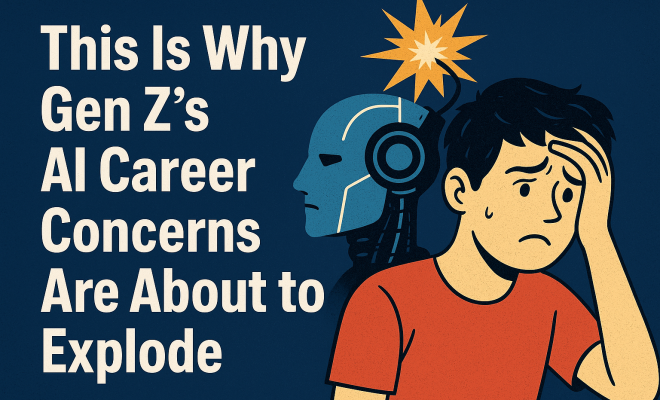
Walk into almost any high school classroom across California, or indeed, anywhere in the U.S., and you’ll find a buzzing undercurrent of anxiety. It’s not just about grades or college applications anymore; there’s a new, more existential dread settling in, particularly among teenagers. They’re worried about Artificial Intelligence – not just how it’s changing their homework, but how it’s poised to fundamentally reshape their future careers. And honestly, who can blame them? The rapid, often unregulated, expansion of AI in education is creating a fascinating, sometimes controversial, and deeply emotionally charged debate.
It’s a conversation that’s igniting social media and, more importantly, sparking genuine AI career concerns among a generation on the cusp of entering the workforce. You see, these aren’t just abstract fears; they’re rooted in their daily experiences. A recent paper from the Fordham Institute brought some stark numbers to light: nearly half of high school students are already tapping into AI for their math problems. Even more eye-opening, over a quarter are using it for essays or tests. This kind of widespread adoption has a direct consequence: a staggering 58% of students now feel that AI makes homework, well, kind of meaningless. When the very foundation of traditional learning feels irrelevant, what does that do to a young person’s motivation, or their sense of preparedness for what comes next?
The Pervasive Spread of AI in Classrooms: More Than Just a Cheating Tool
Let’s be clear: AI isn’t just lurking in the shadows of student laptops anymore; it’s actively being embraced by educators, too. A new survey from Efekta Education revealed that a striking 73% of U.S. teachers are currently using AI tools in their classrooms. That’s not a fringe movement; that’s mainstream adoption. Teachers are using it for everything from generating lesson plans and creating quizzes to providing personalized feedback. On the surface, this sounds like progress, right? Tools that can lighten a teacher’s workload and potentially offer more tailored learning experiences for students. Yet, beneath this veneer of innovation lies a significant problem: a major disconnect between adoption and understanding.
Many schools, caught in the rapid current of technological advancement, simply haven’t provided adequate training or clear guidance on how to ethically integrate these powerful tools. It’s like handing someone the keys to a high-performance sports car without giving them a single driving lesson. You can imagine the potential for both accidental and intentional misuse. This lack of guidance extends to critical areas like data privacy – a massive concern when you consider the sensitive information students generate and share within digital learning environments. So, while AI offers incredible potential, its current trajectory in education often feels like an uncontrolled experiment, leaving students, teachers, and parents grappling with the consequences.
Ethical Quagmires and the Erosion of Learning Value
When students openly admit that AI makes homework feel meaningless, we’ve hit a pretty significant ethical snag. The core purpose of homework, after all, isn’t just to get the right answer; it’s to engage in the process of learning, to struggle, to problem-solve, and to develop critical thinking skills. If an AI can churn out a perfectly coherent essay or solve a complex math problem in seconds, what incentive does a student have to grapple with the material themselves? This isn’t just about cheating; it’s about the fundamental value proposition of education itself.
Consider the long-term implications. If a student consistently relies on AI to bypass the hard work of learning, are they truly developing the cognitive muscles necessary for higher education or the demands of a professional career? Will they be able to think critically, innovate, or solve novel problems when they can no longer just prompt an AI for a solution? These are the kinds of profound AI career concerns that are keeping students up at night. They see the shortcuts, but they also intuitively grasp that taking those shortcuts might ultimately shortchange their own development, leaving them ill-equipped for a world that demands genuine human ingenuity.
The AI Skills Gap: What Do Employers Really Want?
This brings us directly to the heart of the AI career concerns. Students aren’t just worried about passing their next test; they’re looking ahead to a job market that’s being fundamentally reshaped by AI. There’s a growing fear that the skills valued in yesterday’s economy might be rendered obsolete tomorrow. What does an employer really want from a new graduate in an AI-driven world? Is it rote memorization? Probably not, as AI handles information recall with ease. Is it basic calculation? Again, AI excels there. (Modern education and AI)
The answer, increasingly, points towards uniquely human skills: critical thinking, complex problem-solving, creativity, emotional intelligence, collaboration, and ethical reasoning. The ability to *use* AI effectively, to prompt it well, to interpret its outputs, and to apply its capabilities to real-world problems is becoming crucial. But if students are relying on AI to *do the work for them* rather than *learn how to work with it*, they might be developing a dependency rather than a partnership. This gap between the skills AI can automate and the skills humans need to cultivate is a vast and challenging terrain for today’s students to navigate.
The Role of Educators: Navigating a New Frontier
Teachers are truly on the front lines of this technological revolution, and it’s a tough spot to be in. The Efekta Education survey shows a clear willingness among educators to adopt AI, which is commendable. But their willingness often outpaces the institutional support they receive. Many teachers are experimenting with AI tools on their own, trying to figure out best practices in isolation, without clear guidelines from their districts or comprehensive professional development. (See: impact of AI on education.)
How do you teach students to use AI responsibly when you’re still figuring it out yourself? How do you detect AI-generated content without reliable tools, or when the very definition of ‘original work’ is shifting? How do you ensure data privacy when using third-party AI applications? These are not easy questions, and the answers aren’t readily available. Without a concerted effort from school boards, administrators, and policymakers to provide robust training, clear ethical frameworks, and resources, educators are left trying to build the plane while flying it. This creates a disjointed experience for students, who might encounter vastly different approaches to AI depending on their teacher or school. For more context, see how unionization is reshaping tech jobs.
Data Privacy: The Unseen Risk for Students
Beyond the immediate academic and ethical concerns, there’s a looming shadow: student data privacy. As AI tools become more integrated into the educational ecosystem, they collect vast amounts of information about students’ learning patterns, strengths, weaknesses, and even their thought processes. Who owns this data? How is it stored? Who has access to it? And, crucially, how is it being protected from breaches or misuse? We covered Future of AI in education in more detail.
Many AI platforms, especially those offered by third-party vendors, might have opaque data handling policies. Schools, in their rush to adopt innovative tools, sometimes overlook the fine print on privacy agreements. This isn’t just about protecting personal information like names and addresses; it’s about safeguarding intellectual property, learning profiles, and potentially sensitive behavioral data. The long-term implications of this data collection, particularly as AI algorithms become more sophisticated, are profound and largely uncharted. For students, whose digital footprints are being formed at an ever-earlier age, the lack of clear data privacy protocols adds another layer of legitimate AI career concerns.
Policy Lag: Why Regulations Can’t Keep Up
The speed at which AI technology is advancing is truly breathtaking. It feels like every week brings a new breakthrough, a new capability that pushes the boundaries of what we thought possible. Unfortunately, policy and regulation simply cannot keep pace. Legislative processes are inherently slow, deliberate, and often reactive rather than proactive. This creates a significant lag between technological innovation and the establishment of clear rules for its ethical and responsible use.
Right now, we’re in a bit of a Wild West scenario in education. Without robust national or even state-level guidelines, individual schools and districts are left to formulate their own policies, often piecemeal and inconsistent. This fragmented approach means students in one district might be operating under completely different rules and expectations regarding AI than their peers just a few miles away. This policy lag isn’t just an inconvenience; it’s a systemic vulnerability that leaves students, educators, and institutions exposed to the unknown risks and ethical dilemmas inherent in rapid technological change.
Addressing AI Career Concerns: A Path Forward for Education
So, what do we do about these very real AI career concerns? We can’t put the genie back in the bottle. AI is here to stay, and its influence will only grow. The solution isn’t to ban AI, but to learn how to integrate it thoughtfully, ethically, and effectively into our educational systems. This requires a multi-pronged approach that addresses the needs of students, educators, and institutions.
First, we need comprehensive AI literacy programs for both students and teachers. This isn’t just about teaching them how to use AI tools, but how they work, their limitations, their biases, and their ethical implications. Students need to understand how to prompt AI effectively, how to critically evaluate its output, and when to rely on their own human judgment. Teachers need training not just on tools, but on how to redesign assignments to be ‘AI-proof’ – focusing on higher-order thinking, creativity, and problem-solving that AI can assist with but not fully replicate.
Second, we need clear, consistent ethical guidelines and policies from school districts and state education departments. These policies must address issues like academic integrity, data privacy, equitable access to AI tools, and the responsible use of AI in assessments. This provides a much-needed framework for both students and educators, reducing confusion and fostering a more consistent learning environment.
Third, curriculum development needs to evolve. We must intentionally integrate AI into learning in ways that enhance, rather than diminish, critical thinking and creativity. This might mean teaching students to code, to understand algorithms, or to work on projects that leverage AI as a collaborative partner. The goal isn’t to replace human intelligence but to augment it, preparing students to be ‘AI-fluent’ in their future careers. (See: AI's role in student learning.) Related reading: AI's impact on higher learning.
Monetization Opportunities: Solutions for a Changing Landscape
The widespread AI career concerns and the challenges within education also present significant opportunities for innovative solutions. The B2B SaaS and software sectors are particularly well-positioned to address these needs, offering value that can simultaneously improve education and generate revenue.
- AI Detection Software: As the use of AI for academic work proliferates, schools are desperately seeking reliable tools to identify AI-generated content. Companies offering sophisticated AI detection software with high accuracy and low false-positive rates will find a ready market. Affiliate partnerships with these providers could be lucrative.
- Ethical AI Educational Tools: Beyond simple detection, there’s a demand for AI tools specifically designed for education that prioritize ethical use and learning outcomes. Think AI writing assistants that guide students through the writing process rather than just generating text, or AI tutors that adapt to individual learning styles while encouraging critical thinking.
- Cybersecurity Solutions for Student Data Protection: Given the massive data privacy concerns, robust cybersecurity solutions tailored for educational institutions are crucial. This includes secure data storage, identity management, and compliance tools that help schools navigate complex privacy regulations like FERPA.
- Online Courses and Professional Development: There’s a huge market for online courses and professional development programs focused on AI literacy for both students and educators. These could cover topics like ‘Prompt Engineering for Students,’ ‘Ethical AI Integration for Teachers,’ or ‘Understanding AI’s Impact on Future Careers.’ These could be offered directly or through affiliate models.
- AI-Powered Curriculum Development Platforms: Tools that help educators create and adapt curricula to incorporate AI effectively, focusing on project-based learning and the development of higher-order thinking skills, will also be in high demand.
The Psychological Impact: Anxiety and Adaptation
It’s easy to focus on the technical and ethical aspects of AI in education, but we can’t ignore the very real psychological toll it’s taking on students. The undercurrent of anxiety mentioned earlier isn’t just about grades; it’s about identity and future viability. Imagine being told your entire life that certain skills are essential for success, only to see a machine perform them effortlessly. This can lead to feelings of inadequacy, a lack of motivation, and even a sense of existential dread about one’s place in the future workforce. Students aren’t just worried about AI taking their jobs; they’re worried about what it means to be human and valuable in a world increasingly dominated by artificial intelligence. For more context, see leverage AI-powered tools for real estate.
Educators and parents need to acknowledge these feelings. Dismissing them as overreactions won’t help. Instead, fostering resilience, encouraging self-discovery, and emphasizing the unique contributions humans can make – creativity, empathy, nuanced judgment – becomes even more critical. Mental health support in schools might need to adapt to address these new forms of anxiety, helping students navigate a rapidly changing landscape without losing their sense of purpose.
Comparative Approaches: Learning from Other Nations
While the U.S. grapples with these challenges, it’s worth looking at how other nations are approaching AI integration in education. Some countries, particularly in Asia and Europe, have taken more centralized and proactive stances. For example, nations like Finland and Estonia, known for their innovative educational systems, are exploring national curricula that explicitly include AI literacy from an early age. They’re not just reacting to AI’s presence but strategically planning how to equip their next generation. This often involves government-funded research into ethical AI use in schools, dedicated professional development programs for teachers, and the development of open-source AI educational tools.
These international examples highlight a key difference: a shift from viewing AI as merely a tool for efficiency to recognizing it as a fundamental literacy requirement for citizenship in the 21st century. By learning from these comparative approaches, the U.S. could develop a more coherent and robust national strategy, moving beyond the current fragmented, school-by-school response.
The Role of Parental Engagement: A Critical Partnership
Parents are often caught in the middle of this AI revolution, unsure how to guide their children. They hear about AI’s potential but also the risks, and they’re likely feeling their own AI career concerns. Schools need to actively engage parents in the conversation. This means clear communication about school AI policies, workshops on understanding AI tools, and resources for discussing AI’s impact on future careers at home. When parents are informed partners, they can reinforce responsible AI use, help foster critical thinking skills, and provide emotional support for their children navigating these complexities.
Without parental engagement, there’s a risk of conflicting messages between home and school, undermining efforts to teach ethical AI use. A unified front, where parents understand and support the school’s approach to AI literacy and digital citizenship, is essential for creating a cohesive and effective learning environment.
FAQ: Navigating AI Career Concerns in Education
Q: Are all jobs at risk from AI, and should students be worried about every career path?
A: Not all jobs are equally at risk. AI tends to automate repetitive, data-driven, or predictable tasks. Jobs requiring uniquely human skills like complex problem-solving, creativity, emotional intelligence, critical thinking, and interpersonal communication are generally more resilient. Students should focus on cultivating these “human” skills, learning to work *with* AI as a tool rather than fearing it as a replacement. Many careers will be transformed, not eliminated, by AI. For more context, see AI revolution in insurance claims. (See: technology and youth mental health.)
Q: How can students prepare for an AI-driven job market if schools aren’t fully equipped?
A: Students can take initiative by seeking out resources beyond the classroom. This includes online courses on AI literacy, coding, data science, and prompt engineering. Participating in hackathons, robotics clubs, or projects that involve AI can provide practical experience. Developing strong critical thinking, adaptability, and a lifelong learning mindset are also crucial. They should also seek out internships or mentors in fields where AI is already making an impact to see its real-world application.
Q: What’s the difference between using AI for learning and using it to cheat?
A: The distinction lies in the intent and the learning process. Using AI as a tool to understand a concept, generate ideas, or get feedback (like a digital tutor or research assistant) can enhance learning. Using AI to bypass the learning process entirely, such as having it write an essay or solve a problem without engaging in the intellectual work yourself, is considered cheating. The goal should be augmentation, not outsourcing of thought.
Q: How can parents help their children navigate AI career concerns?
A: Parents can start by having open conversations about AI, its potential, and its limitations. Encourage critical thinking about AI-generated content. Help your child identify their unique strengths and passions, especially those that involve creativity, empathy, or complex human interaction. Explore AI-related learning opportunities together, like online courses or educational apps. Most importantly, foster resilience and adaptability, emphasizing that continuous learning will be key in a changing world.
Q: Is it possible for schools to ban AI entirely?
A: While some schools initially tried to ban AI tools like ChatGPT, it’s generally proven to be an unsustainable and ineffective long-term strategy. AI is widely accessible and rapidly evolving. A more pragmatic approach, increasingly adopted by educators, is to teach students how to use AI responsibly and ethically, integrating it into the curriculum in a way that enhances learning outcomes and prepares them for the future.
The Future of Work: A Generation Poised for Transformation
Ultimately, the AI career concerns voiced by high school students are a reflection of a larger societal shift. They’re keenly aware that the world they’re preparing to enter will be fundamentally different from the one their parents or even older siblings navigated. The notion of a stable, lifelong career in a single field might become a relic of the past. Instead, adaptability, continuous learning, and the ability to collaborate effectively with intelligent machines will be paramount. This builds on The synergy of AI and education.
It’s not just about what jobs AI will replace; it’s about what new jobs it will create, and how existing roles will be transformed. Students need to be equipped not just with knowledge, but with the meta-skills that allow them to thrive in an environment of constant change. This includes digital literacy, critical evaluation of information, and a strong ethical compass to guide their interactions with powerful technologies. The challenge, and the opportunity, for our educational system is to bridge the gap between current teaching practices and the future demands of an AI-powered workforce. It’s a daunting task, but one we absolutely must get right for the sake of this generation’s future.
Trending Now
Frequently Asked Questions
What concerns does Gen Z have about AI in their careers?
Gen Z is increasingly anxious about how AI will impact their future careers. They worry that the rapid advancement of AI technology may render traditional job skills obsolete, leading to uncertainty about their preparedness for the workforce.
How is AI being used in classrooms today?
AI is being widely adopted in classrooms, with 73% of U.S. teachers using tools for tasks like lesson planning, quiz creation, and personalized student feedback. This integration reflects a significant shift in educational practices, moving beyond merely being a cheating tool.
What percentage of students are using AI for homework?
According to a recent study, nearly half of high school students are utilizing AI for math problems, while over a quarter use it for writing essays or taking tests. This widespread adoption is reshaping their learning experiences.
Why do students feel AI makes homework meaningless?
A staggering 58% of students believe that AI diminishes the value of homework, as it provides easy access to answers. This perception raises concerns about their motivation and the relevance of traditional learning methods in an AI-driven world.
How is the education system responding to AI concerns?
The education system is adapting to the rise of AI by integrating it into teaching methods. Educators are leveraging AI tools to enhance learning experiences, which helps address students' concerns while preparing them for a future where AI will be prevalent.
Have you experienced this yourself? We'd love to hear your story in the comments.