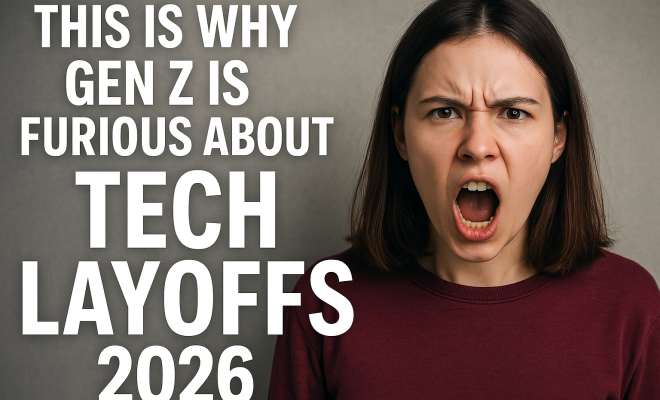
This Is Why Gen Z Is Furious About Tech Layoffs 2026
October 2026 has landed a fresh, hard blow to the tech industry, and honestly, it’s getting harder to ignore the pattern. We’re seeing a new wave of mass job cuts, with major players like Netflix, HubSpot, and Flock announcing significant workforce reductions. These aren’t just minor adjustments; we’re talking about thousands of employees suddenly facing an uncertain future. And while companies often try to frame these decisions in the most palatable way possible, there’s an undercurrent of genuine concern and, frankly, anger, especially among younger generations. The conversation around tech layoffs 2026 isn’t just about numbers; it’s deeply personal, touching on livelihoods, career aspirations, and the very fabric of our economic future.
What’s particularly striking this time around is the recurring whisper – or in some cases, outright shout – of AI being a primary driver. HubSpot, for instance, is openly talking about reorganizing its operations around ‘AI-driven customer outcomes.’ This isn’t an isolated incident. Oracle and Meta made similar pronouncements earlier in 2026, explicitly citing AI adoption as a reason for their workforce reductions. This narrative has ignited a pretty controversial debate: Is AI truly displacing jobs at an unprecedented rate, or is it becoming a convenient, almost futuristic-sounding excuse for companies grappling with broader economic pressures and an insatiable desire to cut costs? It’s a question that’s becoming increasingly difficult to answer, and it’s fueling a firestorm of discussion across social media, dinner tables, and, crucially, within the halls of academia and government.
The October 2026 Cull: Who’s Affected and Why
Let’s get specific about the latest cuts. Netflix, a company that has seen its share of ups and downs in recent years, is once again streamlining. While the exact departments affected haven’t always been disclosed with granular detail, these moves typically target areas deemed less critical to core operations or those where automation is perceived to offer efficiencies. Then there’s HubSpot, a powerhouse in marketing and sales software, which has articulated its restructuring around ‘AI-driven customer outcomes.’ This phrase is a corporate euphemism, signaling a shift where traditional roles might be re-evaluated in light of AI’s capabilities. If a task can be performed more efficiently, or even entirely, by an AI system, the human performing that task becomes redundant.
Flock, Airtable, and even the behemoth Amazon have also joined the list. Amazon, known for its vast workforce and relentless pursuit of efficiency, is no stranger to layoffs, but each new wave contributes to the overall sense of instability. These aren’t small, struggling startups; these are established players, some of whom were once seen as untouchable job creators. Their decisions ripple through the economy, affecting not just the laid-off employees but also their families, local communities, and the broader confidence in the tech sector. The rationale varies slightly from company to company, but a common thread often involves ‘efficiency gains,’ ‘strategic realignment,’ or a somewhat vague ‘optimization’ – all terms that, to a cynical ear, can sound a lot like ‘we’re cutting costs and using AI as a convenient scapegoat.’
The AI Alibi: Displacement or Just Good PR?
This brings us to the core of the controversy: the role of artificial intelligence. When companies like Oracle and Meta explicitly state that AI adoption is a primary driver for workforce reductions, it sends a powerful, unsettling message. It suggests that the future of work, for many, involves direct competition with intelligent machines. But is it truly AI displacing jobs, or is AI merely providing a new, high-tech veneer for what are fundamentally economic adjustments? It’s a nuanced question, and the answer probably lies somewhere in the middle.
On one hand, AI is becoming incredibly powerful. Tools capable of automating data analysis, content generation, customer service, and even complex coding tasks are no longer science fiction. It’s entirely plausible that certain roles, especially those involving repetitive or predictable cognitive tasks, are genuinely becoming obsolete due to AI. Think of a human performing tasks that AI can now do faster, cheaper, and with fewer errors. On the other hand, corporate decisions are complex. Economic slowdowns, rising interest rates, over-hiring during boom periods, and investor pressure for higher profits all play significant roles. Attributing layoffs solely to AI can be a convenient narrative, framing the cuts as forward-thinking and inevitable, rather than the result of potentially mismanaged growth or external economic headwinds. This ‘AI alibi’ allows companies to sidestep harder questions about their business strategies and instead point to an external, technological force.
Gen Z’s Growing Anger: A Generational Divide
Perhaps the most emotionally charged aspect of these tech layoffs 2026 is the reaction from Gen Z. This generation, often heralded as digital natives and future leaders, is reportedly showing growing anger and a significant decline in enthusiasm for AI. Why? Because they’re directly feeling the pinch. As companies cite AI for layoffs, Gen Z finds itself in direct competition with these advanced systems for entry-level positions. They’re entering a job market where the traditional pathways are being rerouted, and the very technology they were told would empower them is now seen as a threat.
We’re seeing a measurable decline in job vacancies in AI-exposed sectors, which disproportionately affects those just starting their careers. Imagine spending years in university, accumulating debt, and honing skills, only to find that the entry-level jobs you were aiming for are either gone or require a completely different skillset centered around ‘managing’ AI, rather than performing the core tasks. This isn’t just about economic anxiety; it’s about a profound sense of betrayal. They were promised a future where technology would open doors, not slam them shut. This generational divide in AI perception is becoming a critical social issue, one that’s fueling a lot of online discourse and shaping how younger demographics view the promises and perils of technological advancement.
The Ripple Effect: Beyond Just Tech
While we often focus on ‘tech layoffs,’ it’s crucial to understand that the ripple effect extends far beyond the immediate industry. When major tech companies shed thousands of jobs, it impacts a vast ecosystem. Think about the local businesses that rely on these employees – the coffee shops, restaurants, real estate markets, and service providers in tech hubs like Silicon Valley, Seattle, Austin, or even burgeoning tech cities globally. Reduced spending power from laid-off workers can quickly dampen local economies, creating a domino effect that impacts everyone, not just those directly employed in tech. (See: impact of AI on job market.)
Moreover, the psychological toll is immense. Job insecurity breeds anxiety, stress, and impacts mental health. It can lead to a decrease in consumer confidence, making people more hesitant to spend or invest, which further slows economic growth. The perception of instability in a traditionally high-growth sector like tech can also deter new talent from pursuing these careers, potentially creating skill gaps in the long run. This isn’t just a tech problem; it’s a societal one, and the longer these waves of layoffs continue, the deeper the impact will be felt across various sectors and communities.
Reskilling and Reinvention: The New Imperative
In the face of these seismic shifts, the call for reskilling and continuous learning has never been louder. For those affected by tech layoffs 2026, and indeed for anyone working in an AI-exposed field, adapting isn’t just an option; it’s a necessity. The skills that were valuable even five years ago might not be enough to secure a stable future today. This means a proactive approach to understanding AI, learning how to leverage it, and developing skills that are inherently human-centric – critical thinking, creativity, emotional intelligence, complex problem-solving, and leadership. For more context, see the $25 billion Meta privacy ruling.
Online education platforms are seeing a surge in interest as individuals scramble to acquire new competencies. Personal finance experts are counseling prudence and diversification of skills. The focus is shifting from simply knowing how to *do* a job to knowing how to *adapt* to jobs that are constantly evolving. This isn’t just about learning to code in a new language; it’s about fundamentally rethinking one’s career trajectory and being open to entirely new industries or roles. It’s a daunting prospect for many, but also an opportunity for reinvention and growth for those willing to embrace the challenge.
The Legal and Ethical Maze: Employment Law in the AI Age
The rise of AI-driven layoffs also brings a complex web of legal and ethical questions. Employment law, largely designed for a pre-AI world, is now struggling to keep pace. For instance, if an algorithm decides who is laid off, are there biases embedded in that algorithm that could lead to discriminatory practices? How do you challenge an AI’s decision in a legal context? What are the responsibilities of employers when implementing AI that directly results in job displacement?
These are not hypothetical questions; they are becoming real legal challenges. Employees who feel unfairly targeted, or who believe their layoff was a result of a biased AI system, may seek legal counsel. This creates a high-CPC (Cost Per Click) niche for legal services specializing in employment law, particularly those with expertise in technology and data ethics. Lawmakers and regulatory bodies are also grappling with how to update existing labor laws or create new ones that address the unique challenges posed by AI in the workplace. It’s a slow process, but one that absolutely needs to happen to ensure fair treatment and protect workers’ rights in this rapidly changing landscape.
Looking Ahead: The Evolving Tech Job Market
So, what does the future hold for the tech job market beyond tech layoffs 2026? It’s undeniably volatile, but it’s not without opportunity. While some roles are being automated, new ones are emerging – jobs focused on AI ethics, AI engineering, prompt engineering, data governance, and human-AI collaboration. The demand for creative roles, strategic thinkers, and professionals who can bridge the gap between technology and human needs will likely grow. The emphasis will shift from performing repetitive tasks to conceptualizing, designing, and managing intelligent systems.
Companies themselves are in a period of intense transformation. They’re trying to figure out how to best integrate AI without alienating their workforce or losing institutional knowledge. The companies that navigate this transition most effectively will likely be those that prioritize upskilling their existing employees, foster a culture of continuous learning, and view AI as a tool to augment human capabilities, rather than merely replace them. The tech job market isn’t shrinking; it’s evolving, and the key to thriving within it will be adaptability and a forward-looking mindset.
Navigating the New Normal: Advice for Job Seekers
For job seekers, particularly those affected by the recent tech layoffs 2026 or those just entering the market, a few strategies become paramount. First, diversify your skillset. Don’t put all your eggs in one basket. Learn about AI, even if you’re not an AI engineer. Understand its capabilities, its limitations, and how it might impact your chosen field. Second, network relentlessly. In an uncertain market, connections can be invaluable. Attend industry events, engage on professional platforms, and seek out mentors. Third, cultivate what are often called ‘soft skills’ – communication, teamwork, emotional intelligence, and critical thinking. These are uniquely human attributes that AI struggles to replicate.
Finally, be resilient and embrace continuous learning. The idea of a static career path is largely obsolete. You’ll likely need to reinvent yourself multiple times over the course of your working life. See these shifts not just as challenges, but as opportunities to learn new things, explore different paths, and build a more robust and adaptable career. It’s tough out there, no doubt, but proactive engagement and a willingness to adapt will be your greatest assets.
The tech layoffs of October 2026 serve as a stark reminder of the ongoing transformation within the industry. While the immediate pain is undeniable, particularly for Gen Z, this period also forces a critical re-evaluation of how we work, what skills we value, and how we integrate advanced technology into our professional lives. The debate over AI’s role in job displacement will continue, but one thing is clear: the future of work demands adaptability, lifelong learning, and a human-centric approach to technological progress.
Beyond the Headlines: A Look at the Macroeconomic Context
While company-specific decisions and AI’s influence are significant, it’s worth stepping back to consider the broader economic landscape influencing these tech layoffs in 2026. Interest rates, for example, have played a huge role. For years, tech companies enjoyed an era of cheap capital, allowing them to pursue aggressive growth strategies, often including substantial hiring. As central banks hiked interest rates to combat inflation, the cost of borrowing rose sharply. This made investors more cautious and less willing to fund unprofitable growth, pushing companies to prioritize profitability and efficiency over sheer expansion. This shift in investor sentiment, coupled with a general economic slowdown in several major markets, creates a powerful incentive for cost-cutting, regardless of AI’s capabilities. (See: tech layoffs and AI adoption.)
Furthermore, the post-pandemic hiring boom in tech was, in many ways, unsustainable. During the peak of remote work and digital transformation, companies hired rapidly to meet unprecedented demand. Now, with many economies normalizing and some sectors experiencing a contraction in demand, companies are right-sizing their workforces. It’s a painful correction, but one that many economists predicted. So, while AI provides a modern narrative, the underlying economic pressures are very real and would likely lead to workforce adjustments even without AI being a factor. This doesn’t lessen the impact on individuals, but it helps paint a more complete picture of the complex forces at play.
The Human-AI Collaboration Paradigm: A Glimmer of Hope?
Despite the anxieties, a growing school of thought suggests that the future isn’t purely about AI replacing humans, but about human-AI collaboration. This paradigm envisions AI as a powerful co-pilot, augmenting human capabilities rather than simply automating them away. For instance, a graphic designer might use AI to generate multiple design concepts in seconds, freeing them up to focus on the creative refinement and strategic direction. A software engineer could leverage AI to write boilerplate code, allowing them to concentrate on complex architectural challenges and innovative solutions. For more context, see the billion-dollar AI drug discovery problem.
This shift requires a different set of skills: prompt engineering (the ability to effectively communicate with AI), critical evaluation of AI outputs, and the capacity to integrate AI tools seamlessly into existing workflows. Companies that embrace this collaborative model, investing in training their existing workforce to work alongside AI, might find themselves with a competitive advantage. It’s about enhancing productivity and creativity, rather than just reducing headcount. This approach offers a more optimistic outlook for the tech job market beyond the immediate concerns of tech layoffs 2026.
Startups and Niche Markets: Where Opportunity Still Knocks
While the giants of tech are making headlines with layoffs, it’s important to remember that the tech ecosystem is incredibly diverse. Many smaller startups and niche technology companies are still actively hiring and even thriving. These companies often focus on highly specialized areas where AI is creating entirely new markets or solving problems that larger, more generalized companies haven’t addressed yet. Think of startups specializing in ethical AI auditing, bespoke AI model training for specific industries, or developing augmented reality solutions for niche applications.
These smaller players might not offer the same perceived stability as a FAANG company, but they often provide unparalleled opportunities for growth, innovation, and direct impact. Job seekers, especially those affected by tech layoffs 2026, might find success by looking beyond the traditional tech behemoths and exploring these emerging sectors. It requires a different kind of job search – one focused on identifying nascent trends and demonstrating adaptability – but it can be a fertile ground for new career paths.
The Role of Government and Policy in Mitigating Impact
The scale and potential disruption of AI-driven job displacement, exacerbated by the tech layoffs 2026, are increasingly drawing the attention of governments worldwide. Policymakers are grappling with how to respond effectively. Potential interventions include expanded unemployment benefits and retraining programs tailored to AI-era skills, similar to initiatives seen during past industrial revolutions. There’s also discussion around portable benefits, where benefits like healthcare and retirement savings are tied to the individual worker rather than a specific employer, offering greater security in a more fluid job market.
Some countries are even exploring the concept of universal basic income (UBI) as a potential safety net, though this remains a highly debated topic. Regulations around AI’s use in hiring and firing, ensuring fairness and transparency, are also on the agenda. While policy changes are typically slow, the growing societal impact of these trends means that governments can’t afford to ignore them. Their role will be crucial in shaping a future where technological progress benefits everyone, not just a select few.
FAQ: Understanding Tech Layoffs in 2026 and Beyond
Q1: What exactly caused the tech layoffs in October 2026?
A1: A combination of factors. Companies are citing AI adoption as a primary driver, aiming for ‘efficiency gains’ and ‘AI-driven outcomes.’ However, broader macroeconomic pressures like rising interest rates, a general economic slowdown, and a correction from over-hiring during the pandemic also play significant roles. It’s a complex interplay of technological advancement and economic realities.
Q2: Is AI truly taking jobs, or is it an excuse?
A2: It’s a bit of both. AI is indeed becoming powerful enough to automate many repetitive or predictable cognitive tasks, making certain roles less necessary. So, genuine displacement is occurring. However, companies also use AI as a convenient narrative to justify cost-cutting measures that might stem from other economic or strategic missteps. It frames the layoffs as an inevitable, forward-looking move rather than a reaction to less favorable conditions. For more context, see the disturbing truth about AI cheating in schools. (See: AI's effects on workforce health.)
Q3: Which types of jobs are most at risk from AI-driven displacement?
A3: Roles involving routine data entry, basic content generation, customer service with predictable queries, some administrative tasks, and even certain coding functions are particularly susceptible. Essentially, if a task is highly repetitive, process-driven, and can be broken down into clear logical steps, AI is likely to automate parts or all of it.
Q4: How is Gen Z specifically affected by these layoffs?
A4: Gen Z is entering a job market where entry-level positions in AI-exposed sectors are declining. They often face direct competition with AI systems for jobs they were trained for, leading to frustration and a sense of betrayal. They expected technology to open doors, not close them, and are experiencing significant economic anxiety right at the start of their careers.
Q5: What skills should I focus on to future-proof my career?
A5: Focus on skills that are uniquely human and difficult for AI to replicate. These include critical thinking, creativity, emotional intelligence, complex problem-solving, strategic thinking, and leadership. Also, learn how to work with AI: prompt engineering, understanding AI’s capabilities and limitations, and integrating AI tools into your workflow are becoming increasingly vital.
Q6: Are there any positive outcomes from these transformations?
A6: Yes, absolutely. While disruptive, these shifts are also creating entirely new job categories, such as AI ethics specialists, AI engineers, and human-AI collaboration managers. The emphasis on reskilling can lead to a more adaptable and diverse workforce. Companies that successfully integrate AI can become more efficient and innovative, potentially creating new products and services that benefit society.
Q7: What can governments do to help mitigate the impact of AI layoffs?
A7: Governments can implement expanded retraining programs, offer portable benefits (like healthcare tied to the individual, not the employer), explore universal basic income, and develop new labor laws to address AI’s role in the workplace. Regulations around AI bias and transparency in hiring/firing decisions are also crucial to ensure fairness and protect workers’ rights.
Q8: Should I avoid a career in tech because of these layoffs?
A8: Not necessarily. The tech industry is constantly evolving, and while it’s currently experiencing a turbulent period, it remains a sector of immense innovation and opportunity. The key is to be adaptable, continuously learn new skills, and focus on roles that involve human-AI collaboration or areas where human creativity and critical thinking are paramount. The tech job market isn’t shrinking; it’s transforming.
Trending Now
- the complete explanation
- our breakdown of baffling: the $25 billion meta privacy ruling that could reshape tech accountability
- our breakdown of the billion-dollar ai drug discovery problem nobody’s talking about
- our breakdown of the troubling truth about your digital games ownership
- the complete explanation
Frequently Asked Questions
Why are tech layoffs happening in 2026?
Tech layoffs in 2026 are primarily driven by major companies like Netflix and HubSpot announcing significant workforce reductions. These layoffs are attributed to a combination of economic pressures and the increasing adoption of AI technologies, which many companies cite as a reason for reorganizing operations and cutting costs.
How is Gen Z reacting to tech layoffs?
Gen Z is reacting with anger and concern to the recent tech layoffs, as these job cuts impact their livelihoods and career aspirations. The layoffs are perceived not just as numbers but as a threat to their economic future, igniting discussions about the role of AI in displacing jobs.
What companies are laying off employees in 2026?
In 2026, major companies such as Netflix, HubSpot, and Flock have announced significant layoffs. These reductions affect thousands of employees and are part of a broader trend in the tech industry as companies seek to streamline operations and adapt to changing market conditions.
Is AI responsible for job losses in tech?
AI is often cited as a primary driver behind job losses in the tech industry, with companies like HubSpot and Oracle reorganizing around AI-driven outcomes. However, this has sparked debate on whether AI is genuinely displacing jobs or if it serves as an excuse for companies facing economic challenges.
What impact do tech layoffs have on the economy?
Tech layoffs can have a significant impact on the economy by increasing unemployment rates and affecting consumer confidence. The emotional toll on affected employees, especially younger generations, raises concerns about long-term career stability and economic prospects, contributing to broader discussions on job security.
What did we miss? Let us know in the comments and join the conversation.