Perovskite Solar Cells: A Breakthrough Revolutionizing Clean Energy
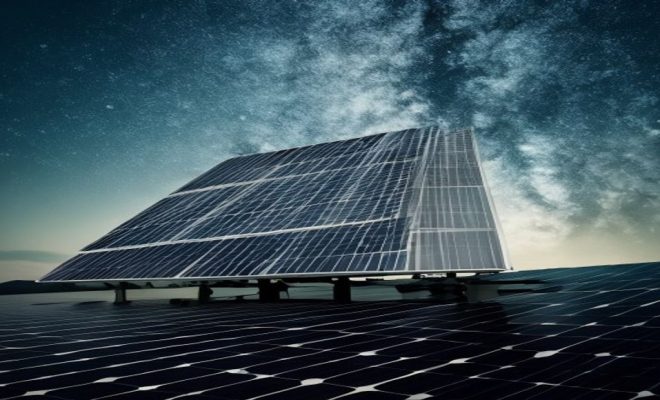
For decades, solar power has been the quiet champion of renewable energy, steadily growing but often overshadowed by the sheer scale of fossil fuels. But what if I told you that a breakthrough is happening right now, one that could fundamentally reshape our energy landscape faster than anyone thought possible? We’re talking about a scientific leap that’s pushing solar panel efficiency to astonishing new heights, making clean energy not just competitive, but potentially the dominant force.
The buzz in the scientific community, and increasingly in the investment world, is all about perovskite solar cells. These aren’t your grandpa’s silicon panels; they represent a new generation of solar technology that’s achieving efficiencies previously thought impossible outside a lab. And now, those lab results are rapidly translating into real-world modules, promising a future where solar energy is cheaper, more accessible, and far more potent. This isn’t just an incremental improvement; it’s a genuine revolution in how we harness the sun’s power, sparking what some are calling an ‘investment frenzy’ in green tech. Let’s dive into the specifics of this groundbreaking development.
1. Perovskite: The New Material on the Block: A Paradigm Shift in Solar Cell Chemistry
When you think of solar panels, you probably picture those rigid, dark blue or black squares made from silicon. Silicon has been the workhorse of the solar industry for over half a century, and for good reason: it’s abundant, stable, and relatively efficient. However, silicon also has its limitations. Its manufacturing process is energy-intensive and requires high temperatures, contributing to significant production costs. Plus, there’s a theoretical limit to how much sunlight a single-junction silicon cell can convert into electricity, known as the Shockley-Queisser limit, which hovers around 33.7%.
Enter perovskites. These are a class of materials, often hybrid organic-inorganic lead or tin halide-based materials, that have a specific crystal structure similar to the naturally occurring mineral perovskite. What makes them so exciting for solar applications is their incredible ability to absorb light and convert it into electrical current with remarkable ease. They are fantastic at handling a broad spectrum of light and have excellent charge carrier mobility. This material class has only been seriously explored for solar cells for about a decade, but its progress has been nothing short of meteoric, leaving traditional silicon research in the dust in terms of speed of development.
2. Breaking the 30% Barrier: Unprecedented Solar Panel Efficiency
This is where the rubber truly meets the road. Recent breakthroughs have pushed the energy-conversion efficiency of perovskite solar cells past critical psychological and practical thresholds. Researchers have announced lab results for tandem cell configurations — essentially stacking a perovskite layer on top of a traditional silicon layer — that exceed 30%. Think about that for a moment: over 30% of the sunlight hitting the panel is being converted into usable electricity. This is a monumental achievement.
To put this into perspective, most commercially available silicon solar panels today typically range from 17% to 22% efficiency. While high-end premium silicon panels might touch 23-24%, 30% was largely considered the domain of highly specialized, expensive cells used in niche applications like space. This leap in solar panel efficiency means that for the same footprint, a perovskite-based panel could generate significantly more power, making solar viable in locations with limited space or where maximizing output is crucial. Imagine needing fewer panels to power your home or business – that’s the promise here.
3. Commercial Modules Closing the Gap: From Lab to Rooftop
Lab results are exciting, but what really matters for the clean energy transition is how quickly these innovations can move from the laboratory bench to commercial production. And this is another area where perovskites are shining. While the 30%+ figures are for research-grade tandem cells, commercial perovskite modules are already demonstrating efficiencies in the 24-28% range. This is incredibly significant because it means the technology is maturing rapidly enough for large-scale deployment.
These commercial module efficiencies are not far off from the best silicon panels on the market, and in some cases, they’re surpassing them. This swift transition from cutting-edge research to viable commercial products underscores the potential of perovskites to disrupt the existing solar market. It’s a testament to the intense research and development efforts globally, with companies and institutions pouring resources into perfecting the manufacturing processes and improving the stability and longevity of these new cells. You’re seeing a rapid acceleration that traditional silicon never experienced at this stage of its development.
4. Cost-Effectiveness and Simpler Production: Democratizing Solar Energy
Beyond raw efficiency, one of the most compelling aspects of perovskite technology is its potential for dramatically lower manufacturing costs. Traditional silicon panel production is a complex, multi-step process that involves high temperatures, vacuum conditions, and expensive purification of silicon ingots. This contributes significantly to the final price tag of a solar installation.
Perovskite cells, on the other hand, can be manufactured using much simpler, lower-temperature processes, often employing solution-based methods like printing or coating. Think about how much cheaper it is to print something compared to carving and refining a crystal! This dramatically reduces both the energy required for production and the capital investment needed for manufacturing facilities. If these cost savings translate to the consumer, it could make solar energy accessible to a far wider demographic, accelerating adoption in developing nations and making rooftop solar a no-brainer for millions more households and businesses worldwide. This is a key factor in achieving true market disruption and driving down the levelized cost of electricity (LCOE) for solar. (See: Perovskite solar cell overview.)
5. Reduced Defects and Enhanced Stability: Overcoming Early Challenges
Early perovskite research, while promising in terms of efficiency, faced significant hurdles, primarily related to stability and defect density. Perovskite materials were known to degrade relatively quickly when exposed to moisture, oxygen, or heat, limiting their real-world applicability. Additionally, defects within the crystal structure could trap charge carriers, reducing overall efficiency and lifetime.
The recent breakthroughs specifically address these challenges. Researchers have developed innovative methods to greatly reduce defects in the perovskite layers, leading to more robust and higher-performing cells. This involves advanced material engineering and passivation techniques that effectively ‘heal’ or prevent the formation of these detrimental defects. Concurrently, significant progress has been made in encapsulation technologies and material compositions that protect the perovskite layer from environmental degradation. These advancements are critical for perovskites to achieve the long lifetimes (20-25 years) that consumers expect from solar panels, paving the way for widespread commercial adoption.
6. Tandem Cell Configurations: A Synergistic Approach to Solar Panel Efficiency
One of the most exciting avenues for perovskite solar panel efficiency is their integration into tandem cell configurations. Instead of replacing silicon entirely, perovskites can complement it beautifully. Imagine a solar panel where a thin, transparent layer of perovskite sits on top of a conventional silicon solar cell. The perovskite layer is optimized to absorb the high-energy blue and green light from the sun, while allowing the lower-energy red and infrared light to pass through to the silicon layer below, which is excellent at converting those wavelengths.
This ‘best of both worlds’ approach allows the tandem cell to capture a much broader spectrum of sunlight, significantly boosting overall energy conversion. This is precisely how researchers have achieved efficiencies exceeding 30%. It leverages the strengths of both materials, overcoming the individual limitations of each. This approach not only pushes the theoretical limits of solar panel efficiency but also provides a clear pathway for perovskites to integrate into and enhance the existing solar infrastructure, rather than requiring a complete overhaul.
7. Accelerating the Clean Energy Transition: A Global Impact
The implications of these breakthroughs extend far beyond laboratory benches and balance sheets. Higher solar panel efficiency, coupled with lower manufacturing costs, means that solar energy can become a primary power source much faster than previously projected. This is critical for meeting global climate goals and transitioning away from fossil fuels.
More efficient and affordable solar means more rapid deployment of utility-scale solar farms, more accessible rooftop solar for homeowners, and more opportunities for off-grid solutions in remote areas. It reduces our reliance on volatile fossil fuel markets, enhances energy security for nations, and significantly lowers carbon emissions. This isn’t just about making a better solar panel; it’s about fundamentally altering the global energy mix and providing a powerful tool in the fight against climate change. The speed at which this technology is advancing suggests that the clean energy transition might just get a turbo boost.
8. Sparking an ‘Investment Frenzy’: The Green Tech Gold Rush
When you have a technology that promises higher performance, lower costs, and addresses critical global challenges, it’s bound to attract significant financial interest. The news of these perovskite breakthroughs has indeed sparked what many are calling an ‘investment frenzy’ in green tech. Venture capitalists, institutional investors, and even individual stock traders are keenly watching this space.
Companies involved in perovskite research, manufacturing, and integration are seeing increased valuations and funding rounds. This influx of capital is crucial for scaling up production, further refining the technology, and bringing these advanced solar solutions to market at a rapid pace. For investors, it represents an opportunity to be part of the next wave of energy innovation, potentially yielding substantial returns as the world pivots towards sustainable power. Keep an eye on the public markets for companies that are positioned to capitalize on this next generation of solar panel efficiency.
9. The Road Ahead: Challenges and Opportunities: What’s Next for Solar Panel Efficiency?
While the excitement around perovskites is palpable, it’s important to remember that every revolutionary technology faces challenges on its path to widespread adoption. For perovskites, ongoing research is still focused on further improving long-term stability under real-world conditions, scaling up production to truly industrial levels, and managing any potential environmental concerns related to the materials used (for example, the lead content in some perovskite formulations, though lead-free alternatives are also being explored).
However, the rapid progress we’ve seen suggests these challenges are being tackled head-on with remarkable speed. The opportunities, frankly, are immense. We’re talking about a future where solar energy isn’t just a niche alternative but the default, most economical, and most efficient choice for power generation globally. These advancements in solar panel efficiency are not just a scientific curiosity; they are a beacon of hope for a sustainable future, promising to deliver clean, abundant energy to every corner of the planet.
10. Beyond the Lab: Real-World Performance and Degradation
It’s one thing to achieve record efficiencies in a meticulously controlled laboratory setting, but it’s another entirely to maintain that performance under the unpredictable conditions of a rooftop or a solar farm. Real-world solar panel efficiency is affected by a multitude of factors that lab tests often minimize or ignore. We’re talking about temperature fluctuations, humidity, UV radiation exposure, dust accumulation, and even the angle of the sun throughout the day and year. (See: Nature article on solar technology.)
Traditional silicon panels have a well-understood degradation rate, typically losing about 0.5% to 1% of their efficiency per year. This is factored into their 25-year warranties. For perovskites, demonstrating comparable long-term stability in the field is paramount for broad market acceptance. Researchers are actively developing new encapsulation methods, such as atomic layer deposition and advanced polymers, to create impenetrable barriers against moisture and oxygen. They’re also tinkering with the perovskite material itself, introducing additives or modifying the crystal structure to make it inherently more robust against heat and light-induced degradation. The goal isn’t just to match silicon’s lifespan, but to potentially exceed it, pushing the boundaries of what’s expected from a solar panel.
11. Flexible and Transparent Solar: New Applications Emerging
The unique properties of perovskites aren’t just about raw power conversion; they open up entirely new avenues for solar energy applications. Unlike rigid silicon wafers, perovskite films can be incredibly thin and flexible. Imagine solar cells that can be integrated into the fabric of clothing, painted onto irregular surfaces, or even rolled up and deployed like a banner. This flexibility dramatically expands where solar power can be used, moving it beyond traditional flat, sunny rooftops. See also renewable energy advancements.
Even more intriguing is the potential for transparent perovskite solar cells. By adjusting the material’s composition and thickness, researchers can create cells that are partially or largely see-through, allowing visible light to pass through while still converting a significant portion of the invisible spectrum (UV and infrared) into electricity. This opens up possibilities for power-generating windows in skyscrapers, greenhouses, or even vehicle sunroofs. Your office building could become its own power plant, subtly generating electricity without altering its aesthetic. This diversification of application is a huge part of the perovskite revolution, moving solar from a discrete energy source to an integrated building material.
12. Environmental Considerations and Sustainability
As with any new technology, especially one with such immense potential, it’s crucial to consider its environmental footprint. Many high-performing perovskite formulations currently use lead. While the amount of lead in a single cell is minuscule, and encapsulation techniques prevent its release, scaling to gigawatt levels of production requires a responsible approach to material sourcing, manufacturing, and end-of-life recycling. The industry is very much aware of this and is proactively working on solutions.
One major area of research is the development of lead-free perovskites, often using tin as a substitute. While these alternatives haven’t quite matched the efficiency of their lead-containing counterparts yet, rapid progress is being made. Beyond lead content, the solution-based manufacturing processes for perovskites generally require less energy and fewer toxic solvents than silicon production, which is a significant environmental advantage. The lifecycle assessment of perovskite solar cells, from raw material extraction to manufacturing and eventual disposal or recycling, is a key focus to ensure that this leap in solar panel efficiency is also a leap in overall sustainability.
13. The Role of AI and Machine Learning in Accelerating Development
The speed at which perovskite technology has progressed is truly remarkable, and a significant factor in this acceleration is the increasing integration of artificial intelligence (AI) and machine learning (ML) into materials science research. AI algorithms can sift through vast datasets of experimental results, identify subtle correlations, and predict optimal material compositions or fabrication parameters much faster than human researchers ever could.
For example, ML models can simulate how different perovskite structures will respond to light or heat, guiding experiments and reducing the need for countless trial-and-error tests. They can optimize doping strategies, predict defect formation, and even suggest new precursor materials. This computational power acts as a turbocharger for innovation, allowing scientists to explore the vast chemical and structural landscape of perovskites with unprecedented efficiency. It’s not just about better materials; it’s about smarter, faster material discovery, ensuring that the solar panel efficiency curve continues its steep upward trajectory.
Frequently Asked Questions About Solar Panel Efficiency
Q1: What is solar panel efficiency, and why does it matter?
Solar panel efficiency measures how much of the sunlight hitting a panel is converted into usable electricity. If a panel has 20% efficiency, it means 20% of the sun’s energy it receives is turned into power. This matters because higher efficiency means you need fewer panels to generate the same amount of electricity, which saves space, reduces installation costs, and can be crucial for areas with limited roof space or specific energy demands. It directly impacts how much energy you can harvest from a given area.
Q2: How do perovskite solar cells differ from traditional silicon solar cells?
Traditional silicon cells are made from rigid, highly purified silicon wafers, requiring energy-intensive, high-temperature manufacturing. They excel at converting red and infrared light. Perovskite cells use a different class of materials with a unique crystal structure. They can be made using simpler, lower-temperature, solution-based processes (like printing), and they’re particularly good at absorbing the high-energy blue and green parts of the light spectrum. Their flexibility and potential for transparency are also key differentiators. (See: ScienceDirect on solar energy advancements.)
Q3: What is a “tandem cell configuration,” and how does it boost solar panel efficiency?
A tandem cell configuration is like stacking two different types of solar cells on top of each other. In the context of perovskites, it often means placing a perovskite layer on top of a silicon layer. The perovskite layer captures the high-energy light (blue, green) that silicon isn’t as good at converting, while letting the lower-energy light (red, infrared) pass through to the silicon layer, which then converts it. This ‘best of both worlds’ approach allows the combined cell to capture a much broader spectrum of sunlight, significantly increasing overall efficiency beyond what either material could achieve alone.
Q4: Are perovskite solar cells available commercially right now?
While the absolute record-breaking efficiencies are still primarily in research labs, commercial perovskite modules are indeed emerging and showing promising efficiencies (in the 24-28% range). Several companies are moving towards large-scale production, with some pilot projects and niche applications already in deployment. We’re on the cusp of seeing them more widely available, especially as manufacturing scales up and long-term stability is fully validated.
Q5: What are the main challenges for perovskite technology before widespread adoption?
The primary challenges include ensuring long-term stability and durability under real-world weather conditions (heat, humidity, UV exposure) for 20-25 years, scaling up manufacturing processes from lab to industrial gigawatt levels, and addressing environmental concerns related to the lead content in some formulations (though lead-free alternatives are being developed). These are active areas of research and development, and significant progress is being made rapidly.
Q6: Will perovskite solar cells replace silicon panels entirely?
It’s more likely that perovskites will complement silicon rather than completely replace it, at least in the near to medium term. The tandem cell approach, where perovskites enhance silicon’s performance, is a very strong contender for future high-efficiency panels. Perovskites also open up new applications (flexible, transparent solar) where silicon isn’t suitable, carving out their own market segments. So, you’ll probably see a hybrid future with both technologies coexisting and improving together.
Q7: How do temperature and environmental factors affect solar panel efficiency?
All solar panels experience a slight drop in efficiency as their temperature increases. This is known as the temperature coefficient, and it’s typically expressed as a percentage loss per degree Celsius above 25°C (77°F). Humidity, dust, and shading also reduce real-world output. Perovskites are being engineered to have better temperature stability than some silicon types, and their thin-film nature might also allow for better heat dissipation in some configurations, which is a significant advantage in hot climates.
Q8: What is the “Shockley-Queisser limit”?
The Shockley-Queisser limit is a theoretical maximum efficiency for a single-junction solar cell (like a standard silicon panel) based on fundamental physics. It’s around 33.7% for silicon, meaning even a perfect silicon cell can’t convert more than about a third of the sun’s energy into electricity because of how photons interact with the material and energy losses. Tandem cells bypass this limit by using multiple junctions that each absorb different parts of the light spectrum, hence their ability to exceed 30%.
The transition to a truly renewable energy future has never looked more promising, and perovskites are undeniably leading the charge. Keep watching this space; the sun, it seems, is only getting brighter for solar power.
Trending Now
Frequently Asked Questions
What are perovskite solar cells?
Perovskite solar cells are a new generation of solar technology that utilize a unique class of materials, often hybrid organic-inorganic lead or tin halide-based compounds. They are achieving unprecedented efficiencies in converting sunlight into electricity, surpassing traditional silicon panels and promising a more cost-effective and accessible solar energy future.
How do perovskite solar cells compare to traditional silicon panels?
Unlike traditional silicon panels, which have limitations in efficiency and require energy-intensive manufacturing, perovskite solar cells offer higher efficiency rates and lower production costs. This shift represents a significant advancement in solar technology, making clean energy more competitive and potentially dominant in the market.
What is the significance of the Shockley-Queisser limit?
The Shockley-Queisser limit refers to the theoretical maximum efficiency of a single-junction solar cell, capped at around 33.7% for silicon. Perovskite solar cells challenge this limit by achieving higher efficiencies, indicating a revolutionary potential for solar energy conversion.
Why is there an investment frenzy in green technology?
The recent breakthroughs in perovskite solar cell technology have sparked a surge of interest and investment in green tech. As these advancements promise cheaper and more efficient solar energy solutions, investors are eager to capitalize on the potential for significant returns in the renewable energy sector.
What advancements are being made in solar panel efficiency?
Recent advancements in solar panel efficiency are primarily driven by the development of perovskite solar cells, which are achieving efficiencies previously thought impossible. These developments are reshaping the energy landscape, making solar power a more viable and dominant energy source.
What's your take on this? Share your thoughts in the comments below — we read every one.