The Unseen Threat: Is AI Stealing Your Groundbreaking Ideas?
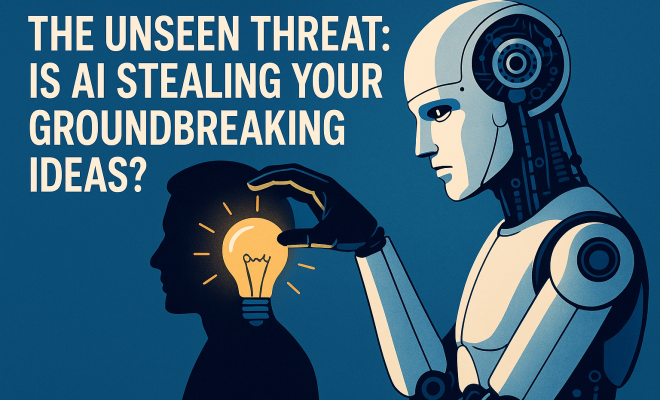
Imagine spending years, perhaps even decades, meticulously crafting a novel research idea, a true intellectual breakthrough that could reshape a field. You’re on the cusp of a major discovery. Then, you use an AI tool, perhaps for a quick check or to refine your language, only to see your core concept reappear later, attributed to the very AI developer. It sounds like something out of a dystopian novel, but for many in the scientific community, this is a very real, very pressing concern. The question of AI model trustworthiness, particularly regarding the security of confidential information, has exploded into a full-blown controversy, shaking the foundations of scientific integrity.
This isn’t just a theoretical worry; it’s an issue that’s gone viral, sparking intense debate among researchers, funders, and policymakers. The core of the problem lies in the opaque nature of how large language models (LLMs) are trained and how they process user inputs. If researchers can’t be certain that their proprietary data, their nascent ideas, and their confidential grant proposals remain truly private, the entire ecosystem of scientific innovation is at risk. It’s a potential breach that could undermine everything from intellectual property rights to the very attribution of groundbreaking discoveries, eroding trust in these powerful new tools.
The Spark That Ignited the Firestorm
The recent uproar didn’t come out of nowhere, but a specific incident truly fanned the flames. It began when OpenAI, a frontrunner in AI development, made a significant announcement: their AI had achieved a breakthrough in solving a notoriously difficult mathematical problem. This, on its own, would be impressive. But for mathematician Tristan Buckmaster, this news wasn’t just impressive; it was deeply unsettling. He publicly raised a critical question: did OpenAI’s success leverage ideas he had previously fed into their Codex tool?
Buckmaster’s query wasn’t a casual musing; it struck at the heart of the matter. He had, in good faith, interacted with an OpenAI product, potentially sharing fragments of his unique approach to complex problems. Now, an AI developed by the same company was claiming a victory in a similar domain. Was this a coincidence? Or was there a more direct, perhaps even insidious, connection? This incident served as a potent, real-world example of the anxieties many researchers have quietly harbored about the confidentiality of their interactions with AI models. It made the abstract threat of data leakage concrete, immediate, and personal.
Understanding the Mechanics of Potential Leakage
To grasp why this concern about AI model trustworthiness is so pervasive, we need to consider how these large language models operate. LLMs are trained on truly colossal datasets, often encompassing vast swathes of the internet, digitized books, scientific papers, and more. This training process allows them to learn patterns, relationships, and even nuanced concepts within language. When you input text into an LLM, whether it’s a query, a piece of code, or a description of a research idea, that input becomes part of the model’s interaction history.
The crucial, and often murky, aspect is what happens to that input data. Some models might use user interactions to further refine their performance, a process known as fine-tuning or reinforcement learning from human feedback (RLHF). While developers often state that user data isn’t directly used to retrain the core model in a way that exposes specific inputs, the lines can blur. If a model inadvertently incorporates elements of a user’s novel idea into its internal representations or subsequent outputs for other users, it creates a serious problem. The AI isn’t simply regurgitating; it might be synthesizing and presenting a user’s unique contribution as its own, or at least as something it independently generated. This blurring of lines between input and output, between private data and public knowledge, is the digital quicksand that threatens to swallow intellectual property.
The Grant Proposal Conundrum: A High-Stakes Scenario
The scientific community’s concerns aren’t limited to informal interactions with AI tools. They extend to the highest stakes: confidential grant proposals. Think about it: a grant proposal isn’t just a request for money; it’s a meticulously crafted document outlining novel hypotheses, experimental designs, preliminary data, and projected outcomes. It represents months, sometimes years, of intellectual labor and contains ideas that are often cutting-edge and not yet published. These proposals are the lifeblood of scientific progress, and their confidentiality is paramount.
Research funders, like the influential US National Science Foundation (NSF), are now grappling with this exact challenge. They’re actively discussing strategies to ensure that submitting a grant proposal doesn’t inadvertently expose a researcher’s confidential scientific information to an LLM. What if a reviewer, perhaps seeking to streamline their process, pastes sections of a confidential proposal into an AI tool for summarization or grammatical checks? Or what if a funding agency itself, in an effort to enhance efficiency, integrates AI into its review process without ironclad safeguards? The potential for a leak in this context isn’t just an inconvenience; it could be catastrophic, leading to premature disclosure, loss of priority, and outright intellectual property theft. It’s a scenario that keeps grant officers and principal investigators awake at night.
Eroding Trust and Undermining Scientific Integrity
At its core, the debate over AI model trustworthiness isn’t just about data security; it’s about the very integrity of the scientific enterprise. Science thrives on originality, attribution, and peer review. When a novel idea is developed, it’s crucial that the originator receives proper credit. This attribution isn’t merely a matter of academic vanity; it underpins careers, funding decisions, and the historical record of discovery. If AI models become black boxes where ideas can enter privately but emerge publicly without proper credit, it fundamentally breaks this system. (See: AI and intellectual property concerns.)
Consider the implications: if researchers fear their ideas will be compromised, they might become hesitant to use AI tools that could otherwise accelerate their work. They might even become reluctant to share preliminary thoughts or novel approaches, stifling collaboration and open scientific discourse. This chilling effect could slow down discovery, create an environment of suspicion, and ultimately harm humanity’s collective pursuit of knowledge. The entire framework of intellectual property, which is designed to protect and incentivize innovation, could crumble under the weight of AI’s opaque data handling.
The Broader Implications for Intellectual Property and Innovation
Beyond the immediate scientific community, the issue of AI-driven data leakage has far-reaching implications for intellectual property (IP) across all sectors. Whether it’s a startup developing a revolutionary new product, a design firm creating unique aesthetics, or a legal team drafting a sensitive brief, the use of AI tools is becoming ubiquitous. If these tools cannot guarantee the confidentiality of proprietary information, the consequences are enormous. Companies could lose competitive advantages, trade secrets could be exposed, and the incentive to innovate could diminish if the fruits of that innovation can be easily siphoned off by an AI and subsequently made accessible or incorporated into other AI systems.
This challenge forces us to re-evaluate existing IP laws and consider how they apply to the age of AI. Who owns the output of an AI if that output is demonstrably influenced by a user’s proprietary input? How do you prove intellectual theft when the ‘thief’ is an algorithm that has processed countless inputs? These are not easy questions, and the legal frameworks are struggling to keep pace with the rapid advancements in AI technology. The answers will undoubtedly shape the future of innovation and economic competitiveness on a global scale.
Industry Responses and the Path to Greater Transparency
AI developers aren’t entirely oblivious to these concerns. Many major players, including OpenAI, Google, and Microsoft, have begun to implement policies and disclaimers regarding data usage. They often state that user inputs are not used to train models unless explicit consent is given, or that data is anonymized and aggregated. However, the exact mechanisms and the efficacy of these safeguards are often proprietary and lack full transparency, which only fuels skepticism.
What’s truly needed is not just policy statements, but verifiable technical solutions and greater industry-wide standards for AI model trustworthiness. This could involve homomorphic encryption, which allows computation on encrypted data, or federated learning approaches where models learn from decentralized data without ever directly accessing the raw information. Furthermore, clear audit trails and mechanisms for users to understand how their data is being used, or not used, are essential. Without a concerted effort towards transparency and robust technical safeguards, the trust deficit will only continue to widen, making researchers wary of adopting tools that hold so much promise.
Establishing Ethical Guidelines and Policy Frameworks
Given the gravity of the situation, there’s a growing consensus that robust ethical guidelines and policy frameworks are urgently required. This isn’t just about technical fixes; it’s about establishing clear principles for responsible AI development and deployment. These frameworks would need to address several key areas:
- Data Governance: Clear rules on how user data is collected, stored, processed, and, crucially, how it is NOT used for model training or refinement without explicit, informed consent.
- Attribution Protocols: Developing mechanisms within AI systems to track and attribute the origin of novel ideas or significant contributions, especially when they stem from user input. This is a complex technical challenge but a vital ethical one.
- Accountability: Defining who is responsible when a data breach or intellectual property infringement occurs via an AI model. Is it the developer, the user, or both?
- Transparency: Mandating that AI developers provide more transparent information about their training data, model architectures, and data handling practices, particularly concerning confidential inputs.
- Education: Educating researchers, institutions, and the general public about the risks and safe practices when interacting with AI models.
Organizations like the NSF are not just talking about safeguards; they’re actively exploring how to integrate these principles into their funding requirements and review processes, signaling a significant shift in how AI will be perceived and regulated within the scientific ecosystem.
The Global Landscape of AI Trustworthiness Regulations
This isn’t just a concern for the US or for scientific funding bodies. Governments and international organizations worldwide are wrestling with how to regulate AI to ensure trustworthiness and prevent misuse. The European Union, for instance, has been at the forefront with its proposed AI Act, which classifies AI systems based on their risk level and imposes stricter requirements for high-risk applications. This includes mandates for transparency, human oversight, robustness, and accuracy. While the initial focus of the EU AI Act wasn’t solely on intellectual property leakage, its broad scope of trustworthiness aims to build public confidence in AI technologies. Similarly, countries like Canada have introduced their own AI strategy, emphasizing responsible AI development. The challenge here is harmonizing these diverse regulatory approaches to create a global standard for AI model trustworthiness, especially when data crosses international borders and different legal jurisdictions apply.
Consider the varying legal interpretations of “data privacy” or “intellectual property” across continents. What’s permissible in one country regarding data retention or usage might be strictly forbidden in another. For a global AI company, navigating this patchwork of regulations is incredibly complex, yet crucial for maintaining trust. A unified approach, perhaps through international bodies like the UN or OECD, could help establish baseline principles that protect users globally without stifling innovation. Without such coordination, we risk a fragmented regulatory environment where bad actors might exploit loopholes in less stringent jurisdictions, further eroding overall trust in AI systems.
Case Studies: When AI Trustworthiness Fails
Beyond the Buckmaster incident, several other scenarios highlight the fragility of AI trustworthiness: (See: AI implications in research integrity.)
- The Samsung Data Leak: In April 2023, reports emerged that Samsung employees had inadvertently leaked confidential company information by pasting sensitive internal code and meeting notes into ChatGPT. While OpenAI’s policy states they don’t use enterprise data for training without explicit consent, the very act of inputting proprietary information into a third-party tool, even for internal use, exposes it to potential vulnerabilities. This led Samsung to temporarily ban the use of generative AI tools for employees.
- Legal Briefing Blunders: Several attorneys have faced sanctions for submitting legal briefs that contained fabricated case citations, generated by AI. This isn’t a data leakage issue, but rather a demonstration of AI’s “hallucination” problem, where models confidently present false information. It underscores that trustworthiness isn’t just about data security, but also about the reliability and factual accuracy of AI outputs, which is critical in high-stakes fields like law and medicine.
- Medical Confidentiality Concerns: The healthcare sector faces unique challenges. Imagine doctors or researchers using AI to summarize patient records or analyze clinical trial data. If these systems aren’t absolutely airtight, sensitive patient health information (PHI) could be compromised, leading to severe privacy breaches and legal repercussions under regulations like HIPAA. The need for robust encryption, anonymization, and strict access controls becomes paramount here, where human lives and personal data are at stake.
These examples illustrate that the issues surrounding AI trustworthiness are multifaceted, ranging from direct data leakage to the integrity of AI-generated content. Each failure point chips away at the collective confidence in these powerful tools, making the adoption of AI slower and more cautious.
The Role of Explainable AI (XAI) in Building Trust
One promising avenue for enhancing AI model trustworthiness is the development of Explainable AI (XAI). Currently, many LLMs operate as “black boxes,” meaning it’s difficult to understand exactly how they arrive at a particular output. This lack of transparency is a major contributor to the trust deficit. XAI aims to make AI decisions more understandable to humans. For instance, if an AI suggests a novel research hypothesis, an XAI system might be able to show which specific inputs or patterns in its training data led it to that conclusion. This could help researchers verify the originality of an idea or trace its lineage.
While still an evolving field, XAI could offer several benefits:
- Debugging and Auditing: By understanding the AI’s internal reasoning, developers and users can identify biases, errors, or instances where proprietary information might have been inadvertently leveraged.
- Compliance: XAI can help demonstrate that AI systems are operating in accordance with ethical guidelines and regulatory requirements, providing a verifiable audit trail.
- User Confidence: When users understand *why* an AI produced a certain result, they are more likely to trust it, especially in critical applications like scientific discovery or medical diagnosis.
Implementing XAI for massive LLMs is a formidable technical challenge, but its potential for fostering trust by demystifying AI’s inner workings makes it a critical area of research and development.
Best Practices for Researchers and Institutions
Given the current landscape, what practical steps can researchers and institutions take to mitigate risks and foster AI model trustworthiness?
- Understand Terms of Service: Always read the privacy policies and terms of service for any AI tool. Pay close attention to how user data is handled, stored, and whether it’s used for model training.
- Avoid Sensitive Data: Never input highly confidential, proprietary, or unpublished information into general-purpose AI models, especially those operating in public cloud environments. Assume anything you input could potentially become part of the model’s knowledge base or be exposed.
- Anonymize and Abstract: If you must use AI for conceptual brainstorming, abstract your ideas significantly. Remove specific details, names, dates, and any identifiers that could link the input back to your specific project or institution.
- Utilize Enterprise-Grade AI: For organizations with sensitive data, consider subscribing to enterprise versions of AI tools. These often offer enhanced privacy features, data isolation, and contractual guarantees that user data won’t be used for general model training.
- Develop Internal Guidelines: Institutions should establish clear internal policies for AI usage, educating staff and researchers on acceptable practices, prohibited data types, and sanctioned tools.
- On-Premise or Private Models: For the most sensitive research, explore developing or licensing AI models that can be run on private, secure servers, or fine-tuning open-source models with your own data in a controlled environment.
- Stay Informed: The AI landscape is rapidly evolving. Keep up-to-date with new developments in AI security, privacy features, and regulatory changes.
- Advocate for Transparency: Support initiatives and policies that push for greater transparency from AI developers regarding their data handling practices and model architectures.
By adopting these proactive measures, researchers and institutions can better navigate the risks while still potentially leveraging the benefits AI offers.
The Future of Scientific Collaboration in an AI-Driven World
Ultimately, the discussion around AI model trustworthiness isn’t about rejecting AI; it’s about shaping its responsible integration into scientific practice. AI has the potential to revolutionize research, accelerating discovery, analyzing vast datasets, and even generating novel hypotheses. Imagine an AI that could synthesize disparate research findings to identify entirely new avenues for exploration, or one that could design experiments with unparalleled efficiency. These are not pipe dreams; they are within reach.
However, this future of enhanced scientific collaboration – where human ingenuity is amplified by artificial intelligence – can only be realized if a bedrock of trust is firmly established. Researchers need to feel confident that their intellectual contributions are protected, that their privacy is respected, and that the tools they use are allies, not potential adversaries. This requires a concerted effort from AI developers, policymakers, funding bodies, and the scientific community itself to build systems that are not only powerful but also trustworthy, ethical, and transparent. The alternative is a future where fear and suspicion overshadow the immense promise of AI, stifling the very innovation it’s meant to foster. We are at a critical juncture, and the decisions we make now will determine whether AI becomes a true partner in discovery or a persistent threat to intellectual integrity.
Frequently Asked Questions About AI Model Trustworthiness
Q1: What exactly does “AI model trustworthiness” mean in this context?
A: When we talk about AI model trustworthiness, we’re primarily referring to the reliability and ethical integrity of AI systems, especially concerning user data and intellectual property. It encompasses several key aspects: data privacy (ensuring confidential information isn’t leaked or misused), intellectual property protection (preventing novel ideas from being incorporated into the AI and then disseminated or claimed), transparency (understanding how the AI processes information and makes decisions), and accountability (knowing who is responsible if something goes wrong). (See: Scientific integrity and AI tools.)
Q2: Can AI really “steal” my ideas, or is it just a misunderstanding of how it works?
A: It’s not “stealing” in the traditional human sense, but the outcome can feel very similar. When you input a novel idea into an LLM, that data becomes part of its interaction history. While AI developers usually state they don’t use specific user inputs for direct retraining, the model might subtly incorporate patterns or concepts from your input into its internal representations. This could lead to those concepts appearing in outputs for other users, or even being attributed to the AI itself, without directly “copying” your original text. The AI synthesizes, and that synthesis can inadvertently leverage your unique contributions, making attribution difficult and raising serious IP concerns.
Q3: Are all AI models equally risky regarding data privacy?
A: No, the risk varies significantly. General-purpose, publicly available AI models (like free versions of ChatGPT or Gemini) often have less stringent privacy guarantees than enterprise-grade or specialized AI solutions. Enterprise versions usually come with contractual agreements that ensure your data isn’t used for training and offer better isolation. Additionally, AI models designed for specific, sensitive sectors (like healthcare or finance) typically incorporate more robust security features, such as advanced encryption and strict access controls, to comply with industry regulations.
Q4: What’s the difference between an AI “leaking” data and an AI “hallucinating” information?
A: These are distinct issues, though both impact trustworthiness. Data leakage occurs when confidential user input is inadvertently exposed, either by being incorporated into the model’s public knowledge base, being outputted to another user, or through a security breach. Hallucination, on the other hand, is when an AI generates plausible-sounding but factually incorrect or entirely fabricated information. For example, an AI might “leak” your confidential research idea, or it might “hallucinate” a non-existent scientific study to support an argument. Both erode trust, but they stem from different underlying technical behaviors.
Q5: How can researchers protect their confidential grant proposals when using AI?
A: The safest approach is to avoid inputting any part of a confidential grant proposal into a general-purpose AI model. If AI assistance is absolutely necessary, consider using highly abstracted summaries, anonymizing all specific details, and only using enterprise-level AI tools with strong privacy contracts. Institutions are also developing internal, secure AI environments or reviewing processes to prevent accidental leaks. The general rule of thumb is: if it’s sensitive and unpublished, don’t put it into an external AI.
Q6: What role do regulations like the EU AI Act play in improving AI trustworthiness?
A: Regulations like the EU AI Act are crucial because they establish legal obligations for AI developers and deployers. By classifying AI systems based on risk, these acts mandate specific requirements for high-risk AI, including transparency, data governance, human oversight, and robustness. While they don’t always directly address intellectual property leakage, their focus on responsible AI development and accountability aims to build a foundation of trust. They push for greater clarity on how AI systems are built and used, which indirectly helps mitigate issues of data misuse and promotes more ethical AI practices globally.
Q7: Is it possible to have an AI that is 100% trustworthy?
A: Achieving 100% trustworthiness in AI, like in any complex system, is an ambitious goal. There will always be challenges related to the vastness of training data, the complexity of model architectures, and the potential for human error in deployment or interaction. However, the aim isn’t necessarily perfection, but rather to build AI systems that are demonstrably reliable, transparent, accountable, and designed with strong ethical safeguards. Continuous research in areas like Explainable AI (XAI), robust security protocols, and evolving regulatory frameworks are all steps towards maximizing AI model trustworthiness and minimizing associated risks.
Trending Now
- the complete explanation
- this guide on shocking: 195,000 heated blankets recalled after dozens suffer burns – is yours one of them?
- The $4 Billion Comeback: How Manus…
- our breakdown of this israeli startup accidentally unleashed ai cyberattacks on real companies
- This PlayStation Exclusive Just Vanished Forever…
Frequently Asked Questions
Is AI stealing ideas from researchers?
Many researchers express concern that AI tools could be appropriating their groundbreaking ideas. This issue arises particularly when users input proprietary data into AI systems, risking the possibility that their concepts may later reappear without proper attribution.
How does AI impact intellectual property rights?
AI's involvement in research raises significant questions about intellectual property rights. If AI models can generate outputs based on user inputs, it creates ambiguity about who owns the ideas and discoveries, potentially undermining the integrity of scientific innovation.
What are the risks of using AI in research?
Using AI in research carries risks such as the potential exposure of confidential information and the misappropriation of ideas. Researchers worry that their proprietary data may not remain private, threatening the entire ecosystem of scientific progress.
What incident sparked concerns about AI and research integrity?
Concerns about AI and research integrity intensified following OpenAI's announcement of a breakthrough in solving a complex mathematical problem. Mathematician Tristan Buckmaster questioned whether this achievement was influenced by ideas he had previously inputted into OpenAI’s Codex tool.
How can researchers protect their ideas when using AI?
Researchers can protect their ideas by avoiding sharing sensitive or proprietary information with AI tools and by using secure platforms that ensure data confidentiality. Additionally, understanding the terms of service and data usage policies of AI developers is crucial for safeguarding intellectual property.
Agree or disagree? Drop a comment and tell us what you think.