The Silent Threat: How Unseen API Flaws Are Exposing Small Businesses
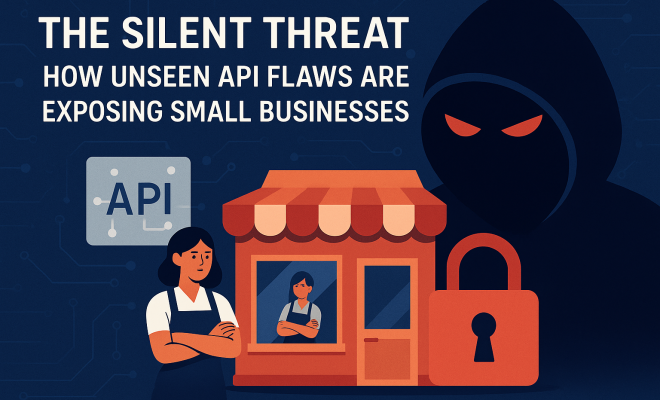
Look, if you’re running a small business today, you’re probably neck-deep in SaaS. QuickBooks for finance, Salesforce for CRM, Slack for communication – it’s the backbone of modern operations, right? And what powers nearly all of that interconnected magic? APIs. These Application Programming Interfaces are the digital glue holding your entire tech stack together, allowing different software to talk to each other seamlessly. But here’s the rub: that convenience comes with a rapidly escalating security risk, particularly for small businesses that often lack dedicated cybersecurity teams.
In 2025 alone, we saw a staggering analysis of 60 disclosed API breaches, with broken authentication accounting for a chilling 52% of incidents and unsafe consumption of third-party APIs making up another 27%. That’s a massive red flag, indicating that attackers are actively targeting these digital arteries. And it’s not just about protecting your own data; the regulatory landscape is shifting dramatically. New comprehensive data privacy laws are hitting various US states in 2026, and federal initiatives like the SECURE Data Act, introduced in April 2026, are pushing for national consumer privacy standards. This isn’t just a tech problem; it’s a compliance nightmare waiting to happen for businesses that aren’t prepared. Finding the
Why APIs Are the New Battleground for Cybercriminals
Think of an API as a waiter in a restaurant. You, the customer, place an order (a request), and the waiter (the API) takes that order to the kitchen (the server or another application). The kitchen prepares the food (processes the request) and the waiter brings it back to you (the response). It’s efficient, but what happens if that waiter isn’t vetted? What if they can access the pantry directly without authorization, or accidentally drop sensitive information on the way?
This analogy plays out in the digital world with terrifying precision. APIs handle vast amounts of sensitive data daily – customer records, financial transactions, intellectual property. When these interfaces are poorly secured, they become wide-open doors for attackers. Broken authentication, for instance, means an attacker can bypass login screens or impersonate legitimate users. Unsafe consumption of third-party APIs points to vulnerabilities introduced by services you integrate with, often without fully understanding their security posture. It’s a supply chain risk, plain and simple, and it’s why agencies like CISA and the FBI are sounding the alarm for critical infrastructure operators regarding third-party ICS integrators.
The Regulatory Hammer: Why Compliance Can’t Wait
The days of ‘ignorance is bliss’ are long gone, especially when it comes to data privacy. We’re witnessing a seismic shift in how data is regulated, and small businesses are squarely in the crosshairs. With new state-level data privacy laws coming into effect throughout 2026 and the push for federal legislation like the SECURE Data Act, the compliance burden is only going to grow. These laws aren’t just about fines; they’re about reputation, customer trust, and potentially crippling legal battles.
For a small business, a data breach isn’t just an inconvenience; it can be an existential threat. The financial penalties alone can be devastating, but the loss of customer trust can be even more damaging. Imagine losing clients because their personal information was compromised through an API vulnerability you didn’t even know you had. That’s why proactively seeking out the
1. Cloudflare API Gateway: The Edge Protector
Cloudflare is a name you probably already recognize for its content delivery network (CDN) and DDoS protection. But their API Gateway offering goes much further, providing a robust security layer right at the edge of your network. This is crucial because it means threats can be identified and mitigated before they even reach your core applications. Think of it as a bouncer checking IDs and frisking patrons before they enter your club – they stop trouble at the door.
For small businesses, Cloudflare’s appeal lies in its ease of implementation and comprehensive feature set, often available through tiered pricing that scales. It offers API discovery, schema validation, rate limiting, and advanced bot detection. What this means in practice is that it can automatically identify and block malicious traffic, ensure that API requests conform to expected formats (preventing many common attacks), and prevent brute-force attacks by limiting how many requests an individual IP can make. User feedback often highlights its reliability and the ability to set up powerful security rules without needing deep cybersecurity expertise.
2. Akamai API Security: The Enterprise-Grade Shield, Scaled
Akamai has long been a heavyweight in enterprise-level web and API security, and they’ve been increasingly tailoring solutions for smaller and mid-sized businesses. Their API Security platform is designed to offer deep visibility and protection for your APIs, regardless of where they reside – on-premises, in the cloud, or hybrid environments. It leverages artificial intelligence and machine learning to understand normal API behavior, making it incredibly effective at detecting anomalies that signal an attack. (See: CDC on cybersecurity risks.)
What sets Akamai apart is its advanced behavioral analytics. While other solutions might block based on known bad patterns, Akamai learns what ‘good’ looks like for your specific APIs. So, if a user suddenly starts making requests from an unusual location or at an odd time, or if the nature of their requests changes dramatically, Akamai can flag it. This proactive, adaptive defense is invaluable against sophisticated, zero-day attacks that traditional signature-based systems might miss. While it can be a more premium option, many small businesses find the peace of mind and reduced risk of a breach to be well worth the investment, particularly as API incidents continue to surge.
3. Salt Security API Protection Platform: The Discovery & Posture Expert
Salt Security has carved out a niche as a leader in API security, particularly excelling in API discovery and posture management. Why is this so important? Because many small businesses don’t even know all the APIs they’re exposing. Shadow APIs – unintended or forgotten endpoints – are prime targets for attackers. Salt automatically discovers all your APIs, whether documented or not, and then continuously assesses their security posture, highlighting vulnerabilities and misconfigurations. For more context, see certifications against zero-day attacks.
Beyond discovery, Salt offers real-time protection by analyzing API traffic and identifying malicious activity, even during the reconnaissance phase of an attack. It reconstructs attack narratives, helping you understand how attackers are trying to exploit your APIs, which is incredibly useful for incident response and improving future defenses. Small businesses appreciate Salt’s focus on proactive identification of weaknesses and its ability to provide clear, actionable insights into their API attack surface. It’s a powerful tool for businesses that want to get ahead of the curve and truly understand their API risks.
4. Noname Security API Security Platform: The Holistic Guardian
Noname Security takes a holistic approach to API security, offering a comprehensive platform that covers discovery, posture management, runtime protection, and even active testing. This means it doesn’t just watch for attacks; it helps you find and fix vulnerabilities before they can be exploited. For small businesses juggling multiple priorities, having a single platform that addresses the entire API lifecycle is a significant advantage.
One of Noname’s standout features is its ability to integrate seamlessly across various environments, from cloud-native to on-premises, providing a unified view of your API landscape. It leverages AI and machine learning to detect advanced threats, including those related to broken authentication and unsafe third-party API consumption – precisely the kind of threats highlighted in the 2025 breach analysis. Users frequently praise its intuitive interface and the detailed reporting it provides, making it easier for non-specialists to understand and address complex security issues. It’s truly among the
5. Cequence Security Unified API Protection: The Automated Defender
Cequence Security focuses on providing automated, real-time API protection against a wide range of threats, including sophisticated bot attacks, API abuse, and data breaches. Their Unified API Protection platform offers a blend of API discovery, threat detection, and bot management, all designed to operate with minimal human intervention once configured. This automation is a huge benefit for small businesses with limited IT staff, as it reduces the manual effort required to maintain a strong security posture.
What really makes Cequence shine is its ability to provide granular control over API access and behavior. You can define specific policies that dictate who can access what, under what conditions, and even identify and block API calls that deviate from expected patterns. This is crucial for preventing broken authentication and ensuring safe API consumption. Customer reviews often highlight its effectiveness in blocking complex attacks and its ability to integrate smoothly into existing security frameworks, making it a strong contender for businesses seeking efficient, automated API defense.
6. DataDome API Security: The Bot & Fraud Specialist
While many API security solutions offer bot protection, DataDome specializes in it, providing an incredibly robust defense against automated threats, credential stuffing, account takeover attempts, and other forms of API abuse that often precede larger data breaches. For small businesses that rely heavily on online interactions and have public-facing APIs, protecting against sophisticated bots is paramount.
DataDome uses a powerful AI engine to analyze billions of daily signals, distinguishing between legitimate human and bot traffic in real-time with remarkable accuracy. This means it can block malicious bots without impacting the experience of your actual customers. The platform is known for its quick deployment and low maintenance, which is a significant plus for resource-constrained small businesses. If your primary concern revolves around protecting your APIs from automated attacks, web scraping, and fraud, DataDome offers a highly specialized and effective solution, making it one of the
7. WSO2 API Manager: The Open-Source Powerhouse with Security Modules
For small businesses that have some technical chops or prefer a more customizable solution, WSO2 API Manager presents an interesting option. While it’s primarily an API management platform, it includes powerful security features as part of its open-source core and commercial offerings. This means you can manage your APIs – from design and publication to analysis and monetization – while also enforcing strong security policies. (See: NIST Cybersecurity Framework.)
WSO2 API Manager offers features like authentication, authorization, threat protection, and rate limiting. Its open-source nature means a vibrant community and extensive documentation, which can be beneficial for businesses looking to integrate API security deeply into their development lifecycles. While it might require a bit more technical expertise to set up and manage compared to some of the purely SaaS-based security solutions, its flexibility and comprehensive feature set, especially with add-on security modules, make it a compelling choice for small businesses that prioritize control and adaptability in their API infrastructure. It allows for a tailored approach to addressing issues like broken authentication and securing third-party API consumption.
The Hidden Costs of Inadequate API Security
It’s easy to look at API security solutions and see them as just another line item in the budget. But what happens if you don’t invest? The costs can be staggering, far outweighing the price of prevention. We’re not just talking about direct financial penalties from regulatory bodies, though those are certainly a factor. There’s a whole cascade of negative consequences that can hit a small business hard. For more context, see zero-day exploit analysis.
First, there’s the immediate financial hit from a breach: forensic investigations to figure out what happened, legal fees, credit monitoring services for affected customers, and the potential need to overhaul your entire security infrastructure. Then, there’s the operational downtime. If your APIs are compromised, your services might be inaccessible, leading to lost sales and disrupted workflows. Imagine your e-commerce site going dark for days because a malicious bot exploited an API vulnerability – that’s revenue lost, and potentially customers who won’t come back.
Beyond that, the damage to your brand reputation can be irreversible. Trust is hard to earn and incredibly easy to lose. A public API breach can erode customer confidence, leading to churn and making it harder to attract new clients. Partners might also reconsider working with you if they perceive your security posture as weak, creating a ripple effect across your business ecosystem. And let’s not forget the emotional toll on business owners and employees who have to deal with the fallout. It’s a heavy burden, and one that proactive API security aims to prevent.
Expert Perspectives: What the Pros Are Saying
Cybersecurity experts universally agree: APIs are the new frontier for attacks. Industry analysts like Gartner have repeatedly highlighted API security as a top priority for businesses of all sizes, predicting that by 2025, API attacks will become the most frequent attack vector, surpassing traditional web application attacks. This isn’t just a trend; it’s a fundamental shift in how bad actors operate.
Many experts emphasize that small businesses often make attractive targets precisely because they might underestimate these risks. “Attackers follow the path of least resistance,” notes a prominent security researcher. “If a small business has valuable data but lacks robust API security, they become an easy mark.” Another common piece of advice is to treat APIs not as mere technical connectors, but as direct interfaces to your most critical data and functions. This means applying the same rigor and security best practices to your APIs that you would to your customer-facing websites or internal databases. The message is clear: API security isn’t optional; it’s foundational to modern business resilience.
Making the Right Choice: What to Consider
Choosing the
- Your Current API Landscape: How many APIs do you have? Are they internal, external, or both? Do you use many third-party integrations?
- Budget: API security solutions range in price. Some offer freemium tiers or scaled pricing that works well for small businesses, while others are more geared towards larger enterprises.
- Technical Expertise: Do you have dedicated IT or security staff, or will non-technical employees be managing this? Ease of use and automation features will be critical if your team is lean.
- Compliance Needs: What specific data privacy regulations (GDPR, CCPA, upcoming state laws, SECURE Data Act) apply to your business? Ensure the solution helps you meet those requirements.
- Key Threat Vectors: Are you more concerned about broken authentication, bot attacks, data exfiltration, or supply chain risks from third-party APIs? Different solutions excel in different areas.
Remember, the goal isn’t just to buy software; it’s to implement a strategy that protects your valuable data, maintains customer trust, and keeps you compliant with an increasingly complex regulatory environment. Start with an audit of your existing APIs, understand your most critical risks, and then evaluate solutions based on how well they address those specific needs.
The Future is API-Driven, and So Are the Risks
There’s no turning back from the API-driven world. Your small business, whether you fully realize it or not, relies on APIs for nearly every digital interaction. As the 2025 breach statistics vividly illustrate, attackers are acutely aware of this reliance and are actively exploiting API vulnerabilities. With new data privacy laws taking effect in 2026 and federal legislation like the SECURE Data Act on the horizon, the stakes for protecting your APIs have never been higher. (See: WHO on technology and health.)
Ignoring API security is akin to leaving the back door of your business wide open. It’s not a question of if an attack will happen, but when. By proactively investing in one of the
Frequently Asked Questions About SaaS API Security
What exactly is an API, and why are they so vulnerable?
An API, or Application Programming Interface, is essentially a set of rules and protocols that allows different software applications to communicate with each other. Think of it like a standardized menu and a waiter in a restaurant. You order from the menu (make a request), and the waiter (the API) takes your order to the kitchen (another application or server) and brings back your food (the response). They’re vulnerable because they’re designed to be exposed and accessible, making them a direct entry point into your systems. If authentication isn’t strong, authorization isn’t properly managed, or data isn’t validated, attackers can exploit these weaknesses to gain unauthorized access, steal data, or disrupt services.
Is API security really different from web application security?
Yes, while there’s some overlap, API security has unique challenges. Web application security often focuses on protecting user interfaces and traditional web traffic (HTTP requests from browsers). API security, on the other hand, deals with machine-to-machine communication, often involving different data formats (like JSON or XML) and authentication mechanisms (like API keys or OAuth tokens). Attacks on APIs can be more subtle, focusing on logic flaws, broken object-level authorization, or exploiting undocumented endpoints that traditional web application firewalls might miss. It requires a more specialized approach that understands API protocols and traffic patterns.
My small business uses mostly off-the-shelf SaaS. Do I still need API security?
Absolutely. While your SaaS providers are responsible for securing their own infrastructure, you’re still responsible for how your business uses and integrates with their APIs. Many SaaS platforms offer APIs for integration with other tools, custom development, or data extraction. If these integrations are poorly configured, or if the API keys and tokens you use are compromised, it opens a significant vulnerability. Moreover, if your small business develops any custom applications that expose APIs, or if you integrate with less common third-party services, your risk exposure increases dramatically. API security isn’t just for developers; it’s for any business that relies on interconnected digital services.
What’s the difference between API management and API security?
API management is a broader discipline that covers the entire lifecycle of an API, from design and publication to monitoring, analytics, and versioning. It helps organizations streamline their API strategy, make APIs discoverable, and manage access. API security, while often a component of API management, specifically focuses on protecting APIs from malicious attacks and vulnerabilities. An API management platform might include basic security features like authentication and rate limiting, but dedicated API security solutions go much deeper, offering advanced threat detection, behavioral analytics, posture management, and specialized bot protection. For robust defense, you often need both, with a strong API security solution complementing your API management strategy.
How can a small business evaluate which API security solution is best for them?
Start by understanding your specific needs. What kind of APIs do you have (internal, external, third-party integrations)? What’s your budget? How much technical expertise do you have on staff? Then, consider the key features offered by different solutions: API discovery (can it find all your APIs, even shadow ones?), posture management (does it highlight vulnerabilities?), runtime protection (can it block attacks in real-time?), and bot detection. Look for solutions with intuitive interfaces and strong reporting, as these will be crucial for lean teams. Don’t be afraid to request demos and trials to see how a solution fits into your existing workflows. Prioritize ease of use and automated features if you have limited cybersecurity resources.
Trending Now
Frequently Asked Questions
What are the common security risks associated with APIs?
Common security risks with APIs include broken authentication, which accounts for 52% of incidents, and unsafe consumption of third-party APIs, making up 27%. These vulnerabilities can expose sensitive data and create significant security threats for small businesses relying on interconnected software.
Why are small businesses particularly vulnerable to API breaches?
Small businesses are often more vulnerable to API breaches due to limited resources and lack of dedicated cybersecurity teams. This makes them easy targets for cybercriminals who exploit weaknesses in API security, especially as they adopt more SaaS solutions.
How can small businesses protect themselves from API threats?
Small businesses can protect themselves by implementing robust API security solutions, conducting regular security assessments, and ensuring proper authentication measures are in place. Staying informed about compliance regulations and educating staff on security best practices is also essential.
What is the impact of new data privacy laws on small businesses?
New data privacy laws, such as those set to be introduced in various US states in 2026, will require small businesses to enhance their data protection measures. Non-compliance can lead to significant legal and financial consequences, making it crucial for businesses to prioritize cybersecurity.
How do APIs function in modern business operations?
APIs function as the digital connectors in modern business operations, allowing different software applications to communicate and share data seamlessly. They enable efficient workflows in tools like QuickBooks, Salesforce, and Slack, but also introduce potential security vulnerabilities if not properly managed.
What's your take on this? Share your thoughts in the comments below — we read every one.