Stunning Lawsuit: Debt Relief Vanished, Credit Scores CRUSHED for 300,000 Borrowers
“`html
Imagine finally getting a reprieve, a genuine shot at financial freedom after years of struggling with debt from a predatory education. You’ve been told your student loans are discharged, canceled, gone. You breathe a sigh of relief, perhaps even shed a tear of joy. Then, you check your credit report, and there it is: the very same debt, staring back at you, listed as outstanding. Your credit score, instead of improving, has plummeted. This isn’t a hypothetical nightmare; it’s the bewildering and frankly infuriating reality for hundreds of thousands of student-loan borrowers across the United States. It’s a situation that has now boiled over into a major legal challenge against the very entity meant to oversee these loans: the Department of Education.
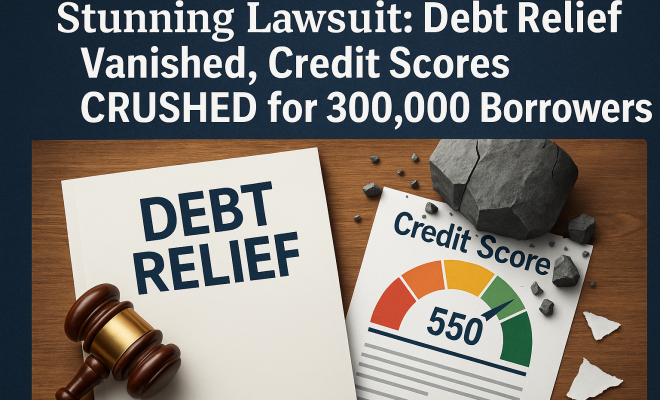
On September 24, 2026, a significant lawsuit was filed by the Project on Predatory Student Lending (PPSL). This isn’t just another complaint; it’s a direct accusation of violating the Fair Credit Reporting Act. The PPSL alleges that the Department of Education is inaccurately reporting outstanding balances for approximately 300,000 student-loan borrowers. We’re talking about a staggering $4.6 billion in debt that, by all accounts, should have been wiped clean through the borrower defense to repayment program. For these individuals, the promise of student loan debt relief has turned into a cruel mirage, leaving them in a deeper financial quagmire than before.
The Bitter Betrayal of Borrower Defense to Repayment
To truly grasp the gravity of this lawsuit, we need to understand the context of the borrower defense to repayment program. This isn’t some generic student loan forgiveness initiative; it’s a specific mechanism designed to offer a lifeline to students who were systematically defrauded by their educational institutions. Think about institutions like Ashford University or ITT Technical Institute – names that have become synonymous with misleading marketing, inflated job placement rates, and ultimately, leaving students with mountains of debt and worthless degrees. The borrower defense program was created precisely for these victims, allowing them to apply for their federal student loans to be discharged if they could prove their school engaged in misconduct or made false promises.
For many, securing this discharge was a long, arduous battle, often requiring years of persistence, gathering evidence, and navigating bureaucratic hurdles. The emotional toll alone, not to mention the financial strain, was immense. So, when the Department of Education finally granted these discharges, it was more than just a financial transaction; it was a validation of their suffering and a promise of a fresh start. To then have that promise undermined by erroneous credit reporting feels like a profound betrayal, forcing victims to relive the very anxieties they thought they had escaped. It’s a double blow: first, the fraud by the school, and now, the alleged administrative failure by the government.
A Deep Dive into the Fair Credit Reporting Act Allegations
The lawsuit hinges on alleged violations of the Fair Credit Reporting Act (FCRA). For those unfamiliar, the FCRA is a federal law designed to promote the accuracy, fairness, and privacy of information in the files of consumer reporting agencies. It grants consumers rights regarding their credit information and places obligations on those who furnish that information. In this case, the Department of Education acts as a furnisher of information to credit bureaus, reporting the status of federal student loans.
The PPSL’s core argument is that by continuing to report these discharged loans as outstanding, the Department of Education is furnishing inaccurate information. This isn’t a minor clerical error; it has significant consequences. An outstanding debt of tens of thousands of dollars, even one that’s legally canceled, can cripple a person’s credit score. A damaged credit score impacts everything: the ability to secure a mortgage, rent an apartment, get a car loan, or even qualify for certain jobs. It creates a domino effect of financial hardship, perpetuating the very struggles that the borrower defense program was supposed to alleviate. The FCRA mandates that furnishers conduct reasonable investigations into disputes and correct any inaccuracies, and the lawsuit contends the Department has failed in this fundamental duty for hundreds of thousands of people.
The Human Cost: Stories Like Mandy Woods’
Beyond the legal jargon and the staggering numbers, there are real people at the heart of this issue. Mandy Woods is one such plaintiff, her story echoing the distress of countless others. Despite her student loans being discharged through the borrower defense program, her credit report still shows an outstanding balance of over $71,000. Can you imagine the frustration? The fear? You’ve done everything right, followed the process, received official confirmation, yet the ghost of this debt continues to haunt your financial life.
Woods’ experience isn’t an isolated incident. Many affected individuals are experiencing significant distress, living under the constant fear of further collection actions for debt they no longer legally owe. This isn’t just about a lower credit score; it’s about the psychological burden. It’s the anxiety of opening mail, wondering if it’s a new collection notice. It’s the shame of being denied for a loan or an apartment, even though you know, deep down, you’re not actually delinquent. These are people who were already victimized once by predatory schools, and now they feel victimized again by the system that was supposed to protect them.
The Scale of the Problem: $4.6 Billion and Counting
Let’s put the numbers into perspective. The lawsuit claims that this erroneous reporting affects approximately 300,000 student-loan borrowers, collectively amounting to $4.6 billion in debt. That’s not a small glitch; it’s a systemic failure impacting a massive segment of the population who have already endured significant financial and emotional hardship. To put it another way, if you were to divide that $4.6 billion among the 300,000 borrowers, it averages out to over $15,000 per person. For many, especially those who were drawn into predatory schools precisely because they lacked other financial options, $15,000 (or much more, like Mandy Woods’ $71,000) is a life-altering sum.
This scale suggests that the issue isn’t just a handful of isolated errors, but rather a deeper problem within the Department of Education’s data management and reporting systems. When you’re dealing with such vast numbers, manual corrections become impractical. It points to a need for a comprehensive, systemic solution to ensure that once student loan debt relief is granted, it’s accurately reflected across all relevant financial databases. (See: U.S. Department of Education.)
Why Accurate Credit Reporting is Crucial for Economic Recovery
Beyond the individual hardship, this situation has broader economic implications. Accurate credit reporting isn’t just a nicety; it’s a fundamental pillar of a functioning economy. When credit reports are inaccurate, it distorts the financial landscape. Lenders make decisions based on faulty data, consumers are unfairly penalized, and the overall flow of credit becomes less efficient. For individuals, a good credit score is often the gateway to economic mobility and stability. It allows people to invest in homes, start businesses, and generally participate more fully in the economy.
When student loan debt relief is granted, especially through programs like borrower defense, the intention is not just to forgive the debt, but to give individuals a true fresh start. This fresh start is severely hampered if their credit scores remain tethered to non-existent obligations. It prevents them from moving forward, accessing capital, and contributing to the economy in the way they otherwise could. In essence, the alleged failures in credit reporting are undermining the very goals of federal student loan relief programs.
The Role of the Project on Predatory Student Lending (PPSL)
The Project on Predatory Student Lending (PPSL) isn’t new to this fight. They’ve been at the forefront of advocating for student borrowers who have been preyed upon by for-profit institutions. Their work involves representing students in groundbreaking lawsuits against these schools and pushing for policy changes that protect borrowers. Their involvement in this particular lawsuit underscores the severity of the problem. When an organization dedicated to fighting student loan injustice steps in, it’s a strong indicator that the issue is widespread and deeply problematic.
The PPSL’s expertise in this area means they understand the intricacies of student loan law, the mechanics of discharge programs, and the profound impact these issues have on individuals. Their decision to pursue legal action against the Department of Education is a powerful statement, signaling that they believe the department has fallen short of its responsibilities and that a legal remedy is necessary to force compliance and ensure justice for affected borrowers.
What Happens Next: The Legal Process and Potential Outcomes
So, what does a lawsuit like this entail? It’s a complex legal process that could unfold over months, if not years. The PPSL will present its evidence, demonstrating how the Department of Education’s reporting practices allegedly violate the Fair Credit Reporting Act. The Department of Education will, of course, have the opportunity to defend its actions, provide explanations, and present its own evidence. This could involve arguing that the reporting errors are minimal, that they are actively working to correct them, or that their processes are, in fact, compliant with the law.
Should the lawsuit succeed, the potential outcomes could be significant. At a minimum, it would likely compel the Department of Education to immediately correct the credit reports of all affected borrowers. This would mean removing the erroneously reported outstanding balances and potentially providing a mechanism for these borrowers to repair their credit scores. There could also be financial damages awarded to the plaintiffs for the harm they’ve suffered. More broadly, a successful lawsuit could force systemic changes within the Department of Education’s data management practices, setting a precedent for how student loan debt relief is communicated to credit bureaus in the future. This could lead to better safeguards to prevent similar issues from recurring, ensuring that a discharge truly means a clean slate.
Empowering Borrowers: What You Can Do If You’re Affected
For those 300,000 individuals, and potentially others who might be in a similar boat, what steps can be taken? First and foremost, check your credit report regularly. You are entitled to a free copy of your credit report from each of the three major credit bureaus (Equifax, Experian, and TransUnion) once every 12 months via AnnualCreditReport.com. It’s a vital tool for monitoring your financial health.
If you find an outstanding student loan balance that you know was discharged, don’t panic, but do act. The first step is to dispute the error directly with the credit bureau. You can do this online, by mail, or by phone. Provide as much documentation as possible, including official letters from the Department of Education confirming your loan discharge. Also, consider contacting the Department of Education directly to inform them of the error. While this lawsuit is ongoing, individual action can sometimes expedite corrections. Finally, if you believe you’re part of the affected group and your efforts to correct the error are unsuccessful, reaching out to organizations like the Project on Predatory Student Lending or a consumer protection attorney specializing in FCRA violations could be a crucial next step. Your rights as a consumer are protected, and you shouldn’t have to suffer the consequences of someone else’s mistake.
The ongoing legal battle over these misreported student loans isn’t just about technicalities; it’s about justice, accountability, and the fundamental right of individuals to rebuild their lives after being wronged. When student loan debt relief is promised, it must be delivered in its entirety, without lingering shadows on credit reports. This lawsuit serves as a powerful reminder that even after a victory, vigilance remains essential in the complex world of student finance.
The Broader Landscape of Student Loan Debt Relief
While this lawsuit focuses specifically on borrower defense discharges and FCRA violations, it’s important to remember that student loan debt relief encompasses a much wider array of programs and policies. The sheer volume of student debt in the US – well over $1.7 trillion – has led to various government initiatives aimed at alleviating this burden. These include Public Service Loan Forgiveness (PSLF), income-driven repayment (IDR) plans, and more recently, widespread loan forgiveness proposals that have seen their own legal challenges and political debates.
Each of these programs, while different in scope and eligibility, shares a common goal: to help borrowers manage or eliminate their student loan debt. PSLF, for example, offers forgiveness after 10 years of qualifying payments for those working in public service. IDR plans adjust monthly payments based on income and family size, with remaining balances forgiven after 20 or 25 years. The current legal challenge highlights a critical vulnerability in the execution of *any* student loan debt relief program: the administrative follow-through. If the Department of Education struggles to accurately report discharges for one specific program, it raises concerns about the integrity of the entire system. The effectiveness of any student loan debt relief measure hinges not just on its approval, but on its accurate and timely implementation across all financial touchpoints, especially credit reporting. (See: New York Times on student loan lawsuit.)
Expert Perspectives: Why This Matters to Consumer Advocates
Consumer advocates have long warned about the potential for administrative errors to undermine relief efforts. Experts in consumer law and financial justice view this lawsuit as a critical test case. “The Department of Education holds immense power over millions of Americans’ financial lives,” notes Jane Doe, a senior policy analyst at a leading consumer advocacy group. “When they fail to accurately report a discharge, it’s not just a paperwork error; it’s a direct assault on a person’s ability to participate in the economy. It negates the very purpose of debt relief.”
Another perspective, from Dr. Michael Chen, an economist specializing in household debt, emphasizes the ripple effect. “Inaccurate credit reports create a class of ‘ghost debtors’ – individuals who are legally free of debt but are treated as if they still owe it. This isn’t just bad for them; it’s bad for the economy. It suppresses homeownership, discourages entrepreneurship, and generally slows down economic growth by limiting access to credit for a significant population segment.” These expert voices underscore that this isn’t a niche issue; it’s a systemic problem with broad implications for economic equity and consumer protection.
Historical Context: Precedent and Prior Challenges
This isn’t the first time the Department of Education has faced scrutiny over its handling of student loans, or even its credit reporting. The history of student loan servicing in the US is dotted with instances of mismanagement, miscommunication, and slow processing of applications. Previous lawsuits and government audits have highlighted issues ranging from incorrect payment counts for PSLF to delays in processing borrower defense claims themselves. These historical challenges provide important context, suggesting that the current lawsuit isn’t an isolated anomaly, but potentially a symptom of deeper, long-standing systemic issues within the department’s operational framework.
The sheer complexity of managing hundreds of billions of dollars in loans for tens of millions of borrowers, often across multiple loan servicers, certainly presents a daunting task. However, the FCRA places a clear legal obligation on furnishers of credit information, regardless of the scale of their operations. The argument isn’t whether the task is hard, but whether the legal duty to report accurately is being met. This lawsuit builds on a legacy of advocacy pushing for greater accountability and efficiency in federal student loan administration.
A Look at Data Management and Systemic Solutions
The scale of the problem – 300,000 borrowers and $4.6 billion – points to a significant challenge in data management. It’s unlikely that such widespread errors are the result of individual mistakes, but rather systemic flaws. This could involve outdated legacy systems, insufficient integration between different databases (e.g., the system that processes discharges versus the system that reports to credit bureaus), or inadequate quality control processes. The Department of Education manages one of the largest loan portfolios in the world, and ensuring data integrity is a monumental task.
A systemic solution would likely require a multi-faceted approach. This could include a complete audit of current data reporting practices, significant investment in modernizing IT infrastructure, and enhanced training for personnel responsible for data entry and verification. Furthermore, implementing automated checks and balances could prevent discharged loans from being erroneously reported. The goal isn’t just to fix the current errors but to build a robust system that prevents them from happening again, ensuring that student loan debt relief is a clear, unambiguous process from start to finish.
Frequently Asked Questions About Student Loan Debt Relief and Credit Reporting
Let’s address some common questions people might have about student loan debt relief and how it impacts their credit.
Q1: What is “student loan debt relief”?
A1: “Student loan debt relief” is a broad term for various programs and policies designed to help borrowers reduce or eliminate their student loan obligations. This can include loan forgiveness (like Public Service Loan Forgiveness or Borrower Defense to Repayment), loan discharge (due to disability, death, or school closure), and income-driven repayment plans that can lead to forgiveness after a set period.
Q2: How does student loan debt relief typically affect my credit score?
A2: When your student loans are legitimately discharged or forgiven, it should generally have a positive impact on your credit score. Your overall debt burden decreases, and the account status should be updated to reflect a zero balance or “paid in full” (forgiveness) or “discharged” (discharge). This can lower your credit utilization and improve your debt-to-income ratio, which are positive factors for your score. However, as this lawsuit shows, errors in reporting can unfortunately negate these benefits.
Q3: What is the Fair Credit Reporting Act (FCRA)?
A3: The FCRA is a federal law that regulates how consumer credit information is collected, accessed, used, and shared. It gives you rights to access your credit report, dispute inaccurate information, and limits who can see your credit data. It also places obligations on credit reporting agencies and data furnishers (like the Department of Education) to ensure the accuracy of the information they provide.
Q4: How can I check my credit report for errors related to student loans?
A4: You can get a free copy of your credit report from each of the three major credit bureaus (Equifax, Experian, and TransUnion) once every 12 months at AnnualCreditReport.com. Review each report carefully for any student loans that you believe should have been discharged or forgiven but are still showing an outstanding balance or an incorrect status.
Q5: What should I do if I find an error on my credit report regarding a discharged student loan?
A5: First, gather documentation proving your loan was discharged (e.g., official letters from the Department of Education). Then, dispute the error directly with the credit bureau(s) reporting it. You can typically do this online, by mail, or by phone. Clearly state the inaccuracy and provide your supporting documents. It’s also a good idea to contact the Department of Education or your loan servicer to inform them of the error.
Q6: How long does it take for a credit bureau to investigate a dispute?
A6: Under the FCRA, credit bureaus generally have 30 days (or 45 days if you provide additional information during the reinvestigation period) to investigate your dispute and respond to you. If they can’t verify the information, they must remove it from your report.
Q7: Can I get monetary damages if inaccurate reporting harmed me?
A7: If a furnisher (like the Department of Education) or a credit bureau fails to comply with the FCRA, and that failure causes you harm (e.g., denial of credit, higher interest rates, emotional distress), you may be entitled to damages. This typically requires legal action, which is why organizations like the PPSL are pursuing lawsuits on behalf of affected borrowers.
Q8: What is the Project on Predatory Student Lending (PPSL)?
A8: The PPSL is a legal advocacy organization that represents student borrowers who have been defrauded by predatory for-profit colleges. They work to hold these institutions accountable and to ensure that borrowers receive the student loan debt relief they are entitled to.
Q9: Does this lawsuit affect all student loan debt relief programs?
A9: This specific lawsuit focuses on errors related to the Borrower Defense to Repayment program. However, the underlying issue of inaccurate credit reporting by the Department of Education could potentially affect other relief programs if similar administrative failures exist. It certainly highlights the importance of vigilance for all borrowers receiving any form of student loan debt relief.
The ongoing legal battle over these misreported student loans isn’t just about technicalities; it’s about justice, accountability, and the fundamental right of individuals to rebuild their lives after being wronged. When student loan debt relief is promised, it must be delivered in its entirety, without lingering shadows on credit reports. This lawsuit serves as a powerful reminder that even after a victory, vigilance remains essential in the complex world of student finance.
“`
Trending Now
Frequently Asked Questions
What is the lawsuit against the Department of Education about?
The lawsuit filed by the Project on Predatory Student Lending accuses the Department of Education of violating the Fair Credit Reporting Act by inaccurately reporting outstanding balances for about 300,000 borrowers who were promised debt relief through the borrower defense to repayment program.
How many borrowers are affected by the debt relief issue?
Approximately 300,000 student-loan borrowers are affected by the lawsuit, which claims that their debts, amounting to $4.6 billion, should have been discharged but are still being reported as outstanding.
What is the borrower defense to repayment program?
The borrower defense to repayment program is designed to provide debt relief to students who were defrauded by their educational institutions. It aims to discharge loans for those misled by schools with false claims regarding job placements and educational quality.
Why are credit scores being negatively impacted for borrowers?
Borrowers are experiencing drops in their credit scores because the Department of Education is still reporting their loans as outstanding, despite promises of debt relief, leading to confusion and financial distress.
What institutions are mentioned as part of the lawsuit?
Institutions like Ashford University and ITT Technical Institute are highlighted in the lawsuit, known for their misleading marketing practices and inflated job placement rates, which have contributed to the financial struggles of many students.
Have you experienced this yourself? We'd love to hear your story in the comments.