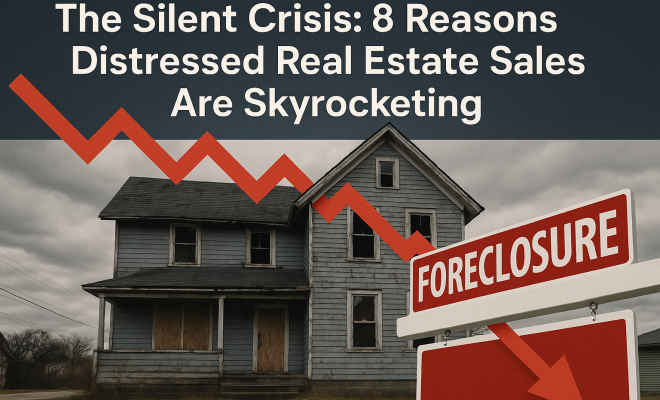
The Silent Crisis: Why Distressed Commercial Real Estate Is About To Make Fortunes

“`html
The commercial real estate (CRE) market is facing a seismic shift, and if you’re paying attention, it’s not just a subtle tremor – it’s a full-blown earthquake creating both chaos and incredible opportunity. We’re talking about a significant surge in distressed sales, a situation that’s gaining serious traction not just among industry insiders, but also with anyone concerned about the broader economic landscape. Forget the headlines about tech stocks for a minute; the real drama is unfolding in brick and mortar, particularly for those savvy enough to consider investing in distressed commercial real estate.
Bisnow’s analysis of MSCI data paints a pretty stark picture: a 26.4% jump in distressed sales across CRE in the first nine months of 2026 compared to the previous year. That’s not just a blip; it’s a trend that’s accelerating. And if you drill down, one sector is truly feeling the heat: multifamily. This segment saw a staggering 62.8% increase in distressed sales during the same period. What’s driving all this? Primarily, it’s the stubborn persistence of elevated interest rates. We’ve been living with higher rates for roughly three years now, and this sustained environment is making it incredibly tough for property owners to refinance their existing debt at anything resembling viable terms. It’s creating what many are calling a “maturity wall” – an ominous term for over $1 trillion in commercial mortgages that are staring down a refinancing deadline. This isn’t just an abstract financial problem; it has real-world implications, especially for regional banks that are heavily exposed to CRE loans.
So, why should you care? Because this isn’t just a story about failing properties; it’s a narrative about potential instability, sure, but also about immense opportunity. For investors with the right strategy and a strong stomach, this environment could be a once-in-a-decade chance to acquire valuable assets at significant discounts. We’re going to explore what’s really happening, why it matters, and how you might position yourself to capitalize on what many believe will be a defining period for the commercial real estate world.
Understanding the “Maturity Wall” and Its Implications
The term “maturity wall” sounds a bit dramatic, doesn’t it? But trust me, it’s not hyperbole. It refers to the sheer volume of commercial mortgages that are coming due in the next few years. We’re talking about more than a trillion dollars in debt that needs to be refinanced or repaid. Imagine you’re a property owner who bought a building five or seven years ago, when interest rates were historically low – say, 3% or 4%. You financed that purchase with a floating-rate loan or a fixed-rate loan that’s now maturing. Suddenly, you’re faced with refinancing that debt at today’s rates, which could be 7%, 8%, or even higher. Your debt service costs could literally double overnight.
For many owners, especially those who underwrote their deals assuming continued low rates and rising property values, this simply isn’t feasible. The income generated by their properties often isn’t enough to cover the new, higher mortgage payments. This puts them in a precarious position: they either have to inject more capital, sell the property, or face default. This pressure is precisely what’s fueling the increase in distressed sales, creating fertile ground for those interested in investing in distressed commercial real estate. It’s a fundamental mismatch between old debt structures and the new economic reality, and it’s forcing a massive repricing of assets across the board.
Why Multifamily Is Feeling the Heat Disproportionately
When we look at the raw numbers, the multifamily sector is clearly at the forefront of this distressed wave, with that eye-popping 62.8% jump in sales. Why multifamily, specifically? It seems counterintuitive, doesn’t it? Housing demand is generally strong, and rents have been climbing in many markets. However, a few factors have converged to create a perfect storm for apartment building owners.
First, many multifamily properties were acquired and developed during the low-interest-rate era with aggressive underwriting. Investors piled into the sector, often using floating-rate debt or short-term fixed-rate loans, betting on continued rent growth and easy refinancing. Second, construction costs soared, and in some markets, new supply has come online, putting pressure on occupancy and rent growth in older assets. Third, and perhaps most critically, the sheer volume of debt coming due on these properties is enormous. Many owners were banking on rising property values to offset higher rates, but that hasn’t materialized universally. When a large apartment complex faces a refinancing challenge, the numbers involved are substantial, leading to significant distressed opportunities.
The Regional Bank Exposure: A Ticking Time Bomb?
The implications of this “maturity wall” extend far beyond individual property owners; they pose a substantial risk to regional banks. These institutions are often the primary lenders for smaller and mid-sized commercial real estate projects. Unlike the major national banks, regional banks tend to have a higher concentration of their loan portfolios tied to CRE. When a wave of defaults or troubled loans hits, these banks are disproportionately affected.
Think back to the Silicon Valley Bank collapse – that was largely driven by interest rate risk on their bond portfolio, but the current CRE situation presents a different, yet equally potent, form of systemic risk. If a significant number of CRE loans go sour, regional banks could face substantial losses, eroding their capital bases and potentially leading to liquidity issues. This isn’t just a theoretical concern; regulators are already scrutinizing these portfolios closely. The ripple effect could mean tighter lending standards, fewer loans available for new projects, and a further dampening of economic activity in local markets. For those keen on investing in distressed commercial real estate, understanding which banks are most exposed can offer clues about where the next wave of opportunities might emerge.
Identifying Investment Strategies in a Distressed Market
So, if you’re an investor looking at this landscape, how do you even begin to approach it? It’s not as simple as just buying low. This market requires a nuanced approach, combining due diligence with a deep understanding of financing and asset management. Here are a few strategies that experienced investors are employing:
- Debt Acquisition: Instead of buying the property directly, some investors are acquiring the distressed debt itself from banks or other lenders. This can be cheaper than buying the asset outright and gives the investor more control over the workout process. You might restructure the loan, take over the property through foreclosure, or negotiate a deed-in-lieu.
- Opportunistic Property Acquisition:
This is the more straightforward approach – buying properties directly from distressed owners or through foreclosure sales. The key here is to identify assets with strong underlying fundamentals (good location, strong demand drivers) that are simply being sold due to financial distress, not because the property itself is fundamentally flawed. - Partnerships with Experienced Operators: For those new to distressed assets, partnering with seasoned developers or operators who have a track record of turning around troubled properties can be invaluable. They bring the expertise in asset management, renovation, and leasing that is crucial for success.
- Niche Focus: While multifamily is a hot spot, other sectors are also experiencing distress, albeit to a lesser extent. Office properties, particularly older, less amenitized buildings, are facing headwinds due to remote work trends. Retail, while having stabilized somewhat, still presents opportunities in certain sub-markets.
The common thread across these strategies is the need for capital, expertise, and patience. This isn’t a get-rich-quick scheme; it’s a strategic long-term play. (See: commercial real estate crisis analysis.)
The Importance of Due Diligence in Distressed Deals
I cannot stress this enough: due diligence is paramount when you’re investing in distressed commercial real estate. A distressed asset is distressed for a reason, and sometimes those reasons go far beyond just a bad loan. You need to dig deep into every aspect of the property and its financial history. What are the operating expenses truly like? Is there deferred maintenance that will cost a fortune to fix? Are the leases favorable, or are tenants paying below-market rates that will take years to correct?
You also need to understand the legal intricacies. Is there environmental contamination? Are there pending lawsuits? What’s the exact status of the existing debt and any liens on the property? Skipping steps here can turn a potential bargain into a financial black hole. Engage experienced legal counsel, environmental consultants, and property inspectors. The more information you have, the better you can assess the true value and potential risks, and structure your offer accordingly. Remember, in distressed situations, information asymmetry can be your greatest advantage or your biggest downfall. For more context, see the housing market downturn.
Mitigating Risks in a Volatile Market
Of course, with great opportunity comes great risk, especially in a volatile market like this. The very factors creating these opportunities – high interest rates, economic uncertainty, potential bank instability – also present significant challenges. How do you mitigate these risks?
First, secure your financing early and understand its terms intimately. If you’re using debt, ensure it’s structured to withstand potential future interest rate fluctuations, or that you have a clear plan for refinancing. Second, build in significant capital reserves. Distressed properties often require more capital for renovations, tenant improvements, or unexpected repairs than initially budgeted. A healthy reserve can prevent you from becoming distressed yourself. Third, diversify your investments if possible. Don’t put all your eggs in one distressed basket. Spreading your capital across different asset types or geographic locations can cushion the blow if one deal doesn’t perform as expected. Finally, maintain a long-term perspective. This isn’t a market for flipping properties in six months. Realizing the full value of a distressed asset often takes several years of active management, repositioning, and market recovery.
The Role of Technology and Data in Identifying Opportunities
In today’s market, you’re at a significant disadvantage if you’re not leveraging technology and data. Gone are the days of simply relying on a broker’s email list. Sophisticated investors are using advanced analytics to identify potential distressed assets even before they hit the open market. This involves:
- Loan Data Analysis: Tracking commercial mortgage-backed securities (CMBS) data, loan maturity schedules, and debt service coverage ratios (DSCRs) can help pinpoint properties most likely to face refinancing challenges.
- Predictive Analytics: Some platforms are using AI to predict which property types or sub-markets are most vulnerable to distress based on economic indicators, demographic shifts, and market supply/demand dynamics.
- Geographic Information Systems (GIS): Overlaying property data with demographic, economic, and infrastructure information can help identify assets in strong growth corridors that are temporarily distressed.
- Online Marketplaces: While some deals are still off-market, specialized online platforms for distressed debt and properties are becoming increasingly common, offering broader access to opportunities.
For anyone serious about investing in distressed commercial real estate, embracing these tools isn’t optional; it’s essential for competitive advantage. It allows you to move faster, analyze more thoroughly, and make more informed decisions than those relying on traditional methods.
Case Studies: Learning from Past Distressed Cycles
It’s easy to get caught up in the current market dynamics, but history often offers the best lessons. We’ve seen distressed CRE cycles before, notably in the early 1990s following the Savings & Loan crisis and again during the Great Financial Crisis of 2008-2009. What can we learn from those periods?
During the S&L crisis, a deluge of foreclosed properties flooded the market, managed by the Resolution Trust Corporation (RTC). Savvy investors who had the capital and patience to acquire these assets at deep discounts saw immense returns as the market stabilized. The key takeaway was that patience and a strong balance sheet were crucial. Those who bought too early without sufficient reserves often got caught in the downdraft.
The GFC brought a different flavor of distress, largely driven by overleveraged properties and a freeze in credit markets. Again, investors who were able to access capital and acquire non-performing loans or foreclosed assets, particularly in residential and commercial sectors that had seen significant price declines, performed exceptionally well. Many private equity funds built their reputations and fortunes during this period by recapitalizing troubled assets and repositioning them for a recovery.
The common threads across these cycles are clear: distress creates opportunity for well-capitalized, patient investors who understand value and are willing to take on complexity. It also highlights the importance of market timing – not necessarily hitting the absolute bottom, but recognizing when the market is beginning to capitulate and opportunities are becoming widespread.
The Human Element: Building Relationships and Networks
While technology and data are incredibly powerful, investing in distressed commercial real estate is still a relationship business. Many of the best distressed deals are found off-market, through personal connections, and via trusted networks. Banks, special servicers, and even property owners facing distress often prefer to work with known entities rather than engage in a public, drawn-out sale process.
Cultivating relationships with regional bank loan officers, workout specialists, bankruptcy attorneys, and experienced brokers who specialize in troubled assets can provide an invaluable pipeline of opportunities. These individuals are often the first to know when a property is heading for trouble or when a lender is quietly looking to offload a non-performing loan. Being known as a reliable, capable buyer who can close quickly and efficiently can put you at the front of the line for deals that never even hit the public market. This “boots on the ground” intelligence, combined with sophisticated data analysis, creates a truly formidable investment approach. (See: impact of economic factors on real estate.)
Comparing Distressed CRE to Other Alternative Investments
When considering where to allocate capital during uncertain economic times, investors often weigh various alternative investments. How does distressed CRE stack up against, say, private equity, venture capital, or even commodities?
Unlike venture capital, which often involves high-risk, high-reward bets on unproven technologies, distressed CRE deals are typically asset-backed. You’re investing in tangible property, which provides a floor of value, even if the current income isn’t optimal. The risk comes more from the operational turnaround and market recovery than from the fundamental viability of an idea. For more context, see the EV battery recycling boom.
Compared to private equity buyouts of operating companies, distressed CRE often offers a clearer path to value creation through physical improvements, recapitalization, and market repositioning. While both require active management, the variables in CRE can sometimes feel more controllable, particularly if you have strong real estate operational expertise.
Commodities, on the other hand, are often highly volatile and purely speculative, driven by global supply and demand dynamics that are difficult for individual investors to influence. Distressed CRE offers a more direct control over the asset and its future performance, allowing investors to implement specific strategies to enhance value. The illiquidity of real estate can be a double-edged sword, but it also means less susceptibility to daily market fluctuations, allowing a longer-term strategy to play out.
Ultimately, distressed CRE offers a unique blend of tangible asset ownership, potential for significant value-add, and a cyclical recovery play that can be very compelling for investors seeking uncorrelated returns and a hedge against broader market instability.
Looking Ahead: Market Recovery and Long-Term Value Creation
While the current market presents challenges, it’s crucial to remember that commercial real estate is cyclical. What goes down eventually comes back up, usually. The opportunities being created now are for those who can see beyond the current distress to the long-term value. Acquiring properties at a discount during a downturn positions investors for significant appreciation when the market recovers and interest rates eventually normalize.
Successful distressed investing isn’t just about buying cheap; it’s about adding value. This could mean renovating an outdated apartment building to command higher rents, repositioning an underperforming retail center, or converting an office building to residential use. The ability to execute a sound business plan and improve the asset’s performance is what ultimately drives returns. The “maturity wall” might seem like a dark cloud, but for prepared investors, it casts a long shadow of opportunity, offering a chance to acquire prime assets that will likely generate substantial returns for years to come once the current storm passes.
Frequently Asked Questions About Investing in Distressed Commercial Real Estate
What exactly is “distressed commercial real estate”?
Distressed commercial real estate refers to properties that are experiencing financial difficulties. This can mean the owner is struggling to make mortgage payments, the property’s value has declined below the outstanding debt, or the asset is underperforming significantly. These situations often lead to forced sales, foreclosures, or opportunities to acquire non-performing debt.
Why is there so much distressed CRE right now?
The primary drivers are elevated interest rates, which make refinancing existing debt much more expensive, and a large volume of commercial mortgages (the “maturity wall”) coming due. This is exacerbated in some sectors, like multifamily, where aggressive underwriting and increased supply during the low-rate era created vulnerabilities.
Is investing in distressed CRE risky?
Yes, it carries significant risks. Distressed properties often come with hidden problems like deferred maintenance, legal issues, or environmental concerns. Market volatility, economic uncertainty, and the complexity of these transactions can also pose challenges. However, with thorough due diligence, proper structuring, and sufficient capital reserves, these risks can be mitigated. For more context, see the $25 billion Meta privacy ruling. (See: distressed sales in commercial real estate.)
What types of properties are most affected?
Currently, the multifamily sector is seeing the highest increase in distressed sales. Office properties, particularly older or less amenitized buildings, are also experiencing significant headwinds due to changes in work patterns. Retail and hospitality can also present opportunities, depending on the specific market and property.
Do I need a lot of capital to invest in distressed CRE?
While some opportunities require substantial capital, there are ways for smaller investors to participate. This could include partnering with experienced operators, investing in a distressed debt fund, or focusing on smaller, individual distressed assets. Debt acquisition can sometimes offer a lower entry point than direct property ownership.
How do I find distressed CRE opportunities?
Opportunities can be found through traditional brokers specializing in troubled assets, direct outreach to lenders and special servicers, online marketplaces for distressed assets, and by leveraging data analytics tools to identify properties with upcoming loan maturities or declining financial performance. Building a strong network of industry contacts is also crucial.
What’s the typical timeline for a distressed CRE investment?
Distressed CRE is generally a long-term investment. While some quick flips can happen, realizing the full value often takes several years. This includes time for acquisition, property stabilization, potential renovations, re-tenanting, and waiting for market conditions to improve. A 3-7 year holding period isn’t uncommon.
Should I consult with professionals before investing?
Absolutely. Given the complexity and risks involved, it’s highly advisable to work with experienced professionals. This includes real estate attorneys, financial advisors specializing in CRE, property inspectors, environmental consultants, and tax experts. Their expertise is invaluable for proper due diligence and structuring the deal.
Final Thoughts for the Prudent Investor
The current landscape for commercial real estate is undeniably complex, marked by a significant uptick in distressed assets, particularly in the multifamily sector. This isn’t just a financial footnote; it’s a major development driven by persistent high interest rates and a looming “maturity wall” of debt. Regional banks, with their heavy exposure to CRE loans, are certainly feeling the pressure, and the broader economic implications are worth watching closely.
But for the discerning investor, this turmoil presents a compelling, albeit high-stakes, opportunity. Investing in distressed commercial real estate requires more than just capital; it demands meticulous due diligence, a clear understanding of risk mitigation, and a strategic, long-term vision. Leveraging technology for data analysis and partnering with experienced operators can provide a critical edge. While the path ahead might be bumpy, those who navigate this market wisely could very well find themselves building substantial wealth as the cycle inevitably turns.
“`
Trending Now
Frequently Asked Questions
What is causing the increase in distressed commercial real estate?
The surge in distressed commercial real estate is primarily driven by persistently high interest rates, which have made it difficult for property owners to refinance their existing debt. This situation has led to a significant increase in distressed sales, particularly in the multifamily sector, as owners face looming refinancing deadlines.
How much have distressed sales in commercial real estate increased?
Distressed sales in commercial real estate have seen a 26.4% increase in the first nine months of 2026 compared to the previous year. The multifamily sector experienced an even more staggering 62.8% rise, indicating a troubling trend in the market.
What opportunities exist in distressed commercial real estate?
Investors who are strategic and willing to take calculated risks may find significant opportunities in distressed commercial real estate. With properties available at substantial discounts, savvy investors can potentially acquire valuable assets during this market shift.
What is a 'maturity wall' in commercial real estate?
A 'maturity wall' refers to a critical point where over $1 trillion in commercial mortgages are approaching refinancing deadlines. This situation poses risks for property owners and regional banks heavily invested in commercial real estate loans, potentially leading to increased distressed sales.
Why should investors pay attention to the commercial real estate market now?
Investors should pay attention to the commercial real estate market due to the potential for significant returns amid the current upheaval. The combination of rising distressed sales and the opportunity to purchase undervalued assets may present a unique investment opportunity not seen in a decade.
Agree or disagree? Drop a comment and tell us what you think.