The Silent Crisis: 8 Reasons Distressed Real Estate Sales Are Skyrocketing
“`html
The Silent Crisis: 8 Reasons Distressed Real Estate Sales Are Skyrocketing
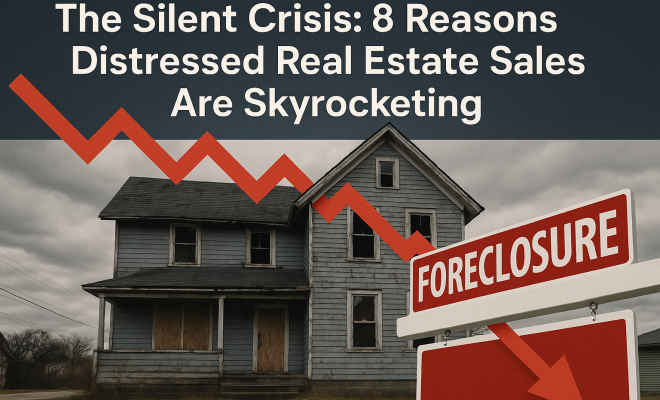
It’s no secret that the commercial real estate (CRE) market has been under pressure, but the latest figures are painting a stark picture: distressed real estate sales are surging. According to a Bisnow analysis of MSCI data, the first nine months of 2026 saw a staggering 26.4% increase in these types of sales compared to the previous year. This isn’t just a slight uptick; it’s a significant shift that’s grabbing headlines and causing genuine concern across financial circles. When we talk about distressed real estate sales, we’re talking about properties being offloaded because their owners can no longer meet their financial obligations – often due to unmanageable debt.
What’s truly remarkable, and perhaps most concerning, is the multifamily sector. This part of the market, often seen as a relatively stable investment, experienced an astonishing 62.8% jump in distressed sales during the same period. Think about that for a moment: nearly two-thirds more apartment buildings are hitting the market under duress than just a year prior. This isn’t just an abstract financial statistic; it impacts everything from investment strategies to the stability of regional banks, and it begs the question: what’s really going on?
1. Elevated Interest Rates: The Root Cause
Let’s cut right to the chase: the primary culprit behind this surge in distressed real estate sales is elevated interest rates. We’ve been living with higher rates for roughly three years now, and while many hoped they would be a temporary measure, their persistence has created a significant headache for property owners. When you bought or refinanced a commercial property a few years ago, you likely locked in a much lower interest rate. Those days are gone.
Now, as those loans mature, owners are facing a brutal reality: refinancing at today’s rates often means a dramatically higher monthly payment, sometimes to the point where the property no longer generates enough income to cover its costs. This isn’t just an inconvenience; it’s an existential threat to many property owners, particularly those who operated on thin margins or assumed rates would fall back down. This single factor is arguably the biggest driver of current distressed real estate sales.
2. The “Maturity Wall”: A Tsunami of Debt
Compounding the problem of high interest rates is what industry insiders are calling the “maturity wall.” This isn’t some abstract concept; it’s a very real, very large volume of commercial mortgages – well over $1 trillion, to be precise – that are coming due and need to be refinanced in the near future. Imagine a dam holding back a massive amount of water; that’s what this maturity wall represents for the CRE market.
Many of these loans were taken out during periods of lower interest rates and higher property valuations. Now, as they mature, owners are finding that not only are interest rates significantly higher, but property values in some sectors have also softened, making it even harder to secure new financing. Lenders are more cautious, appraisals are coming in lower, and the capital markets aren’t as free-flowing as they once were. This looming refinancing challenge is pushing many properties into the distressed category.
3. Regional Banks’ Exposure: A Ticking Time Bomb?
The implications of this wave of distressed real estate sales extend far beyond individual property owners. Regional banks, in particular, are heavily exposed to commercial real estate loans. Unlike the massive national and international banks, regional institutions often have a disproportionate amount of their loan portfolios tied up in local and regional CRE projects – everything from office buildings and shopping centers to, yes, those multifamily apartment complexes now seeing so much distress.
If a significant number of these loans go sour, it could create substantial problems for these banks, potentially impacting their stability and their ability to lend to other businesses and consumers. This isn’t just a theoretical worry; we’ve already seen how quickly confidence can erode in the banking sector. The fear of broader economic impact stemming from this CRE debt crisis is a major reason why this topic is gaining such viral traction.
4. Multifamily Market’s Vulnerability: A Surprising Weakness
As mentioned, the multifamily sector has been hit particularly hard, with a 62.8% increase in distressed sales. This might seem counterintuitive to some, as apartments are often viewed as a relatively safe haven, especially during economic uncertainty, given the constant demand for housing. However, several factors have conspired to make this sector surprisingly vulnerable. Many multifamily properties were acquired at peak valuations with aggressive financing assumptions during the low-rate era.
When interest rates spiked, the economics of these deals fundamentally changed. High construction costs, coupled with a slowdown in rent growth in some markets, have squeezed profit margins. Moreover, some markets saw an oversupply of new units, putting downward pressure on rents and occupancy rates. For owners who leveraged heavily, this combination has proven toxic, leading directly to a dramatic rise in distressed real estate sales within this segment.
5. Investor Sentiment Shift: Caution Reigns Supreme
The broader market sentiment has undeniably shifted. A few years ago, there was an almost insatiable appetite for commercial real estate, driven by low interest rates and the hunt for yield. Investors were often willing to take on more risk, assuming continued growth and easy access to capital. Today, that enthusiasm has been replaced by a much more cautious, wait-and-see approach. Why would you rush to buy a property today if you believe prices might fall further, or if the cost of financing remains prohibitively high? (See: CDC on economic impacts of real estate.)
This shift in investor sentiment means fewer buyers are chasing properties, particularly those that are not prime, stabilized assets. This lack of liquidity in the market makes it even harder for distressed owners to find a buyer, often forcing them into deeper discounts or, ultimately, foreclosure. It’s a self-reinforcing cycle: distress begets caution, which in turn exacerbates distress.
6. Discounted Deals Driving Activity: Opportunities for Savvy Investors
While the overall picture for distressed real estate sales might seem grim, it’s not without its silver linings – at least for certain players. The surge in these sales is, by its very nature, creating opportunities for investment platforms specializing in distressed assets. These firms, often backed by large debt funds or private equity, are specifically geared to acquire properties at significant discounts, restructure their debt, and manage them back to profitability. For more context, see the housing market downturn.
For these opportunistic buyers, the current market is a goldmine. They have the capital, the expertise, and the patience to weather the storm, picking up assets that are simply too burdensome for their current owners. This dynamic is a key driver of the 26.4% jump in sales; it’s not just foreclosures, but also strategic dispositions by owners who see the writing on the wall and prefer to sell at a discount rather than face a more painful future.
7. Legal Services in High Demand: Restructuring the Fallout
As distressed real estate sales proliferate, so too does the need for specialized legal services. This isn’t just about handling foreclosures; it’s about a wide array of loan restructuring, workouts, and bankruptcy proceedings. Property owners facing maturity walls or cash flow issues are desperately seeking legal counsel to renegotiate terms with lenders, explore forbearance options, or navigate the complex process of selling a troubled asset.
Lenders, too, require legal expertise to manage their growing portfolios of non-performing or underperforming loans. This boom in legal activity underscores the depth of the distress in the market. It’s a clear indicator that many owners are trying everything they can to avoid losing their properties entirely, and that lenders are grappling with how to manage risk without causing a broader market collapse.
8. Broader Economic Impact Fears: Ripple Effects
The fear of a broader economic impact from the rise in distressed real estate sales is very real and contributes to the topic’s viral traction. When a significant sector of the economy, like commercial real estate, faces such headwinds, it rarely remains isolated. Potential ripple effects include job losses in construction and property management, reduced tax revenues for municipalities, and a tightening of credit availability across the board.
Moreover, if regional banks face significant losses from their CRE portfolios, it could lead to a broader credit crunch, making it harder for small and medium-sized businesses to secure financing, thus slowing economic growth. This interconnectedness is precisely why financial news outlets are covering these market trends so closely; the health of the CRE market is often a bellwether for the broader economy, and right now, that bell is ringing with a somewhat somber tone.
So, where do we go from here? The surge in distressed real estate sales is a clear signal that the commercial property market is in a period of significant adjustment. While it presents challenges for many existing owners and lenders, it also opens doors for new capital and those prepared to navigate a complex, but potentially rewarding, landscape. The next few years will undoubtedly be a fascinating, if turbulent, time for anyone involved in commercial real estate.
The Human Cost: More Than Just Numbers
While we often talk about distressed real estate sales in terms of financial metrics and market trends, it’s crucial to remember the human element behind these numbers. For property owners, particularly smaller, independent investors or families who have poured their life savings into a commercial property, facing distress can be devastating. It’s not just a balance sheet entry; it represents years of hard work, dreams, and financial security that are now at risk. The emotional toll of trying to navigate complex loan workouts, potential bankruptcies, or the forced sale of an asset can be immense.
Consider the small business owner who rents space in a shopping center facing foreclosure. Their business might be stable, but the instability of their landlord could force them to relocate, disrupting their operations and potentially impacting their employees. Or the tenants in a multifamily building that changes hands under duress – they might face new management, changes in services, or even uncertainty about their leases. The ripple effects extend to local communities, where property tax revenues, which fund schools and public services, can decline if property values drop or buildings remain vacant longer. It’s a reminder that beneath the headlines of surging distressed real estate sales, there are real people and communities feeling the pinch.
Navigating the Current Landscape: Strategies for Owners and Lenders
Given the challenging environment, both property owners and lenders are employing various strategies to mitigate risk and manage the current wave of distressed real estate. For owners, proactive engagement is key. Waiting until the last minute to address an expiring loan or declining cash flow significantly limits options. Many are exploring:
- Loan Modifications: Working with lenders to adjust loan terms, such as extending maturity dates, modifying interest rates (even if temporary), or converting part of the debt to equity.
- Capital Injections: Bringing in new equity partners to pay down existing debt or provide working capital to stabilize the property.
- Strategic Sales: Deciding to sell a property at a discount before it falls into deeper distress, aiming to preserve some equity rather than face foreclosure.
- Cost Cutting & Revenue Enhancement: Aggressively managing operational expenses and exploring ways to increase income, such as improving tenant retention or optimizing rental rates where market conditions allow.
Lenders, too, are adopting more nuanced approaches than simply foreclosing. Foreclosure is often a last resort, as it can be costly, time-consuming, and may result in the lender owning an asset they aren’t equipped to manage. Instead, many are:
- Workout Agreements: Negotiating directly with borrowers to create a feasible plan to avoid default, which might include forbearance, payment deferrals, or interest-only periods.
- Asset Management Teams: Bolstering internal teams or engaging third-party specialists to manage troubled assets and maximize recovery.
- Debt Sales: Selling non-performing loans to specialized debt funds, transferring the risk and management burden to buyers who specialize in distressed debt.
- Recapitalizations: Working with borrowers and new equity partners to restructure the capital stack of a property, often involving a partial write-down of the existing debt.
These strategies highlight a shared understanding that collaboration, while difficult, can often lead to better outcomes for all parties involved compared to outright default and foreclosure. (See: New York Times on real estate trends.)
Historical Context: Is This 2008 All Over Again?
The surge in distressed real estate sales naturally brings up comparisons to the 2008 financial crisis. It’s a valid question to ask: are we heading for a similar collapse? While there are certainly parallels, there are also significant differences that make this situation distinct.
Similarities: For more context, see student loan debt relief issues.
- Credit Tightening: Lenders are more cautious, and financing is harder to secure, reminiscent of post-2008 conditions.
- Property Value Declines: Certain sectors are seeing value erosion, particularly office and some retail, similar to the broader housing market crash then.
- Banking Sector Concerns: Regional banks’ exposure to CRE debt is a significant worry, just as subprime mortgages were for larger banks in 2008.
Differences:
- Nature of the Debt: The current distress is largely in commercial real estate, driven by interest rates and changing work/lifestyle patterns, rather than a systemic meltdown of consumer mortgages and collateralized debt obligations (CDOs) that characterized 2008.
- Underwriting Standards: Post-2008 regulations led to stricter underwriting standards for many loans, meaning less “subprime” lending in the commercial space this time around.
- Capital Reserves: Banks, particularly larger ones, are generally better capitalized today than they were in 2008, thanks to regulatory reforms like Dodd-Frank.
- Government Intervention: The Federal Reserve and Treasury Department have more tools and experience in managing financial crises, potentially allowing for more targeted interventions if needed.
So, while the current situation is serious and warrants close monitoring, it’s generally not considered an identical replay of 2008. The specific drivers and the structure of the financial system have evolved, suggesting a different, though still challenging, path forward.
The Role of Technology and Remote Work
One factor that can’t be overlooked, particularly in the office sector’s distress, is the transformative impact of technology and the widespread adoption of remote and hybrid work models. Before the pandemic, office demand was relatively stable. Now, many companies have realized they need less physical space, leading to:
- Increased Vacancy Rates: Especially in older, less amenitized buildings, vacancies are soaring.
- Reduced Rents: Landlords are forced to lower asking rents and offer significant concessions to attract and retain tenants.
- Obsolescence: Buildings not equipped with modern HVAC, collaborative spaces, and high-speed connectivity are struggling to compete.
This structural shift is fundamentally altering the value proposition of office real estate. Owners of these assets, many of whom took out loans based on pre-pandemic income projections, are now facing a stark reality where their properties are worth significantly less and generate far less income. This contributes heavily to the distressed real estate sales figures, especially when considering the significant portion of the maturity wall tied to office properties.
Beyond office, technology also plays a role in retail (e-commerce impact) and even multifamily (smart home tech, online leasing). The rapid pace of technological change means that properties must be adaptable and modern to remain competitive and avoid becoming obsolete, further complicating the financial outlook for owners.
Looking Ahead: Potential Scenarios and Long-Term Outlook
The current turbulence in distressed real estate sales isn’t likely to resolve overnight. The “maturity wall” will continue to present challenges for the next few years, and interest rates, while potentially stabilizing or even declining slightly, are unlikely to return to the ultra-low levels seen in the past decade. Here are a few potential scenarios for the long-term outlook:
- Gradual Adjustment: The most likely scenario involves a prolonged period of adjustment, where distressed assets are slowly absorbed by opportunistic buyers. This would mean continued, but perhaps moderating, distressed sales for several years, avoiding a sudden collapse.
- Sector-Specific Recovery: Certain sectors, like industrial (driven by e-commerce and logistics) or specialized life sciences facilities, may continue to perform well, attracting capital and seeing less distress. Office and some retail sectors will likely face a much longer road to recovery or significant repurposing.
- Increased Repurposing and Redevelopment: Older, distressed office buildings, and even some retail centers, may be repurposed into residential units, mixed-use developments, or specialized facilities. This will require significant capital and creative urban planning but could breathe new life into struggling assets.
- Consolidation in Lending: Smaller regional banks heavily exposed to CRE might face pressure, potentially leading to consolidation within the banking sector as stronger institutions acquire weaker ones.
- Government Intervention (Targeted): While unlikely to be a broad bailout, there might be targeted government programs to facilitate affordable housing development (using distressed multifamily assets) or support specific infrastructure projects tied to commercial real estate.
Ultimately, the market is undergoing a re-pricing and re-evaluation. While painful for current owners, it could lead to a healthier, more sustainable commercial real estate market in the long run, built on more realistic valuations and financing structures.
FAQs About Distressed Real Estate Sales
Q1: What exactly does “distressed real estate” mean?
Distressed real estate refers to properties whose owners are facing financial difficulties and can no longer meet their mortgage payments or other financial obligations. This can lead to a property being sold at a discount, often through foreclosure, a short sale, or a strategic disposition to avoid deeper financial trouble. The key characteristic is the owner’s inability to sustain the property under its current financial structure. (See: BBC on global economic shifts.)
Q2: How do elevated interest rates contribute to distressed sales?
Elevated interest rates make it significantly more expensive for property owners to borrow money. When existing commercial mortgages mature, owners need to refinance. If current interest rates are much higher than their original loan, their new monthly payments can become unaffordable, causing the property’s income to no longer cover its expenses. This cash flow crunch often forces owners into distressed situations.
Q3: What is the “maturity wall” and why is it a concern?
The “maturity wall” refers to a massive volume of commercial real estate loans that are set to mature and require refinancing within a relatively short period, often the next 1-3 years. Many of these loans were taken out when interest rates were low and property values were high. Now, with higher rates and potentially lower property values, refinancing these loans is incredibly challenging, pushing many properties into distress.
Q4: Which real estate sectors are most affected by distressed sales?
Currently, the multifamily sector has seen a surprisingly high increase in distressed sales, though it’s often considered stable. The office sector is also heavily impacted due to shifts towards remote work and declining demand for traditional office space. Some retail properties, particularly older malls, continue to face challenges. Industrial and specialized sectors, like data centers or life sciences, tend to be more resilient.
Q5: Are distressed real estate sales a good opportunity for investors?
For savvy, well-capitalized investors, distressed real estate sales can present significant opportunities. Properties are often available at a discount, allowing investors to acquire assets below market value. However, it requires expertise in restructuring debt, property management, and often substantial capital to stabilize and reposition the assets. It’s generally not for inexperienced investors.
Q6: How do distressed sales impact regional banks?
Regional banks are particularly vulnerable because they often have a higher concentration of their loan portfolios tied to commercial real estate within their local markets. If a significant number of these CRE loans default, it can lead to substantial losses for these banks, potentially impacting their financial stability, their ability to lend, and causing broader economic concerns in their service areas.
Q7: What’s the difference between a foreclosure and a short sale in distressed real estate?
A foreclosure occurs when a lender takes legal possession of a property after the borrower fails to make mortgage payments as required. The lender then typically sells the property to recover the outstanding debt. A short sale happens when a property owner sells their property for less than the amount they owe on their mortgage, with the lender’s approval. The lender agrees to accept a lesser amount to avoid the longer and more costly foreclosure process.
Q8: Will this lead to a recession or another 2008-style crisis?
While the surge in distressed real estate sales is a serious concern and could contribute to economic headwinds, most experts do not believe it will directly lead to a repeat of the 2008 financial crisis. The underlying causes are different (commercial debt and interest rates versus systemic subprime consumer mortgages), and the banking system is generally better capitalized and regulated. However, it could lead to slower economic growth, particularly in regions heavily exposed to struggling CRE markets.
Q9: What should current commercial property owners do if they’re facing distress?
If you’re a commercial property owner facing potential distress, it’s crucial to act early. This includes:
- Communicate with your lender: Explore options like loan modifications, extensions, or forbearance.
- Seek professional advice: Consult with real estate attorneys, financial advisors, or workout specialists.
- Evaluate your property’s financials: Look for ways to cut costs or increase revenue.
- Consider strategic disposition: If necessary, explore selling the property proactively to preserve equity before it deteriorates further.
Proactive engagement significantly increases your chances of a more favorable outcome.
“`
Trending Now
Frequently Asked Questions
What are the reasons for the increase in distressed real estate sales?
The surge in distressed real estate sales can be attributed to several factors, primarily elevated interest rates, which have made refinancing difficult. Other contributing reasons may include economic downturns, rising operational costs, and owners facing unmanageable debt, especially in the multifamily sector.
How do elevated interest rates affect real estate owners?
Elevated interest rates significantly impact real estate owners by increasing their refinancing costs. As loans mature, many owners find themselves facing much higher monthly payments, which can lead to financial strain and the need to sell properties under distress.
What impact does distressed real estate sales have on the market?
Distressed real estate sales can destabilize the market by flooding it with properties sold under duress, lowering property values and affecting investment strategies. This trend can also have broader implications for regional banks and overall economic stability.
Why is the multifamily sector experiencing a surge in distressed sales?
The multifamily sector is experiencing a surge in distressed sales due to heightened financial pressures from rising interest rates and increased operational costs. This sector, once considered stable, is now facing significant challenges leading to a 62.8% jump in distressed sales.
What does the term 'distressed real estate' mean?
Distressed real estate refers to properties that are being sold because their owners can no longer meet financial obligations, often due to unmanageable debt. These sales typically occur under duress, reflecting broader market challenges.
Have you experienced this yourself? We'd love to hear your story in the comments.