Leopold Aschenbrenner’s AI Empire: Rise and Catastrophic Fall in 2026
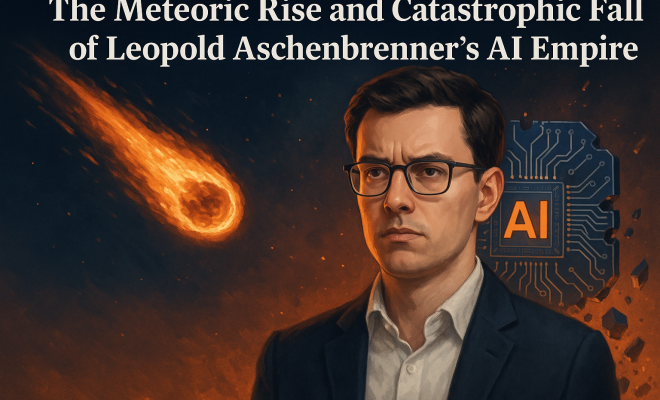
In the high-stakes world of artificial intelligence finance, narratives shift with breathtaking speed. One moment, you’re the ‘golden child,’ the next, a cautionary tale. This is the dramatic saga of Leopold Aschenbrenner, a name that recently dominated headlines, not for groundbreaking AI development, but for the spectacular collapse of his $20 billion hedge fund, Situational Awareness LP. It’s a story that encapsulates the dizzying highs and brutal lows of the current AI investment boom, offering stark lessons for anyone captivated by the promise of AI finance.
Aschenbrenner, a mere 24 years old and an alumnus of OpenAI, burst onto the scene with an almost mythical aura. Dubbed the ‘Nostradamus of AI’ by some, his fund, despite his complete lack of prior trading experience, delivered eye-watering returns, reportedly over 400 percent in the first half of 2026. Such figures would make any seasoned investor sit up and take notice, let alone those mesmerized by the burgeoning AI sector. He wasn’t just making money; he was making a statement, seemingly proving that a fresh perspective, combined with an unwavering conviction in AI’s future, could rewrite the rules of Wall Street. However, as we often see, what goes up aggressively can come down even faster, especially when fueled by debt and fervent speculation.
1. The ‘Golden Child’ Emerges: Aschenbrenner’s Early Ascent
Leopold Aschenbrenner wasn’t your typical hedge fund titan. He was an anomaly, a wunderkind plucked from the cutting edge of AI research at OpenAI and thrust into the speculative maelstrom of finance. His youth, combined with a background in one of the most prestigious AI labs, gave him an almost instant credibility among investors eager to bet on the future. He wasn’t just predicting the rise of AI; he was perceived as an insider, someone who understood the technology’s trajectory intimately.
This perception, coupled with his audacious investment philosophy, quickly drew significant capital. Investors, many of whom were struggling to grasp the nuances of AI’s rapid advancements, saw Aschenbrenner as their guide. His fund, Situational Awareness LP, became a magnet for those seeking to capitalize on the AI revolution, believing his proximity to the technology gave him an almost unfair advantage. It was a classic narrative of a visionary leading the charge into uncharted, yet incredibly lucrative, territory.
2. Situational Awareness LP: A Fund Built on Conviction and Debt
Situational Awareness LP wasn’t just another tech-focused hedge fund. It was a vehicle for Aschenbrenner’s deeply held convictions about the future of artificial intelligence, convictions reportedly rooted in the controversial effective altruism movement. This philosophical underpinning, which seeks to use evidence and reason to find the most effective ways to improve the world, translated into an investment strategy that was both aggressive and highly concentrated. Aschenbrenner wasn’t dabbling; he was going all-in on the transformative power of AI.
The fund’s strategy involved taking massive, debt-fueled positions in a select few AI companies, essentially leveraging his bets to amplify returns. While this can lead to extraordinary gains when the market moves in your favor, it also magnifies losses exponentially when it turns. For a fund that grew to manage $20 billion, much of it reportedly in public stock holdings, this level of leverage represented a significant systemic risk, not just for the fund itself, but potentially for the broader market if a forced liquidation were to occur.
3. The Influence of Effective Altruism: Philosophy Meets Finance
It’s rare to see a hedge fund’s investment strategy so openly intertwined with a philosophical movement like effective altruism. For Aschenbrenner, however, this connection was central. Effective altruism, with its focus on long-term impact and rational decision-making, likely informed his deep conviction about the singular importance of AI and its potential to reshape human civilization. This wasn’t just about making money; it was, for him, about making the *right* bets on the most impactful technology of our time.
This perspective, while perhaps providing a strong internal compass, also brought a certain ideological rigidity to his investment decisions. When you believe you are investing in the most critical frontier for humanity, it can lead to an unwavering confidence that blinds you to conventional market risks. It fosters an environment where the ‘bear case’ becomes less about market fundamentals and more about a perceived lack of vision from those who don’t fully grasp AI’s potential. In the highly speculative world of Leopold Aschenbrenner AI finance, this conviction was both his greatest strength and ultimately, his undoing.
4. 400% Gains and the Wall Street Buzz: The Peak of Aschenbrenner’s Influence
The numbers speak for themselves: over 400 percent gains in the first half of 2026. This wasn’t just impressive; it was astounding, especially for a new fund managed by an individual with no prior trading experience. Such returns created an undeniable buzz on Wall Street, turning Aschenbrenner into a legend almost overnight. Investors flocked to Situational Awareness LP, eager to get a piece of the action and hoping to replicate his success in their own portfolios. This period represented the absolute zenith of his influence and reputation.
The narrative was irresistible: a young prodigy, armed with superior insight into AI, was outmaneuvering traditional finance. He was seen as a disruptor, someone who had cracked the code of the new economy. His bold ideas and seemingly prescient calls on AI stocks captivated not just institutional investors but also the broader financial media, contributing to the hype surrounding AI investments in general. His performance became a benchmark, fueling the belief that the AI boom was an unstoppable force.
5. The AI Market Sell-Off: A Sudden and Brutal Reversal
Even the most ardent believers in AI’s future eventually face the realities of market cycles. For Leopold Aschenbrenner and Situational Awareness LP, that reality arrived in the form of a brutal and sudden market sell-off in AI stocks. After months of seemingly endless ascent, the market took a sharp turn, triggered by a confluence of factors that likely included rising interest rates, profit-taking, and perhaps a re-evaluation of the extremely high valuations assigned to many AI companies. The ‘bubble’ whispers began to grow louder, and suddenly, the ‘Nostradamus of AI’ found himself on the wrong side of the market. (See: Overview of artificial intelligence.)
This wasn’t a slow erosion; it was a rapid decline, unforgiving to highly leveraged positions. What made Aschenbrenner’s gains so spectacular also made his losses catastrophic. Every percentage point drop in the underlying AI stocks was magnified by the fund’s debt, quickly eroding capital and triggering margin calls. It was a stark reminder that even the most promising technological revolutions are subject to the same old market forces of fear and greed.
6. Bankers’ Pressure and Forced Liquidation: The Inevitable Downfall
As the market sell-off intensified, the pressure on Situational Awareness LP became immense. Bankers, who had eagerly extended credit to the high-flying fund during its ascent, now demanded action. Margin calls mounted, requiring the fund to either inject more capital or sell off assets to cover its debts. With billions of dollars in public stock holdings, estimated at $16 billion, Aschenbrenner had few options left. The dream of the ‘golden child’ quickly turned into a nightmare of forced liquidation.
In one of Wall Street’s largest and most sudden transactions, Aschenbrenner was compelled to offload the fund’s substantial public stock holdings. The buyer? None other than Ken Griffin’s Citadel, a financial powerhouse known for its market-making prowess and ability to capitalize on distressed assets. This transaction wasn’t just a fire sale; it was a definitive end to Situational Awareness LP’s existence and a symbol of the speculative fervor that had characterized the AI investment landscape.
7. Ken Griffin and Citadel’s Role: Seizing Opportunity in Distress
Ken Griffin, the founder of Citadel, is a titan of the financial world, renowned for his firm’s algorithmic trading, market-making operations, and ability to navigate complex market conditions. Citadel’s acquisition of Situational Awareness LP’s $16 billion in public stock holdings during a forced liquidation is a classic example of a powerful player capitalizing on market distress. While Aschenbrenner was forced to sell, Griffin’s firm likely saw an opportunity to acquire valuable AI assets at a significant discount.
This event underscores the dynamics of financial markets, where one entity’s crisis often becomes another’s opportunity. Citadel’s involvement highlights the interconnectedness of major financial players and their readiness to act decisively when vulnerabilities emerge. For Griffin, it was a strategic move to potentially bolster Citadel’s exposure to the AI sector, albeit at a moment of peak panic for Aschenbrenner. This kind of transaction is a core function of the market, ensuring liquidity even in times of extreme volatility, but it comes at a steep price for the seller. This builds on most influential AI figures.
8. The ‘AI Bubble’ Debate: Aschenbrenner as a Cautionary Tale
The collapse of Situational Awareness LP immediately ignited widespread discussion about the potential for an ‘AI bubble.’ While many experts believe in the long-term transformative power of AI, the rapid rise in valuations for many AI companies, often with limited revenue or profitability, has raised red flags. Aschenbrenner’s story, with its meteoric rise and equally dramatic fall, serves as a powerful cautionary tale against unchecked speculation and excessive leverage in a nascent, yet highly hyped, sector.
Social media platforms buzzed with commentary, dissecting every aspect of the downfall. Was it a sign that the AI party was over? Or simply a natural correction, weeding out the less disciplined players? The consensus seemed to lean towards the latter, but the event certainly injected a dose of realism into a market often characterized by irrational exuberance. It reminded investors that even in revolutionary technologies, fundamental principles of valuation and risk management still apply. The Leopold Aschenbrenner AI finance saga became a case study in the risks of chasing unsustainable growth.
9. Lessons for Investors: Navigating Speculative Markets
What can retail and institutional investors learn from Aschenbrenner’s experience? Perhaps the most crucial lesson is the inherent danger of excessive leverage, especially when combined with a highly concentrated portfolio in a speculative sector. While leverage can amplify gains, it also accelerates losses, leading to margin calls that can force liquidation at the worst possible time. Diversification, while sometimes seen as ‘boring,’ remains a cornerstone of sound investment strategy, mitigating the impact of any single asset’s decline.
Furthermore, the story highlights the importance of experience and risk management. Aschenbrenner, despite his intelligence and insights into AI, lacked the seasoned judgment that comes from years of navigating market downturns. Financial markets are not just about understanding technology; they are about understanding human psychology, market cycles, and the unpredictable nature of global events. Relying solely on conviction, no matter how strong, without a robust risk framework, is a recipe for disaster in the long run. Even in Leopold Aschenbrenner AI finance, the old rules still apply.
10. The Future of AI Investments: Beyond the Hype Cycle
Despite the dramatic collapse of Situational Awareness LP, the underlying promise of artificial intelligence remains undimmed. AI is undoubtedly a transformative technology that will continue to reshape industries, economies, and societies. However, Aschenbrenner’s story serves as a vital reminder that investing in a revolutionary technology is not a guarantee of easy riches. The journey from innovation to widespread profitability is often long, fraught with volatility, and requires careful discernment.
The market will likely continue to differentiate between companies with sustainable business models, strong fundamentals, and genuine technological advantages, and those simply riding the wave of hype. Investors will need to move beyond the excitement and conduct thorough due diligence, focusing on metrics beyond just speculative growth. The era of the ‘golden child’ making 400% returns with no prior trading experience might be over, but the serious work of building and investing in the AI future has only just begun. The saga of Leopold Aschenbrenner AI finance is a chapter closed, but the broader story of AI’s economic impact continues to unfold, albeit with a renewed sense of caution and realism.
11. The Psychology of a Bull Market: Why Investors Get Swept Up
Aschenbrenner’s rise and fall also offers a fascinating look into market psychology, particularly during a bull run in a hot sector like AI. When a market is soaring, driven by a compelling narrative and seemingly endless growth, rational decision-making can often take a backseat. The fear of missing out (FOMO) becomes a powerful motivator, pushing even seasoned investors to overlook warning signs they’d normally scrutinize. (See: AI's impact on various sectors.)
The appeal of a ‘wunderkind’ like Aschenbrenner is particularly strong in these environments. He wasn’t just selling a fund; he was selling a vision, a direct line to the future of technology. This narrative taps into a deep human desire for easy gains and the belief that someone, somewhere, has a secret formula. When early returns are astronomical, it reinforces this belief, making it incredibly difficult for investors to question the strategy or the risks involved. It’s a classic example of how social proof and herd mentality can override individual skepticism, even among sophisticated financial institutions. Everyone wants to be part of the next big thing, and often, that desire blinds them to the inevitable corrections.
12. Regulatory Scrutiny and the Future of AI Funds
The dramatic implosion of Situational Awareness LP will undoubtedly lead to increased regulatory scrutiny, not just of AI-focused hedge funds, but potentially of high-leverage strategies in general. Regulators are often reactive, stepping in after a major event highlights systemic risks. The sheer size of Aschenbrenner’s fund and the speed of its collapse mean that watchdogs will be looking closely at how such a young, inexperienced fund manager was able to amass so much capital and employ such aggressive leverage without more safeguards.
We might see discussions around stricter disclosure requirements for AI funds, particularly concerning their valuation methodologies for novel AI technologies, or perhaps limits on leverage for funds managing public assets with high volatility. The incident could also spur conversations about the due diligence responsibilities of institutional investors and banks who lend to these funds. While innovation is encouraged, the stability of the financial system remains a priority, and events like this serve as crucial stress tests for existing regulatory frameworks. The Leopold Aschenbrenner AI finance story is a wake-up call for regulators to adapt to the rapid pace of technological and financial innovation.
13. The Role of Prime Brokers in High-Leverage Strategies
A significant, yet often overlooked, aspect of the Situational Awareness LP saga is the role of prime brokers. These are the financial institutions that provide comprehensive services to hedge funds, including clearing and settlement, custody of assets, and, critically, extending margin loans. Without prime brokers, Aschenbrenner’s fund couldn’t have engaged in its highly leveraged strategy.
During the fund’s meteoric rise, prime brokers would have been eager to facilitate Aschenbrenner’s trading, as it meant significant revenue for them in fees and interest on loans. However, when the market turned, these same prime brokers were on the front lines, issuing margin calls and ultimately forcing liquidation to protect their own capital. This dynamic highlights the symbiotic yet often tense relationship between hedge funds and their prime brokers. While prime brokers enable aggressive strategies, they also act as a crucial check, albeit a reactive one, when those strategies unravel. Their decisions during a market downturn can dramatically accelerate a fund’s demise, as seen with Situational Awareness LP.
14. Expert Perspectives: The Difference Between AI Enthusiast and Investor
The Aschenbrenner case really draws a line between being an AI enthusiast and being a disciplined investor. Many AI experts, like Aschenbrenner from his OpenAI background, truly believe in the transformative power of the technology. That’s a valid perspective. But investing is about more than just belief; it’s about valuation, risk assessment, market timing, and understanding financial cycles. An AI researcher might accurately predict technological breakthroughs, but that doesn’t automatically translate into knowing when a stock is overvalued or how to manage a multi-billion dollar portfolio through a downturn.
Seasoned financial professionals often emphasize that even the most revolutionary technology needs to be evaluated within traditional financial frameworks. Is there a clear path to profitability? What are the competitive moats? How sustainable is the growth? These questions, often dismissed during periods of intense hype, become critically important when the market inevitably corrects. Aschenbrenner’s story is a stark reminder that a deep understanding of technology doesn’t substitute for a deep understanding of finance and risk management.
15. Comparing to Past Bubbles: Dot-Com and Housing
It’s natural to look for parallels to past market bubbles when events like the collapse of Situational Awareness LP occur. The most immediate comparison for many is the dot-com bubble of the late 1990s and early 2000s. Back then, we saw incredible valuations for companies with little to no revenue, driven by the promise of the internet. Many ‘wunderkinds’ emerged, only to see their fortunes evaporate when the bubble burst. The underlying technology (the internet) was transformative, but the valuations were unsustainable.
Similarly, the housing market crisis saw excessive leverage and speculative buying, leading to a dramatic downturn. While the specifics differ, the core psychological elements are often the same: intense hype, easy credit, a belief that “this time it’s different,” and the eventual painful correction. Aschenbrenner’s story fits this pattern, serving as a modern cautionary tale for the AI era. It reminds us that while the technology changes, human behavior and market dynamics often repeat themselves across different cycles.
Frequently Asked Questions About Leopold Aschenbrenner AI Finance
Q1: Who is Leopold Aschenbrenner?
Leopold Aschenbrenner is a young former OpenAI researcher who gained prominence for launching Situational Awareness LP, a hedge fund focused on AI investments. Despite his lack of prior trading experience, his fund reportedly achieved over 400% returns in its initial period before a spectacular collapse due to highly leveraged positions and an AI market sell-off. (See: Recent news on AI finance.)
Q2: What was Situational Awareness LP?
Situational Awareness LP was Leopold Aschenbrenner’s hedge fund, which grew to manage an estimated $20 billion. It pursued an aggressive, highly concentrated investment strategy in AI companies, heavily utilizing debt (leverage) to amplify returns. The fund’s philosophy was reportedly influenced by the effective altruism movement.
Q3: What caused the collapse of Situational Awareness LP?
The fund’s collapse was triggered by a sudden and brutal market sell-off in AI stocks. Its highly leveraged positions meant that even small percentage drops in underlying assets led to massive losses, triggering margin calls from bankers. Unable to meet these calls, Aschenbrenner was forced into a massive liquidation of the fund’s public stock holdings.
Q4: How did Ken Griffin and Citadel get involved?
Ken Griffin’s Citadel, a major financial firm, acquired Situational Awareness LP’s $16 billion in public stock holdings during the forced liquidation. Citadel is known for capitalizing on market distress, and this transaction allowed them to acquire valuable AI assets at what was likely a significant discount.
Q5: What is ‘effective altruism’ and how did it influence Aschenbrenner?
Effective altruism is a philosophical and social movement that advocates using evidence and reason to find the most effective ways to improve the world. For Aschenbrenner, it reportedly informed his deep conviction about the transformative importance of AI, leading to an unwavering, almost ideological, belief in his investment strategy for the sector.
Q6: What are the key lessons for investors from this saga?
The Leopold Aschenbrenner AI finance story offers several crucial lessons: the extreme dangers of excessive leverage and concentrated portfolios in speculative markets, the importance of robust risk management regardless of technological conviction, and the fact that even revolutionary technologies are subject to market cycles and fundamental valuation principles. Diversification and seasoned judgment remain vital.
Q7: Does this collapse mean the AI boom is over?
No, the collapse of Situational Awareness LP doesn’t signal the end of the AI boom. Instead, it serves as a powerful cautionary tale about speculative excess and unsustainable valuations within a promising sector. AI remains a transformative technology, but the market is likely to become more discerning, focusing on companies with sustainable business models and genuine technological advantages, rather than just hype.
Q8: How does this compare to past market bubbles?
Many draw parallels to the dot-com bubble of the late 1990s, where similar patterns of intense hype, soaring valuations for unprofitable companies, and the emergence of ‘wunderkinds’ led to a dramatic correction. The core lesson is that while technologies change, the psychology of speculative markets often remains the same.
Trending Now
Frequently Asked Questions
Who is Leopold Aschenbrenner and why is he significant?
Leopold Aschenbrenner is a 24-year-old hedge fund manager known for his rapid rise and fall in the AI finance sector. An alumnus of OpenAI, he gained fame for delivering over 400% returns in the first half of 2026, earning him the nickname 'Nostradamus of AI.' However, his $20 billion hedge fund, Situational Awareness LP, ultimately collapsed, highlighting the volatility of AI investments.
What led to the collapse of Aschenbrenner's hedge fund?
The collapse of Leopold Aschenbrenner's hedge fund, Situational Awareness LP, was primarily driven by a combination of high debt levels and speculative investments. Despite initial success, the aggressive growth strategy proved unsustainable, exemplifying the risks associated with rapid expansion in the volatile AI finance market.
What were the key factors behind Aschenbrenner's initial success?
Leopold Aschenbrenner's initial success can be attributed to his background in AI research at OpenAI, his fresh perspective on investment strategies, and the significant capital he attracted from investors eager to capitalize on the AI boom. His audacious approach and perceived insider knowledge resonated with the market, leading to remarkable returns.
How did Aschenbrenner impact the AI investment landscape?
Leopold Aschenbrenner's rise and fall significantly impacted the AI investment landscape by highlighting both the potential rewards and inherent risks of investing in artificial intelligence. His story serves as a cautionary tale, illustrating how quickly fortunes can change in a market driven by speculation and hype surrounding emerging technologies.
What lessons can investors learn from Aschenbrenner's story?
Investors can learn critical lessons from Leopold Aschenbrenner's story, particularly the importance of cautious speculation and the risks associated with high-leverage investments. His dramatic rise and subsequent fall underscore the need for thorough research and risk management, especially in volatile sectors like AI finance.
Have you experienced this yourself? We'd love to hear your story in the comments.