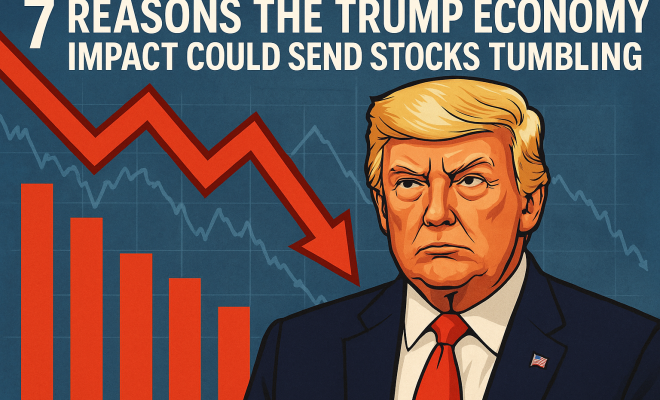
7 Reasons The Trump Economy Impact Could Send Stocks Tumbling
Alright, let’s cut to the chase: if you’re an investor, you’re probably feeling that knot in your stomach tighten just a bit. The financial world is buzzing with a renewed sense of unease, and it’s not just background noise. We’re looking at a confluence of factors that could seriously shake up the market, particularly the S&P 500 and the Nasdaq. When we talk about the Trump economy impact, we’re not just discussing historical performance; we’re talking about how current policy and global events intertwine to create a potentially volatile future.
Right now, the big elephant in the room is inflation. It’s persistent, it’s nagging, and it’s forcing the Federal Reserve’s hand. If you’ve been paying attention, you know the Fed has been on a mission to cool things down, and it looks like they’re not done yet. The expectation is for two more interest rate hikes before the year is out. Now, history has a pretty clear message for us about what happens when the Fed starts hiking rates – it’s rarely good news for stock market bulls. We’re going to dive into the specific reasons why this situation feels different, and why the potential for a significant market correction is very real.
1. The Fed’s Persistent Rate Hike Stance: A Historical Precedent
The Federal Reserve’s primary mandate is price stability and maximum employment. For a while, it seemed like they might be easing off the gas, but persistent inflation figures have clearly signaled that the job isn’t done. The market is now widely anticipating at least two more interest rate hikes by the end of the year. This isn’t just a minor adjustment; it’s a significant tightening of monetary policy, and it carries substantial implications for asset prices.
Think about it: when borrowing money becomes more expensive, it trickles down everywhere. Businesses face higher costs for expansion, consumers see credit card rates and mortgage payments climb, and the overall economic engine tends to slow. Historically, this kind of aggressive tightening cycle has often preceded market corrections. It’s a classic push-pull: the Fed tries to rein in inflation, and the market, which thrives on cheap money, gets a reality check. The debate around the Trump economy impact often circles back to how these broad macroeconomic levers are pulled, and right now, they’re pulling hard in one direction.
2. Oil Price Surges and Renewed Geopolitical Tensions: The Inflationary Fuel
Just when you thought inflation might be getting under control, a fresh crisis emerges. We’ve seen a brutal 30% surge in oil prices this month alone, and the culprit appears to be renewed hostilities between the U.S. and Iran. This isn’t just about what you pay at the pump; oil is a foundational commodity, and its price ripples through virtually every sector of the economy.
Higher energy costs mean increased expenses for transportation, manufacturing, and even food production. Businesses pass these costs on to consumers, further fueling inflationary pressures. This directly complicates the Fed’s job and makes those additional rate hikes almost inevitable. The geopolitical landscape, particularly in the Middle East, has always been a wildcard for global markets, and right now, it’s playing a particularly disruptive hand. Understanding the Trump economy impact means acknowledging how quickly international events can derail domestic economic stability.
3. Bank of England’s Stance and Global Inflation Fears: A Broader Problem
It’s not just the U.S. facing these headaches. Across the Atlantic, the Bank of England recently held its interest rates steady, but not because inflation is tamed. Quite the opposite: they’re grappling with their own mounting inflation fears, exacerbated by that rekindled Middle East crisis we just discussed. This global synchronicity of inflationary pressures is particularly troubling.
When major central banks worldwide are all facing similar challenges, it suggests a more systemic issue rather than an isolated domestic problem. It means there’s less room for individual economies to maneuver and more potential for a coordinated global slowdown. Investors need to pay close attention when multiple central banks are signaling distress; it’s a strong indicator that the headwinds are stiff and widespread. The global dimension of the Trump economy impact is undeniable, as trade, energy, and financial markets are deeply interconnected.
4. Historical Market Corrections Post-Rate Hike: A Sobering Look Back
Let’s talk about history, because it often rhymes, even if it doesn’t repeat exactly. The data from past tightening cycles is pretty sobering. After the Federal Reserve initiates its first interest rate hike, the stock market typically doesn’t take it well. We’ve seen the S&P 500 fall by an average of 10% and the Nasdaq Composite by an average of 15% in the periods following those initial increases.
These aren’t minor dips; these are legitimate corrections. For investors, this isn’t just academic; it’s about protecting capital and understanding potential downside risk. While past performance is never a guarantee of future results, ignoring these historical trends would be foolish. The market operates on sentiment, expectations, and hard data, and right now, the historical data is flashing a warning sign about the potential Trump economy impact on equity valuations. (See: Federal Reserve monetary policy overview.)
5. The Highly Charged Economic Debate: Uncertainty as a Market Mover
Beyond the raw numbers, there’s a palpable sense of debate and uncertainty swirling around the economy under the current administration. Everyone has an opinion, from pundits to politicians to everyday investors, and this creates a highly charged atmosphere. Is the economy resilient, or is it on the brink? Are we headed for a soft landing, or a hard one?
This kind of intense debate, especially when it involves the potential for a significant market downturn, can itself become a market mover. Uncertainty makes investors hesitant, leading to less capital flowing into riskier assets and more into safe havens. It’s a self-fulfilling prophecy to some extent: if enough people believe a downturn is coming, their actions can help bring it about. This psychological element is a crucial, often overlooked, aspect of the broader Trump economy impact.
6. Intensified Search Interest in Key Financial Terms: A Sign of Investor Anxiety
You can often gauge the collective mood of investors by looking at what they’re searching for online. Right now, there’s an intense surge in search interest for terms like ‘interest rate forecasts,’ ‘inflation impact,’ and ‘stock market predictions.’ What does this tell us? It tells us that people are worried, and they’re actively seeking information to understand and prepare for what’s next.
This isn’t just casual curiosity; it’s a reflection of genuine anxiety about personal finances and investment portfolios. When search trends spike for these kinds of terms, it’s often a precursor to market volatility. People are looking for answers, and sometimes, the very act of everyone looking for answers simultaneously can create a cascade effect in the market. The digital footprint of the Trump economy impact is clearly visible in these search trends.
7. Monetization Opportunities Amidst Volatility: A Double-Edged Sword for Consumers
While this economic climate signals potential trouble for broad market indices, it paradoxically creates substantial monetization opportunities in specific niches. We’re seeing consumers actively seeking advice on ‘best high-yield savings accounts,’ ‘refinance rates,’ and ‘how to invest during inflation.’ This isn’t just about financial institutions; it’s about how people are trying to protect and grow their assets during volatile times.
For individuals, this means there’s a clear incentive to be smart about your money. High-yield savings accounts become attractive when interest rates climb, offering a safer place to park cash. Refinancing decisions become critical as mortgage rates fluctuate. And understanding inflation-resistant investment strategies becomes paramount. The Trump economy impact, therefore, isn’t just about market performance; it’s about a broader shift in consumer financial behavior, creating both challenges and specific opportunities for those who are well-informed and agile.
8. The Role of Fiscal Policy: Beyond the Fed’s Reach
While the Federal Reserve handles monetary policy with its interest rate levers, we can’t ignore the massive influence of fiscal policy. That’s the government’s side of the economic equation – things like taxation, government spending, and debt management. During the Trump administration, we saw significant tax cuts, particularly the Tax Cuts and Jobs Act of 2017, which reduced corporate and individual income tax rates. The argument was that these cuts would stimulate economic growth by encouraging businesses to invest and consumers to spend.
The impact of these policies is still debated. Proponents point to robust GDP growth and low unemployment rates seen pre-pandemic. Critics argue that the tax cuts disproportionately benefited corporations and the wealthy, contributing to increased national debt without a corresponding boost in wages for the average worker. This fiscal approach, characterized by deregulation and tax reduction, created a specific economic environment. Now, as we face inflation and potential recession, the legacy of these fiscal decisions – particularly the increased national debt – might limit the current administration’s ability to respond with large-scale spending programs without exacerbating inflationary pressures. The interplay between past fiscal choices and present monetary challenges is a critical piece of the Trump economy impact puzzle.
9. Trade Wars and Supply Chains: Lingering Disruptions
Another defining characteristic of the Trump economy was its approach to international trade. The imposition of tariffs on goods from countries like China, often framed as a way to protect American industries and jobs, ignited trade wars. While some argued this was necessary to rebalance trade relationships, it undeniably disrupted established global supply chains.
The long-term effects of these trade policies are still being felt. Businesses that relied on international supply networks faced higher costs and uncertainty, leading some to reshore production or seek alternative suppliers. This restructuring, while sometimes beneficial for domestic manufacturing, also contributed to inflationary pressures by increasing the cost of imported goods and making supply chains less efficient in the short term. When you combine these trade disruptions with recent global events like the pandemic and geopolitical conflicts, you get a fragile supply chain system struggling to keep up with demand, a significant factor in today’s persistent inflation. This aspect of the Trump economy impact highlights how policies can have delayed, yet profound, consequences on global commerce and domestic prices.
10. Labor Market Dynamics: Pre-Pandemic Strength and Post-Pandemic Shifts
The labor market under the Trump administration saw historically low unemployment rates, reaching a 50-year low of 3.5% just before the COVID-19 pandemic hit. Wage growth was also ticking up, particularly for lower-income workers, which was a positive sign for many households. This period was often characterized by a strong job market, with businesses struggling to find enough workers. (See: BBC report on inflation and interest rates.)
However, the pandemic fundamentally reshaped the labor landscape. While the economy has recovered many of the jobs lost, the dynamics have shifted. We’re now seeing a phenomenon often called “the Great Resignation” or “Great Reshuffle,” where workers are demanding better pay, benefits, and work-life balance. This has led to continued wage pressure, which, while good for workers, also contributes to inflationary concerns for businesses. The tight labor market, influenced by demographic shifts and evolving worker expectations, is a complex factor today. Understanding the Trump economy impact requires acknowledging the pre-pandemic strengths and how they set the stage for the unique challenges and opportunities in the post-pandemic labor market.
11. Expert Perspectives: Diverse Views on Economic Trajectories
When you talk about something as complex as the economy, you’re never going to get a single, unified voice, especially when discussing the Trump economy impact. Economists, market strategists, and policymakers often hold widely divergent views, and understanding these different perspectives can help investors get a more nuanced picture.
For example, some conservative economists might argue that the tax cuts and deregulation under Trump were essential for unleashing business potential, leading to sustained growth and job creation. They might point to the pre-pandemic economic metrics as proof of concept, suggesting that any subsequent inflation or slowdown is due to other factors, like excessive government spending during the pandemic or geopolitical events. On the other hand, many progressive economists might contend that the policies exacerbated income inequality and contributed to an unsustainable increase in national debt, making the economy more vulnerable to shocks. They might highlight the rise in corporate profits versus slower wage growth for the majority, or the long-term implications of environmental deregulation.
Then there are market strategists who focus less on the political leanings and more on the quantitative data. They might analyze how specific sectors performed, how investor sentiment shifted, or how geopolitical risks were priced into assets. Their focus would be on dissecting the market’s reaction to policies like tariffs or changes in regulatory frameworks. Listening to these diverse viewpoints, understanding their underlying assumptions and the data they emphasize, is crucial. It helps you form your own informed opinion rather than simply absorbing a single narrative. It’s about recognizing that economic reality is often a tapestry woven from many threads, and each expert offers a unique lens through which to view the Trump economy impact.
Navigating the Current Economic Crosscurrents
So, what does all this mean for you, the individual investor or someone simply trying to keep their financial house in order? It means vigilance is key. We’re not just seeing a simple economic cycle play out; we’re witnessing a complex interplay of monetary policy, geopolitical tensions, and persistent inflationary pressures. The Federal Reserve’s commitment to taming inflation, even if it means more rate hikes, is a significant force. Combine that with surging oil prices driven by renewed U.S.-Iran hostilities and global inflation concerns echoed by the Bank of England, and you have a recipe for uncertainty.
Historically, aggressive rate hikes have often been followed by market corrections, and the averages of 10% for the S&P 500 and 15% for the Nasdaq aren’t numbers to be ignored. This isn’t about fear-mongering; it’s about being realistic and prepared. The intense public debate about the economy’s direction and the surge in online searches for financial guidance underscore a collective anxiety that can influence market movements.
Practical Steps for Investors in a Volatile Market
Given the current climate, what can investors do? First, reviewing your portfolio’s risk exposure is probably a smart move. Are you overly concentrated in growth stocks that are particularly sensitive to higher interest rates? Diversification remains a timeless principle, but it’s especially critical when market sectors are likely to react differently to tightening conditions. Consider rebalancing towards assets that traditionally perform better during inflationary periods or economic slowdowns, like commodities, real estate (though rising rates impact mortgages), or dividend-paying value stocks.
Secondly, cash is king, or at least a very good friend, in uncertain times. With rising interest rates, high-yield savings accounts are finally starting to offer decent returns. This provides a safe harbor for funds you might need in the short term, or simply a place to generate some income while you wait for clearer market signals. Don’t forget about I-Bonds or Treasury Inflation-Protected Securities (TIPS) if you’re looking for inflation protection, though they come with their own liquidity considerations.
Finally, staying informed is paramount. This isn’t about checking your portfolio every five minutes, but understanding the broader macroeconomic trends. Keep an eye on Fed announcements, oil price movements, and global economic indicators. Knowledge is power, and in a volatile market, it can be the difference between making informed decisions and reacting impulsively to headlines. The Trump economy impact is a multifaceted issue, and a proactive, informed approach is your best defense.
It’s easy to get caught up in the daily gyrations of the market, but what we’re really talking about here are fundamental shifts in the economic landscape. The confluence of aggressive monetary policy, geopolitical instability, and persistent inflation creates a challenging environment. While every downturn eventually gives way to recovery, navigating the immediate future will require a steady hand and a clear understanding of the forces at play. Don’t just hope for the best; prepare for the possibilities. (See: New York Times on Fed interest rate hikes.)
Frequently Asked Questions About the Trump Economy Impact and Current Market Conditions
Q1: How did the Trump administration’s tax cuts affect the economy long-term?
The Tax Cuts and Jobs Act of 2017 significantly lowered corporate and individual income tax rates. In the short term, this was credited with boosting corporate profits and stock market performance. Businesses had more capital, which theoretically spurred investment and job creation, contributing to the strong pre-pandemic economy. However, critics argue that the cuts also ballooned the national debt without generating enough additional revenue to offset the losses, potentially limiting future fiscal flexibility. The long-term impact is still being debated, but it’s clear these cuts altered the financial landscape for businesses and individuals, setting a new baseline for government revenue and spending.
Q2: Were trade wars under Trump beneficial or detrimental to the U.S. economy?
This is a complex question with arguments on both sides. Proponents argued that tariffs were necessary to protect domestic industries, reduce trade deficits, and pressure other countries, particularly China, into fairer trade practices. Some American manufacturers did see a boost. However, opponents pointed to higher costs for consumers and businesses that relied on imported goods, retaliatory tariffs from other countries hurting U.S. exporters, and significant disruptions to global supply chains. The trade wars contributed to uncertainty for many businesses and likely fueled some inflationary pressures by making imports more expensive. The consensus leans towards a mixed bag, with specific sectors benefiting while others faced significant headwinds.
Q3: What was the state of the job market during the Trump presidency?
Before the COVID-19 pandemic, the U.S. labor market experienced a period of remarkable strength. Unemployment rates hit a 50-year low of 3.5%, and job creation was robust. Wage growth also showed positive trends, particularly for lower and middle-income workers, indicating a tightening labor market where employers were competing for talent. This strong job market was a key pillar of the economic narrative during that time. The pandemic, of course, caused an unprecedented shock, but the pre-existing strength provided a foundation for recovery.
Q4: How did deregulation policies impact the economy?
The Trump administration pursued a broad agenda of deregulation across various sectors, including finance, environment, and energy. The stated goal was to reduce the burden on businesses, stimulate investment, and encourage economic growth. For example, some financial regulations enacted after the 2008 crisis were eased. In the energy sector, policies aimed to boost domestic oil and gas production. Supporters argued this led to increased business activity and reduced compliance costs. Critics, however, raised concerns about potential risks to consumer protection, environmental quality, and financial stability, suggesting that the long-term costs of deregulation might outweigh the short-term economic benefits.
Q5: How does the current inflation compare to inflation during the Trump years?
During most of the Trump administration (2017-2020), inflation generally remained relatively low and stable, often hovering around the Federal Reserve’s target of 2%. This period was characterized by steady economic growth without significant inflationary pressures. The current inflationary environment, however, is much different. It’s marked by significantly higher rates, driven by a combination of factors including pandemic-related supply chain disruptions, massive fiscal stimulus, strong consumer demand, and more recently, geopolitical events like the conflict in the Middle East impacting oil prices. The shift from low, stable inflation to the persistent, elevated inflation we see today is one of the most striking economic differences between the two periods.
Q6: What role did the national debt play in the Trump economy?
The national debt increased significantly during the Trump administration, driven primarily by the 2017 tax cuts, which reduced government revenue, and increased government spending. While a growing economy can sometimes absorb more debt, the combination of lower tax receipts and higher outlays meant the debt-to-GDP ratio rose. This increase in debt becomes a concern because it can limit a country’s fiscal flexibility during economic downturns and potentially lead to higher interest payments, crowding out other essential government spending. The legacy of this increased debt level is a factor in current economic considerations, especially as interest rates rise.
Q7: How did global events under Trump, like relations with China, affect U.S. investors?
The U.S.-China relationship saw significant tension during the Trump presidency, primarily due to trade disputes and tariffs. For U.S. investors, this created a considerable amount of uncertainty and volatility. Companies with extensive supply chains in China or those heavily reliant on the Chinese market faced risks from tariffs and potential business disruptions. Tech companies, in particular, felt the impact of restrictions on technology transfers and sales. While some investors might have seen opportunities in domestic companies benefiting from protectionist policies, the overall climate was one of elevated geopolitical risk, which typically makes markets nervous and can lead to capital flight from riskier assets.
Trending Now
Frequently Asked Questions
What impact does the Federal Reserve's interest rate hikes have on the stock market?
When the Federal Reserve raises interest rates, borrowing costs increase for businesses and consumers, leading to slower economic growth. Historically, such tightening can result in decreased asset prices, causing significant volatility in the stock market, particularly affecting indices like the S&P 500 and Nasdaq.
How does inflation influence stock market performance?
Persistent inflation can create uncertainty in the market, prompting the Federal Reserve to implement rate hikes. This can lead to increased costs for businesses and consumers, ultimately slowing down economic growth and negatively impacting stock market performance.
Why is the current economic climate different from previous years?
The current economic climate is marked by persistent inflation and anticipated interest rate hikes, which differ from previous years of low rates and stable prices. These factors create a unique environment that could lead to a significant market correction.
What are the potential risks for investors in the Trump economy?
Investors may face risks such as increased borrowing costs, higher inflation, and the potential for significant market corrections due to the Federal Reserve's rate hikes. These factors combined could create a volatile investment landscape.
What should investors consider with upcoming interest rate hikes?
Investors should prepare for potential market volatility as the Federal Reserve is expected to implement at least two more interest rate hikes. It's important to assess how these changes could impact borrowing costs, consumer spending, and overall economic growth.
What's your take on this? Share your thoughts in the comments below — we read every one.