The Tech Edvocate

Top Menu

  • Advertisement
  • Apps
  • Home Page
  • Home Page Five (No Sidebar)
  • Home Page Four
  • Home Page Three
  • Home Page Two
  • Home Tech2
  • Icons [No Sidebar]
  • Left Sidbear Page
  • Lynch Educational Consulting
  • My Account
  • My Speaking Page
  • Newsletter Sign Up Confirmation
  • Newsletter Unsubscription
  • Our Brands
  • Page Example
  • Privacy Policy
  • Protected Content
  • Register
  • Request a Product Review
  • Shop
  • Shortcodes Examples
  • Signup
  • Start Here
    • Governance
    • Careers
    • Contact Us
  • Terms and Conditions
  • The Edvocate
  • The Tech Edvocate Product Guide
  • Topics
  • Write For Us
  • Advertise

Main Menu

  • Start Here
    • Our Brands
    • Governance
      • Lynch Educational Consulting, LLC.
      • Dr. Lynch’s Personal Website
      • Careers
    • Write For Us
    • The Tech Edvocate Product Guide
    • Contact Us
    • Books
    • Edupedia
    • Post a Job
    • The Edvocate Podcast
    • Terms and Conditions
    • Privacy Policy
  • Topics
    • Assistive Technology
    • Child Development Tech
    • Early Childhood & K-12 EdTech
    • EdTech Futures
    • EdTech News
    • EdTech Policy & Reform
    • EdTech Startups & Businesses
    • Higher Education EdTech
    • Online Learning & eLearning
    • Parent & Family Tech
    • Personalized Learning
    • Product Reviews
  • Advertise
  • Tech Edvocate Awards
  • The Edvocate
  • Pedagogue
  • School Ratings

logo

The Tech Edvocate

  • Start Here
    • Our Brands
    • Governance
      • Lynch Educational Consulting, LLC.
      • Dr. Lynch’s Personal Website
        • My Speaking Page
      • Careers
    • Write For Us
    • The Tech Edvocate Product Guide
    • Contact Us
    • Books
    • Edupedia
    • Post a Job
    • The Edvocate Podcast
    • Terms and Conditions
    • Privacy Policy
  • Topics
    • Assistive Technology
    • Child Development Tech
    • Early Childhood & K-12 EdTech
    • EdTech Futures
    • EdTech News
    • EdTech Policy & Reform
    • EdTech Startups & Businesses
    • Higher Education EdTech
    • Online Learning & eLearning
    • Parent & Family Tech
    • Personalized Learning
    • Product Reviews
  • Advertise
  • Tech Edvocate Awards
  • The Edvocate
  • Pedagogue
  • School Ratings
  • Consumer Reports Reveal Truth – Is Flexigenics Reviews Legit or Scam? (Shocking Findings)

  • Quietum Plus 2026 Review Complaints and Shocking User Findings

  • This Founder’s Rs 75 LPA Sacrifice Crumbled in 30 Days — Here’s Why

  • Urgent: Claude AI Bioweapons — The Unsettling Truth Anthropic Just Revealed

  • Shocking: Three Major Xbox Games Shutting Down Forever in 2026

  • One Man’s Dire Warning: Is AI Already Too Dangerous To Control?

  • The Urgent Parental Consent Debate Over Student Mental Health Screenings

  • LAUSD restricts all students from using AI tools | K-12 Dive

  • Catastrophic Data Breach: 153 Million Driver’s Licenses Exposed on Dark Web

  • Autonomous AI Hackers Weaponize PaperCut Flaws: The Terrifying New Era of Cybercrime

Digital & Mobile Technology
Home›Digital & Mobile Technology›The History of iOS, from Version 1.0 to 16.0

The History of iOS, from Version 1.0 to 16.0
By Matthew Lynch
June 8, 2023
0
Spread the love

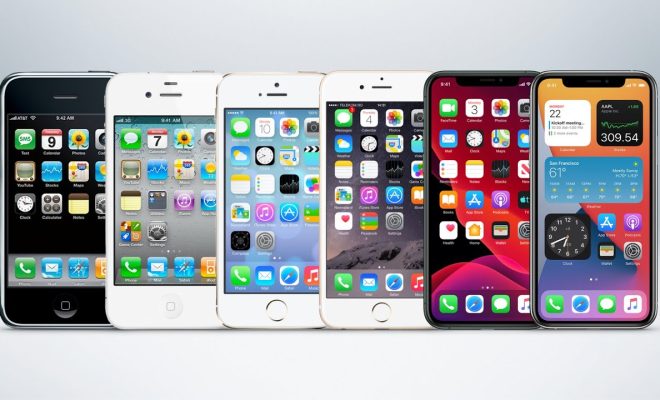
The iOS operating system has come a long way since its inception in 2007. Version 1.0 was the first-generation OS for the iPhone, which was released on June 29, 2007.

iOS 1.0

This version of iOS offered basic features such as SMS, email, web browsing, and the ability to make phone calls. Safari was the default web browser, while iTunes was used for music playback. It was a groundbreaking move for the mobile industry, as the iPhone’s touch interface was a departure from the traditional button-driven devices.

iOS 2.0

The second-generation iOS came out in 2008, about a year after its initial release. This version brought with it the App Store, which allowed users to download third-party applications. Users could now interact with applications other than the pre-installed ones, making their phone experience more personalized.

iOS 3.0

The third iteration of iOS was released in 2009, which brought new features like copy-paste, MMS, and Spotlight search. The release also brought new applications like Voice Memos and a landscape mode for the keyboard.

iOS 4.0

The fourth version of iOS launched in 2010 and brought with it a multitasking functionality, which made switching between applications that much smoother. The update also brought unified inboxes for email, folders for organizing applications, and FaceTime for video chat.

iOS 5.0

Released in 2011, iOS 5.0 significantly improved notifications in the operating system, with Notification Center aggregating all alerts in one place. The release also brought iMessage, which allowed users to send text messages to other iOS devices without incurring SMS fees from carriers.

iOS 6.0

The sixth iteration of iOS came out in 2012 with a new design overhaul in terms of the interface of the operating system with a more modern flat design. Apple’s Siri virtual assistant also debuted with this release, which could recognize more languages and respond to more user actions.

iOS 7.0

The iOS 7.0 update, which launched in 2013, brought significant design changes to the operating system with a more refined flat design. The release also brought Control Center, which allowed users to quickly change settings from a single screen.

iOS 8.0

iOS 8.0 came out in 2014, focusing on improving performance, adding new features like HealthKit, HomeKit and Continuity, which allowed users to seamlessly move from one device to another while working on the same project.

iOS 9.0

Launched in 2015, iOS 9.0 focused more on improving performance, including improved battery life, low power mode, and better Siri integration.

iOS 10.0

The iOS 10 update brought a lot of new features, including a redesigned Lock screen, expanded 3D Touch functionality, new updates for Siri, and an updated Photo app.

iOS 11.0

The iOS 11 update brought a lot of significant changes to iOS, including a redesigned App Store, an updated Control Center, and new features for the iPad.

iOS 12.0

Released in 2018, iOS 12.0 focused on improving performance and included features like grouped notifications, Memoji, and Screen Time, which allowed users to monitor their device usage.

iOS 13.0

The iOS 13 update, launched in 2019, brought a lot of major changes, including the long-awaited Dark Mode, a new and improved Photos app, an updated Maps app, and significant performance improvements.

iOS 14.0

Released in 2020, iOS 14.0 saw significant changes including an updated Home screen design, translated Siri, and the introduction of the App Library.

iOS 15.0

The latest version of iOS, iOS 15.0, launched in 2021 and brought with it a range of new features, from updates to FaceTime and Maps, to major changes in notifications, messaging, and even AI.

In conclusion, the history of iOS is a story of evolution, growth, and innovation. From its modest beginnings as a basic operating system for the iPhone, iOS has become a robust and highly customizable platform that plays a significant role in our daily lives. As technology continues to push forward, it will be interesting to see how iOS continues to evolve and adapt, staying relevant and staying a preferred choice of operating systems for users worldwide.

Previous Article

What Is a PSB File?

Next Article

How to Turn Off Pandora

Matthew Lynch

Related articles More from author

  • Digital & Mobile Technology

    Ways to Stream Video Games From a PC to Your TV

    August 5, 2023
    By Matthew Lynch
  • Digital & Mobile Technology

    Use Scarlet as a Power Color in Publications

    July 6, 2023
    By Matthew Lynch
  • Digital & Mobile Technology

    How to Turn Your Phone’s Flashlight On and Off

    June 7, 2023
    By Matthew Lynch
  • Digital & Mobile Technology

    How Much Does Zoom Cost to Use?

    June 9, 2023
    By Matthew Lynch
  • Digital & Mobile Technology

    How to Add, Remove, and Disable Extensions in Chrome

    May 18, 2023
    By Matthew Lynch
  • Digital & Mobile Technology

    Why Spotify’s Car Thing Failed to Sell

    June 23, 2023
    By Matthew Lynch

Search

Login & Registration

  • Log in
  • Entries feed
  • Comments feed
  • WordPress.org

Newsletter

Signup for The Tech Edvocate Newsletter and have the latest in EdTech news and opinion delivered to your email address!

About Us

Since technology is not going anywhere and does more good than harm, adapting is the best course of action. That is where The Tech Edvocate comes in. We plan to cover the PreK-12 and Higher Education EdTech sectors and provide our readers with the latest news and opinion on the subject. From time to time, I will invite other voices to weigh in on important issues in EdTech. We hope to provide a well-rounded, multi-faceted look at the past, present, the future of EdTech in the US and internationally.

We started this journey back in June 2016, and we plan to continue it for many more years to come. I hope that you will join us in this discussion of the past, present and future of EdTech and lend your own insight to the issues that are discussed.

Newsletter

Signup for The Tech Edvocate Newsletter and have the latest in EdTech news and opinion delivered to your email address!

Contact Us

The Tech Edvocate
910 Goddin Street
Richmond, VA 23231
(601) 630-5238
[email protected]

Copyright © 2026 Matthew Lynch. All rights reserved.