The Historical Accuracy of Assassin’s Creed
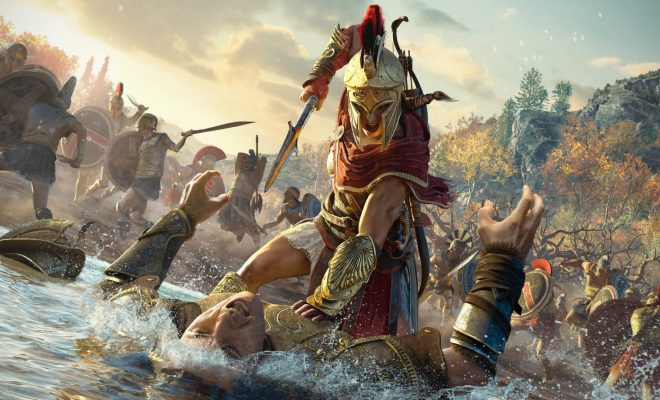
One of the most compelling aspects of the Assassin’s Creed franchise is its commitment to historical accuracy. While the games blend fiction with fact, they have garnered praise for their meticulous recreation of historical periods and locations. This dedication to authenticity has not only enhanced the gaming experience but has also sparked interest in history among players.
From the very beginning, Ubisoft has employed historians and researchers to ensure that each game presents a faithful representation of its chosen era. This attention to detail extends to architecture, clothing, social customs, and even language. For instance, in Assassin’s Creed II, set in Renaissance Italy, the development team recreated 15th-century Florence, Venice, and other Italian cities with stunning accuracy.
The series has covered a wide range of historical periods and locations, including the Third Crusade, the Italian Renaissance, the American Revolution, the Golden Age of Piracy, Ancient Egypt, Classical Greece, and the Viking Age. In each case, the developers have strived to create an immersive historical environment that serves as more than just a backdrop for the game’s action.
However, it’s important to note that Assassin’s Creed is not, and does not claim to be, a completely accurate historical simulation. The games take creative liberties with historical events and figures to craft compelling narratives. The central conflict between the Assassins and Templars, along with the sci-fi elements involving the Precursor civilization, are entirely fictional.
Nevertheless, the series has been praised for its portrayal of historical events and figures. Many of the characters players encounter in the games are based on real historical personalities, and their depictions often align closely with historical accounts. For example, Leonardo da Vinci’s portrayal in Assassin’s Creed II and Brotherhood is largely consistent with what is known about the Renaissance polymath.
The games also often incorporate lesser-known historical events and figures, bringing them to the attention of a wider audience. This has led to increased interest in these historical periods among players, with many reporting that they’ve been inspired to learn more about the eras depicted in the games.
Assassin’s Creed’s approach to history has not been without controversy, however. The portrayal of certain historical figures or events has sometimes been criticized for inaccuracy or bias. The developers have responded to such criticisms by emphasizing that while they strive for accuracy, they also need to balance historical fidelity with the needs of storytelling and gameplay.
One of the most interesting aspects of the series’ historical approach is how it uses the concept of genetic memory and the Animus device to explore different interpretations of historical events. This framing device allows the games to present history as a subjective experience, acknowledging that our understanding of the past is often incomplete and open to interpretation.
The educational potential of Assassin’s Creed has not gone unnoticed. In 2018, Ubisoft released Discovery Tour modes for Origins and Odyssey, which allow players to explore the game worlds without combat or story constraints, learning about the history and culture of Ancient Egypt and Greece through guided tours. This feature has been used in educational settings, demonstrating the potential of video games as teaching tools.
In conclusion, while Assassin’s Creed takes creative liberties with history, its commitment to historical accuracy in its settings, characters, and cultural depictions has set a new standard for historical fiction in video games. By blending meticulous research with engaging storytelling and gameplay, the series has not only provided entertainment but has also inspired millions of players to take a deeper interest in history.