Glowing Cloud Over NZ: Chinese Rocket’s 2026 Sky Spectacle
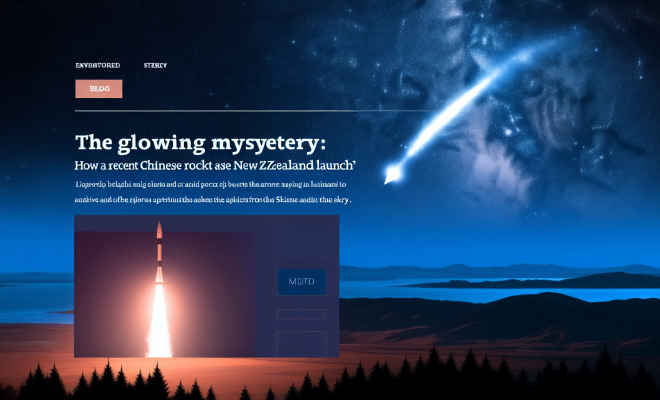
On April 24, 2026, residents of New Zealand were treated to a spectacular sight—a glowing cloud that illuminated the evening sky. Initial investigations suggest that this celestial phenomenon was likely the result of a Chinese rocket launch that took place around the same time. As this event captured the attention of the public and the media, it also raised questions about the implications of space activities on our atmosphere and environment.
The Event: A Glimpse into the Sky
The glowing cloud appeared in the New Zealand sky on the evening of April 24, prompting curiosity and wonder among the local population. Many took to social media to share photos and videos, which showcased the ethereal glow against the backdrop of the darkening sky. Observers described the phenomenon as surreal, with hues of orange and blue swirling together in an otherworldly display.
Initial Reactions and Speculations
As news of the glowing cloud spread, various theories emerged regarding its origin. Some speculated it might have been a natural meteorological event, while others pointed towards human activity in space. The timing of the phenomenon coincided with a known rocket launch conducted by China, leading experts to investigate further.
Understanding Rocket Launches and Their Atmospheric Effects
Rocket launches are increasingly common as countries and private companies expand their presence in space. With each launch, however, there are potential environmental impacts that can manifest in various ways. The glowing cloud seen over New Zealand is a reminder of how these activities can produce visible effects in our atmosphere.
What Happens During a Rocket Launch?
- Liftoff: Rockets are propelled into space using powerful engines that burn fuel, creating thrust to overcome Earth’s gravity.
- Stage Separation: Most rockets consist of multiple stages. After the first stage burns out, it separates from the rest of the rocket, often falling back to Earth.
- Upper Stage Operations: The remaining stages continue to propel the payload into orbit. These stages can sometimes release remnants or produce visible effects as they re-enter the atmosphere.
Atmospheric Effects of Rocket Upper Stages
When rocket upper stages reach the end of their missions, they may re-enter the atmosphere. This process can lead to the creation of clouds or trails that resemble glowing phenomena. The materials used in rocket fuels, combined with the intense heat generated during re-entry, can ionize the surrounding air, creating bright, colorful displays.
Recent Chinese Rocket Launch: Key Details
The launch in question was conducted by China on April 24, 2026, as part of the country’s ongoing space exploration efforts. This launch was one of several that China has undertaken in recent years, showcasing its commitment to advancing its capabilities in space.
Significance of Chinese Space Activities
China’s space program has made remarkable strides in recent years. With missions ranging from lunar exploration to the construction of a modular space station, the nation has positioned itself as a key player in global space activities. Each launch not only signifies progress for China but also contributes to the growing conversation about space traffic management and environmental impacts.
The Public’s Perception of Space Activities
The glowing cloud phenomenon over New Zealand has sparked interest and discussions among the public regarding space activities. While some view these launches as exciting advancements in technology and exploration, others harbor concerns about the environmental implications.
Balancing Innovation and Environmental Concerns
- Environmental Impact: The effects of rocket launches on the atmosphere, including emissions and debris, are critical issues that need addressing as space activities increase.
- Public Engagement: As more people witness phenomena like the glowing cloud, public interest in space science and environmental stewardship may grow.
- Policy Development: Governments and organizations must develop guidelines to ensure sustainable practices in space exploration.
Conclusion: Illuminating the Future of Space Exploration
The glowing cloud over New Zealand serves as a striking reminder of the interconnectedness of human activities and the environment. As nations continue to explore the cosmos, it is crucial to consider the implications of these actions on our planet’s atmosphere and climate. By fostering dialogue between scientists, policymakers, and the public, we can ensure that the excitement of space exploration is balanced with a commitment to protecting our home planet.
As we look to the future, the ongoing advancements in space technology will undoubtedly lead to more spectacular sights in our skies. However, with this comes the responsibility to understand and mitigate the effects of our ventures beyond Earth. The glowing cloud may have been a fleeting moment of beauty, but it also highlights the pressing need for sustainable practices in space exploration.