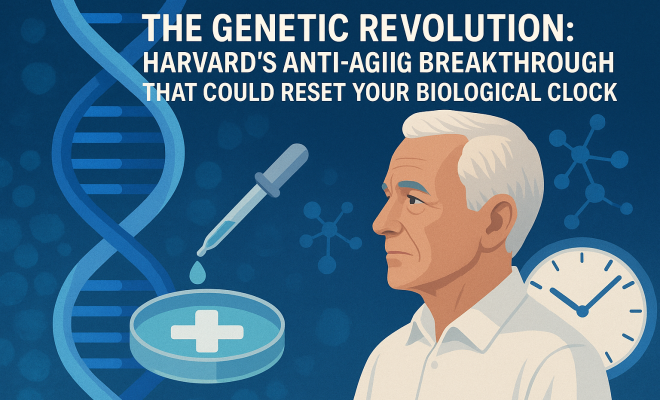
The Genetic Revolution: Harvard’s Anti-Aging Breakthrough That Could Reset Your Biological Clock
For centuries, the quest for eternal youth has been relegated to myths and legends, a fantastical dream pursued by alchemists and emperors. Yet, here we are in 2023, standing on the precipice of a scientific revolution that promises to turn those ancient dreams into tangible realities. The landscape of anti-aging treatments is shifting dramatically, moving beyond superficial fixes to target the very genetic mechanisms that drive the aging process. This isn’t just about looking younger; it’s about being younger, at a cellular level, and extending our healthspan alongside our lifespan.
The pace of discovery is frankly breathtaking. Just recently, the 13th Aging Research and Drug Discovery (ARDD) meeting at Harvard buzzed with the convergence of artificial intelligence, major pharmaceutical players, and pioneering scientists all pushing the boundaries of longevity biotechnology. What we’re seeing isn’t incremental progress; it’s a series of groundbreaking leaps that are redefining what we thought was possible. From gene expression reprogramming to innovative topical solutions, the best anti-aging treatments 2023 are offering hope that we might not just slow down aging, but actually reverse it. Let’s dig into the most exciting developments shaping this incredible field.
1. SRSF1 and the Genetic Reset Button: The Harvard Breakthrough
Imagine a switch within your cells that, when flipped, could rewind the clock on aging. That’s essentially what researchers at Harvard’s Wyss Institute for Biologically Inspired Engineering have uncovered with their groundbreaking work on a splicing factor called SRSF1. This isn’t some theoretical musing; it’s a tangible, biological mechanism that has demonstrated remarkable results in aged mice, successfully extending both their healthspan and their lifespan. It’s a discovery that fundamentally challenges our long-held beliefs about aging, suggesting it’s not an irreversible one-way street but a process that can be reprogrammed.
What exactly does SRSF1 do? In simple terms, it’s involved in gene expression networks. Think of your DNA as a massive instruction manual for your body. Over time, due to various factors like environmental stressors and just plain living, these instructions can get muddled, leading to cellular dysfunction and the hallmarks of aging. SRSF1 appears to act like a master editor, helping to restore the clarity and accuracy of these instructions. By tweaking these genetic networks, the Harvard team observed a multifaceted rejuvenation effect, essentially giving aged cells a fresh start. This isn’t just cosmetic; it’s about improving organ function, resilience, and overall vitality, paving the way for truly transformative anti-aging treatments in 2023 and beyond.
The implications of the SRSF1 discovery are vast. Historically, the prevailing scientific view of aging was that it was a process of accumulated damage and entropy, an inevitable decline. This research offers a different perspective: aging might be, in part, a failure in our cells’ ability to accurately read and execute their genetic instructions. If that’s the case, then fixing the instruction reader – SRSF1 – could theoretically reset a broad range of cellular functions. This isn’t targeting a single pathway like some traditional drugs; it’s more like recalibrating the entire operating system of a cell. This holistic approach to rejuvenation is what makes SRSF1 so compelling and why it stands out among the best anti-aging treatments 2023 is seeing emerge from research labs.
While human trials are still a ways off, the success in mice opens up exciting avenues. We’re talking about potential therapies that could address not just the superficial signs of aging, but the underlying causes of age-related diseases like neurodegeneration, cardiovascular issues, and metabolic disorders. Imagine a future where a treatment could improve cognitive function, strengthen bones, and enhance immune response all at once, by simply optimizing cellular gene expression. That’s the long-term vision this research inspires, offering a glimpse into what genuine biological age reversal could look like.
2. AI’s Ascendance in Longevity Research: Accelerating Discovery
The scientific method, while rigorous, can be painstakingly slow. But what happens when you supercharge it with artificial intelligence? That’s precisely what’s happening in longevity biotechnology, and it’s accelerating discovery at an unprecedented pace. The ARDD meeting at Harvard underscored this convergence, highlighting how AI is no longer just a supporting player but a central engine driving new insights into the aging process and identifying potential interventions.
AI algorithms can sift through vast datasets of genetic information, protein interactions, and cellular responses – data far too complex for human analysis alone. They can identify subtle patterns, predict drug candidates, and model the effects of various interventions on biological aging. This means researchers can move from hypothesis to validation much faster, bypassing years of trial and error. This synergy between human ingenuity and artificial intelligence is not only speeding up the identification of molecules like SRSF1 but also helping to personalize anti-aging strategies, moving us closer to truly bespoke treatments tailored to an individual’s unique biological makeup. It’s a game-changer for finding the best anti-aging treatments 2023 has to offer.
Consider the sheer volume of biological data available today: genomics, proteomics, metabolomics, epigenomics, and clinical trial results. A human researcher can only process a tiny fraction of this. AI, however, can analyze these massive, multi-modal datasets to uncover correlations and causal relationships that would otherwise remain hidden. For instance, AI can predict which compounds are most likely to modulate specific aging pathways, or even design entirely new molecules with desired anti-aging properties. This predictive power significantly reduces the time and cost associated with drug discovery, making the path from concept to clinic much more efficient.
Moreover, AI is crucial for developing “digital twins” – computational models of individual biological systems. By feeding an AI algorithm your unique genetic profile, lifestyle data, and health markers, it could theoretically predict how you’re aging, what specific pathways are most dysfunctional, and which interventions would be most effective for you. This level of personalization is the holy grail of anti-aging medicine, moving us away from one-size-fits-all solutions towards precision longevity. Companies are already using AI to identify biomarkers of aging, develop personalized supplement recommendations, and even design individualized exercise and nutrition plans. This represents a significant leap in making the best anti-aging treatments 2023 more tailored and impactful for everyone. (See: Harvard University research on aging.)
3. The Rise of Biopharmaceutical Investments: From Lab to Market
When major pharmaceutical companies start pouring significant resources into a nascent field, you know it’s serious. This is precisely what’s happening with longevity biotechnology. For a long time, anti-aging research was primarily confined to academic labs and niche biotech startups. But the tide has turned. The promise of not just treating age-related diseases but preventing them altogether, or even reversing the aging process, represents an enormous market opportunity. For more context, see RNA breakthroughs in Alzheimer's treatment.
These large pharmaceutical players bring not only massive funding but also the infrastructure, regulatory expertise, and clinical trial capabilities needed to translate groundbreaking scientific discoveries into widely available treatments. Their involvement signals a maturation of the field, moving it from the realm of speculative science into mainstream medical development. This influx of capital and expertise means that discoveries like SRSF1, or novel compounds identified by AI, have a much clearer path from the lab bench to your medicine cabinet. It’s an exciting time, as this synergy promises to rapidly bring forward some of the best anti-aging treatments 2023 will see and beyond.
The shift in investment strategy by big pharma is a strong indicator of the field’s increasing legitimacy. For decades, age-related diseases were treated individually – a drug for heart disease, another for Alzheimer’s, one for diabetes. The “longevity approach” flips this, aiming to treat aging itself as the root cause of these conditions. This fundamental paradigm shift opens up a potential market that dwarfs individual disease markets. Estimates for the global anti-aging market vary widely but are consistently in the hundreds of billions of dollars, projected to grow significantly in the coming years.
This increased investment isn’t just about money; it’s about talent. Leading scientists and researchers are being drawn into longevity biotech companies, fostering an ecosystem of innovation. Partnerships between academic institutions and pharmaceutical giants are becoming more common, creating pipelines that effectively bridge the gap between basic research and clinical application. This collaborative environment, fueled by substantial capital, is crucial for accelerating the development and approval of new therapies. When you combine cutting-edge science with the formidable resources of the pharmaceutical industry, the potential for bringing the best anti-aging treatments 2023 has to offer to a global population becomes a much more achievable reality.
4. Topical Solutions That Go Deeper: Beyond Surface-Level Beauty
While the genetic breakthroughs are profoundly exciting, not all advancements require a trip to a specialized clinic. The world of topical anti-aging solutions is also experiencing a significant evolution. We’re moving far beyond simple moisturizers and collagen creams. The latest innovations are leveraging sophisticated delivery systems and biologically active compounds designed to penetrate deeper and exert more profound effects on skin health and biological age.
A prime example, recently reported, is a new anti-aging cream that demonstrated an astonishing ability to reduce the biological age of skin by two years in participants. This isn’t just about reducing the appearance of wrinkles; it’s about actually rejuvenating the skin at a cellular level, making it biologically younger. These creams often contain ingredients that stimulate cellular repair mechanisms, boost collagen and elastin production, and protect against environmental damage more effectively than ever before. This direct consumer application of advanced science means that access to some of the best anti-aging treatments 2023 offers for skin is becoming more widespread and impactful.
The key to these advanced topical solutions lies in several innovative approaches. First, improved ingredient science: researchers are identifying novel peptides, growth factors, antioxidants, and even small molecules that can directly influence cellular behavior in the skin. These aren’t just hydrating; they’re signaling cells to produce more collagen, repair DNA damage, or reduce inflammation. Second, enhanced delivery systems: traditional creams often struggle to get active ingredients past the skin’s protective barrier. Newer formulations use nanotechnology, liposomal encapsulation, or specialized polymers to ensure these potent ingredients reach the deeper layers of the epidermis and dermis where they can have a genuine biological impact.
Furthermore, the focus has shifted from simply adding collagen to stimulating the skin’s own collagen production. Ingredients like retinoids (Vitamin A derivatives), certain forms of Vitamin C, and specific peptides are proven to upregulate fibroblasts, the cells responsible for producing collagen and elastin. This endogenous stimulation leads to more sustainable and natural-looking rejuvenation. We’re also seeing topical products designed to mitigate glycation, a process where sugars bind to proteins, stiffening tissues and contributing to wrinkles. The best anti-aging treatments 2023 for skin are not just about masking symptoms; they’re about recalibrating the skin’s cellular machinery to function more youthfully, making a measurable difference in biological age, not just perceived age.
5. The Consumer Experience: What to Expect from New Treatments
With so many exciting developments, consumers are naturally eager to understand what these new anti-aging treatments mean for them. The experience, of course, varies wildly depending on the type of treatment. For cutting-edge genetic interventions still in early stages, the consumer experience is currently limited to participation in clinical trials, which come with rigorous protocols and potential risks, albeit under strict medical supervision. This is where the true pioneers of longevity will make their mark.
On the other hand, for advanced topical solutions, the experience is much more accessible. Users can expect to integrate these creams and serums into their daily skincare routines, much like traditional products. However, the key difference lies in the expectation of more significant, measurable results beyond mere cosmetic improvements. We’re talking about tangible changes in skin elasticity, texture, and even markers of biological age. It’s crucial for consumers to look for products backed by scientific studies and transparent data, rather than just marketing hype, to ensure they’re truly investing in the best anti-aging treatments 2023 has to offer. (See: National Institutes of Health on aging.)
Beyond topicals and future genetic therapies, other treatments are already in various stages of availability, offering different consumer experiences. For instance, non-invasive aesthetic procedures like advanced laser treatments, radiofrequency therapies, and focused ultrasound are delivering remarkable results in skin tightening and rejuvenation with minimal downtime. These typically involve a series of in-office sessions, with results gradually appearing over weeks or months. The experience here is professional, guided by a licensed practitioner, and often involves a consultation to determine the most suitable approach for your specific skin concerns and goals.
Then there are the growing number of diagnostic tools that inform personalized longevity strategies. Consumers can now access advanced biological age tests, often through specialized clinics or direct-to-consumer kits, which measure epigenetic markers, telomere length, or specific blood biomarkers. The experience here involves providing biological samples (saliva or blood), receiving a detailed report on your biological age compared to your chronological age, and often receiving personalized recommendations for lifestyle changes, supplements, or further medical interventions. This diagnostic aspect is becoming a crucial first step for many seeking the best anti-aging treatments 2023 has, as it helps identify specific areas for intervention rather than just guessing. The consumer experience is evolving from passive product application to active, data-driven participation in one’s own longevity journey. For more context, see AI's impact on healthcare advancements.
6. Navigating the Wild West of Longevity Supplements: Buyer Beware
The allure of extended youth has always attracted its share of opportunistic charlatans, and the current boom in anti-aging research is no exception. While legitimate scientific breakthroughs are occurring, the market is also flooded with a myriad of supplements promising miraculous results with little to no scientific backing. This creates a challenging landscape for consumers trying to discern genuine innovations from snake oil.
When considering longevity supplements, skepticism is your best friend. Look for ingredients that have been rigorously studied in human trials, not just in petri dishes or rodents (though early animal studies can be promising). Be wary of exaggerated claims, proprietary blends with undisclosed ingredients, and products that promise a quick fix without any effort on your part. Consulting with a healthcare professional knowledgeable in anti-aging medicine can also provide invaluable guidance, helping you make informed choices and avoid wasting money on ineffective or potentially harmful products. The best anti-aging treatments 2023 are rooted in science, not wishful thinking.
The supplement industry operates with less stringent regulation than pharmaceuticals, which allows for a wide range of product quality and efficacy claims. Many ingredients touted as “anti-aging miracles” are often based on preliminary in vitro (test tube) or animal studies, which don’t always translate to human benefits. For example, compounds like NAD+ boosters (NMN, NR), resveratrol, and senolytics (e.g., fisetin, quercetin) have shown promise in research, but the optimal dosages, long-term safety, and definitive human efficacy are still being actively investigated. It’s not enough for an ingredient to exist; it needs to be proven to work in humans, in a safe and effective manner, and in the dosage provided.
A critical red flag is the lack of third-party testing for purity and potency. Many supplements don’t contain the advertised amount of the active ingredient, or worse, are contaminated with heavy metals or undeclared substances. Always look for products that have undergone independent third-party analysis and can provide certificates of analysis. Educating yourself on the specific mechanisms of action of popular longevity molecules and understanding the current scientific consensus is vital. Don’t fall for marketing that uses scientific jargon without providing actual data. For the best anti-aging treatments 2023, especially in the supplement space, evidence and transparency are paramount.
7. Ethical Considerations and Future Horizons: A Brave New World
As we push the boundaries of what’s possible in anti-aging, we inevitably venture into complex ethical territory. If we can truly extend healthspan and lifespan significantly, what are the societal implications? How will healthcare systems adapt? What about issues of access and equity – will these life-changing treatments only be available to the wealthy? These aren’t easy questions, and they demand careful consideration as the science progresses.
Looking ahead, the future of anti-aging treatments is incredibly bright and multifaceted. We’ll likely see a combination of personalized genetic therapies, advanced pharmaceuticals, and sophisticated topical solutions working in concert. Imagine a future where your annual check-up includes a biological age assessment and a tailored regimen of interventions to keep your cells operating at peak performance. The work on SRSF1 at Harvard represents a foundational step in understanding how to reprogram our very biology. While we’re not quite at the point of easily flipping a genetic switch for humans, the path is becoming clearer. The convergence of AI, major pharmaceutical companies, and pioneering scientists means that the pace of innovation will only accelerate, promising a future where aging is no longer an inevitable decline, but a manageable, and perhaps even reversible, process. The best anti-aging treatments 2023 are just the beginning of this remarkable journey.
The ethical dilemmas surrounding significant life extension are profound. Consider the potential impact on global population dynamics, resource allocation, and retirement ages. If people remain healthy and productive for much longer, what does that mean for employment, social security, and intergenerational relationships? There’s also the question of identity: if our biological age can be reversed, how does that affect our sense of self and our place in time? These are not merely academic questions; they are real-world challenges that will require careful societal dialogue and policy development as these technologies mature. Ensuring equitable access will be paramount to prevent a future where longevity becomes a luxury commodity, exacerbating existing social inequalities. For more context, see investments in health technology. (See: Nature journal on genetic breakthroughs.)
On the scientific horizon, beyond specific molecules like SRSF1, researchers are exploring a multitude of fascinating approaches. Gene editing technologies like CRISPR, while primarily used for disease treatment, could theoretically be adapted to correct age-related genetic mutations or enhance longevity pathways. Organ regeneration and replacement, leveraging stem cell technology and 3D bioprinting, could revolutionize how we deal with age-related organ failure. Furthermore, the burgeoning field of senolytics and senomorphics – drugs that either kill senescent (“zombie”) cells or alter their harmful secretions – holds immense promise for targeting a key hallmark of aging. These diverse avenues of research suggest that the “best anti-aging treatments 2023” are just the tip of a much larger, transformative iceberg, promising a future where healthspan is dramatically extended, and perhaps, even the concept of old age is redefined.
Frequently Asked Questions About Anti-Aging Treatments in 2023
What is the difference between chronological age and biological age?
Chronological age is simply the number of years you’ve been alive. Biological age, on the other hand, is a measure of how well your body’s cells and tissues are functioning. It’s influenced by genetics, lifestyle, environment, and disease. For instance, someone who is 50 chronologically might have a biological age of 40 due to healthy habits, or a biological age of 60 due to chronic stress and poor lifestyle. The goal of modern anti-aging treatments is to reduce or reverse biological age, thus extending healthspan.
Are the new anti-aging treatments safe?
Safety is a primary concern for any medical intervention. New anti-aging treatments span a wide spectrum, from well-understood topical creams to experimental genetic therapies. Treatments undergoing clinical trials, especially genetic ones, are subject to rigorous safety protocols and monitoring. However, many supplements and unproven therapies in the market lack such oversight. It’s crucial to distinguish between scientifically validated treatments with established safety profiles and speculative products. Always consult with a qualified healthcare professional before starting any new anti-aging regimen, especially those involving novel compounds or procedures.
How soon can I expect to see results from anti-aging treatments?
The timeline for results varies greatly depending on the type of treatment. Topical solutions for skin might show visible improvements in texture and tone within weeks to a few months, with deeper cellular changes taking longer. Non-invasive procedures like lasers often require multiple sessions and gradual results over several months. For more profound biological interventions, such as those targeting genetic pathways or cellular senescence, treatments are still largely in research or early clinical trial phases. If and when these become available, results would likely be measured over longer periods, focusing on healthspan markers rather than immediate cosmetic changes.
Will anti-aging treatments make me live forever?
The current scientific consensus is that genuine immortality is not an achievable goal with existing or foreseeable technologies. The aim of modern anti-aging research is to extend “healthspan” – the period of life spent in good health, free from chronic disease and disability – alongside lifespan. While some breakthroughs might significantly extend human lifespan, the focus is more on ensuring those extra years are lived with vitality and quality, rather than simply delaying death indefinitely. The quest is for a longer, healthier life, not eternal life.
Are these advanced treatments expensive?
The cost of anti-aging treatments varies significantly. Accessible options like advanced topical skincare products range from moderate to premium prices, similar to high-end cosmetics. Non-invasive aesthetic procedures can range from hundreds to several thousands of dollars per treatment or course. For cutting-edge therapies still in development, such as personalized genetic interventions, they would likely be very expensive initially, if and when they become available, potentially in the tens or hundreds of thousands of dollars, reflecting the complexity of their research and development. As these technologies mature and become more widespread, costs may decrease, but accessibility remains a significant ethical and economic challenge.
Can lifestyle choices still impact aging even with these new treatments?
Absolutely. Lifestyle choices remain foundational to healthy aging, even with the advent of advanced treatments. A balanced diet rich in whole foods, regular physical activity, adequate sleep, stress management, and avoiding harmful habits like smoking and excessive alcohol consumption all play a critical role in maintaining cellular health and slowing biological aging. These lifestyle factors create a resilient biological environment that can potentially enhance the efficacy of any medical anti-aging interventions. Think of treatments as powerful tools that work best when applied to a well-maintained foundation, not as a substitute for healthy living.
Trending Now
Frequently Asked Questions
What is Harvard's anti-aging breakthrough?
Harvard's anti-aging breakthrough centers on the discovery of a splicing factor called SRSF1, which researchers at the Wyss Institute have found can effectively reset biological aging in cells. This innovative approach has shown promising results in extending both healthspan and lifespan in aged mice, challenging traditional views on aging as an irreversible process.
How does SRSF1 work to reverse aging?
SRSF1 functions as a genetic reset button within cells, reprogramming gene expression related to aging. By activating this splicing factor, researchers have been able to induce significant cellular changes that promote longevity, suggesting that aging may be reversible at a biological level rather than a fixed decline.
Can aging be reversed through genetic mechanisms?
Recent research indicates that aging can potentially be reversed through genetic mechanisms, particularly by targeting specific factors like SRSF1. These findings suggest that manipulating gene expression can lead to improved healthspan and lifespan, marking a shift in how we approach anti-aging treatments.
What are the latest developments in anti-aging treatments?
The latest developments in anti-aging treatments include advances in gene expression reprogramming and innovative topical solutions. Research presented at the 13th Aging Research and Drug Discovery meeting highlights groundbreaking progress in longevity biotechnology, focusing on biological mechanisms rather than mere cosmetic fixes.
What is the significance of the Aging Research and Drug Discovery meeting at Harvard?
The Aging Research and Drug Discovery meeting at Harvard is significant as it showcases the convergence of artificial intelligence, pharmaceutical innovation, and pioneering scientific research aimed at extending lifespan and healthspan. It serves as a platform for sharing groundbreaking discoveries that could redefine our understanding of aging and longevity.
Agree or disagree? Drop a comment and tell us what you think.