GDC 2026 Trends: Generative AI Reshaping Gaming’s Future
“`html
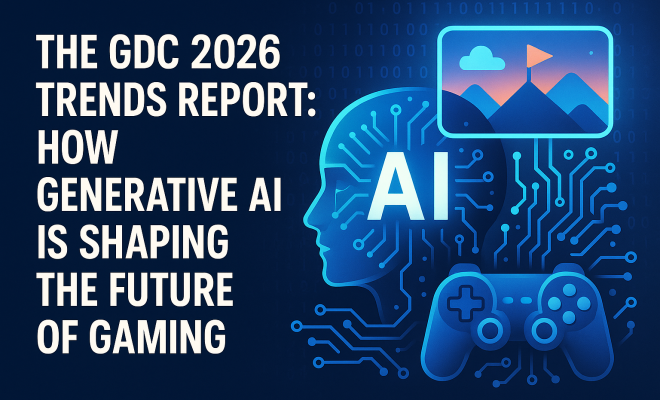
The gaming industry is in flux, and the recent release of the GDC 2026 trends report underscores this seismic shift. As professionals, enthusiasts, and gamers alike start to grasp the implications of generative AI, the conversation is intensifying around its potential to reframe game development, co-development strategies, and publishing dynamics. What does this mean for the future of creativity in gaming? Let’s explore the findings and perspectives emerging from this pivotal report.
Understanding Generative AI in Game Development
Generative AI is no longer a buzzword; it’s becoming a fundamental component of how games are created. The GDC 2026 trends report highlights the capabilities of AI tools that can now autonomously generate entire game assets and narratives. Think about it: entire worlds, characters, and storylines can be produced with minimal human input. This reality brings about a host of questions regarding creativity, authenticity, and the role of human developers.
For instance, renowned game designer and AI expert Jamie Lin emphasizes that while AI can significantly enhance productivity, it could also lead to a homogenization of gaming experiences. If everyone taps into the same generative tools, will we lose the unique flair that diverse human creators bring to the table? The potential for AI to streamline development processes is undeniable, but at what cost?
As we evaluate the role of generative AI, several emerging technologies come into play. For example, procedural generation techniques, already popular in titles like *No Man’s Sky*, can be augmented by AI to create even more complexity and realism in game environments. This integration could lead to vast, immersive worlds that are not just visually stunning but also filled with dynamically generated content that reacts to player actions, ultimately enhancing the gaming experience.
Co-Development Strategies are Evolving
The report indicates a notable shift in co-development strategies fueled by AI capabilities. Game studios are increasingly collaborating with AI technology to leverage its efficiency in asset creation and narrative structuring. An example can be seen in the partnership between a major gaming studio and AI developers, where the latter’s tools were utilized to draft initial designs and engage in iterative feedback loops that accelerated project timelines.
However, as studios embrace these AI partnerships, they also face a critical question: how will this affect the distribution of creative control? The blending of human and AI contributions could lead to innovative outcomes, but it risks diluting the individual artistic vision that has defined the industry for decades.
To illustrate this further, consider a recent project by a well-known indie studio that utilized AI algorithms to analyze player behavior from their previous titles. The AI provided insights that helped shape character arcs and level designs that resonated with player preferences, resulting in a product that not only appealed to existing fans but attracted new players as well. This blend of data-driven design and human creativity showcases the potential benefits of co-development strategies when approached thoughtfully.
The Financial Landscape: Shifting Dynamics in Game Publishing
Another area of concern highlighted in the GDC 2026 trends report is the evolving financial landscape of game publishing. With generative AI streamlining many aspects of development, the capital required to bring a game to market could decrease significantly. This newfound financial agility may allow indie developers to compete more effectively with larger studios.
On the flip side, there are alarming statistics surrounding job displacement. As AI tools become more integrated into the production pipeline, experts warn that thousands of positions could be rendered obsolete. This has sparked a heated debate in gaming communities, particularly around the ethical implications of AI’s rapid integration into creative fields. Are we sacrificing jobs for efficiency?
Moreover, the investment landscape is shifting. Traditionally, publishers have held most of the power in deciding which games get funded. However, as development costs decrease with AI, alternative funding routes such as community-driven crowdfunding platforms (e.g., Kickstarter, Indiegogo) are gaining traction. In fact, the GDC 2026 report notes a 30% rise in successful crowdfunding campaigns this past year, suggesting a growing confidence in independent projects. This trend could democratize game development, allowing for a wider array of voices and stories to be told. (See: Understanding Generative AI technologies.)
Job Displacement: An Industry on Edge
The potential for AI to displace jobs is a prominent theme in the report. With AI now capable of generating art, music, and even dialogue, many fear that traditional roles within game development may become redundant. According to industry analyst Chris Dyer, “The risk of job loss is real, and it’s vital for industry leaders to consider how they can protect their workforce while embracing technological advancements.” For more on this, see unintended consequences of AI.
For many developers, the prospect of being replaced by AI tools feels like a direct assault on their creativity and livelihood. Alan Reyes, a veteran game artist, voiced concerns during a recent panel discussion: “It’s not just about productivity; it’s about the essence of what we do. Can a machine truly replace the emotional resonance of human-created art?” These sentiments are echoed widely among creators grappling with the impact of AI.
To combat this, some developers are advocating for a shift in focus towards hybrid roles that blend creative and technical skills. Training programs emphasizing AI literacy for artists and designers could be crucial. For example, learning how to guide AI in generating aesthetic choices or narrative structures rather than letting it take full control could empower developers and preserve jobs while maximizing the creative capabilities of AI tools.
The Ethical Debate: Human Creativity vs. Machine Efficiency
The GDC 2026 trends report also opens the floor to a critical ethical debate: Can generative AI genuinely replicate human creativity? While AI can produce remarkable outputs, its creations lack the emotional depth and nuance that human artists bring to their work. Gamers and developers alike are questioning whether the industry is steering toward a future where machine-generated content becomes the norm.
Social media platforms have erupted with discussions around this topic. Many argue that while AI can augment the creative process, it should never replace the human touch. The emotional weight of storytelling, character development, and unique art styles deeply resonate with players—elements that AI cannot replicate. The challenge lies in finding a balance, where AI serves as a tool rather than a replacement.
In light of this, some industry leaders are proposing ethical guidelines for AI use in game development. These guidelines could outline best practices for how developers should incorporate AI while ensuring that it enhances rather than diminishes the human creative process. For example, transparency in AI contributions could be crucial for maintaining player trust and ensuring that the artistry behind games remains visible and valued.
Community Perspectives: Mixing AI and Human Talent
The report highlights that many in the gaming community see the potential for a symbiotic relationship between AI and human talent. Communities of developers are beginning to explore how AI can enhance, rather than overshadow, the creative process. Collaborations that allow for human oversight and AI assistance may lead to innovative gameplay experiences.
For instance, studios can employ AI to draft initial concepts, which human developers then refine. This hybrid model could leverage the strengths of both AI and human creativity, enabling teams to push boundaries while preserving individual artistic expression. However, this model necessitates a paradigm shift in how teams are structured and how projects are managed.
Additionally, community forums and hackathons focused on AI in gaming are becoming more popular, fostering collaboration among developers. These shared spaces allow creators to experiment with AI tools and share best practices, leading to a collective increase in innovation. Engaging with AI doesn’t have to be a solitary journey; the community can grow stronger together, blending human intuition with machine efficiency.
Fostering Creativity in an AI-Dominated Landscape
As the GDC 2026 trends report reveals, fostering creativity in an AI-dominated landscape is paramount. Developers must find ways to integrate AI tools while ensuring that human creativity remains central to the gaming experience. That could mean investing in training programs to help artists and developers navigate the evolving landscape, as well as promoting a culture of innovation that embraces both technology and artistry.
Game developers like Mia Chen suggest hosting workshops that focus on collaborative AI use in game design. “We need to teach developers how to work alongside AI, not compete with it,” she says. By equipping creators with the skills to harness AI’s capabilities, we can foster an environment that celebrates innovation rather than fear it.
One innovative approach being explored is the concept of “AI-assisted brainstorming sessions,” where teams can use AI to generate ideas or variations on a theme, which can then be critically evaluated by the team members. This encourages experimentation and creativity while still keeping the human aspect of decision-making at the forefront. It’s a way to leverage AI’s strengths while ensuring that the artistry of game design is preserved. (See: AI's impact on video game development.)
The Future of Game Financing and AI
Game financing is another area ripe for transformation through generative AI. With AI potentially reducing the costs of development, many believe we might see a shift toward democratized funding models. Crowdfunding could become more viable as independent developers can produce high-quality games with fewer resources.
However, there are caveats. As highlighted in the report, if AI-generated content floods the market, the saturation may diminish the perceived value of unique, hand-crafted titles. This raises the question: how do we maintain the integrity of game artistry in a rapidly evolving marketplace? The balance between efficiency and quality will be critical in determining how the future unfolds.
This scenario could also lead to a shift in the types of games being funded. With AI reducing entry barriers, we might see a rise in niche genres that appeal to specific communities. This diversification could enrich the gaming landscape, providing gamers with experiences that cater to their unique tastes rather than broad, generic offerings.
Anticipating the Challenges Ahead
The trends highlighted in the GDC 2026 report are a double-edged sword. While generative AI offers exciting opportunities for innovation and creativity, it also brings forth challenges that must be addressed proactively. As the industry adapts to these changes, stakeholders must consider the ethical, financial, and creative implications of integrating AI into game development.
Experts predict that the next decade will see a dramatic reshaping of the gaming landscape, with generative AI playing a pivotal role. This will require collaboration and open dialogue between developers, publishers, and players to ensure that the evolution of gaming remains both creative and inclusive. The involvement of players in this dialogue is crucial; after all, they are the ones who ultimately experience the games and can provide valuable feedback on the balance between AI and human creativity.
AI’s Role in Emerging Gaming Technologies
As AI technology continues to evolve, its impact on emerging gaming technologies is becoming increasingly apparent. Consider virtual reality (VR) and augmented reality (AR)—two sectors that are gaining traction in the gaming world. Integrating AI can enhance these experiences by creating adaptive environments that respond to player interactions in real-time. For instance, AI algorithms can be used to analyze player behavior within a VR setting, ensuring that the game dynamically adjusts the difficulty. This personalized approach could lead to more engaging gameplay experiences, keeping players immersed for longer periods.
Another area where AI shows promise is in the realm of game testing. Traditionally a labor-intensive process, AI can automate many aspects of quality assurance, identifying bugs and inconsistencies more quickly than human testers. By leveraging machine learning, AI can learn from previous testing data to enhance its accuracy in finding issues. This not only speeds up development cycles but also allows developers to allocate resources to more creative tasks, ultimately improving the overall quality of the final product.
Exploring Cross-Platform Play and AI
Cross-platform play is becoming a key expectation among gamers, and AI could facilitate this in innovative ways. By analyzing player data across different platforms, AI can help balance gameplay mechanics, ensuring a fair experience regardless of whether players are using consoles, PCs, or mobile devices. For example, AI could match players based on their skill levels rather than just their chosen platform, leading to a more enjoyable gaming experience for everyone involved.
Additionally, AI can assist in creating cross-platform content that remains cohesive and engaging across various devices. This means that developers can focus on creating rich, immersive stories that resonate with players no matter how they choose to play. The potential for AI to bridge the gap between platforms opens up exciting possibilities for collaboration within the gaming community.
FAQ: Navigating the New Terrain of Game Development
What are the key trends highlighted in the GDC 2026 report?
The GDC 2026 report focuses on several key trends, including the integration of generative AI in game development, evolving co-development strategies, changes in the financial landscape for game publishing, job displacement concerns, and the ethical implications of AI-generated content. (See: Research on AI in creative industries.)
How is generative AI changing the role of game developers?
Generative AI is shifting the role of developers from solely creating content to also managing and collaborating with AI tools. Developers may focus more on guiding AI outputs and refining them, which requires a new set of skills that combines technical knowledge with creative vision.
What are the potential benefits and drawbacks of AI in game development?
Benefits include increased efficiency, reduced costs, and the ability to produce complex content quickly. Drawbacks involve potential job displacement, concerns over the quality of AI-generated content, and the risk of homogenization in game design if too many developers rely on the same tools.
How can developers protect their jobs in an AI-driven landscape?
Developers can focus on upskilling in areas that complement AI, such as enhancing their creative decision-making, narrative development, or technical expertise related to AI tools. Building a portfolio that showcases unique human creativity can also differentiate them in the job market.
Will AI-generated games be accepted by gamers?
Acceptance may vary among gamers. While some players may appreciate the efficiency and innovation brought by AI, others might prefer the emotional and artistic depth found in human-created games. Transparency about AI’s role in game development will be key to maintaining player trust.
What are the ethical considerations surrounding AI in gaming?
Ethical considerations include the potential for job displacement, the authenticity of AI-generated content, and the need for transparency. Developers and studios must navigate these issues carefully to ensure a responsible integration of AI in gaming.
What does the future hold for game financing with AI?
AI may democratize game financing, enabling indie developers to create high-quality games with less initial investment. However, the proliferation of AI-generated content could lead to market saturation, making it essential for developers to maintain the quality and uniqueness of their offerings to stand out.
Conclusion: Embracing AI While Preserving Artistry
The GDC 2026 trends report is a wake-up call for everyone involved in the gaming industry. While the allure of generative AI can’t be denied, the human aspect of game development must not be overshadowed. As we plunge into this new era of gaming, embracing AI tools while fiercely protecting human creativity will be vital. You don’t want to be left behind as this fascinating conversation unfolds. Stay engaged, stay informed, and be part of the change as gaming navigates its future.
“`
Trending Now
Frequently Asked Questions
How is generative AI changing game development?
Generative AI is revolutionizing game development by enabling the autonomous creation of game assets and narratives. This technology allows for the generation of entire worlds, characters, and storylines with minimal human input, which enhances productivity but raises questions about creativity and the uniqueness of gaming experiences. There’s a fuller look at transformative AI tools of 2026.
What are the potential downsides of using AI in gaming?
While generative AI can streamline development and enhance productivity, it may lead to a homogenization of gaming experiences. If multiple developers use the same AI tools, the distinctiveness and creative flair of individual creators might be compromised, raising concerns about the authenticity of games.
What is procedural generation in gaming?
Procedural generation refers to the creation of game content algorithmically rather than manually. It allows for the development of vast and complex game environments, as seen in titles like *No Man’s Sky*. When combined with AI, procedural generation can create even more dynamic and immersive gaming experiences.
What does the GDC 2026 trends report say about co-development strategies?
The GDC 2026 trends report highlights a significant evolution in co-development strategies, indicating that the integration of generative AI is reshaping how developers collaborate. This shift is expected to impact the dynamics of game publishing and development, fostering new partnerships and innovative approaches.
What are the implications of AI on creativity in gaming?
The integration of AI in gaming raises important questions about creativity. While AI can enhance the efficiency of game development, it may also challenge the uniqueness of creative expression by standardizing experiences. The balance between AI assistance and human creativity is crucial for the future of game design.
What's your take on this? Share your thoughts in the comments below — we read every one.