The Tech Edvocate

Top Menu

  • Advertisement
  • Apps
  • Home Page
  • Home Page Five (No Sidebar)
  • Home Page Four
  • Home Page Three
  • Home Page Two
  • Home Tech2
  • Icons [No Sidebar]
  • Left Sidbear Page
  • Lynch Educational Consulting
  • My Account
  • My Speaking Page
  • Newsletter Sign Up Confirmation
  • Newsletter Unsubscription
  • Our Brands
  • Page Example
  • Privacy Policy
  • Protected Content
  • Register
  • Request a Product Review
  • Shop
  • Shortcodes Examples
  • Signup
  • Start Here
    • Governance
    • Careers
    • Contact Us
  • Terms and Conditions
  • The Edvocate
  • The Tech Edvocate Product Guide
  • Topics
  • Write For Us
  • Advertise

Main Menu

  • Start Here
    • Our Brands
    • Governance
      • Lynch Educational Consulting, LLC.
      • Dr. Lynch’s Personal Website
      • Careers
    • Write For Us
    • The Tech Edvocate Product Guide
    • Contact Us
    • Books
    • Edupedia
    • Post a Job
    • The Edvocate Podcast
    • Terms and Conditions
    • Privacy Policy
  • Topics
    • Assistive Technology
    • Child Development Tech
    • Early Childhood & K-12 EdTech
    • EdTech Futures
    • EdTech News
    • EdTech Policy & Reform
    • EdTech Startups & Businesses
    • Higher Education EdTech
    • Online Learning & eLearning
    • Parent & Family Tech
    • Personalized Learning
    • Product Reviews
  • Advertise
  • Tech Edvocate Awards
  • The Edvocate
  • Pedagogue
  • School Ratings

logo

The Tech Edvocate

  • Start Here
    • Our Brands
    • Governance
      • Lynch Educational Consulting, LLC.
      • Dr. Lynch’s Personal Website
        • My Speaking Page
      • Careers
    • Write For Us
    • The Tech Edvocate Product Guide
    • Contact Us
    • Books
    • Edupedia
    • Post a Job
    • The Edvocate Podcast
    • Terms and Conditions
    • Privacy Policy
  • Topics
    • Assistive Technology
    • Child Development Tech
    • Early Childhood & K-12 EdTech
    • EdTech Futures
    • EdTech News
    • EdTech Policy & Reform
    • EdTech Startups & Businesses
    • Higher Education EdTech
    • Online Learning & eLearning
    • Parent & Family Tech
    • Personalized Learning
    • Product Reviews
  • Advertise
  • Tech Edvocate Awards
  • The Edvocate
  • Pedagogue
  • School Ratings
  • The Chew That Changed My Training: Why Nitraflex Pre-Workout Chews Deliver Unbelievable Pumps

  • The Brutal Truth: Why Your AI Skills Training Is Failing (And How to Fix It)

  • 8 Essential AI Upskilling Programs Your Business Needs to Thrive Now

  • One Critical Mistake Companies Make With AI Skills Training

  • The AI Career Showdown: Which Path Pays More And Fits You Best?

  • The Shocking Truth About the Highest Paying AI Jobs in 2026

  • The Staggering Truth About 5 AI Job Roles That Will Redefine Your Career by 2026

  • Crypto Crackdown: Is the FCA’s Iron Fist Crushing Innovation, or Just Protecting You?

  • 7 Critical Steps to Survive the Crypto Crackdown: How to Navigate FCA Regulations

  • This One Thing Is Quietly Reshaping Illegal Crypto Trading — And Regulators Are Panicking

Online Learning & eLearning
Home›Online Learning & eLearning›The Differences between Su, Sudo Su, Sudo -s and Sudo -i

The Differences between Su, Sudo Su, Sudo -s and Sudo -i
By Matthew Lynch
April 1, 2023
0
Spread the love

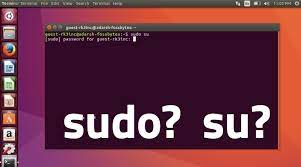
As a Linux user, you must have come across at least one if not all four of these commands: su, sudo su, sudo -s, and sudo -i. Although they share some similarities, they serve different purposes, and using one instead of the other can cause unwanted results. So, what are the differences between su, sudo su, sudo -s, and sudo -i?

First, let’s define the commands:

1. “su” stands for “switch user” or “substitute user.” It allows you to switch to another user account without logging out of the current one. The command always requires the root password to execute.

2. “sudo su” is a two-part command. It is a way to switch to another user account without logging out of the current user. It works by running su as root using sudo. It prompts the user to enter their password before granting permission, which may or may not be the root password.

3. “sudo -s” is a way to run a shell as another user, usually root. It is similar to the “su” command but is used when you don’t know the root password. The command prompt changes to show that the user is now logged in as the other user. It does not require the root password; instead, it requires the user’s password who is running the command.

4. “sudo -i” is a way to log in as another user or to grant root access to execute several commands as if you were the root user. It provides you with access to that user’s environment, including their HOME directory. It is similar to “su -” but with the added security and authentication benefits of “sudo”, requiring the user’s password who is running the command.

Now, let’s talk about the differences between them.

1. The “su” command always requires the root password to execute, while “sudo su,” “sudo -s,” and “sudo -i” require the user’s password who is running the command.

2. The “su” command and “sudo su” only switch to the desired user account without changing the environment variables or settings, while “sudo -s” and “sudo -i” provide an environment similar to that of the user with root access.

3. The “su” and “sudo su” only switch to the desired user account, while “sudo -s” and “sudo -i” can execute terminal commands with greater system-level authority.

4. “sudo -i” sets the environment variables to match the targeted user’s profile, allowing the user to execute commands with the same permissions as if the user were the targeted account.

5. “sudo -s” and “sudo -i” also provide a way to switch users without knowing their password, making them more convenient to use.

In conclusion, understanding the differences between “su,” “sudo su,” “sudo -s,” and “sudo -i” is essential for running commands with the proper user permissions and access level. While all four commands serve a similar purpose, each has its specific use case and should be used accordingly. It is essential to understand the differences before using any of the above commands.

Previous Article

The Difference Between SD & SDHC Memory ...

Next Article

The Different Types of Paint (and When ...

Matthew Lynch

Related articles More from author

  • Online Learning & eLearning

    New Wi-Fi technology that will affect your network

    March 19, 2023
    By Matthew Lynch
  • Online Learning & eLearning

    How to Work from a Coffee Shop or Free Wi-Fi Hotspot

    June 6, 2023
    By Matthew Lynch
  • Online Learning & eLearning

    What to Know Before You Order GPS With a Rental Car

    June 14, 2023
    By Matthew Lynch
  • Online Learning & eLearning

    Surprising Facts You Didn’t Know About Google

    June 22, 2023
    By Matthew Lynch
  • Online Learning & eLearning

    3 Problems That Could Diminish Elearning Growth

    January 16, 2020
    By Matthew Lynch
  • Online Learning & eLearning

    Top 6 Ways to Fix Facebook Marketplace Not Working

    April 3, 2023
    By Matthew Lynch

Search

Login & Registration

  • Log in
  • Entries feed
  • Comments feed
  • WordPress.org

Newsletter

Signup for The Tech Edvocate Newsletter and have the latest in EdTech news and opinion delivered to your email address!

About Us

Since technology is not going anywhere and does more good than harm, adapting is the best course of action. That is where The Tech Edvocate comes in. We plan to cover the PreK-12 and Higher Education EdTech sectors and provide our readers with the latest news and opinion on the subject. From time to time, I will invite other voices to weigh in on important issues in EdTech. We hope to provide a well-rounded, multi-faceted look at the past, present, the future of EdTech in the US and internationally.

We started this journey back in June 2016, and we plan to continue it for many more years to come. I hope that you will join us in this discussion of the past, present and future of EdTech and lend your own insight to the issues that are discussed.

Newsletter

Signup for The Tech Edvocate Newsletter and have the latest in EdTech news and opinion delivered to your email address!

Contact Us

The Tech Edvocate
910 Goddin Street
Richmond, VA 23231
(601) 630-5238
[email protected]

Copyright © 2026 Matthew Lynch. All rights reserved.