The Brutal Truth: Teacher Pay Cuts Are Quietly Crushing Student Futures
“`html
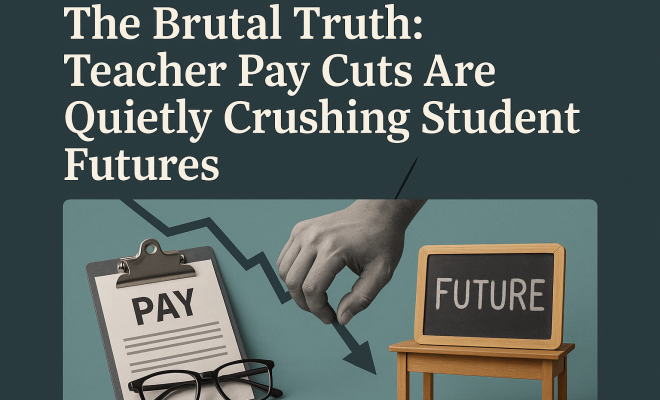
You might think of a teacher’s salary as a number on a spreadsheet, an administrative detail. But what if I told you that those numbers, particularly when they shrink, have a direct, measurable, and frankly devastating impact on the kids in our classrooms? We’re not just talking about teacher morale here; we’re talking about the very fabric of educational quality and, by extension, the future prospects of our students. The ongoing crisis in teacher compensation, exacerbated by persistent shortages, has reached a critical juncture. Recent reports from outlets like Education Week are sounding alarm bells, revealing that many states are actively rolling back pay incentives for teachers in high-need subjects and schools. This isn’t just a misstep; it’s a profound miscalculation with dire consequences for the impact of teacher pay cuts on student outcomes.
Consider the emotional toll alone. Imagine dedicating your life to shaping young minds, only to feel consistently undervalued, underpaid, and, at times, downright disrespected by the very systems you serve. This isn’t a hypothetical scenario for countless educators across the country. And when those incentives – the very things designed to attract and retain talent in challenging environments – start disappearing, it sends a chilling message. It tells teachers that their extra effort, their willingness to tackle the toughest assignments, isn’t worth the investment. This article will delve into the multifaceted ways these pay cuts ripple through our educational system, ultimately landing squarely on the shoulders of our students.
The Alarming Trend: Rolling Back Incentives in High-Need Areas
The news is grim: states are increasingly cutting back on the very pay incentives designed to attract and keep skilled educators in the most challenging schools and subjects. This isn’t just about general teacher salaries; it’s about targeted programs that acknowledge the extra burden and specialized skills required to teach in high-poverty districts, rural areas, or subjects like advanced math, science, and special education. These incentives often take the form of signing bonuses, housing stipends, or higher salary schedules for specific roles. When these are withdrawn, the immediate effect is a reduction in the financial appeal of these critical positions.
Why is this happening? It’s a complex mix of budget constraints, shifting political priorities, and sometimes, a fundamental misunderstanding of how these incentives actually work. Policymakers, perhaps looking for quick budget fixes or swayed by short-sighted arguments, may see these targeted bonuses as expendable. However, the data consistently shows that these incentives are vital for staffing schools where the need for highly qualified teachers is greatest. Without them, the already difficult task of recruiting and retaining talent in these areas becomes nearly impossible, directly exacerbating the impact of teacher pay cuts on student outcomes.
A National Snapshot: Where Teacher Salaries Stand (or Fall)
Let’s talk numbers, because they paint a stark picture. While some states are making headlines with proposals for significant minimum salary increases – a welcome development, to be sure – many others are lagging far behind. Take Mississippi, for example, where the average teacher salary has historically been among the lowest nationally. When you have a baseline salary that’s already struggling to compete with other professions, removing incentives is like taking away the last lifeline. It means teachers in these states often earn less than individuals with comparable education and experience in other fields, forcing many to work second or even third jobs just to make ends meet.
This isn’t just an issue for low-wage states. Even in states with higher average salaries, the cost of living can quickly erode any perceived advantage, making those targeted incentives crucial for urban centers or desirable coastal areas. The fact that a college-educated professional, tasked with nurturing the next generation, often struggles financially is not just an indignity; it’s a systemic failure that has profound implications for who chooses to enter and stay in the profession. And when the best and brightest are consistently deterred, you can bet your bottom dollar that the impact of teacher pay cuts on student outcomes will be severe.
The Exodus: High-Quality Teachers Fleeing the Profession
One of the most immediate and damaging consequences of reduced teacher pay and rolled-back incentives is the accelerated exodus of high-quality educators. Think about it: if you’re a talented, experienced teacher, particularly in a high-demand subject like STEM or special education, you have options. You can move to a district that offers better pay, or you can leave teaching altogether for a more lucrative career in the private sector. This isn’t about greed; it’s about basic economic reality and professional respect.
When these teachers leave, they don’t just take their knowledge with them; they take their experience, their ability to mentor new teachers, and their established relationships with students and families. The schools that lose them are often those that need them most – the high-need areas where stability and expertise are paramount. This brain drain creates a vicious cycle: fewer experienced teachers mean less effective instruction, which can lead to lower student performance, making those schools even less attractive to potential recruits. The impact of teacher pay cuts on student outcomes is undeniably linked to this flight of talent.
The Novice Effect: More Inexperienced Teachers in Challenging Classrooms
As experienced teachers depart, schools are forced to fill the gaps, often with less experienced, sometimes even uncertified, individuals. While every teacher starts somewhere, a high concentration of novice teachers in a single school, especially one serving a high-need population, can be incredibly detrimental. Novice teachers, by definition, are still developing their craft. They’re learning classroom management, pedagogical strategies, and how to differentiate instruction for diverse learners. (See: teacher pay and shortages.)
Placing a disproportionate number of these developing educators in the most challenging environments – classrooms with high rates of poverty, trauma, or language barriers – sets both the teachers and their students up for struggle. These schools need the most skilled, resilient, and resourceful educators, not a revolving door of well-meaning but overwhelmed newcomers. The lack of experienced mentorship, coupled with the immense pressures, often leads to high burnout rates among these new teachers, perpetuating the cycle of turnover and instability. This ‘novice effect’ is a direct consequence, and a significant component, of the overall impact of teacher pay cuts on student outcomes. For more context, see impact on educational quality.
Student Performance Plummets: The Direct Link to Learning
This is where the rubber meets the road. When highly effective teachers leave and are replaced by less experienced ones, or when positions remain unfilled, student performance takes a direct hit. Research consistently shows a strong correlation between teacher quality and student achievement. Effective teachers can significantly boost student test scores, improve graduation rates, and even influence long-term life outcomes, like future earnings and college attendance.
Conversely, a decline in teacher quality, or a lack of consistent, stable instruction, leads to measurable drops in academic performance. Students in classrooms with less effective teachers learn less, fall behind their peers, and are less likely to meet grade-level expectations. This isn’t just about standardized tests; it’s about fundamental learning. Are students truly grasping complex concepts in math? Are they developing critical thinking skills in English? Are they getting the individualized attention they need to thrive? The answer, unfortunately, is often no, highlighting the profound impact of teacher pay cuts on student outcomes.
Beyond Academics: Engagement, Behavior, and Mental Health
The impact of teacher pay cuts on student outcomes extends far beyond academic metrics. Think about the classroom environment. A stable, experienced teacher often creates a more predictable, nurturing, and engaging space. They build stronger relationships with students, understand their individual needs, and are better equipped to manage challenging behaviors. When there’s high teacher turnover, or when teachers are stressed and overwhelmed by financial worries, that positive environment is often the first casualty.
Students, particularly those from vulnerable backgrounds, thrive on stability and strong relationships. A constant rotation of teachers can lead to feelings of insecurity, disengagement, and even behavioral problems. It’s hard for students to invest in learning when they feel disconnected from their instructors. Furthermore, the emotional toll on teachers themselves can seep into the classroom, affecting their ability to be fully present and responsive to student needs. A financially stressed teacher is more likely to be burnt out, less patient, and less able to provide the emotional support many students desperately need, negatively impacting their mental health and overall school experience.
The Equity Crisis: Disproportionate Harm to Vulnerable Students
Perhaps the most infuriating aspect of this trend is how disproportionately it harms the students who need the most support. Schools in high-need areas, already struggling with funding disparities, fewer resources, and students often facing significant socio-economic challenges, are precisely the places that rely most heavily on those targeted pay incentives. These schools serve communities where highly effective teachers can make the most profound difference.
When incentives are cut, these schools become even less attractive, pushing the most experienced and effective teachers towards more affluent districts. This exacerbates existing inequities, creating a two-tiered system where students in wealthy areas receive top-tier instruction, while students in high-poverty areas are left with a revolving door of novice or less qualified educators. This isn’t just unfair; it’s an active perpetuation of educational inequality, trapping generations of children in cycles of disadvantage. The impact of teacher pay cuts on student outcomes is, at its core, an issue of social justice.
The Long-Term Economic Ripple Effect on Communities
It’s easy to view teacher pay as solely an education issue, but the economic implications stretch far beyond the classroom walls. When a community struggles with retaining good teachers, it’s not just the students who suffer. Businesses looking to relocate or expand often consider the quality of local schools as a major factor. A reputation for high teacher turnover and declining student performance can make a town less attractive for families, leading to slower population growth or even decline. This, in turn, impacts local property values, tax bases, and the overall economic vitality of the area. Think about it: who wants to move their family to a place where the schools are visibly struggling to keep qualified educators?
Additionally, a less educated workforce emerging from consistently underperforming schools has broader economic consequences. Businesses need skilled workers, and if the local talent pool is inadequate, they might look elsewhere. This can stifle innovation, limit job creation, and reduce the earning potential for residents, creating a cycle of economic stagnation. The impact of teacher pay cuts on student outcomes, therefore, isn’t just about individual students; it’s about the collective economic health and future prosperity of entire communities and regions.
Expert Perspectives: What Researchers and Economists Say
This isn’t just speculation; leading educational researchers and economists have been sounding the alarm for years. Organizations like The Learning Policy Institute consistently highlight the correlation between competitive teacher salaries and teacher retention, particularly in hard-to-staff schools. Studies often point out that a modest increase in teacher pay can yield significant returns in terms of student achievement and long-term societal benefits, far outweighing the initial investment. (See: health profiles and education.)
Economists like Eric Hanushek from Stanford University, while sometimes advocating for performance-based pay, also emphasize that teacher quality is the single most important school-based factor affecting student achievement. He and others argue that if we want to attract and keep top talent in teaching, we simply must make the profession financially competitive with other fields requiring similar levels of education and skill. When pay is cut, it directly undermines this fundamental principle, making it harder to recruit and easier for good teachers to leave, thereby directly worsening the impact of teacher pay cuts on student outcomes. For more context, see crisis in various industries.
The Innovation Gap: How Pay Cuts Stifle Educational Progress
Beyond the immediate concerns of teacher retention and student performance, there’s a less obvious but equally damaging consequence: a stifling of educational innovation. Highly skilled and experienced teachers are often the ones who experiment with new pedagogical approaches, integrate technology effectively, and develop creative curricula. They are the leaders in their schools, mentoring junior colleagues and pushing for continuous improvement.
When pay cuts drive these innovative educators away, or when financial stress makes them less inclined to invest extra time in professional development or curriculum design, the entire school system becomes more stagnant. There’s less capacity for schools to adapt to new challenges, less willingness to take risks, and a general decline in the dynamic, forward-thinking environment essential for true educational progress. This means students are less likely to be exposed to cutting-edge teaching methods or to develop the 21st-century skills they need, representing another critical impact of teacher pay cuts on student outcomes.
Comparisons to Other Professions: Why Teaching Falls Behind
To truly understand the issue, it helps to compare teacher salaries to those of other professions requiring similar levels of education and responsibility. A bachelor’s degree is the minimum for teaching, with many teachers also holding master’s degrees. Compare their average salaries and career trajectories to, say, engineers, accountants, or even entry-level positions in some corporate sectors. The disparity is often stark.
For instance, a recent report from the Economic Policy Institute noted that teachers earn 23.5% less than comparable college-educated professionals, a gap that has grown significantly over the last few decades. This wage penalty isn’t just a number; it’s a powerful disincentive. When talented individuals weigh their career options, the financial outlook for teaching often pushes them towards other fields, even if they have a passion for education. This consistent undervaluing of the profession actively creates the conditions for the negative impact of teacher pay cuts on student outcomes, by making it harder to attract and retain the best and brightest.
Looking Forward: The Push for Comprehensive Compensation Reform
So, what’s the solution? It’s clear that piecemeal approaches and short-sighted cuts won’t fix this. What’s needed is comprehensive compensation reform that addresses both base salaries and targeted incentives. Some states are, thankfully, moving in the right direction, proposing significant minimum salary increases. This is a crucial first step, as it elevates the baseline for all educators, making the profession more attractive overall.
However, we can’t stop there. We also need to re-evaluate and, in many cases, reinstate and expand targeted bonuses for specialized roles and high-need areas. These aren’t luxuries; they’re strategic investments. States are also exploring performance-based pay models, which can be effective if implemented thoughtfully and fairly, focusing on professional growth rather than punitive measures. The goal should be to create a compensation structure that attracts, retains, and rewards excellence across the board, ensuring that every student, regardless of their zip code, has access to a highly effective teacher. This means recognizing the true value of educators and making the necessary financial commitment to secure the future of our children.
The conversation around teacher pay isn’t just an educational policy debate; it’s a societal reckoning. The impact of teacher pay cuts on student outcomes is too significant to ignore. When we undervalue our educators, we are, in effect, devaluing the education of our children and, by extension, the future health and prosperity of our communities. It’s time for us to recognize that investing in our teachers is not an expense, but an essential investment in the potential of every student. For more context, see devastating effects on job markets.
Frequently Asked Questions About Teacher Pay Cuts and Student Outcomes
Q1: Are teacher pay cuts always directly linked to a drop in student test scores?
While it’s not always a one-to-one, immediate correlation, the link is strong and well-documented over time. Pay cuts contribute to a decline in teacher quality and experience in classrooms, which in turn leads to less effective instruction. This can manifest as lower test scores, reduced graduation rates, and a decrease in overall academic performance. It’s less about a single cut and more about the cumulative effect of undervaluing the profession. Think of it as a gradual erosion of educational quality rather than a sudden cliff dive.
Q2: Don’t teachers choose the profession out of passion, regardless of pay?
Passion is absolutely a driving force for many educators, and it’s what keeps many in the classroom despite challenging conditions. However, passion alone doesn’t pay the bills. Teachers have families to support, mortgages to pay, and often student loan debt. When salaries are uncompetitive or incentives are cut, even the most passionate teachers can be forced to make difficult choices for their financial well-being. It’s not about lacking dedication; it’s about needing to survive in the real world. Expecting teachers to subsist on passion alone is unrealistic and unsustainable.
Q3: How do teacher pay cuts affect different subjects or grade levels?
The impact can be felt across the board, but some areas are hit harder. High-need subjects like advanced math, science (STEM), and special education often rely heavily on targeted incentives to attract and retain specialists. When these are cut, it becomes exceptionally difficult to staff these crucial areas. At the grade level, elementary schools can suffer from a lack of experienced teachers who lay foundational skills, while high schools might struggle to offer a full range of advanced courses, limiting students’ college and career readiness options. Essentially, any area requiring specialized expertise or experiencing existing shortages becomes more vulnerable.
Q4: What role do state budgets play in teacher pay decisions?
State budgets play a massive role, as education funding often makes up a significant portion of state expenditures. When state revenues decline or political priorities shift, education budgets can be among the first areas targeted for cuts. Unfortunately, targeted teacher incentives are sometimes seen as “extras” rather than essential investments, making them vulnerable. Local districts often have limited flexibility to make up for state-level shortfalls, creating a domino effect where state budget decisions directly translate into local teacher pay cuts or stagnation.
Q5: Is there any evidence that higher teacher pay actually improves student outcomes?
Yes, absolutely. Numerous studies, including those by organizations like the National Bureau of Economic Research and The Learning Policy Institute, have shown a positive correlation. When teachers are paid competitively, it attracts a stronger pool of candidates to the profession, reduces turnover, and allows schools to retain experienced, highly effective educators. These factors directly translate into better instruction, more stable learning environments, and ultimately, improved student achievement. It’s an investment that pays dividends for society.
Q6: How can communities advocate for better teacher compensation?
Community advocacy is crucial. Parents, local business leaders, and concerned citizens can engage with their school boards, state legislators, and local government officials. This can involve attending public meetings, writing letters, signing petitions, and supporting organizations that champion fair teacher pay. Highlighting the economic and social benefits of investing in education, beyond just test scores, can also be very effective. It’s about making the case that strong schools with well-compensated teachers are a community asset that benefits everyone, not just families with kids.
“`
Trending Now
Frequently Asked Questions
How do teacher pay cuts affect students?
Teacher pay cuts can lead to decreased morale and motivation among educators, resulting in a decline in educational quality. This directly impacts students' learning experiences and future prospects, as underpaid teachers may leave the profession or become less effective in the classroom.
What are the consequences of cutting teacher incentives?
Cutting teacher incentives can exacerbate teacher shortages, particularly in high-need subjects. This reduction sends a message that the extra effort required in challenging environments is undervalued, which can deter talented educators from staying in or entering the profession.
Why is teacher compensation important for education?
Teacher compensation is crucial because it affects recruitment and retention of quality educators. Adequate pay ensures that skilled teachers remain motivated and committed, which ultimately enhances the educational experience and outcomes for students.
What is the impact of low teacher salaries on educational quality?
Low teacher salaries can lead to a decline in educational quality as experienced teachers may leave for better-paying jobs, and fewer qualified candidates may enter the profession. This can result in larger class sizes, less individualized attention, and poorer student outcomes.
How are states addressing teacher pay issues?
Some states are rolling back pay incentives aimed at attracting teachers to high-need areas, which can worsen existing challenges in teacher recruitment and retention. This trend raises concerns about the long-term implications for educational quality and student success.
Agree or disagree? Drop a comment and tell us what you think.