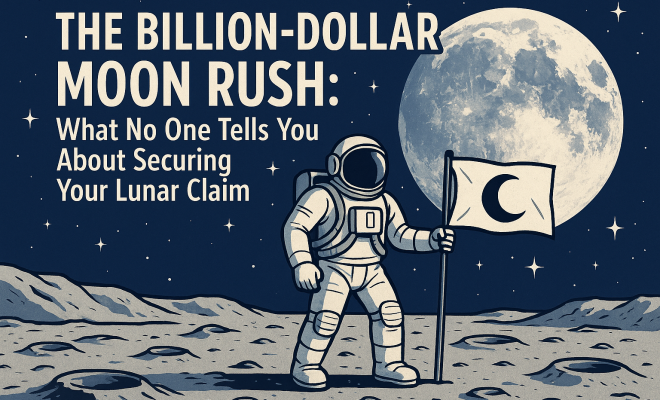
The Billion-Dollar Moon Rush: What No One Tells You About Securing Your Lunar Claim
“`html
Forget everything you thought you knew about real estate. When we talk about the Moon, we’re not talking about deeds, titles, or parcel numbers in the traditional sense. We’re talking about something far more nuanced, complex, and frankly, a bit wild west: operating rights. As humanity sets its sights firmly on our celestial neighbor, the race to establish a presence isn’t just for governments anymore. Private entrepreneurs, visionaries, and even daring investors are looking skyward, eager to stake a claim in what’s projected to be a multi-billion dollar lunar economy. But how do you navigate lunar operating rights when there’s no courthouse on the Moon, no lunar zoning board, and a legal framework that’s still very much in its infancy?
It’s a question that keeps space lawyers, insurance actuaries, and aspiring lunar tycoons up at night. The truth is, the current legal landscape for lunar commercial activity is more akin to a patchwork quilt than a clearly defined map. However, this isn’t stopping the momentum. A recent Deloitte report, ‘Building the Lunar Economy,’ makes it clear: traditional property deeds simply won’t cut it. Instead, ‘operating rights’ and access agreements are poised to become the bedrock of commercial ventures on the Moon. This evolving framework is absolutely crucial to grasp, especially as the global lunar real estate market is expected to skyrocket to a staggering $5.6 billion by 2034. That growth isn’t just theoretical; it’s fueled by a potent combination of government exploration programs and a surge of private investment. So, if you’re an entrepreneur dreaming of lunar opportunities, understanding how to navigate lunar operating rights isn’t just smart – it’s essential.
1. Understanding the Outer Space Treaty (OST): The Bedrock (and the Headache)
Let’s start with the big one: the 1967 Outer Space Treaty, or OST. This is the foundational international agreement governing activities in outer space, including the Moon and other celestial bodies. It’s often cited, but its implications for commercial lunar operations are frequently misunderstood. The key takeaway from the OST, particularly for our discussion on how to navigate lunar operating rights, is Article II: “Outer space, including the Moon and other celestial bodies, is not subject to national appropriation by claim of sovereignty, by means of use or occupation, or by any other means.”
What does this mean in plain English? No country can claim ownership of the Moon or any part of it. And if a country can’t, then neither can a private citizen or company under that country’s jurisdiction. This is why traditional property deeds are out. You can’t “buy” a plot of land on the Moon because no one can legitimately “sell” it to you. However, the OST also encourages the “free exploration and use of outer space by all States.” This creates a fascinating tension: you can’t own the Moon, but you can certainly use it. The challenge, then, becomes defining what constitutes legitimate “use” without veering into “appropriation.” This is the legal tightrope we’re all walking.
2. The Concept of Operating Rights: Beyond Traditional Ownership
Since outright ownership is a non-starter, the conversation pivots to “operating rights.” Think of these not as ownership of the land itself, but as the right to conduct specific activities in a defined area for a specific period. It’s more akin to a leasehold agreement, a concession, or even a mining claim on Earth, but with significant cosmic twists. A company might secure operating rights to extract lunar regolith for construction, to establish a research outpost, or to set up a communications relay station. These rights would typically specify the location, the scope of activities, the duration, and crucially, the responsibilities of the operator.
The beauty of operating rights, in theory, is that they align with the spirit of the OST. You’re not claiming sovereignty over a lunar valley; you’re simply requesting permission to operate within it for a defined purpose, without preventing others from using nearby areas for their own peaceful purposes. This is where the real legal innovation is happening. Nations are beginning to develop domestic frameworks that allow their private companies to obtain these operating rights, even in the absence of a universally accepted international regime. This domestic authorization is critical because, under the OST, states are responsible for the activities of their non-governmental entities in outer space.
3. Domestic Legal Frameworks: Your Gateway to Lunar Operations
Given the lack of a comprehensive international agreement beyond the broad strokes of the OST, individual nations are stepping up to create their own regulatory pathways. This is arguably the most practical entry point for entrepreneurs trying to figure out how to navigate lunar operating rights. Countries like the United States, Luxembourg, and the UAE have been proactive in establishing domestic laws that permit and regulate commercial space activities, including resource utilization.
For example, the U.S. Commercial Space Launch Competitiveness Act of 2015 explicitly grants U.S. citizens the right to engage in commercial exploration and recovery of space resources. It states that such resources are the property of the entity that obtains them. While this doesn’t grant ownership of the Moon itself, it provides a legal basis for companies to extract and utilize lunar resources. This kind of legislation is a game-changer because it gives private entities a degree of legal certainty. If you’re looking to operate on the Moon, your first step will likely involve working within the legal framework of your home country, or a country with a robust space law regime that aligns with your operational goals.
4. International Cooperation and Coordination: The Unwritten Rules
While domestic laws provide a starting point, operating in space inherently requires international cooperation. Even if your home country grants you operating rights, you’ll inevitably interact with other nations’ assets and interests on the Moon. This is where non-binding agreements and initiatives like the Artemis Accords come into play. The Artemis Accords, led by the U.S. and signed by numerous other nations, aim to establish a common set of principles for lunar exploration and resource utilization. They promote transparency, interoperability, and the peaceful use of space.
While not a treaty, the Accords represent a growing consensus among spacefaring nations on how to conduct lunar activities responsibly. Adhering to these principles, even if your country isn’t a signatory, can significantly enhance your legitimacy and reduce potential conflicts. It’s about demonstrating good faith and operating in a manner that is predictable and respectful of other actors. Think of it as establishing a reputation in a brand-new frontier; you want to be seen as a reliable and collaborative partner, not a rogue operator. (See: NASA's lunar exploration initiatives.)
5. Securing Operating Agreements: The Practicalities of a Lunar Claim
So, you’ve understood the OST, the concept of operating rights, and explored domestic frameworks. Now, how do you actually secure an operating agreement? This isn’t a one-size-fits-all answer, but generally, it involves a multi-layered approach. First, you’ll need to develop a detailed proposal outlining your intended activities, their location, duration, and potential environmental or safety impacts. This proposal would then be submitted to the relevant governmental authority in your chosen jurisdiction. For more context, see this crucial AI debate.
Beyond the legal paperwork, securing an agreement often means engaging with national space agencies (like NASA, ESA, or JAXA) or even participating in government-led lunar programs. These agencies are often the primary drivers of lunar infrastructure and can offer access to landing sites, communication networks, and other vital support. Think of it as a public-private partnership on a cosmic scale. Your ability to demonstrate technical competence, financial viability, and adherence to international norms will be paramount. This isn’t just about applying; it’s about building relationships and demonstrating your capacity to contribute meaningfully to the nascent lunar economy.
6. Mitigating Risks with Space Insurance: A Cosmic Safety Net
Operating on the Moon, even with the clearest operating rights, is inherently risky. We’re talking about an environment with extreme temperatures, radiation, micrometeoroids, and a vacuum. And then there’s the risk of mission failure, equipment malfunction, or even liability if your operations inadvertently impact another entity’s assets. This is precisely why the space insurance market is booming. Revenues in this sector are projected to climb from $4.43 billion in 2025 to $6.23 billion by 2030, driven by the sheer volume of commercial satellite launches and the escalating demand for mission risk coverage.
For any entrepreneur looking to navigate lunar operating rights, securing comprehensive space insurance is not just a good idea; it’s a non-negotiable requirement. This isn’t your average car insurance policy. Space insurance covers everything from launch failure and in-orbit damages to third-party liability and even business interruption. Insurers are developing specialized products to cover lunar operations, understanding the unique risks involved. Partnering with experienced space insurance brokers early in your planning can save you from catastrophic financial losses down the line.
7. Environmental and Safety Considerations: Being a Responsible Lunar Citizen
Just because the Moon is vast and seemingly barren doesn’t mean you can operate without considering environmental and safety impacts. The concept of “planetary protection” is crucial here. While primarily focused on preventing contamination of other celestial bodies with Earth microbes (and vice versa), it also extends to responsible use of the lunar environment. This means minimizing debris, avoiding sensitive scientific sites, and planning for the eventual decommissioning of your lunar assets.
Furthermore, safety for your personnel and equipment is paramount. Lunar operations require rigorous adherence to engineering standards, redundant systems, and robust emergency protocols. Regulators, both domestic and international, will increasingly scrutinize these aspects of your proposal when you seek operating rights. Demonstrating a strong commitment to safety and environmental stewardship won’t just be a moral imperative; it will be a legal and reputational necessity to secure and maintain your lunar operating rights.
8. Navigating Potential Conflicts and Dispute Resolution: When Things Go Wrong
Even with the best intentions and clear operating rights, conflicts can arise. What happens if two companies are granted overlapping operating rights, or if one company’s operations interfere with another’s? With no lunar police force or judiciary, dispute resolution mechanisms are still nascent. This is why clear, unambiguous operating agreements are so vital, detailing not just your rights but also your obligations and the procedures for resolving disagreements.
Many international space agreements and domestic laws suggest arbitration or mediation as the preferred methods for dispute resolution. For example, clauses in your operating agreement might specify that any disputes will be settled through the Permanent Court of Arbitration’s Optional Rules for Arbitration of Disputes Relating to Outer Space Activities. Being prepared for these eventualities, and having well-drafted legal documents that anticipate potential friction, is a critical part of learning how to navigate lunar operating rights successfully. It’s about proactive planning in a truly unprecedented legal landscape.
9. The Role of Technology and Innovation in Securing Rights
It’s easy to focus on the legal and political aspects of how to navigate lunar operating rights, but technology plays an equally crucial role. Breakthroughs in robotics, artificial intelligence, and autonomous systems are making lunar operations more feasible and cost-effective. For instance, advanced mapping technologies can help define the precise boundaries of an operating area, reducing the chance of accidental encroachment. Imagine drones surveying a lunar site with centimeter-level accuracy, creating a digital twin that serves as an immutable record of your operational footprint.
Moreover, innovations in in-situ resource utilization (ISRU) are changing the game. If you can extract water ice or regolith and convert it into fuel or building materials on the Moon, you significantly reduce the need for costly resupply missions from Earth. This self-sufficiency strengthens your operational proposal and makes you a more attractive candidate for securing operating rights. Governments and space agencies are eager to support ventures that demonstrate a path towards sustainable lunar presence, and ISRU is a cornerstone of that vision. Your technological readiness and innovative approach can be a significant differentiator in a competitive landscape, directly influencing your ability to secure and maintain those coveted operating rights. (See: CDC on environmental impacts of lunar activities.)
10. Economic Models and Revenue Streams on the Moon: Beyond the Obvious
When thinking about how to navigate lunar operating rights, it’s vital to consider the economic models that will underpin these ventures. What are the actual revenue streams? It’s not just about selling moon rocks. The lunar economy is diversifying rapidly. Key areas include:
- Resource Extraction: Primarily water ice for propellant and life support, and regolith for construction materials. Helium-3, though still speculative, remains a long-term interest for fusion power.
- Infrastructure as a Service (IaaS): Companies building lunar landing pads, power stations, communication relays, or even habitats could offer these as services to other lunar operators, much like cloud computing on Earth.
- Scientific Research and Data: The Moon offers a unique platform for astronomy, fundamental physics, and astrobiology. Companies providing access to telescopes on the far side or specialized laboratories could sell data and research time.
- Tourism and Entertainment: While still a ways off, lunar tourism will eventually become a major revenue driver, requiring infrastructure, transportation, and hospitality services.
- Manufacturing in Microgravity: Producing specialized materials or pharmaceuticals in the Moon’s low gravity could create high-value products impossible to make on Earth.
Each of these economic activities will require different types of operating rights and regulatory considerations. For example, a company establishing a lunar resort might need rights for a much larger “footprint” and stricter safety protocols than a company focused solely on scientific data collection. Understanding these diverse economic possibilities helps shape your strategy for acquiring the right kind of operating rights. For more context, see this one tax could reshape our future.
11. The Importance of Precedent and Soft Law: Shaping Future Regulations
Because the legal framework for lunar operations is still evolving, every successful mission and commercial venture helps establish “precedent.” When a company successfully operates on the Moon, extracts resources, or builds a structure without major international incident, it informally contributes to what’s known as “soft law.” Soft law isn’t legally binding like a treaty, but it consists of norms, guidelines, and practices that states and private entities increasingly recognize and follow. Think of it as best practices that eventually become standard practice, then perhaps eventually hard law.
This means that early movers in the lunar economy have a unique opportunity to influence the future of how to navigate lunar operating rights. By operating responsibly, transparently, and in alignment with principles like those in the Artemis Accords, companies can help solidify a framework that benefits everyone. Conversely, irresponsible actions could lead to stricter, potentially more restrictive regulations. Participating in international forums, contributing to white papers, and collaborating on demonstration missions are all ways to actively shape this emerging legal landscape.
12. Lunar “Zoning” and “Protected Areas”: An Emerging Concept
While there’s no official lunar zoning board yet, the idea of designated “protected areas” is gaining traction. These might include sites of significant scientific interest (like lunar craters with pristine water ice), historical landing sites (Apollo 11, Luna 2), or areas deemed crucial for future infrastructure development. Protecting these areas would prevent commercial operations from damaging irreplaceable scientific data or cultural heritage sites.
For companies seeking operating rights, this means understanding potential restrictions. You might find that certain prime locations are off-limits, or require special permits and mitigation strategies. The scientific community, in particular, advocates for strong planetary protection measures and the designation of “keep-out zones” around sensitive areas. As lunar activity increases, expect more detailed discussions and potential international agreements on how to manage these specific zones, which will directly impact where and how you can apply for operating rights.
Frequently Asked Questions (FAQ) on Navigating Lunar Operating Rights
Q1: Can I really own land on the Moon?
No, you cannot legally own land on the Moon. The 1967 Outer Space Treaty (OST) explicitly states that outer space, including the Moon, is not subject to national appropriation. This means neither countries nor private citizens or companies can claim ownership. What you can pursue are “operating rights” – permission to conduct specific activities in a defined area for a certain period.
Q2: What’s the difference between “ownership” and “operating rights”?
Ownership implies a permanent claim over a piece of property, with the right to exclude others entirely. Operating rights, on the other hand, are more like a license or concession. They grant you the right to perform specific tasks (like resource extraction or establishing an outpost) in a particular area, for a set duration, often with conditions about how you operate and without preventing others from using nearby areas for their own peaceful purposes. You own the resources you extract, but not the land itself.
Q3: Which countries are leading the way in establishing domestic laws for lunar operations?
The United States, through its Commercial Space Launch Competitiveness Act of 2015, is a prominent example. Luxembourg and the United Arab Emirates have also been proactive in developing legal frameworks that support commercial space resource utilization. These countries offer a more defined pathway for private companies to secure authorization for lunar activities. For more context, see cloud seeding bans and hurricanes.
Q4: What are the Artemis Accords, and how do they relate to lunar operating rights?
The Artemis Accords are a set of non-binding principles for lunar exploration and resource utilization, led by the U.S. and signed by many other nations. While not a treaty, they promote responsible behavior, transparency, interoperability, and the peaceful use of space. Adhering to these principles, even if your country isn’t a signatory, can strengthen your proposal for operating rights and enhance your legitimacy on the global stage. They represent a growing international consensus on best practices.
Q5: How do I actually apply for lunar operating rights?
The process generally involves submitting a detailed proposal to the relevant governmental authority in your chosen jurisdiction (i.e., your home country or a country with a suitable space law regime). Your proposal should outline your intended activities, location, duration, and environmental/safety impacts. You’ll likely need to demonstrate technical competence, financial viability, and adherence to international norms. Engaging with national space agencies or participating in government-led programs can also be a crucial step.
Q6: What kinds of risks do I need to insure against for lunar operations?
Lunar operations face unique risks, including launch failure, in-orbit damage from radiation or micrometeoroids, equipment malfunction, and third-party liability if your operations impact another entity’s assets. Business interruption is also a concern. Specialized space insurance policies are essential to cover these scenarios, and partnering with experienced space insurance brokers is highly recommended.
Q7: What about environmental protection on the Moon? Is that even a thing?
Yes, absolutely. The concept of “planetary protection” is important. This includes preventing Earth microbes from contaminating the Moon and vice versa, as well as responsible use of the lunar environment. Operators are expected to minimize debris, avoid sensitive scientific or historical sites, and plan for the eventual decommissioning of their lunar assets. Demonstrating a commitment to environmental stewardship is a key factor in securing and maintaining operating rights.
Q8: How will disputes be resolved if there’s no lunar court system?
Currently, dispute resolution mechanisms are still developing. Clear, unambiguous operating agreements are vital, detailing obligations and procedures for resolving disagreements. International space agreements and domestic laws often suggest arbitration or mediation. For example, disputes might be settled through the Permanent Court of Arbitration’s Optional Rules for Arbitration of Disputes Relating to Outer Space Activities. Proactive legal planning and well-drafted documents are critical.
Q9: Are there any areas on the Moon that might be off-limits for commercial operations?
While not formally “zoned” yet, there’s growing discussion about designating “protected areas.” These could include sites of significant scientific interest (like craters with water ice), historical landing sites (e.g., Apollo mission sites), or areas crucial for future infrastructure. As lunar activity increases, expect more formal discussions and potential agreements on managing these zones, which will influence where you can apply for operating rights.
The lunar economy is no longer the stuff of science fiction; it’s a rapidly approaching reality, projected to hit $5.6 billion by 2034. For entrepreneurs with the vision and courage to look beyond Earth, the opportunities are immense. However, the path isn’t paved with traditional property deeds but with a complex web of operating rights, domestic regulations, international norms, and robust insurance. Understanding these intricacies is the true frontier of lunar commercialization. The future of space isn’t just about rockets and astronauts; it’s about lawyers, insurers, and savvy business minds who can decipher the legal cosmos and secure humanity’s place on the Moon.
“`
Trending Now
Frequently Asked Questions
What are lunar operating rights?
Lunar operating rights refer to the permissions and agreements that allow individuals or companies to conduct commercial activities on the Moon. Unlike traditional land ownership, these rights are not governed by deeds or titles but by access agreements and operational permissions, which are essential as the lunar economy develops.
How is the Moon's legal framework structured?
The legal framework for lunar activities is primarily shaped by the 1967 Outer Space Treaty, which establishes guidelines for the use of outer space, including the Moon. However, this framework is still evolving and lacks clear definitions for property rights, making it a complex landscape for prospective lunar entrepreneurs.
What is the projected value of the lunar economy?
The lunar economy is projected to reach an astounding $5.6 billion by 2034. This growth is driven by a combination of government exploration initiatives and increasing private investments, making it an attractive opportunity for entrepreneurs looking to stake their claims in space.
Why is understanding lunar operating rights important?
Understanding lunar operating rights is crucial for anyone interested in the burgeoning lunar economy. As traditional property concepts do not apply, grasping the nuances of operational agreements and legal guidelines is essential for successfully navigating commercial ventures on the Moon.
What challenges do investors face in lunar real estate?
Investors in lunar real estate face several challenges, including the lack of a clear legal framework, the absence of established property rights, and the complexities of international treaties. These factors create a 'wild west' scenario where navigating rights and agreements is critical for successful investment.
What did we miss? Let us know in the comments and join the conversation.