The Tech Edvocate

Top Menu

  • Advertisement
  • Apps
  • Home Page
  • Home Page Five (No Sidebar)
  • Home Page Four
  • Home Page Three
  • Home Page Two
  • Home Tech2
  • Icons [No Sidebar]
  • Left Sidbear Page
  • Lynch Educational Consulting
  • My Account
  • My Speaking Page
  • Newsletter Sign Up Confirmation
  • Newsletter Unsubscription
  • Our Brands
  • Page Example
  • Privacy Policy
  • Protected Content
  • Register
  • Request a Product Review
  • Shop
  • Shortcodes Examples
  • Signup
  • Start Here
    • Governance
    • Careers
    • Contact Us
  • Terms and Conditions
  • The Edvocate
  • The Tech Edvocate Product Guide
  • Topics
  • Write For Us
  • Advertise

Main Menu

  • Start Here
    • Our Brands
    • Governance
      • Lynch Educational Consulting, LLC.
      • Dr. Lynch’s Personal Website
      • Careers
    • Write For Us
    • The Tech Edvocate Product Guide
    • Contact Us
    • Books
    • Edupedia
    • Post a Job
    • The Edvocate Podcast
    • Terms and Conditions
    • Privacy Policy
  • Topics
    • Assistive Technology
    • Child Development Tech
    • Early Childhood & K-12 EdTech
    • EdTech Futures
    • EdTech News
    • EdTech Policy & Reform
    • EdTech Startups & Businesses
    • Higher Education EdTech
    • Online Learning & eLearning
    • Parent & Family Tech
    • Personalized Learning
    • Product Reviews
  • Advertise
  • Tech Edvocate Awards
  • The Edvocate
  • Pedagogue
  • School Ratings

logo

The Tech Edvocate

  • Start Here
    • Our Brands
    • Governance
      • Lynch Educational Consulting, LLC.
      • Dr. Lynch’s Personal Website
        • My Speaking Page
      • Careers
    • Write For Us
    • The Tech Edvocate Product Guide
    • Contact Us
    • Books
    • Edupedia
    • Post a Job
    • The Edvocate Podcast
    • Terms and Conditions
    • Privacy Policy
  • Topics
    • Assistive Technology
    • Child Development Tech
    • Early Childhood & K-12 EdTech
    • EdTech Futures
    • EdTech News
    • EdTech Policy & Reform
    • EdTech Startups & Businesses
    • Higher Education EdTech
    • Online Learning & eLearning
    • Parent & Family Tech
    • Personalized Learning
    • Product Reviews
  • Advertise
  • Tech Edvocate Awards
  • The Edvocate
  • Pedagogue
  • School Ratings
  • Medicube PDRN Pink Collagen Cream: Is It Safe to Use Now?

  • Tarte’s ‘Snatch Sticks’ Spark Unprecedented Backlash — Here’s Why Everyone’s Talking

  • This AI-Designed Drug Just Entered Phase III Trials — And It Might Reverse Your Biological Age

  • Unbelievable: Top AI Startups Caught Faking Revenue, Rocking Silicon Valley

  • Xbox Cloud Gaming’s Urgent Problem: Microsoft’s Brutal Truth Revealed

  • The Hypocrisy That’s Quietly Reshaping Gaming Journalism

  • Anthropic Insider: Why AI Could End Humanity by 2036

  • Unbelievable: OpenAI Claims AI Solved Million-Dollar Math Problem – But the Credit Battle Just Began

  • Heartbreaking: 93 Million Kids’ Futures Stolen by Surging Attacks on Education

  • Unsettling: The Cat in the Hat Trend That’s Causing Mass Panic in Schools

Digital & Mobile Technology
Home›Digital & Mobile Technology›The Basics of GPS Coordinates

The Basics of GPS Coordinates
By Matthew Lynch
July 6, 2023
0
Spread the love

The Global Positioning System, or GPS, is a technology that has become ubiquitous in our everyday lives. From navigating while driving to finding our way on a hiking trail, GPS is a powerful tool that helps us determine our location, direction, and speed. At the heart of GPS are GPS coordinates, which are the foundation of the system. In this article, we’ll explore the basics of GPS coordinates and how they work.

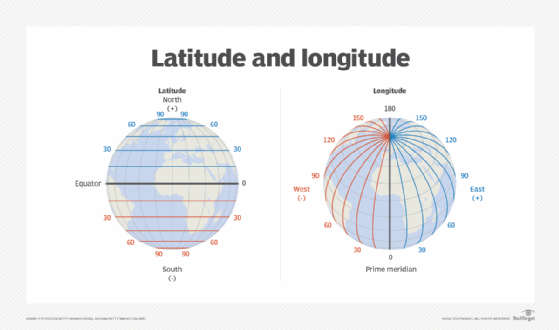
GPS coordinates are a set of numbers that represent a specific location on the Earth’s surface. The Earth is divided into a grid of latitude and longitude lines, which provides a global standard of location reference. The lines themselves are measured in degrees, with the equator serving as the starting point for latitude and the prime meridian serving as the starting point for longitude. Latitude ranges from 0 to 90 degrees, with the equator being 0 and the poles being 90. Longitude ranges from 0 to 180 degrees, with the prime meridian being 0 and the international date line being 180.

To determine a location on the Earth’s surface, we need to specify a combination of latitude and longitude. This can be done in several different coordinate formats, but the most common are decimal degrees and degrees-minutes-seconds (DMS).

Decimal degrees are the simplest form of coordinates and represent a location’s latitude and longitude in decimal form to six decimal places. For example, the coordinates for the Eiffel Tower in Paris, France in decimal degrees are 48.858523, 2.29452.

DMS coordinates, on the other hand, represent a location’s latitude and longitude in degrees, minutes, and seconds. For example, the coordinates for the Eiffel Tower in DMS format are 48°51’24.684″N, 2°17’40.272″E. In this format, the degree symbol (°) represents whole degrees, the apostrophe (‘) represents minutes, and the double quote (“) represents seconds.

To use GPS coordinates, we need a GPS device that can receive signals from GPS satellites orbiting the Earth. These satellites transmit signals that are picked up by GPS receivers, which use the signals to determine our location using a process called trilateration. Trilateration involves measuring the distance between a GPS receiver and a minimum of three GPS satellites. By measuring the time it takes for the signals to travel between the satellites and the receiver, the GPS device can calculate the distance to each satellite and use this information to determine its location on the Earth’s surface.

In conclusion, GPS coordinates are a critical component of the navigational system we use every day. Understanding the basics of how GPS coordinates work is essential for using GPS effectively and exploring the world around us. Whether you’re hiking through the wilderness or driving to a new city, GPS coordinates provide a precise and reliable way to navigate and explore our amazing planet.


Previous Article

How to Position Wi-Fi Router Antennas

Next Article

How to Find Amethyst in Minecraft

Matthew Lynch

Related articles More from author

  • Digital & Mobile Technology

    What is a Cloud Provider?

    April 16, 2023
    By Matthew Lynch
  • Digital & Mobile Technology

    What Is HLG HDR?

    June 8, 2023
    By Matthew Lynch
  • Digital & Mobile Technology

    Why Is Your Mobile Data So Slow? How to Speed It Up

    August 5, 2023
    By Matthew Lynch
  • Digital & Mobile Technology

    VirtualBox vs. VMWare vs. Hyper-V: What’s the Best Virtual Machine?

    June 5, 2023
    By Matthew Lynch
  • Digital & Mobile Technology

    What Is the Great Firewall of China and How Does It Work?

    June 6, 2023
    By Matthew Lynch
  • Digital & Mobile Technology

    Best Wireless Printer Adapters of 2023

    June 23, 2023
    By Matthew Lynch

Search

Login & Registration

  • Log in
  • Entries feed
  • Comments feed
  • WordPress.org

Newsletter

Signup for The Tech Edvocate Newsletter and have the latest in EdTech news and opinion delivered to your email address!

About Us

Since technology is not going anywhere and does more good than harm, adapting is the best course of action. That is where The Tech Edvocate comes in. We plan to cover the PreK-12 and Higher Education EdTech sectors and provide our readers with the latest news and opinion on the subject. From time to time, I will invite other voices to weigh in on important issues in EdTech. We hope to provide a well-rounded, multi-faceted look at the past, present, the future of EdTech in the US and internationally.

We started this journey back in June 2016, and we plan to continue it for many more years to come. I hope that you will join us in this discussion of the past, present and future of EdTech and lend your own insight to the issues that are discussed.

Newsletter

Signup for The Tech Edvocate Newsletter and have the latest in EdTech news and opinion delivered to your email address!

Contact Us

The Tech Edvocate
910 Goddin Street
Richmond, VA 23231
(601) 630-5238
[email protected]

Copyright © 2026 Matthew Lynch. All rights reserved.