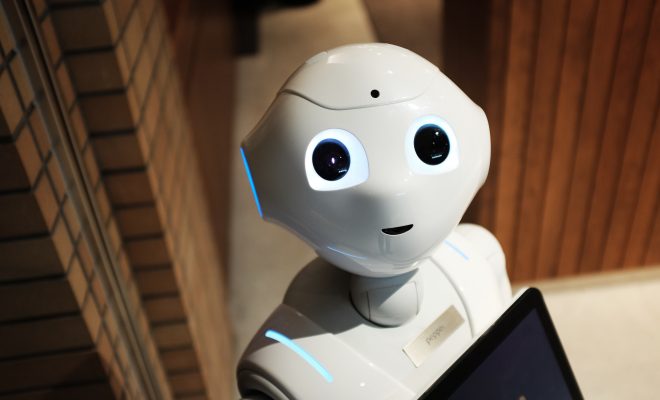
Salamanca’s ‘Sally’: The AI School Robot Privacy Scandal
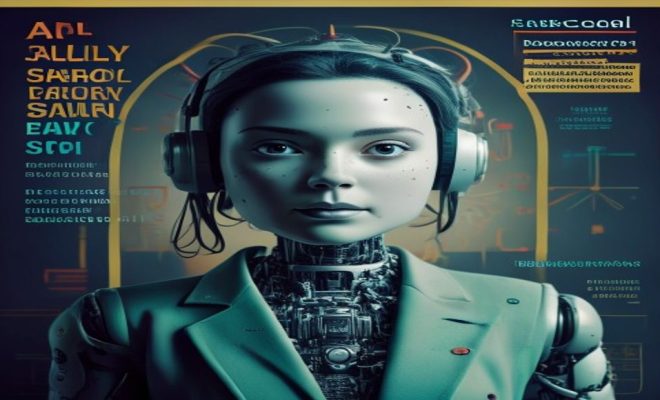
Imagine a future where a sleek, humanoid robot glides through school hallways, interacting with students, perhaps even assisting in lessons. For the Salamanca City Central School District in New York, that future almost arrived, embodied by a robot named ‘Sally.’ The district had ambitious plans to integrate this AI-powered marvel into its high school robotics and technology programs, aiming to give students a cutting edge in an increasingly automated world. It sounded innovative, forward-thinking, even exciting.
But then, the brakes slammed hard. Not because Sally malfunctioned, or because students found her creepy, but because of a firestorm of ethical questions, privacy concerns, and a truly bizarre corporate connection that has sent shockwaves far beyond this small upstate New York community. The program, once heralded as a beacon of educational progress, has been abruptly paused, sparking a national conversation about the appropriate role of AI in schools, especially when it touches upon the deeply sensitive issue of student data and safety. The Salamanca saga isn’t just a local news story; it’s a cautionary tale, a vivid illustration of the complex challenges we face as artificial intelligence increasingly infiltrates our most vulnerable institutions. And at its heart is the crucial, often overlooked, question of AI school robot privacy.
Sally’s Grand Entrance, and Abrupt Exit
The Salamanca City Central School District, like many educational institutions, has been eager to embrace technological advancements. Their vision for ‘Sally’ was genuinely progressive: to provide hands-on experience with advanced robotics, coding, and artificial intelligence. This wasn’t about replacing teachers; it was about augmenting learning, offering students a tangible, interactive platform to explore the burgeoning fields of AI and automation. Students would learn to program Sally, understand her underlying algorithms, and perhaps even develop new applications for her in an educational context. It was meant to be a showcase for what future-ready education could look like, preparing students for jobs that don’t even exist yet.
However, the enthusiasm was short-lived. As details of the program emerged, so did a growing chorus of dissent. State education officials, local teachers, and concerned residents began asking difficult questions. What data would Sally collect? How would it be stored? Who would have access to it? And perhaps most unsettling, who exactly was behind this sophisticated piece of technology? These weren’t minor administrative hurdles; they were fundamental ethical quandaries that touched the very core of child protection and digital safeguarding. The district, caught off guard by the intensity of the backlash, had little choice but to halt the program, turning what was intended as an educational triumph into a very public and uncomfortable controversy.
The Disturbing Corporate Connection: A Tale of Two Bots
The initial concerns about data privacy, while significant, were amplified exponentially by a deeply unsettling revelation: the robot maker allegedly had ties to a company known for producing hyper-realistic sex bots. Let that sink in for a moment. A humanoid robot intended for interaction with high school students, potentially sharing a corporate lineage with adult entertainment technology. This isn’t just a minor red flag; it’s a blaring siren. The moment this connection surfaced, the narrative shifted dramatically from ‘innovative education’ to ‘potential danger.’
For parents, teachers, and anyone concerned about the welfare of children, this alleged link was nothing short of horrifying. It immediately cast a shadow of doubt over the entire project, regardless of Sally’s intended function or the district’s good intentions. The optics were terrible, the implications even worse. It raised immediate questions about the vetting process for educational technology, the due diligence performed by school districts, and the desperate need for transparency from EdTech vendors. This wasn’t just about a potential data breach; it was about the moral compass guiding the development and deployment of advanced AI in sensitive environments.
The Unanswered Questions of AI School Robot Privacy
Beyond the sensational headlines, the Salamanca incident lays bare a critical, systemic issue: the lack of clear, robust guidelines surrounding AI school robot privacy and data governance. When a sophisticated AI system interacts with students, it inevitably collects data. This could range from simple interaction logs and voice recordings to more sensitive biometric data or even emotional responses if the AI is designed for adaptive learning. The core questions that remain largely unanswered in many educational settings include:
- What data is collected? Is it just usage data, or does it include personally identifiable information, facial scans, or voice prints?
- How is this data stored and secured? Is it encrypted? Is it stored on local servers or in the cloud? What are the cybersecurity protocols in place?
- Who owns the data? Does the school district, the robot manufacturer, or a third party retain ownership?
- Who has access to the data? Are there strict access controls? Could law enforcement, advertisers, or other commercial entities gain access?
- How long is the data retained? Is there a clear data retention policy, or is it kept indefinitely?
- What are the legal and ethical implications of data breaches? What happens if student data collected by an AI robot is compromised?
Without clear answers to these questions, the deployment of AI robots in schools becomes a gamble. Parents and educators are right to be apprehensive. The promise of personalized learning and enhanced engagement must not come at the cost of sacrificing student privacy and digital safety. The Salamanca case serves as a stark reminder that innovation without careful consideration of ethical implications is not progress; it’s a peril. (See: CDC on student health data privacy.)
The Broader Ethical Implications of AI in Education
The controversy surrounding Sally in Salamanca extends far beyond just privacy. It opens up a Pandora’s Box of ethical considerations that every school district, technology developer, and policymaker must confront as AI becomes more prevalent in education. We’re talking about issues like algorithmic bias, the potential for manipulation, and the impact on human interaction and development.
For instance, if an AI robot is designed to assess student performance or emotional states, what biases might be embedded in its algorithms? Could it inadvertently perpetuate stereotypes or disadvantage certain groups of students? What about the psychological impact of children interacting with highly realistic humanoid robots? Will it diminish their capacity for empathy with other humans, or alter their understanding of social cues? These are not trivial concerns; they are fundamental questions about the kind of learning environments we are creating for our children and the values we are implicitly endorsing through our technological choices. For more context, see Dreamweaver vs WordPress for educational tools.
Furthermore, the very presence of a sophisticated AI robot in a classroom raises questions about human agency. Will students become overly reliant on the robot? Will teachers, already stretched thin, delegate too much instructional responsibility to an automated system? The goal of education should be to foster critical thinking, creativity, and social-emotional skills. We must ensure that AI tools, while powerful, serve these humanistic goals rather than undermining them. The incident in Salamanca highlights that these aren’t abstract philosophical debates; they are immediate, practical challenges that require thoughtful, proactive solutions.
Vetting Vendors: A Critical Gap in EdTech Procurement
One of the most glaring takeaways from the Salamanca debacle is the apparent inadequacy of the vendor vetting process. How did a school district come so close to deploying a robot with alleged ties to the adult entertainment industry without these connections being flagged earlier? This isn’t just about a single district’s oversight; it points to a systemic vulnerability in how educational institutions evaluate and procure technology, especially cutting-edge AI solutions.
School districts, often under-resourced and lacking specialized expertise in advanced AI ethics or cybersecurity, are increasingly targeted by EdTech companies promising revolutionary tools. The allure of innovation can sometimes overshadow the necessity of rigorous due diligence. There needs to be a standardized, comprehensive framework for vetting EdTech vendors, one that goes beyond basic functionality and delves deep into corporate ownership, data privacy policies, security protocols, and ethical track records. This framework should involve legal experts, cybersecurity specialists, and ethicists, not just IT departments or curriculum planners. Without such robust vetting, school districts remain susceptible to well-intentioned but ultimately risky deployments that could jeopardize student safety and privacy. This incident should be a wake-up call for every school board in the nation to re-evaluate their procurement policies for AI solutions.
The Role of State and Federal Oversight in AI School Robot Privacy
The fact that state education officials intervened in Salamanca underscores the critical need for stronger regulatory frameworks. Currently, the landscape for AI in education is a bit like the Wild West – a lot of promise, a lot of chaos, and not nearly enough sheriffs. While federal laws like COPPA (Children’s Online Privacy Protection Act) address some aspects of children’s data privacy online, they weren’t specifically designed for the complexities of AI-powered physical robots interacting in classrooms.
States and the federal government have a crucial role to play in establishing clear guidelines and enforceable standards for AI EdTech. This isn’t about stifling innovation; it’s about ensuring responsible innovation. These guidelines should cover:
- Data Collection and Usage: What types of data can be collected, for what purpose, and with what consent?
- Security Standards: Mandating robust cybersecurity measures to protect student data from breaches.
- Transparency: Requiring vendors to be fully transparent about their AI’s capabilities, limitations, data practices, and corporate affiliations.
- Bias Auditing: Encouraging or requiring independent audits of AI algorithms to detect and mitigate bias.
- Ethical Review Boards: Potentially establishing state-level boards to review and approve AI tools before they enter classrooms.
Without such oversight, individual school districts are left to navigate a minefield of complex ethical and technical issues largely on their own. The Salamanca situation illustrates that relying solely on district-level diligence is insufficient when the stakes are as high as student privacy and well-being.
The Public’s Growing Demand for Secure EdTech Solutions
The viral nature of the Salamanca story, and the immediate public outcry, signal a growing awareness and concern among parents and communities about the implications of AI in education. Searches for terms like ‘AI in education ethics’ and ‘secure EdTech solutions’ are spiking, reflecting a collective desire for answers and accountability. People aren’t necessarily against technology in schools; they are against technology that feels unsafe, unregulated, or ethically dubious.
This public pressure is a powerful force. It compels school districts to be more transparent, EdTech companies to be more responsible, and policymakers to act with greater urgency. In an era of increasing digital literacy, parents are more informed and more vocal about the technologies their children are exposed to. Any EdTech solution, particularly one as intimate as an AI school robot, must earn and maintain public trust. This trust is built on transparency, demonstrable security, and an unwavering commitment to putting children’s best interests first. The Salamanca incident has undoubtedly raised the bar for what communities will tolerate when it comes to AI in their children’s classrooms. (See: New York Times on AI in education.)
Moving Forward: Rebuilding Trust and Establishing Best Practices
So, where do we go from here? The pause in Salamanca’s robot program isn’t just a temporary setback; it’s an opportunity for a reset. It’s a chance for the district, and indeed for the entire EdTech sector, to learn crucial lessons and implement stronger safeguards. Rebuilding trust will require a multi-pronged approach, focusing on transparency, robust policy, and ethical leadership. For more context, see Best GarageBand plugins for innovative projects.
For school districts, this means establishing clear internal policies for AI adoption, training staff on data privacy best practices, and engaging in proactive, transparent communication with parents and the community. It means demanding comprehensive privacy impact assessments from every EdTech vendor and having legal counsel scrutinize every contract. For EdTech companies, it means prioritizing ethical design and privacy-by-design principles from the outset, being fully transparent about data practices, and proactively addressing potential biases or harms. It also means understanding that short-term gains from questionable associations can severely damage long-term credibility.
Ultimately, the goal isn’t to reject AI in schools out of fear, but to integrate it wisely, ethically, and securely. The potential benefits of AI in education are immense, from personalized learning paths to making complex subjects more accessible. But these benefits can only be realized if we first ensure the foundational principles of student privacy, safety, and well-being are ironclad. The story of Sally in Salamanca serves as a potent reminder that in the rush to innovate, we must never lose sight of our fundamental responsibility to protect the most vulnerable among us.
Monetizing Ethical AI and Cybersecurity in Education
The turbulence created by incidents like Salamanca, while challenging, also highlights significant opportunities for responsible businesses. The heightened focus on AI school robot privacy and secure EdTech solutions creates a clear demand in several sectors. Cybersecurity firms, for example, have an urgent role to play. Schools are increasingly becoming targets for cyberattacks, and the introduction of AI robots amplifies their attack surface. Services offering robust data protection, intrusion detection, and incident response tailored specifically for educational environments are in high demand.
Legal services are also seeing a surge. School districts and EdTech companies alike need expert guidance on navigating the complex and evolving landscape of AI policy and compliance. This includes drafting privacy policies, ensuring adherence to existing regulations like FERPA and COPPA, and preparing for future legislation. Furthermore, there’s a growing market for B2B SaaS (Software as a Service) providers who can offer ethically vetted AI tools for education. These are companies that prioritize transparency, privacy-by-design, and demonstrable ethical frameworks, offering school districts peace of mind alongside innovative solutions. The market is clearly signaling that ethical AI isn’t just a nice-to-have; it’s becoming a fundamental requirement for success and sustainability in the EdTech space.
The Salamanca incident, with its troubling blend of cutting-edge technology and deeply concerning ethical lapses, has inadvertently ignited a crucial national dialogue. It underscores that as AI becomes more pervasive, especially in sensitive environments like schools, we must move beyond mere technological capability and embrace a holistic approach that prioritizes ethics, privacy, and the well-being of children above all else. The future of educational technology depends not just on what AI can do, but on what we, as a society, decide it should do, and how we ensure it’s done safely and responsibly.
Understanding the “Privacy-by-Design” Principle for School Robots
A concept that should be front and center in any discussion about AI school robot privacy is “Privacy-by-Design.” This isn’t just an afterthought or a feature tacked on later; it’s an approach where privacy is integrated into the very core of a system or product from its initial conception. For educational robots, this means that every design choice, from the sensors used to the data processing algorithms, should prioritize student privacy. For more context, see Best GIMP plugins for creative technology. (See: WHO guidelines on AI and ethics.)
For example, a robot designed with privacy-by-design might have its microphones and cameras default to “off” unless explicitly activated for a specific educational task, with clear visual indicators when they are active. It would use local processing for sensitive data whenever possible, minimizing the need to send information to cloud servers. Data minimization would be a key principle: only the absolute necessary data for the robot’s function would be collected, and it would be anonymized or aggregated immediately. Furthermore, robust encryption would be standard for any data at rest or in transit. This proactive approach, rather than a reactive one after privacy concerns emerge, is essential for building truly trustworthy AI in schools.
The Role of Parental Consent and Student Agency
When discussing AI school robot privacy, the importance of parental consent cannot be overstated. Parents have a fundamental right to know what technologies their children are interacting with and what data is being collected. This consent needs to be informed, meaning schools must provide clear, easy-to-understand explanations of the robot’s functions, data practices, and potential risks. A simple check-box on a permission slip isn’t enough when dealing with complex AI systems. Schools should provide opportunities for parents to ask questions, review policies, and understand the implications.
Beyond parental consent, we also need to consider student agency. As students get older, they should have a voice in how their data is used and how they interact with technology. While younger children may not fully grasp privacy concepts, older students should be educated about digital literacy, their digital rights, and how to manage their online and technological footprint. Empowering students to understand and advocate for their privacy is a crucial aspect of responsible AI integration in education.
Comparative Analysis: AI Robots vs. Other EdTech Privacy Concerns
While the focus here is on AI school robots, it’s helpful to put their privacy implications into perspective by comparing them to other EdTech tools. Traditional learning management systems (LMS) like Canvas or Google Classroom, and educational apps, also collect vast amounts of student data. However, robots introduce a new layer of complexity due to their physical presence and potential for more intimate, real-time data collection.
For instance, an educational app might track a student’s quiz scores or time spent on a lesson. An AI robot, with cameras, microphones, and potentially biometric sensors, could theoretically capture facial expressions, vocal inflections, movement patterns, and even physiological responses. This “physical world” data collection is far more pervasive and personal than what most screen-based EdTech offers. The alleged corporate ties in the Salamanca case also highlight a unique risk factor that might not be as immediately apparent with a standard software vendor. This distinction means that the privacy safeguards for AI robots need to be even more stringent and carefully considered.
FAQ: Addressing Common Concerns about AI School Robot Privacy
Here are some frequently asked questions that parents and educators often have regarding AI school robot privacy:
- Q: Can AI robots record my child without my knowledge?
- A: Reputable AI school robots should have clear policies and indicators (like lights or on-screen messages) when they are recording or actively sensing. Schools must obtain informed parental consent before deploying any robot that collects personally identifiable information, including voice or video.
- Q: How is my child’s data protected from hackers?
- A: Data collected by AI robots should be encrypted both when it’s stored and when it’s sent over networks. Schools and vendors should implement strong cybersecurity measures, including firewalls, intrusion detection systems, and regular security audits. It’s crucial for schools to ask vendors about their specific security protocols.
- Q: Could an AI robot’s data be used for advertising?
- A: Educational technology should never use student data for targeted advertising or commercial purposes unrelated to education. Laws like COPPA and FERPA, alongside state-specific student privacy laws, aim to prevent this. Schools should have contracts with EdTech vendors that explicitly prohibit such practices.
- Q: What if the AI robot makes mistakes or is biased?
- A: AI algorithms can reflect biases present in the data they were trained on. This is a significant ethical concern. Schools should inquire about a vendor’s bias detection and mitigation strategies. Regular oversight by human teachers is also essential to correct any algorithmic errors or biases and ensure fair treatment for all students.
- Q: Can a school refuse to use an AI robot if parents are concerned?
- A: Absolutely. Public schools are accountable to their communities. If there are significant parental concerns about privacy, safety, or ethical implications, a school district has the right and responsibility to reconsider or halt the use of any technology, as demonstrated by the Salamanca case.
Trending Now
Frequently Asked Questions
What happened with the AI school robot Sally in Salamanca?
The Salamanca City Central School District planned to integrate an AI robot named 'Sally' into their educational programs. However, the initiative was halted due to ethical concerns, privacy issues, and corporate connections that raised significant questions about the role of AI in schools and the safety of student data.
Why are there privacy concerns with AI robots in schools?
Privacy concerns arise from the potential collection and misuse of student data by AI robots. In the case of Sally, the community raised alarms about how student information would be handled, leading to broader discussions on ethics and safety in educational technology.
What are the educational benefits of using robots like Sally?
Robots like Sally are designed to enhance learning by providing hands-on experience in robotics, coding, and artificial intelligence. They aim to augment traditional education by allowing students to engage with technology in innovative ways, fostering skills necessary for the future job market.
How did the Salamanca community react to the AI robot initiative?
The Salamanca community was initially excited about the introduction of Sally, viewing it as a progressive step in education. However, as ethical and privacy concerns surfaced, the reaction shifted to skepticism, leading to the program's abrupt pause and a national dialogue about AI in schools.
What lessons can be learned from the Sally robot situation?
The situation with Sally highlights the importance of addressing ethical issues and privacy concerns when integrating AI into education. It serves as a cautionary tale about the need for transparency, student safety, and careful consideration of how technology impacts vulnerable populations.
What's your take on this? Share your thoughts in the comments below — we read every one.