The Tech Edvocate

Top Menu

  • Advertisement
  • Apps
  • Home Page
  • Home Page Five (No Sidebar)
  • Home Page Four
  • Home Page Three
  • Home Page Two
  • Home Tech2
  • Icons [No Sidebar]
  • Left Sidbear Page
  • Lynch Educational Consulting
  • My Account
  • My Speaking Page
  • Newsletter Sign Up Confirmation
  • Newsletter Unsubscription
  • Our Brands
  • Page Example
  • Privacy Policy
  • Protected Content
  • Register
  • Request a Product Review
  • Shop
  • Shortcodes Examples
  • Signup
  • Start Here
    • Governance
    • Careers
    • Contact Us
  • Terms and Conditions
  • The Edvocate
  • The Tech Edvocate Product Guide
  • Topics
  • Write For Us
  • Advertise

Main Menu

  • Start Here
    • Our Brands
    • Governance
      • Lynch Educational Consulting, LLC.
      • Dr. Lynch’s Personal Website
      • Careers
    • Write For Us
    • The Tech Edvocate Product Guide
    • Contact Us
    • Books
    • Edupedia
    • Post a Job
    • The Edvocate Podcast
    • Terms and Conditions
    • Privacy Policy
  • Topics
    • Assistive Technology
    • Child Development Tech
    • Early Childhood & K-12 EdTech
    • EdTech Futures
    • EdTech News
    • EdTech Policy & Reform
    • EdTech Startups & Businesses
    • Higher Education EdTech
    • Online Learning & eLearning
    • Parent & Family Tech
    • Personalized Learning
    • Product Reviews
  • Advertise
  • Tech Edvocate Awards
  • The Edvocate
  • Pedagogue
  • School Ratings

logo

The Tech Edvocate

  • Start Here
    • Our Brands
    • Governance
      • Lynch Educational Consulting, LLC.
      • Dr. Lynch’s Personal Website
        • My Speaking Page
      • Careers
    • Write For Us
    • The Tech Edvocate Product Guide
    • Contact Us
    • Books
    • Edupedia
    • Post a Job
    • The Edvocate Podcast
    • Terms and Conditions
    • Privacy Policy
  • Topics
    • Assistive Technology
    • Child Development Tech
    • Early Childhood & K-12 EdTech
    • EdTech Futures
    • EdTech News
    • EdTech Policy & Reform
    • EdTech Startups & Businesses
    • Higher Education EdTech
    • Online Learning & eLearning
    • Parent & Family Tech
    • Personalized Learning
    • Product Reviews
  • Advertise
  • Tech Edvocate Awards
  • The Edvocate
  • Pedagogue
  • School Ratings
  • How to use ClickUp goals feature

  • Trello for Business

  • Can Smartsheet do automation

  • How to use Microsoft Planner boards

  • How many transactions in Kashoo

  • Sage

  • Is Sage worth it for accountants

  • How to use Smartsheet templates

  • How many users in Zoho Books free plan

  • Can Wrike integrate with Adobe Creative Cloud

EdTech FuturesElementary EducationOnline Learning & eLearning
Home›EdTech Futures›SSD vs. HDD vs. USB Flash Drive: Everything You Need to Know

SSD vs. HDD vs. USB Flash Drive: Everything You Need to Know
By Matthew Lynch
March 30, 2023
0
Spread the love

For many years, the Hard Disk Drive (HDD) was the only storage device available, and it was the most reliable and efficient way of storing data, and it remained so until the advent of Solid State Drives (SSD) and USB Flash Drives. These storage devices have become very popular in the last decade due to their speed, cost, and other features that make them desirable to users. In this article, we will compare the three types of storage devices and identify the benefits and drawbacks of each.

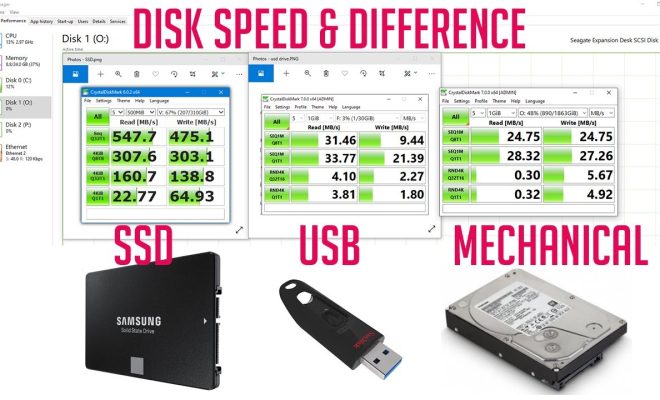
HDDs, as previously mentioned, have been around for decades, and they are still widely used as a means of storing data. They work by using spinning platters and magnetic read/write heads. Data is written to and read from the platters in a very controlled environment to prevent contamination, and these platters are usually coated with a magnetic material that stores information in binary form. HDDs are affordable, and the storage capacity of an HDD is usually very large, with some devices offering terabytes of space. However, HDDs are prone to mechanical failure, and accessing data on them is slower than accessing data on an SSD.

Unlike HDDs, SSDs do not have moving parts, which makes them more reliable and faster. Instead of spinning platters, SSDs have memory chips that store data, allowing for faster access times. Solid-state drives are also more durable than hard drives because they are less likely to be damaged by impact or shake. SSDs are typically smaller than HDDs, but they offer equivalent or greater storage capacity. The downside with SSDs is that they are more expensive than HDDs.

USB flash drives, on the other hand, are small portable devices that are plugged into a USB port of a computer to store data. They also use memory chips like SSDs to store data, but they are often cheaper than both SSDs and HDDs. USB drives vary in size and range from a few gigabytes to several terabytes. They are lightweight, compact, and durable, making them ideal for transporting data from one place to another. The downside to USB flash drives is that data transfer speeds are slower compared to SSDs and HDDs, and they have limited read and write cycles, meaning they will eventually wear out after continued use.

In summary, each storage device has its advantages and disadvantages that determine which is the best for different purposes. For those who need large storage capacity for work, media, or gaming, an HDD is an ideal option. If you are looking for speed, durability, and a more reliable storage device, an SSD is a better choice. For data portability, USB flash drives are the go-to option. However, before settling on a storage device, it’s essential to consider your data storage needs, the speed of the device, the price, and other factors that might affect your decision.    

Previous Article

Sprint Won’t Allow My Phone to Activate

Next Article

Start Your Project Off Right With the ...

Matthew Lynch

Related articles More from author

  • FeaturedFreshHigher EducationHigher Education EdTechOnline Learning & eLearning

    How to Ensure Online Course Quality at Your University

    December 21, 2018
    By Matthew Lynch
  • Elementary EducationOnline Learning & eLearning

    The 5 Best Cover Letter Templates for Google Docs

    March 31, 2023
    By Matthew Lynch
  • Online Learning & eLearning

    How to Use Your Roku Without a Remote

    March 26, 2023
    By Matthew Lynch
  • Online Learning & eLearning

    Reducing Eyestrain During eLearning

    January 11, 2024
    By Matthew Lynch
  • Elementary EducationOnline Learning & eLearning

    Sony PS5 vs. Microsoft Xbox Series X: Best high-end game console for

    March 29, 2023
    By Matthew Lynch
  • Online Learning & eLearning

    Find the best Web Conferencing Software

    March 9, 2023
    By Matthew Lynch

Search

Login & Registration

  • Log in
  • Entries feed
  • Comments feed
  • WordPress.org

Newsletter

Signup for The Tech Edvocate Newsletter and have the latest in EdTech news and opinion delivered to your email address!

About Us

Since technology is not going anywhere and does more good than harm, adapting is the best course of action. That is where The Tech Edvocate comes in. We plan to cover the PreK-12 and Higher Education EdTech sectors and provide our readers with the latest news and opinion on the subject. From time to time, I will invite other voices to weigh in on important issues in EdTech. We hope to provide a well-rounded, multi-faceted look at the past, present, the future of EdTech in the US and internationally.

We started this journey back in June 2016, and we plan to continue it for many more years to come. I hope that you will join us in this discussion of the past, present and future of EdTech and lend your own insight to the issues that are discussed.

Newsletter

Signup for The Tech Edvocate Newsletter and have the latest in EdTech news and opinion delivered to your email address!

Contact Us

The Tech Edvocate
910 Goddin Street
Richmond, VA 23231
(601) 630-5238
[email protected]

Copyright © 2026 Matthew Lynch. All rights reserved.