SpaceX’s Secret Weapon: This $100 Billion Plan Could Reshape the Internet
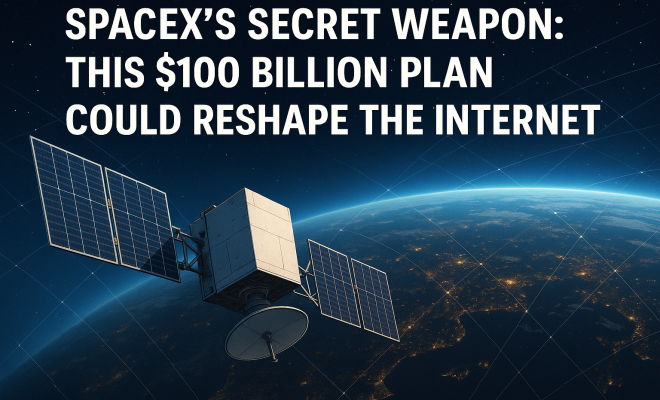
Imagine a future where your most complex computations, your most data-intensive AI models, aren’t running in a server farm humming away in some desert or arctic circle, but are instead whizzing around the Earth at thousands of miles per hour. Sound like science fiction? Well, get ready, because SpaceX isn’t just imagining it – they’re building it. The aerospace giant, famous for its reusable rockets and Starlink internet constellation, is quietly, yet aggressively, pushing into an entirely new frontier: orbital AI data centers.
This isn’t just another incremental tech upgrade. We’re talking about a monumental shift that could fundamentally alter the landscape of cloud computing and data processing as we know it. By 2027, SpaceX aims to deploy its first orbital AI data centers, with CFO Bret Johnsen confidently projecting “huge amounts of compute” available by 2028. This bold move, coupled with an eye-watering $100 billion project to establish Starbase Louisiana, signals a massive expansion far beyond just launching satellites and ferrying astronauts. It’s a strategic pivot into AI infrastructure, a diversification play that could see SpaceX become a dominant force in a market currently ruled by terrestrial giants. The implications for the SpaceX orbital AI data centers impact on cloud computing are profound, challenging existing paradigms and opening up a universe of new possibilities.
The Terrestrial Bottleneck: Why Space Beckons
For decades, cloud computing has been tethered to Earth. Massive data centers, sprawling across acres of land, consume vast amounts of power and generate incredible heat. They require extensive infrastructure – fiber optic cables, cooling systems, security perimeters – all vulnerable to natural disasters, geopolitical instability, and even localized power outages. While incredibly powerful, these terrestrial systems have inherent limitations. Latency, for instance, is a constant battle. Even at the speed of light, data takes time to travel across continents, impacting applications that demand real-time processing, like autonomous vehicles or high-frequency trading.
Think about the sheer energy consumption. Data centers worldwide are estimated to use around 1% of global electricity, a figure that’s only set to grow as AI and big data proliferate. Finding suitable locations with reliable, affordable power and ample cooling is becoming increasingly challenging. Then there’s the physical security aspect; a centralized facility on the ground is a single point of failure, a tempting target for cyberattacks or physical sabotage. These are the very pain points that orbital data centers aim to circumvent, offering a compelling alternative to the traditional model.
SpaceX’s vision isn’t just about putting servers in orbit; it’s about creating a distributed, resilient, and potentially more efficient compute infrastructure. By leveraging their proven capabilities in rocket launches and satellite deployment, they’re uniquely positioned to execute this audacious plan. It’s a testament to Elon Musk’s ‘first principles’ thinking, where fundamental problems are re-evaluated from the ground up, rather than simply optimizing existing solutions.
Orbital Advantages: Unpacking the Competitive Edge
So, what exactly makes space-based servers so appealing, especially for AI workloads? The advantages are compelling and multi-faceted. First and foremost is latency, or rather, the reduction of it. While paradoxical at first glance – data has to travel to space and back – the key lies in proximity to the data source and the potential for direct, line-of-sight communication. Imagine a global network of satellites, each a mini-data center, processing information closer to its origin point, whether that’s an IoT sensor in the Amazon rainforest or an autonomous drone surveying an oil pipeline. This could drastically cut down on round-trip times compared to routing data to a distant terrestrial server.
Another significant benefit is environmental. In space, servers operate in a vacuum, which offers natural cooling. While thermal management in space is still a complex engineering challenge, the absence of atmospheric heat transfer simplifies certain aspects. Furthermore, the potential to power these centers with solar energy, continuously available in orbit, offers a path toward a more sustainable and energy-independent computing infrastructure, reducing reliance on fossil fuel-powered grids on Earth. This could dramatically lower operational costs over the long term, making space-based compute an economically attractive option.
Security Through Distribution and Isolation
Security is another critical differentiator. Terrestrial data centers, by their very nature, are centralized targets. In contrast, a constellation of orbital data centers offers a distributed architecture that is inherently more resilient. Hacking or disabling one satellite wouldn’t cripple the entire network. Physical access is also significantly harder; good luck trying to physically breach a server orbiting thousands of miles above Earth. This isolation provides an unparalleled layer of physical and logical security, making it extremely difficult for malicious actors to gain unauthorized access or cause widespread disruption. This aspect of the SpaceX orbital AI data centers impact on cloud computing cannot be overstated, especially in an era of escalating cyber threats.
Moreover, the ability to rapidly deploy and scale these orbital data centers using SpaceX’s Starship system allows for unprecedented flexibility. Need more compute capacity in a specific region? Launch another batch of server satellites. This agility is something traditional data center construction, which often takes years and billions of dollars, simply cannot match. This speed of deployment and scalability could fundamentally change how organizations plan and execute their IT strategies.
The $100 Billion Bet: Starbase Louisiana and the Grand Vision
SpaceX’s commitment to this orbital computing future isn’t just talk; it’s backed by an astronomical financial commitment. The company is investing a staggering $100 billion into building Starbase Louisiana. While initially associated with rocket manufacturing and launch operations, this new Starbase is clearly designed to be much more. It’s envisioned as a comprehensive hub for AI infrastructure development and deployment, serving as the ground segment for this ambitious orbital network. (See: SpaceX's Starlink internet constellation.)
This massive investment signals a profound strategic shift. SpaceX isn’t just a launch provider or an internet service provider anymore. They are positioning themselves as a full-stack space infrastructure company, integrating every aspect from launch to orbital operations, and now, to data processing. The scale of this investment alone underscores the company’s belief in the viability and profitability of space-based compute. It’s a long-term play, certainly, but one with potentially colossal returns.
The implications for the regional economy around Starbase Louisiana are also immense, creating thousands of high-tech jobs and fostering an ecosystem of innovation. It’s a testament to the belief that the next frontier of computing will literally be off-world. This strategic move is not just about technology; it’s about establishing dominance in a nascent but potentially revolutionary market, ensuring SpaceX controls the entire vertical from lift-off to processing your data. For more context, see Crucial AI Debate.
A Billion-Dollar Customer: Validation and Revenue Projections
Perhaps the most compelling evidence that this isn’t just a pipe dream is the news that SpaceX has already secured an unnamed compute customer for a staggering $1.11 billion a month. Let that sink in: over a billion dollars every single month for orbital compute services. This isn’t theoretical; it’s real revenue, and it demonstrates a clear market demand for what SpaceX is offering. While the identity of this customer remains a mystery, one can speculate it’s a major player in AI, government, or a large enterprise with unique data processing needs that terrestrial solutions can’t adequately meet.
This unprecedented deal is a massive vote of confidence and a critical step towards SpaceX’s audacious goal of achieving $100 billion in annual recurring revenue by the end of 2026. This isn’t just about launching rockets anymore; it’s about building a sustainable, highly profitable business model around space infrastructure and services. The fact that a customer is willing to commit such a vast sum years before widespread deployment speaks volumes about the perceived value and unique capabilities of orbital AI data centers.
This early revenue stream also provides crucial capital for further development and expansion, creating a virtuous cycle of investment and growth. It validates the commercial viability of space-based compute and will undoubtedly spur other companies to explore similar ventures, further heating up the competitive landscape and accelerating innovation in the sector. The SpaceX orbital AI data centers impact on cloud computing is already being felt, even before the first server goes live.
Disrupting the Cloud Triopoly: AWS, Azure, and Google Beware?
For years, the cloud computing market has been dominated by a powerful triopoly: Amazon Web Services (AWS), Microsoft Azure, and Google Cloud Platform (GCP). These giants have invested hundreds of billions in terrestrial data centers, fiber networks, and a vast array of cloud services. They’ve built an ecosystem that seems impenetrable. But SpaceX’s entry into orbital compute could represent the first truly disruptive force capable of challenging their hegemony.
While it’s unlikely to completely replace terrestrial cloud services overnight, orbital AI data centers offer a fundamentally different value proposition. They cater to use cases where traditional cloud providers struggle – ultra-low latency requirements, extreme data security needs, or operations in remote, underserved regions. This isn’t a head-on collision across all fronts, but rather an outflanking maneuver, targeting niche but incredibly high-value segments of the market.
The existing cloud providers will undoubtedly respond. We might see them invest in their own space-based solutions, partner with companies like SpaceX, or double down on optimizing their terrestrial infrastructure. However, the sheer capital expenditure and specialized expertise required for space operations create a significant barrier to entry, giving SpaceX a substantial first-mover advantage. This could force the cloud giants to innovate in new directions, ultimately benefiting customers with more diverse and specialized computing options.
The Technical Hurdles: It’s Not All Smooth Sailing
While the vision is compelling, deploying and operating orbital AI data centers presents a unique set of technical challenges that are far from trivial. First, there’s the radiation environment in space. Electronic components are susceptible to damage from cosmic rays and solar flares, requiring extensive radiation hardening and redundant systems. This adds complexity and cost to hardware design.
Then there’s thermal management. While the vacuum provides some benefits, dissipating heat generated by powerful AI processors in space is an engineering marvel. Without convection, heat must be radiated away, often requiring large, complex radiator systems. Maintaining stable operating temperatures for sensitive electronics in the extreme temperature swings of orbit is a constant battle.
Data Uplink and Downlink: The Bandwidth Challenge
(See: NASA's partnership with SpaceX.)
Communicating with these orbital data centers also poses challenges. While Starlink provides a robust network for internet access, moving petabytes of data for AI training and inference requires even higher bandwidth and reliability. Developing efficient, high-speed optical links or advanced radio frequency systems for rapid data transfer between Earth and orbit, and between satellites themselves, is crucial. Moreover, ensuring continuous connectivity and seamless data handoffs as satellites traverse the globe demands sophisticated network management and ground station infrastructure.
Finally, there’s the maintenance and longevity aspect. Unlike terrestrial data centers where a technician can simply swap out a faulty component, repairing or upgrading hardware in orbit is incredibly difficult and expensive, often requiring robotic missions or even human intervention. Designing systems for extreme reliability and extended operational lifetimes is paramount. These aren’t insurmountable problems, given SpaceX’s track record, but they require significant engineering prowess and innovation. For more context, see AI Cybersecurity Flaw.
Beyond Cloud Computing: Broader Implications for Space and AI
The SpaceX orbital AI data centers impact on cloud computing is just one facet of a much larger revolution. This endeavor has profound implications for the space industry itself. It further commercializes space, demonstrating new revenue streams beyond traditional government contracts or satellite TV. It could spur a new generation of space-based services, from advanced Earth observation analytics performed directly in orbit to scientific research that leverages space-based compute for faster processing of experimental data.
For artificial intelligence, this opens up entirely new possibilities. Imagine AI models trained on vast datasets collected directly in space, perhaps from advanced telescopes or planetary probes, with computation occurring immediately at the source. This could accelerate discoveries in astrophysics, climate science, and resource exploration. It also enables truly global AI applications that are not constrained by terrestrial infrastructure, providing ubiquitous intelligent services anywhere on Earth or even beyond.
Furthermore, it could accelerate the development of autonomous systems in space. If satellites can host their own powerful AI for real-time decision-making, it could lead to more intelligent and resilient space infrastructure, from self-repairing satellites to autonomous space exploration vehicles. This synergy between space infrastructure and advanced AI is a powerful combination that could redefine humanity’s presence in the cosmos.
Cybersecurity in Orbit: A New Frontier of Threat and Defense
With data centers moving into orbit, the cybersecurity landscape will inevitably expand into a new, complex dimension. Protecting these orbital assets and the sensitive data they process from cyber threats becomes an unprecedented challenge. Traditional cybersecurity models, largely designed for terrestrial networks, will need significant adaptation for the unique environment of space.
The stakes are incredibly high. A successful cyberattack on an orbital data center could not only compromise vast amounts of data but also potentially disrupt critical infrastructure or even cause physical damage in orbit. Imagine a scenario where an adversary gains control of a satellite’s thrusters or disables its communication systems. This makes the security architecture for these orbital centers paramount.
Robust Encryption and Resilient Architectures
SpaceX will need to implement multi-layered security protocols, including quantum-resistant encryption for data transmission, advanced intrusion detection systems tailored for space environments, and highly resilient, self-healing network architectures. The distributed nature of the orbital data centers offers some inherent resilience, but each individual node must be incredibly hardened. This will likely involve a combination of hardware-level security, secure boot processes, and continuous monitoring from ground control centers. (See: Impact of technology on health.)
Furthermore, the legal and regulatory frameworks for cybersecurity in space are still nascent. As more private entities launch critical infrastructure into orbit, there will be an urgent need for international cooperation and standardized protocols to prevent space from becoming a new battleground for cyber warfare. The unique challenges of maintaining the integrity and confidentiality of data in such a remote and hostile environment will undoubtedly drive significant innovation in the field of cybersecurity.
The Investment Horizon: What This Means for Businesses and Investors
For businesses, the advent of orbital AI data centers opens up a world of possibilities. Companies in sectors like B2B SaaS, geospatial intelligence, autonomous systems, and even entertainment could leverage this new compute paradigm for unprecedented performance and global reach. Imagine a SaaS platform that can offer ultra-low latency services to customers anywhere on the planet, regardless of local terrestrial infrastructure. This could democratize access to high-performance computing and AI capabilities on a global scale.
For investors, this development presents significant opportunities. Beyond direct investment in SpaceX (which is still privately held, but its valuation is soaring), there will be a ripple effect across the entire space economy. Companies specializing in radiation-hardened electronics, advanced thermal management systems, secure space communications, and orbital cybersecurity are likely to see increased demand. Furthermore, the potential for new space-based applications and services will create entirely new markets and investment avenues.
The “SpaceX orbital AI data centers impact on cloud computing” isn’t just a technical curiosity; it’s a profound economic driver. It signals a new era of space commercialization where the infrastructure of the internet extends beyond our planet. This will reshape competitive landscapes, create new industries, and redefine what’s possible in the digital realm. As we look towards 2027 and beyond, the skies above are no longer just for looking at stars; they’re becoming the next frontier for our most powerful computations.
Looking Ahead: The Future is Orbital
SpaceX’s ambitious plan to deploy orbital AI data centers by 2027 isn’t just another project; it’s a bold declaration of intent. It’s a move that signifies a fundamental shift in how we think about computing, data processing, and global connectivity. By leveraging their unparalleled capabilities in rocketry and satellite deployment, SpaceX is poised to create a truly distributed, resilient, and high-performance computing infrastructure that transcends terrestrial limitations.
The competitive advantages are clear: reduced latency, enhanced security through distribution, environmental benefits, and rapid scalability. While significant technical hurdles remain, the sheer scale of investment – the $100 billion Starbase Louisiana project – and the securing of a multi-billion dollar compute customer demonstrate a powerful commitment and a clear market demand. This isn’t just about putting servers in space; it’s about redefining the very architecture of the internet and the future of artificial intelligence.
The impact will reverberate across industries, challenging the status quo of cloud computing, opening new frontiers for AI applications, and spurring innovation in space technology and cybersecurity. The future of data, it seems, is no longer just on Earth. It’s in orbit, zipping around us, ready to power the next generation of technological marvels. Get ready, because the cloud is about to get a whole lot higher.
Trending Now
Frequently Asked Questions
What is SpaceX's $100 billion plan?
SpaceX's $100 billion plan involves the establishment of orbital AI data centers, which aim to revolutionize cloud computing by processing data in space. This initiative is a significant shift from traditional terrestrial data centers, enabling faster computations and reducing latency.
How will SpaceX's orbital AI data centers impact cloud computing?
SpaceX's orbital AI data centers are expected to challenge existing cloud computing paradigms by offering faster data processing capabilities and reducing reliance on terrestrial infrastructure. This could lead to a new era of computing that enhances efficiency and expands possibilities for AI applications.
When will SpaceX launch its orbital AI data centers?
SpaceX plans to deploy its first orbital AI data centers by 2027, with significant computational resources expected to be available by 2028. This ambitious timeline reflects their commitment to reshaping the future of data processing.
What are the advantages of orbital data centers over traditional ones?
Orbital data centers offer several advantages over traditional terrestrial data centers, including reduced latency, increased computational speed, and decreased vulnerability to natural disasters. They also require less physical infrastructure, which can lower operational costs.
Why is SpaceX diversifying into AI infrastructure?
SpaceX is diversifying into AI infrastructure to establish a dominant position in a market currently led by terrestrial giants. This strategic pivot aims to leverage their existing technologies and expand their influence in the rapidly growing field of artificial intelligence and cloud computing.
What did we miss? Let us know in the comments and join the conversation.