SpaceX Starfall’s Secret Weapon Could Change Space Manufacturing Forever
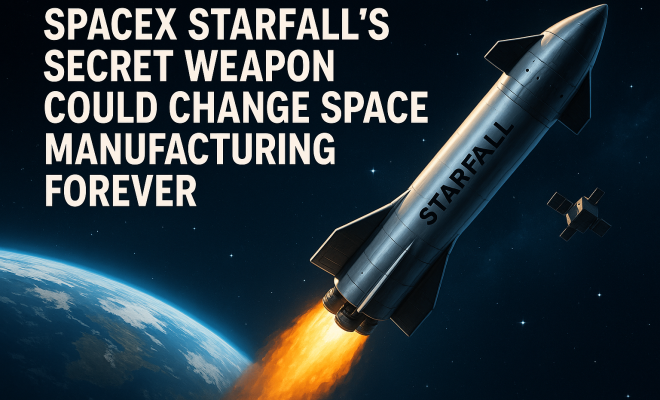
When we talk about satellites, most of us picture those silent, unblinking eyes orbiting our planet, relaying communications, beaming down GPS signals, or capturing stunning images of Earth. They’re essential, no doubt. But what if I told you there’s a new kind of spacecraft shaking up that traditional notion, one that isn’t just about sending signals or taking pictures, but about making things in space and bringing them back? That’s precisely what SpaceX’s Starfall capsule is doing, and it’s fundamentally altering the conversation around SpaceX Starfall vs traditional satellites, especially for businesses eyeing the final frontier.
On October 20, 2026, SpaceX achieved a significant milestone, successfully launching its Starfall return capsule for the second time. Carried skyward by a Falcon 9 rocket, this wasn’t just another launch; it was a profound step toward truly commercializing orbital research and manufacturing. We’re talking about a vehicle explicitly designed to support scientific experiments and, crucially, to manufacture goods in the microgravity environment of space. But here’s the real kicker, the game-changer that sets it apart: Starfall has the unique ability to return those valuable materials, those meticulously crafted space-made products, safely back to Earth. This is a capability traditional satellites simply don’t possess, and it’s opening up entirely new possibilities for industries willing to look beyond our planet’s atmosphere for innovation.
The Fundamental Divide: Return to Earth vs. Orbital Persistence
Let’s get straight to the core difference when comparing SpaceX Starfall vs traditional satellites: the ability to return. Traditional satellites are, by design, one-way tickets. Once launched, they remain in orbit, fulfilling their mission until their operational life ends, often becoming space junk or eventually deorbiting and burning up in the atmosphere. Their purpose is data collection, communication relay, or remote sensing – sending information *to* Earth, not physical objects *from* space.
Starfall flips this script entirely. It’s a round trip. Imagine a specialized factory or laboratory that you can send into space, conduct intricate experiments or manufacturing processes in microgravity, and then retrieve the finished products or research samples. This isn’t just a convenience; it’s a paradigm shift. For industries that rely on specialized materials, pharmaceuticals, or advanced research, the ability to physically interact with and retrieve objects created in space is invaluable. It transforms space from a distant vantage point into an accessible workshop.
Unlocking Microgravity’s Manufacturing Potential
Microgravity isn’t just a cool physics phenomenon; it’s a unique environment with profound implications for material science and manufacturing. On Earth, gravity constantly influences processes, leading to sedimentation, convection currents, and imperfections in crystal growth or alloy formation. In microgravity, these forces are dramatically reduced, allowing for the creation of materials with unprecedented purity, uniformity, and novel properties.
Consider industries like pharmaceuticals. Growing protein crystals in microgravity, for instance, can yield larger, more perfect structures than on Earth, potentially leading to breakthroughs in drug discovery and development. Or think about fiber optics: producing ultra-pure ZBLAN optical fibers in space could result in cables with significantly lower signal loss than anything achievable terrestrially. These aren’t just incremental improvements; they’re leaps forward, and Starfall provides the essential missing link: the ability to bring these revolutionary products back home for analysis and distribution.
The Economic Imperative: Affordability and Routine Access
One of the driving forces behind Starfall’s development is the aim to provide affordable, routine access to microgravity. Historically, space manufacturing or even just microgravity research has been incredibly expensive and logistically complex, largely limited to government-funded space agencies and the International Space Station (ISS). The costs associated with astronaut time, specialized equipment, and limited return capabilities made commercial ventures largely prohibitive.
SpaceX, with its reusable rocket technology and efficient launch cadence, is uniquely positioned to drive down these costs. By offering routine, dedicated flights for Starfall capsules, they’re creating an accessible pipeline to space for businesses. This isn’t just about reducing the price tag; it’s about making space manufacturing a viable, repeatable business model, rather than a prohibitively expensive scientific curiosity. This affordability is a critical differentiator in the SpaceX Starfall vs traditional satellites discussion for commercial applications.
Beyond Data: The Tangible Returns of Space Manufacturing
Think about what traditional satellites deliver: data. Weather patterns, communication signals, geographical maps. All incredibly useful, but intangible. Starfall, on the other hand, promises tangible returns. It’s about bringing back physical samples, finished products, or even components that were impossible to create with Earth’s gravitational pull.
Imagine a pharmaceutical company developing a new drug. They could send precursors into space via Starfall, manufacture the key ingredient in microgravity to achieve optimal purity, and then return the ingredient to Earth for final formulation and distribution. Or consider the aerospace industry, where new alloys with superior strength-to-weight ratios could be forged in orbit, then brought back to build lighter, more fuel-efficient aircraft or spacecraft. This shift from purely informational output to physical, high-value goods represents a profound economic opportunity, fundamentally reshaping the value proposition of space activities.
Expanding Commercial Access and Investment Opportunities
The successful second launch of Starfall isn’t just a technical achievement; it’s a strong signal to the global business community. It signifies that orbital research and manufacturing are moving beyond theoretical discussions and into a tangible, commercially viable reality. This expansion of commercial access to space opens up a robust monetization angle, creating new avenues for investment and specialized services.
For instance, we’re seeing the emergence of B2B SaaS (Software as a Service) for orbital services, where companies can lease space on Starfall missions, manage their experiments remotely, and track the progress of their manufacturing processes. This creates a whole new ecosystem of support services. Furthermore, this budding industry demands specialized insurance for these emerging space manufacturing ventures, mitigating risks associated with launch, orbital operations, and critical re-entry. Businesses considering investments in space technology and services now have a concrete, high-return proposition to evaluate. (See: space manufacturing in microgravity.)
The Competitive Edge: SpaceX Starfall vs Traditional Satellites in a New Era
The stark contrast in capabilities when comparing SpaceX Starfall vs traditional satellites cannot be overstated. Traditional satellites excel at remote sensing, communication, and navigation. They are the eyes and ears of our planet from above, indispensable for modern life. But they are passive. Starfall, by contrast, is active and interactive. It’s a mobile laboratory and factory, capable of manipulating materials and bringing the results home.
This difference creates a clear competitive advantage for Starfall in specific niches. While a traditional satellite might tell you about a mineral deposit on an asteroid, Starfall could hypothetically be part of a future system that processes that mineral in space. While a traditional satellite delivers data on crop health, Starfall could facilitate the creation of novel agricultural nutrients in microgravity for enhanced yields. The two aren’t necessarily in direct competition; rather, Starfall carves out an entirely new market segment, pushing the boundaries of what’s possible in space for commercial gain. For more context, see AI in space technology.
Challenges and the Path Forward for Orbital Manufacturing
Of course, no groundbreaking technology comes without its challenges. The complexities of operating manufacturing processes in microgravity, ensuring the integrity of materials during re-entry, and scaling operations to meet commercial demand are significant hurdles. The microgravity environment itself presents unique engineering challenges, from fluid management to thermal control. Furthermore, the regulatory landscape for orbital manufacturing and the return of space-made goods is still evolving, requiring careful navigation.
However, SpaceX’s methodical approach, exemplified by the successful second Starfall launch, demonstrates a clear commitment to overcoming these obstacles. Each mission provides invaluable data, informing improvements in capsule design, operational protocols, and manufacturing techniques. As the technology matures and costs continue to decrease, we can expect to see a rapid acceleration in the adoption of orbital manufacturing, moving from niche applications to a broader range of industrial uses.
The Broader Impact: Reshaping Our Relationship with Space
Beyond the immediate commercial implications, Starfall’s success has a broader, more philosophical impact. It reshapes humanity’s relationship with space. For decades, space was primarily a domain of exploration, scientific discovery, and national prestige. While those aspects remain vital, Starfall adds a new dimension: space as a place of commerce, production, and direct economic output that benefits industries on Earth.
This shift from purely ‘observing’ space to ‘utilizing’ space in a tangible, industrial sense is monumental. It’s not just about what we can learn from space, but what we can *make* in space that enhances life here on Earth. This narrative of a ‘new kind of spacecraft’ and the promise of expanding commercial access to space is inherently compelling, appealing to both seasoned space enthusiasts and savvy business communities alike. It’s a testament to human ingenuity, pushing the boundaries of what we once thought was science fiction into the realm of everyday possibility.
Deep Dive: Specific Applications of Microgravity Manufacturing
Let’s get a bit more granular about the kinds of products and processes that truly shine in a microgravity environment, setting Starfall’s capabilities apart when comparing SpaceX Starfall vs traditional satellites. It’s not just about making things; it’s about making them *better* in ways Earth’s gravity prevents.
Advanced Materials and Alloys
On Earth, when you try to mix two metals with different densities, gravity tends to cause them to separate or form uneven distributions as they cool. In microgravity, this problem largely disappears. This allows for the creation of incredibly uniform alloys and metal matrix composites with enhanced properties like strength, heat resistance, or ductility. Imagine turbine blades for aircraft engines made from such alloys – they could be lighter and more durable, leading to significant fuel savings and longer operational lifespans. Similarly, new superconducting materials, which are incredibly sensitive to structural imperfections, could reach their full potential when manufactured in space.
Biotechnology and Pharmaceuticals
We touched on protein crystal growth, but the applications in biotech extend further. Cell cultures, for instance, behave differently in microgravity. Without the constant pull of gravity, cells can grow into larger, more complex 3D structures that more closely mimic tissues in the human body. This is invaluable for drug screening, disease modeling, and regenerative medicine research. Think about developing new cancer therapies or understanding neurodegenerative diseases. By bringing these unique biological samples back to Earth with Starfall, scientists can analyze them in ways simply not possible with ground-based experiments. There’s also potential for creating purer vaccines or even growing organs for transplantation, though that’s a longer-term vision.
Optical Fibers and Semiconductors
For fiber optics, producing ZBLAN (Zirconium Barium Lanthanum Aluminum Sodium) fibers in microgravity could dramatically reduce attenuation – the signal loss over distance. Earth-made ZBLAN fibers suffer from microscopic crystallites and bubbles due to gravity-driven convection during cooling. In space, these imperfections are minimized, leading to fibers that could transmit data with vastly superior efficiency, potentially revolutionizing global communications and internet infrastructure. For semiconductors, growing ultra-pure silicon crystals or other compound semiconductors in microgravity could lead to faster, more efficient microchips, pushing the boundaries of computing power.
Additive Manufacturing (3D Printing) in Space
While 3D printing is common on Earth, doing it in microgravity presents unique advantages, especially for complex geometries or materials that require precise layer-by-layer deposition without gravitational sagging. Future iterations of Starfall could potentially carry specialized 3D printers to fabricate components for larger space structures, or even custom tools and parts on demand for other orbital platforms. The ability to return these unique, space-printed items to Earth for analysis and validation would be crucial for developing robust off-world manufacturing capabilities.
The Role of Automation and AI in Starfall Operations
To maximize the economic viability and efficiency of Starfall missions, automation and artificial intelligence (AI) will play increasingly critical roles. Given the high cost of launch and the desire for routine access, human presence in the capsule during manufacturing is often impractical and unnecessary for many processes.
Autonomous Experiment Execution
Starfall capsules are designed to house automated experimental modules. This means researchers on Earth can upload protocols, and the capsule’s onboard systems will execute them precisely in microgravity. AI algorithms can monitor conditions, adjust parameters in real-time based on sensor data, and even identify unexpected results, optimizing the manufacturing process without human intervention. This capability is a huge step beyond traditional satellites that simply collect data; Starfall actively *performs* tasks.
Robotics for Assembly and Handling
As manufacturing processes become more complex, small robotic arms and manipulators within the Starfall capsule can handle delicate materials, assemble components, or transfer finished products to storage compartments for re-entry. This reduces the risk of human error and allows for continuous operations. Imagine miniature factories where robots manage every step, from material introduction to final packaging, all overseen remotely from Earth. (See: research on space-based manufacturing.)
Data Analysis and Predictive Maintenance
AI isn’t just for the manufacturing itself; it’s also for the systems supporting it. Machine learning can analyze telemetry data from the capsule to predict potential equipment failures, allowing for proactive maintenance planning. This ensures higher success rates for missions and reduces costly downtime. Furthermore, AI can sift through vast amounts of experimental data generated in space, identifying patterns and insights that might be missed by human researchers, accelerating the pace of discovery.
Regulatory Landscape and Intellectual Property in Orbit
The rise of commercial orbital manufacturing, as spearheaded by Starfall, brings with it a complex set of legal and regulatory questions that traditional satellites, largely focused on data transmission, didn’t fully address. For more context, see recycling in the aerospace industry.
Licensing and Permitting
Who grants permission for manufacturing in space? How are environmental impacts assessed for processes occurring outside Earth’s atmosphere? Current space law, primarily based on the Outer Space Treaty of 1967, is broad and designed for national activities. Commercial operations require more specific frameworks. Countries like the United States, through agencies like the FAA (Federal Aviation Administration) and NOAA (National Oceanic and Atmospheric Administration), are working to adapt existing regulations or create new ones to cover private space endeavors, including manufacturing and return missions.
Intellectual Property Rights
If a company creates a revolutionary material or drug in microgravity using Starfall, how is that intellectual property (IP) protected? Does the location of manufacture (low Earth orbit) affect patentability or ownership? What if the manufacturing process uses components from multiple nations? These questions are actively being debated. Generally, the IP rights are tied to the nationality of the entity conducting the research and development, but the unique environment of space adds layers of complexity. Clear international agreements will be essential to foster a stable environment for investment and innovation.
Liability and Insurance
What happens if a Starfall capsule malfunctions during re-entry and causes damage? Who is liable? The launching state typically bears international liability for objects launched into space. However, as private entities take on more operational roles, the allocation of liability between government and commercial operators becomes crucial. Specialized space insurance markets are developing to cover these risks, but the novelty of returning manufactured goods adds a new dimension to risk assessment and premium calculations.
Comparison with Other Space Station and Return Capabilities
While Starfall is groundbreaking, it’s worth noting the broader ecosystem of orbital facilities and return capabilities to fully appreciate its niche when considering SpaceX Starfall vs traditional satellites.
International Space Station (ISS)
The ISS has been the premier microgravity research platform for decades. It offers a human-tended laboratory, allowing for complex experiments and immediate adjustments by astronauts. However, returning significant quantities of manufactured goods from the ISS is limited by cargo capacity on visiting vehicles like Dragon or Cygnus, and the frequency of these return missions can be unpredictable. Astronaut time is also incredibly expensive. Starfall offers an uncrewed, dedicated, and potentially much more frequent and affordable return path for manufactured goods, specifically designed for industrial output rather than broad scientific research.
Commercial Space Stations (Future)
Companies like Axiom Space, Orbital Reef (Blue Origin/Sierra Space), and Starlab (Voyager Space/Airbus) are planning commercial space stations. These will offer expanded microgravity research and manufacturing facilities. Starfall could serve as a vital logistics link for these future stations, transporting raw materials *to* them and finished products *from* them. In this scenario, Starfall wouldn’t be a competitor but a complementary service, providing the crucial “last mile” delivery for space-made goods.
Other Return Capsules (e.g., Dream Chaser, Starliner)
While vehicles like Sierra Nevada Corporation’s Dream Chaser or Boeing’s Starliner are capable of returning cargo (and crew), their primary mission profiles are often tied to ISS resupply or crew transport. Starfall is uniquely positioned as a dedicated, commercial-off-the-shelf solution for high-frequency, automated material processing and return, specifically targeting manufacturing clients rather than general cargo or human transport.
FAQ: SpaceX Starfall vs Traditional Satellites
What is the core difference between SpaceX Starfall and traditional satellites?
The fundamental difference is return capability. Traditional satellites stay in orbit, sending data or signals to Earth. Starfall is designed for a round trip: it carries experiments or manufacturing processes to space, conducts them in microgravity, and then safely returns the physical products or research samples to Earth.
What kinds of businesses would benefit most from Starfall?
Industries involved in advanced materials, pharmaceuticals, biotechnology, and specialized electronics stand to gain significantly. Companies looking to produce ultra-pure materials, grow superior protein crystals for drug discovery, or forge novel alloys with unique properties that are impossible to create under Earth’s gravity are prime candidates. (See: SpaceX and advancements in space.)
Is Starfall replacing traditional satellites?
No, not at all. Starfall and traditional satellites serve entirely different purposes. Traditional satellites are essential for communication, navigation, Earth observation, and remote sensing. Starfall opens up a new market for in-space manufacturing and research with physical return. They are complementary technologies, not competitive ones.
How does microgravity manufacturing create better products?
On Earth, gravity causes issues like sedimentation, convection currents, and structural imperfections during manufacturing processes. In microgravity, these effects are minimized, allowing for the creation of materials with unprecedented purity, uniformity, and novel crystalline structures, leading to superior performance.
How often will Starfall missions launch?
SpaceX aims to make Starfall missions routine and affordable. While specific cadences are still developing, the goal is to provide frequent access, much like their existing Falcon 9 launches, to support continuous commercial operations and research cycles.
What are the main challenges facing orbital manufacturing?
Key challenges include the technical complexities of operating manufacturing processes in microgravity, ensuring the integrity of materials during re-entry, scaling operations to meet commercial demand, and navigating the evolving regulatory and intellectual property landscape for space-made goods.
Can small businesses or universities use Starfall?
Absolutely. One of Starfall’s goals is to democratize access to microgravity. By driving down costs and offering routine flights, SpaceX intends to make orbital research and manufacturing accessible not just to large corporations but also to smaller businesses, startups, and academic institutions, fostering widespread innovation.
What happens to Starfall after it returns to Earth? Is it reusable?
SpaceX designs its vehicles for reusability whenever possible to reduce costs. While specific details on Starfall’s reusability are still emerging, the company’s track record with Falcon 9 boosters and Dragon capsules suggests a strong inclination towards maximizing component reuse for efficiency and affordability.
How does Starfall compare to the International Space Station (ISS) for manufacturing?
The ISS is a human-tended laboratory, great for complex, astronaut-assisted experiments. Starfall is an uncrewed, automated capsule designed specifically for manufacturing and returning physical goods. It offers a more dedicated, potentially more frequent, and often more cost-effective solution for industrial-scale production without the need for human presence.
What is the long-term vision for Starfall and space manufacturing?
The long-term vision is to establish space as a viable industrial zone. This includes creating a robust supply chain for raw materials, expanding manufacturing capabilities to produce a wider range of goods, and potentially supporting future deep-space exploration by enabling on-orbit production of essential components, reducing the need to launch everything from Earth.
The advent of SpaceX’s Starfall capsule truly marks a new era. It’s moving us beyond merely looking at space or sending signals through it, to actively using it as an extension of our industrial capabilities. The contrast between SpaceX Starfall vs traditional satellites is clear: one observes, the other creates and returns. For businesses looking for a truly innovative edge, the ability to harness microgravity for manufacturing and retrieve those unique products could very well be the next great frontier for economic growth. The future, it seems, isn’t just in space; it’s coming back from it.
Trending Now
Frequently Asked Questions
What is SpaceX Starfall?
SpaceX Starfall is a revolutionary spacecraft designed to manufacture goods in space and return them safely to Earth. Unlike traditional satellites, which serve primarily for data collection and communication, Starfall aims to commercialize orbital research and manufacturing by creating products in the microgravity environment of space.
How does SpaceX Starfall differ from traditional satellites?
The primary difference between SpaceX Starfall and traditional satellites is Starfall's ability to return materials to Earth. While traditional satellites are designed for one-way missions and often become space debris, Starfall focuses on manufacturing in space and safely delivering those products back to our planet.
What are the benefits of manufacturing in space?
Manufacturing in space offers unique advantages, such as the ability to create materials in a microgravity environment, which can lead to higher quality products. This innovation opens up new possibilities for various industries, allowing them to explore and utilize resources beyond Earth's atmosphere.
What was the significance of the SpaceX Starfall launch on October 20, 2026?
The launch of SpaceX Starfall on October 20, 2026, marked a significant milestone in the commercialization of space. It was the second successful launch of the Starfall return capsule, emphasizing its role in supporting scientific experiments and manufacturing in space, thus transforming the industry landscape.
Why is SpaceX Starfall important for businesses?
SpaceX Starfall is important for businesses as it offers a new avenue for innovation in space manufacturing. By enabling the creation and return of products from space, it allows companies to explore new markets and technologies that were previously unattainable, thereby expanding their operational capabilities.
Have you experienced this yourself? We'd love to hear your story in the comments.