Solar Activity Dips: A Calm Period for the Sun and Its Effects on Earth
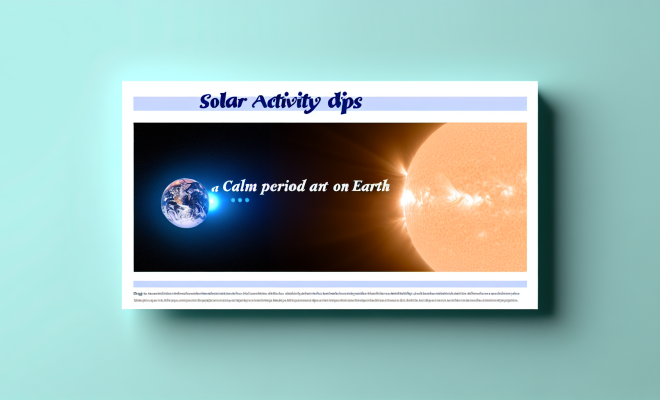
In a notable shift from recent months of heightened solar activity, the Sun has entered a quieter phase as recorded between April 12 and 13, 2026. This period has been characterized by a significant decrease in solar flares, with only low-intensity B-class flares being detected. The most powerful of these flares was a B7.2 event originating from Active Region 4417 (AR4417), which has recently been observed nearing the Sun’s western limb.
Understanding Solar Flares and Their Classifications
Solar flares are classified into categories based on their intensity. The classification system includes:
- A-class: Minor flares with little to no impact on Earth.
- B-class: Low-intensity flares that may cause minor radio disturbances.
- C-class: Medium-intensity flares that can produce noticeable radio blackouts.
- M-class: Strong flares that can cause significant disturbances in radio communications and navigation.
- X-class: The most intense flares that can cause widespread disruptions on Earth.
The recent activity, primarily consisting of B-class flares, indicates a period of reduced solar output. This lull in activity can have various implications for both space weather and life on Earth.
The Role of Solar Wind
In conjunction with the reduced flare activity, the solar wind—a stream of charged particles released from the Sun—has also diminished in strength. Solar wind plays a critical role in shaping space weather and can significantly influence conditions in the Earth’s magnetosphere.
Typically, enhanced solar wind can lead to geomagnetic storms, which can affect satellite operations, GPS navigation, and even power grids on Earth. However, during this quieter phase, the waning solar wind has led to a more stable environment.
Coronal Mass Ejections: What’s Happening?
During the same timeframe, three coronal mass ejections (CMEs) were observed. CMEs are large expulsions of plasma and magnetic field from the Sun’s corona and can also influence space weather. Fortunately, none of the detected CMEs are expected to impact Earth directly. This lack of significant CME activity further underscores the current period of tranquility in solar behavior.
Looking Ahead: Potential for Auroras
Despite the calmer solar conditions, a coronal hole was identified in the Sun’s atmosphere, which may send a stream of fast solar wind toward Earth by April 15. Coronal holes are regions where the Sun’s magnetic field opens up, allowing solar wind to escape more easily. This fast solar wind can interact with Earth’s magnetic field, leading to the possibility of auroras—spectacular natural light displays commonly seen in polar regions.
For aurora enthusiasts, this upcoming solar wind could provide a chance to witness beautiful displays in the night sky, particularly at high latitudes. The best opportunities for viewing auroras typically occur in areas close to the magnetic poles, where the Earth’s magnetic field is most susceptible to solar influences.
The Science Behind Auroras
Auroras occur when charged particles from the solar wind collide with gases in the Earth’s atmosphere, leading to the release of energy in the form of light. The colors observed in auroras are primarily due to the type of gas involved:
- Oxygen: Produces green and red hues.
- Nitrogen: Can create purples and blues.
The interaction of these particles with Earth’s magnetic field not only creates stunning light displays but also serves as an important reminder of the dynamic relationship between our planet and the Sun.
Conclusion: Embracing the Quiet
As solar activity subsides, the scientific community remains vigilant in monitoring the Sun’s behavior. Periods of quiet, such as the one currently being experienced, provide valuable opportunities for researchers to study the Sun’s various phenomena without the interference of intense solar activity.
While the immediate impacts of this solar calm may be limited, the potential for auroras on the horizon adds an element of excitement for skywatchers. As we approach mid-April, those in high-latitude regions should keep an eye on the skies for the possibility of vibrant auroral displays, a beautiful reminder of the intricate dance between our planet and its closest star.