Socratic Seminar vs. Traditional Discussion: Boost Student Learning
“`html
When it comes to student engagement and learning outcomes in the classroom, the method of discussion can play a pivotal role. Many educators are increasingly turning to the Socratic seminar model as a way to replace traditional class discussions. But what exactly are the Socratic seminar benefits? This article will explore the distinct advantages of student-led dialogue through Socratic seminars compared to conventional discussions, providing insights into their effectiveness in promoting critical thinking, collaboration, and ownership of learning.
1. The Essence of Socratic Seminars
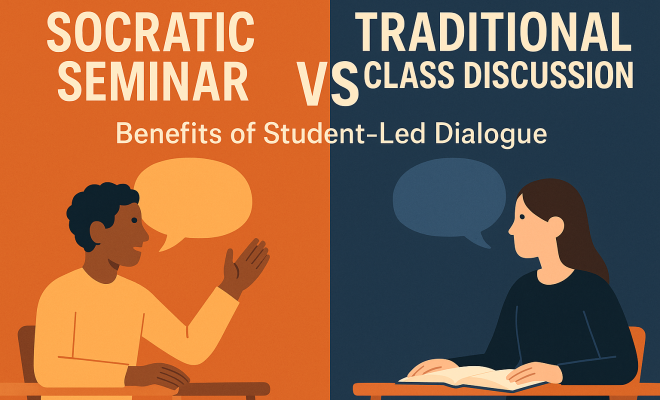
Socratic seminars are based on the ancient teaching method attributed to Socrates, where instead of a teacher lecturing, students engage in a dialogue that encourages deep exploration of ideas. The goal is not to arrive at a ‘correct’ answer but rather to foster critical thinking, analytical skills, and collaborative learning among peers. Unlike traditional discussions, where a teacher often leads the conversation and dictates the flow, Socratic seminars place students at the center, prompting them to support their viewpoints with evidence and reason.
This shift from a teacher-centric approach to a student-led dialogue has profound implications for how students learn. In a Socratic seminar, participants ask open-ended questions, listen actively to their peers, and build on each other’s ideas. This interaction encourages a more profound understanding of the material and promotes a culture of inquiry and respect for different perspectives.
2. Encouraging Critical Thinking
One of the standout Socratic seminar benefits is its emphasis on critical thinking. The format requires students to analyze texts and formulate their thoughts before articulating them in a group setting. This process promotes higher-order thinking skills as students must evaluate evidence, make connections, and defend their perspectives. The act of questioning not only deepens understanding but also cultivates an environment where students learn to challenge assumptions and consider alternative viewpoints.
Moreover, a study published in the journal Teaching in Higher Education found that students participating in Socratic seminars demonstrated improved critical thinking dispositions compared to those engaged in traditional discussions. Students reported feeling more confident in their ability to analyze complex issues and articulate their thoughts clearly, a skill that extends beyond the classroom.
3. Enhanced Communication Skills
Effective communication is paramount in any educational setting, and Socratic seminars provide an ideal platform for students to hone these skills. In these discussions, students must articulate their ideas clearly and concisely, listen actively, and respond thoughtfully to their peers. This interactive format reinforces the importance of verbal communication, allowing students to practice public speaking and argumentation in a supportive environment.
Research from the National Communication Association emphasizes that students who participate in seminar-style discussions show increased proficiency in communication skills, particularly in their ability to engage in constructive dialogue. The feedback loop within Socratic seminars encourages students to refine their ideas based on peer input, thereby fostering a community of communicators who are engaged in active learning.
4. Boosting Student Engagement
Engagement is a critical factor in effective learning, and Socratic seminars have been shown to significantly enhance student participation. When students are given the freedom to lead discussions and explore topics that interest them, they are more likely to be invested in the learning process. This model creates a sense of ownership, where students feel that their contributions matter, which can lead to higher motivation and enthusiasm for the subject matter.
In traditional discussions, students may feel intimidated or reluctant to speak up, especially if they perceive the teacher as the sole authority. However, in a Socratic seminar, the equal footing provided to all participants fosters an inclusive atmosphere where every voice is valued. This empowerment not only increases participation rates but also enhances the overall classroom dynamic.
5. Developing Collaborative Skills
Collaboration is a vital skill in today’s interconnected world, and Socratic seminars are an excellent way to cultivate this ability among students. Participants must work together to explore various perspectives, building on one another’s ideas and responding to comments in a constructive manner. This collaborative approach encourages students to see learning as a shared journey rather than an individual endeavor. Related reading: strategies for critical thinking.
According to a report by the American Institute for Research, engaging in collaborative learning activities such as Socratic seminars can lead to improved social skills, including teamwork and conflict resolution. Students develop a greater appreciation for diverse viewpoints and learn how to navigate discussions respectfully, which is essential for success in academic and career settings. (See: Socratic method overview.)
6. Fostering a Growth Mindset
The concept of a growth mindset, popularized by psychologist Carol Dweck, emphasizes the belief that abilities and intelligence can be developed through dedication and hard work. Socratic seminars naturally promote this mindset by encouraging students to view challenges as opportunities for growth. When faced with complex questions or differing opinions, students learn to embrace uncertainty and strive for deeper understanding.
Through Socratic discussions, students are encouraged to take risks with their ideas and to view mistakes as part of the learning process. This environment not only reduces the fear of failure but also reinforces resilience and adaptability—qualities essential for lifelong learning. As a result, participants in Socratic seminars often leave with a stronger belief in their capabilities and a willingness to tackle difficult subjects head-on.
7. Real-World Relevance and Application
In a rapidly changing world, the ability to think critically, communicate effectively, and collaborate with others is more important than ever. Socratic seminars align closely with these real-world skills, preparing students not just for tests but for their futures. The discussion-based format mirrors professional environments where teamwork and dialogue are crucial for success.
Educators adopting the Socratic seminar model report that students are better prepared for challenges outside the classroom, whether in higher education or the workforce. They can articulate their thoughts in interviews, contribute meaningfully to group projects, and engage in civic dialogue. By prioritizing student-led discussions, teachers are fostering a generation of learners equipped to navigate the complexities of the modern world. This builds on activities to engage students.
8. Building Confidence and Self-Esteem
Participating in Socratic seminars can significantly boost students’ confidence and self-esteem. In a supportive environment where all opinions are valued, students learn to express their thoughts without the fear of immediate critique. As they engage in meaningful conversations and witness their ideas resonate with others, they develop a stronger sense of self-worth.
A study conducted by Stanford University found that students who frequently participated in discussion-based learning experiences reported greater self-confidence in their academic abilities. This newfound confidence often leads to a willingness to take on more challenging subjects and engage in discourse that they might have previously shied away from.
9. Personalized Learning Experiences
Every student has a unique way of learning and comprehending information. Socratic seminars allow for personalization within the educational experience. Students can bring their perspectives, backgrounds, and interests into the conversation, making the learning process more relevant to their lives. This personal connection can lead to deeper engagement and understanding of the material discussed.
For example, if a seminar focuses on a piece of literature, students can draw from their experiences or cultural context to analyze themes and characters. This not only enriches the discussion but also allows students to invest more personally in what they are learning. By encouraging students to integrate their backgrounds, Socratic seminars promote a more authentic and individualized educational experience.
10. Interdisciplinary Connections
Socratic seminars can also promote interdisciplinary learning, where students can connect ideas across different subjects. For instance, a seminar discussing themes of justice in literature can easily connect to historical, philosophical, and even scientific perspectives. This holistic approach to learning encourages students to see the interconnectedness of knowledge and fosters a more comprehensive understanding of complex topics.
Research by the Education Development Center indicates that students who participate in interdisciplinary discussions are better able to synthesize information and apply it across contexts. This is crucial in real-world scenarios where problems are rarely confined to a single discipline. By engaging in Socratic seminars, students not only deepen their understanding of the material but also learn to think more broadly about the world around them.
11. Creating a Safe Space for Dialogue
One of the key features of Socratic seminars is the establishment of a safe space where students can freely express their thoughts and feelings. This environment encourages vulnerability, making it easier for students to share personal insights or challenge existing norms. Such spaces are essential for fostering open dialogue and creativity, which are critical components of effective learning. ways to enhance kids' thinking offers useful background here.
Teachers often set ground rules for discussions to ensure that everyone feels respected and heard. By emphasizing active listening and respectful disagreement, students learn the importance of civility in discourse. This focus on creating a conducive learning environment not only benefits the seminar itself but also extends to students’ overall classroom interactions. (See: Harvard's insights on student-led discussions.)
12. Strategies for Implementing Socratic Seminars
Implementing Socratic seminars effectively requires careful planning and facilitation. Here are some strategies that educators can use:
- Prepare Guiding Questions: Develop open-ended questions that encourage deep thinking and discussion. Questions should connect to the text and invite various perspectives.
- Set Clear Expectations: Establish ground rules for participation, such as listening respectfully and building on others’ ideas. This helps to create a safe and productive environment.
- Encourage Equal Participation: Use strategies such as “fishbowl” discussions, where some students speak while others listen, allowing everyone the opportunity to contribute.
- Use Reflective Practices: After the seminar, engage students in reflection about the discussion, what they learned, and how they felt during the process. This helps solidify their engagement and promotes growth.
13. Challenges and Considerations
While Socratic seminars offer numerous benefits, there are challenges that educators may face when implementing them. Some students may struggle with the open-ended nature of the discussions, feeling uncertain about how to contribute effectively. Others may dominate conversations, making it difficult for quieter students to participate. Educators need to be prepared to address these dynamics.
Additionally, some curricula may not lend themselves easily to the Socratic method, particularly if they are heavily standardized or test-focused. Teachers must find a balance between meeting curriculum requirements and fostering an engaging seminar experience. Ongoing training and practice can help educators navigate these challenges while maintaining the integrity of the Socratic seminar structure.
14. Frequently Asked Questions (FAQ)
What subjects are best suited for Socratic seminars?
Socratic seminars can be applied across various subjects, including literature, history, social studies, science, and even mathematics. The key is to select texts or topics that allow for rich discussion and multiple interpretations.
How do I assess student performance in a Socratic seminar?
Assessment can be done through self-reflections, peer evaluations, and teacher observations. Consider using rubrics that focus on participation, clarity of thought, and ability to engage with others’ ideas.
Can Socratic seminars be conducted in online learning environments?
Absolutely! Socratic seminars can be adapted for online platforms through video conferencing tools. Educators can use breakout rooms for smaller discussions or utilize chat features to facilitate dialogue.
How do I handle dominant speakers in a seminar?
Establishing ground rules at the beginning can help manage dominant speakers. Consider using strategies like time limits for speaking or directing questions to quieter students to ensure everyone has a chance to contribute.
What if students are hesitant to share their ideas?
Building a culture of trust and respect is crucial. Start with smaller group discussions to ease students into sharing their thoughts. Gradually increase the size of the group as they become more comfortable.
15. Expanding the Benefits: Real-World Examples
To truly grasp the Socratic seminar benefits, let’s consider some real-world examples and scenarios where this method shines.
In a high school setting, a teacher introduced a Socratic seminar to discuss Shakespeare’s Hamlet. Instead of a one-sided lecture, students were broken into small groups to discuss their interpretations of Hamlet’s motives. They were encouraged to connect the themes of the play to modern-day issues like mental health and political corruption, leading to a dynamic discussion. Students not only engaged deeply with the material but began to draw parallels to their own lives, demonstrating the relevance of classic literature in today’s world.
In a college-level sociology course, a professor employed Socratic seminars to tackle controversial topics such as immigration and social justice. By encouraging students to explore their biases and assumptions, rather than presenting a singular viewpoint, the class fostered a rich environment where students could learn from each other’s experiences and backgrounds. The result? Enhanced understanding and empathy, along with a network of students more prepared to engage in civic discourse.
16. Statistics and Research Supporting Socratic Seminars
Research backs the effectiveness of Socratic seminars, with multiple studies highlighting their impact on student engagement and learning. According to a national survey conducted by the Association of American Colleges and Universities, about 70% of students who participated in discussion-based courses reported feeling more engaged than in traditional lecture courses. Furthermore, a longitudinal study indicated that students involved in Socratic seminars scored significantly higher on critical thinking assessments than their peers in conventional classrooms.
17. Expert Perspectives on Socratic Seminars
Experts in the field of education have shared insights on the transformative power of Socratic seminars. Dr. Richard Paul, a leading figure in critical thinking education, emphasizes that Socratic discussions allow students to practice thinking through complex issues collaboratively. He states, “When students engage with the Socratic method, they are not just learning content; they are developing the skills necessary to navigate the complexities of life itself.”
Similarly, author and educator Sarah Brown Wessling highlights the importance of fostering a classroom environment that values inquiry. She notes, “Socratic seminars enable students to practice being thoughtful and reflective individuals, which is essential in a world that often promotes instant opinions over deep understanding.”
18. Future of Socratic Seminars in Education
As we look ahead, it’s clear that the Socratic seminar model will continue to evolve alongside educational trends. With the rise of technology and new teaching methodologies, educators are finding innovative ways to incorporate Socratic principles into their curricula. Whether through digital platforms, hybrid classrooms, or interdisciplinary projects, the core values of inquiry, dialogue, and critical thinking remain at the forefront. (critical thinking in the digital era)
Moreover, as education systems worldwide shift toward more student-centered approaches, Socratic seminars are becoming a pivotal tool in cultivating the skills necessary for success in the 21st century. As we embrace these practices, we prepare students not just for academic achievement but for meaningful participation in society.
Conclusion: Embracing Socratic Seminars in Education
The transition from traditional class discussions to Socratic seminars may seem daunting for some educators, but the benefits are overwhelmingly positive. From enhanced critical thinking skills and improved communication to increased student engagement and collaboration, the Socratic seminar model provides a richer, more dynamic learning experience. As educators continue to seek innovative teaching methods that resonate with today’s learners, embracing the Socratic seminar may just be the key to cultivating a future generation of critical thinkers and effective communicators.
“`
Trending Now
Frequently Asked Questions
What is the difference between a Socratic seminar and a traditional class discussion?
The primary difference lies in the structure and focus of the dialogue. In a Socratic seminar, students lead the discussion by asking open-ended questions and engaging with peers, fostering critical thinking and collaboration, while traditional discussions are typically teacher-led and more directive.
What are the benefits of Socratic seminars for students?
Socratic seminars enhance critical thinking, promote analytical skills, and encourage student ownership of learning. They create an environment where students actively engage with content, listen to diverse perspectives, and develop a deeper understanding through dialogue.
How do Socratic seminars promote critical thinking?
Socratic seminars require students to analyze texts and articulate their viewpoints, promoting higher-order thinking. They must evaluate evidence, make connections, and defend their ideas, which deepens their understanding and enhances critical analysis skills.
Can Socratic seminars improve student engagement?
Yes, Socratic seminars significantly increase student engagement by placing them at the center of the learning process. This student-led format encourages active participation, collaboration, and a culture of inquiry, making learning more dynamic and interactive.
What skills do students develop through Socratic seminars?
Students develop essential skills such as critical thinking, effective communication, active listening, and collaborative problem-solving. These seminars encourage them to articulate their thoughts clearly and engage respectfully with differing viewpoints.
What did we miss? Let us know in the comments and join the conversation.