Mars Exploration Revolutionized by Semi-Autonomous Walking Robots
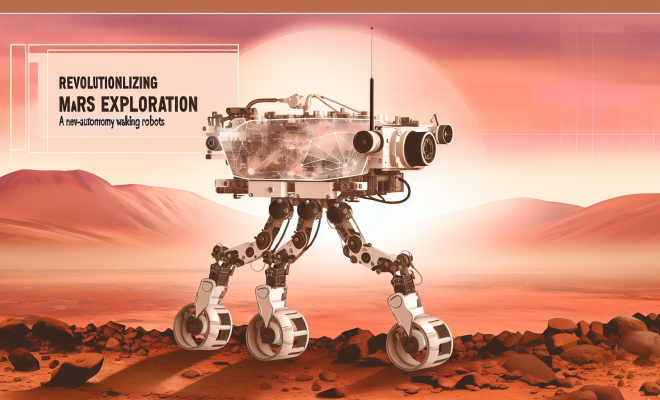
The quest for life on Mars has taken a giant leap forward with the introduction of a groundbreaking semi-autonomous walking robot. This innovative technology, developed by researchers, has the potential to transform how we search for geological evidence of life and resources on the Red Planet. With its ability to autonomously navigate rocky terrains and analyze geological samples, this robot could significantly enhance the efficiency and effectiveness of future planetary exploration missions.
The Technological Leap
For decades, planetary exploration has relied heavily on traditional rovers like NASA’s Curiosity and Perseverance. While these rovers have provided invaluable insights into Martian geology and climate, they operate under a command-and-control model that often requires significant human intervention. In contrast, this new walking robot, tested extensively by researchers, represents a shift towards a more autonomous approach. By enabling the robot to make real-time decisions and navigate obstacles independently, scientists can expect to cover more ground—and potentially discover more evidence of life—than ever before.
Enhancements in Speed and Efficiency
One of the most remarkable features of the semi-autonomous walking robot is its speed and efficiency. According to the research published in Frontiers, the robot can complete missions up to three times faster than traditional rovers. This acceleration is crucial when it comes to exploring Mars, where every moment counts. The faster the robot can move and analyze geological targets, the sooner we can gain insights into the planet’s history and its capacity to support life.
Autonomous Targeting and Analysis
Equipped with advanced sensors and imaging technology, the robot is capable of identifying geological targets without human input. It can analyze rocks and soil samples for signs of past life or resources such as water and minerals. This ability not only maximizes the efficiency of exploration but also reduces the chances of human error—an essential factor when dealing with the complexities of extraterrestrial environments.
Key Features of the Robot
- Autonomous Navigation: The robot can navigate rocky terrains, avoiding obstacles and making decisions on the fly.
- Real-Time Analysis: It can analyze geological samples and identify targets for further investigation independently.
- Speed: The robot completes missions up to three times faster than traditional rovers, allowing for more ground coverage.
- Data Collection: Equipped with advanced sensors, it gathers vital information that can aid in the understanding of Martian geology and past life.
Implications for Future Missions
The implications of this technological advancement are immense. As space agencies like NASA and ESA plan future missions to Mars, incorporating semi-autonomous walking robots could vastly improve the efficiency of these endeavors. With the ability to traverse larger areas in shorter time frames, scientists can focus on analyzing results and making informed decisions about subsequent exploration strategies.
Moreover, the data collected by these robots could lead to groundbreaking discoveries about Mars’ geological history. Understanding the planet’s past conditions is key to determining its potential to have harbored life. By identifying areas of interest more rapidly, researchers can prioritize locations that warrant deeper investigation—ultimately accelerating humanity’s search for extraterrestrial life.
Challenges Ahead
While the advancements in robotic technology are promising, challenges remain. The Martian environment is harsh, with extreme temperatures and dust storms that can hinder operations. Ensuring that these robots can withstand such conditions is crucial for their success. Furthermore, the complexities of Mars’ terrain can pose navigational challenges, requiring ongoing refinement of the robot’s autonomous systems.
Collaborative Exploration
Future missions may also see a combination of traditional rovers and these new walking robots working in tandem. This collaborative approach could allow for a multi-faceted exploration strategy, where rovers gather broad data while walking robots target specific areas for in-depth analysis. By leveraging the strengths of both technologies, scientists can gain a more comprehensive understanding of the Martian landscape.
Conclusion
The development of this semi-autonomous walking robot marks a significant milestone in the ongoing exploration of Mars. With its ability to navigate autonomously, analyze geological samples, and operate at high speeds, it stands to redefine our approach to searching for life and resources on the Red Planet. As we stand on the brink of a new era in planetary exploration, the potential to uncover the mysteries of Mars has never been greater. With continued innovation and collaboration, the dream of discovering signs of life on Mars could soon become a reality.