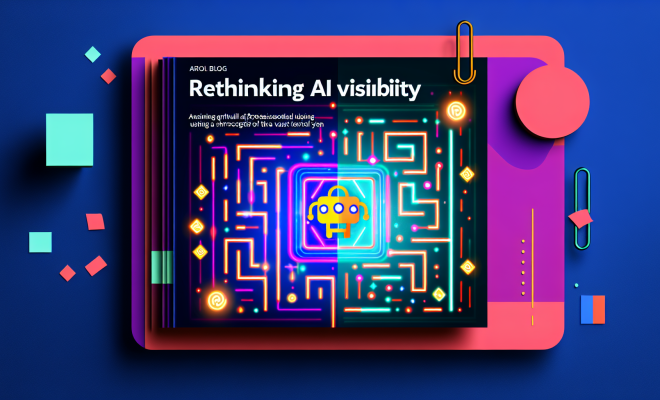
Paul Hewett Critiques llms.txt: A Misguided AI Marketing Shortcut (2026)
Introduction
In a rapidly evolving digital landscape, the marketing strategies that once proved effective are continually being challenged and redefined. One such challenge comes from the advent of generative AI and the complexities it introduces to content attribution and visibility. In a recent opinion piece published on April 30, 2026, in Mumbrella, Paul Hewett, CEO of In Marketing We Trust, offered a sharp critique of a proposed solution known as llms.txt. This markdown file, initially introduced in 2024, was intended as a workaround for language models, allowing for better documentation and citation. However, as Hewett argues, it has now become a misguided marketing shortcut.
Understanding llms.txt
At its core, llms.txt is a simple markdown file that is placed in a website’s root directory. Its original purpose was to serve as an informational tool for language models, providing a structured way for AI to reference content accurately. The idea was that this would enhance the ability of language models to generate responses that included proper citations and attributions, thus maintaining some level of integrity in the content generated by AI.
The Evolution of Content Attribution
As the digital ecosystem grows, the importance of content attribution has become paramount. In an age where generative AI can synthesize information from a plethora of sources, the challenge lies in ensuring that original creators receive due credit. Hewett points out that while llms.txt was designed to address this issue, it ultimately oversimplifies the complexities of content aggregation and visibility.
The Limitations of llms.txt
Hewett’s critique focuses on several key limitations of llms.txt as a marketing solution:
- Oversimplification of Complex Issues: The introduction of llms.txt may give the impression that a straightforward technical fix can solve deep-rooted issues in content attribution. However, Hewett emphasizes that AI visibility and citation require more than just a markdown file.
- Failure to Address Structural Changes: The digital landscape is undergoing significant transformations that require a reevaluation of how content is served. As platforms increasingly favor synthesized answers over original content, relying solely on llms.txt does not tackle the broader structural changes happening within these platforms.
- Lack of Universal Adoption: For llms.txt to be effective, it must be widely adopted across various platforms and by content creators. Hewett highlights the challenge of ensuring that all stakeholders recognize and implement this solution.
- Potential for Misleading Visibility: By focusing on technical solutions like llms.txt, marketers may inadvertently mislead themselves into believing that visibility and attribution are guaranteed, which is far from the reality.
The Broader Implications of Generative AI
Hewett’s insights into llms.txt also reflect a broader commentary on the implications of generative AI for marketing and content creation. As AI continues to evolve, marketers must consider how these advancements are reshaping the way audiences consume information.
The Shift Toward Synthesized Content
One of the most significant shifts is the movement toward synthesized content, where AI-generated responses often aggregate information from various sources without clear attribution. This trend raises concerns about the future of content consumption, as users may receive synthesized answers that obscure the original sources of information.
Challenges for Marketers
For marketers, this evolution presents several challenges:
- Maintaining Brand Authenticity: As content becomes increasingly synthesized, brands must find ways to maintain their authenticity and ensure that their voices are not lost in the noise.
- Building Trust with Audiences: Trust is a crucial component of successful marketing. Marketers must navigate the complexities of generative AI while ensuring that their audiences receive accurate and credible information.
- Adapting Strategies: Traditional marketing strategies may no longer be effective in a world dominated by AI-generated content. Marketers need to rethink their approaches to engage audiences meaningfully.
Looking Ahead: Navigating the Future of Marketing
As the digital landscape continues to evolve, marketers must be proactive in adapting to new technologies and methodologies. While llms.txt was conceived as a solution to enhance AI visibility and citation, Hewett’s critique serves as a reminder that effective marketing strategies require a deeper understanding of the challenges posed by generative AI.
Emphasizing Authentic Engagement
Rather than relying on technical fixes alone, marketers should prioritize authentic engagement with their audiences. This means fostering a genuine connection and ensuring that content is not only accurate but also resonates with the audience’s values and interests.
Exploring Alternative Solutions
In light of the limitations of llms.txt, marketers should explore alternative solutions that address the root causes of content visibility and attribution challenges. These may include:
- Enhanced Content Collaboration: Collaborating with content creators, publishers, and AI developers can lead to more comprehensive solutions that prioritize attribution and visibility.
- Investing in Education: Educating marketers and content creators about the implications of generative AI can empower them to develop strategies that align with the evolving landscape.
- Leveraging Advanced Analytics: Utilizing advanced analytics tools can help marketers understand audience behavior and preferences, enabling them to create more targeted and effective content.
Conclusion
Paul Hewett’s critique of llms.txt sheds light on the complexities surrounding AI visibility and content attribution in the digital age. While technical solutions like llms.txt may seem appealing, they fail to address the broader structural changes affecting how content is created, aggregated, and consumed. As marketers navigate this evolving landscape, it is crucial to prioritize authentic engagement, explore alternative solutions, and adapt strategies to ensure that their brands remain relevant and trustworthy in the eyes of their audiences.
As we look to the future, the challenge remains: how can marketers effectively leverage generative AI while maintaining the integrity of their content and ensuring that original creators receive the recognition they deserve? The answer lies in a commitment to innovation, collaboration, and a deeper understanding of the digital ecosystem.