The Tech Edvocate

Top Menu

  • Advertisement
  • Apps
  • Home Page
  • Home Page Five (No Sidebar)
  • Home Page Four
  • Home Page Three
  • Home Page Two
  • Home Tech2
  • Icons [No Sidebar]
  • Left Sidbear Page
  • Lynch Educational Consulting
  • My Account
  • My Speaking Page
  • Newsletter Sign Up Confirmation
  • Newsletter Unsubscription
  • Our Brands
  • Page Example
  • Privacy Policy
  • Protected Content
  • Register
  • Request a Product Review
  • Shop
  • Shortcodes Examples
  • Signup
  • Start Here
    • Governance
    • Careers
    • Contact Us
  • Terms and Conditions
  • The Edvocate
  • The Tech Edvocate Product Guide
  • Topics
  • Write For Us
  • Advertise

Main Menu

  • Start Here
    • Our Brands
    • Governance
      • Lynch Educational Consulting, LLC.
      • Dr. Lynch’s Personal Website
      • Careers
    • Write For Us
    • The Tech Edvocate Product Guide
    • Contact Us
    • Books
    • Edupedia
    • Post a Job
    • The Edvocate Podcast
    • Terms and Conditions
    • Privacy Policy
  • Topics
    • Assistive Technology
    • Child Development Tech
    • Early Childhood & K-12 EdTech
    • EdTech Futures
    • EdTech News
    • EdTech Policy & Reform
    • EdTech Startups & Businesses
    • Higher Education EdTech
    • Online Learning & eLearning
    • Parent & Family Tech
    • Personalized Learning
    • Product Reviews
  • Advertise
  • Tech Edvocate Awards
  • The Edvocate
  • Pedagogue
  • School Ratings

logo

The Tech Edvocate

  • Start Here
    • Our Brands
    • Governance
      • Lynch Educational Consulting, LLC.
      • Dr. Lynch’s Personal Website
        • My Speaking Page
      • Careers
    • Write For Us
    • The Tech Edvocate Product Guide
    • Contact Us
    • Books
    • Edupedia
    • Post a Job
    • The Edvocate Podcast
    • Terms and Conditions
    • Privacy Policy
  • Topics
    • Assistive Technology
    • Child Development Tech
    • Early Childhood & K-12 EdTech
    • EdTech Futures
    • EdTech News
    • EdTech Policy & Reform
    • EdTech Startups & Businesses
    • Higher Education EdTech
    • Online Learning & eLearning
    • Parent & Family Tech
    • Personalized Learning
    • Product Reviews
  • Advertise
  • Tech Edvocate Awards
  • The Edvocate
  • Pedagogue
  • School Ratings
  • A Visitor’s Guide to Fresno (CA), United States

  • A Visitors Guide to New Orleans (LA), United States

  • A Visitors Guide to Sacramento (CA), United States

  • A Visitors Guide to Lyon, France

  • JisuLife Ultra2 Portable Fan: A Powerful Multi-Function Cooling Solution

  • A Visitors Guide to Viña del Mar, Chile

  • A Visitors Guide to Århus, Denmark

  • A Visitors Guide to Bakersfield (CA), United States

  • A Visitors Guide to Aurora (CO), United States

  • A Visitor’s Guide to Toledo (OH), United States

Digital & Mobile Technology
Home›Digital & Mobile Technology›Plus Power Supply Ratings and What They Mean

Plus Power Supply Ratings and What They Mean
By Matthew Lynch
April 10, 2023
0
Spread the love

Power supply ratings are an essential aspect of any electronic device, and it’s critical to understand what they mean. The plus power supply rating is one of the most crucial power supply ratings in electronic devices. In this article, we’ll explore what plus power supply ratings mean and why they’re important.

What is a Plus Power Supply Rating?

A plus power supply rating measures the maximum amperage a power supply can provide at a specific voltage level. Plus power supply ratings are typically found in power supplies that convert AC power to DC power, such as computer power supplies. Essentially, the plus power supply rating tells us how much current a power supply can provide at a specific voltage.

How to Interpret Plus Power Supply Ratings

When looking at a plus power supply rating, the first thing to understand is that it’s measured in amps. If you see a rating that says “12V/15A,” this means that the power supply can provide a maximum of 15 amps at 12 volts.

It’s important to pay attention to the voltage level when interpreting plus power supply ratings. A power supply may have multiple voltage levels, each with its own amperage rating. For example, a computer power supply might have a 12V rail, a 5V rail, and a 3.3V rail, each with its own maximum amperage rating.

Why Does the Plus Power Supply Rating Matter?

The plus power supply rating matters for several reasons. First, it determines how much current a power supply can provide to the components in a device. If a device’s components require more current than the power supply can provide, the device may not work correctly or could even be damaged.

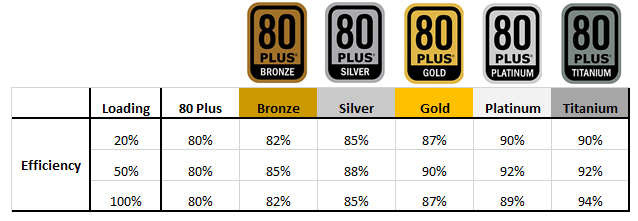
Second, the plus power supply rating can affect the efficiency of a power supply. If a power supply has a higher amperage rating than necessary, it may be less efficient, resulting in higher energy consumption and increased heat output.

Finally, the plus power supply rating can affect the lifespan of a power supply. If a power supply is required to provide more current than its maximum rating, its components may degrade more quickly, leading to a shorter lifespan.

Conclusion

In conclusion, the plus power supply rating is a crucial aspect of any electronic device. It determines how much current a power supply can provide to the components in a device and affects the efficiency and lifespan of the power supply. When choosing a power supply for an electronic device, it’s important to pay close attention to the plus power supply rating and make sure it’s sufficient for the device’s needs.

Previous Article

Best Fixes for Instagram Story Notifications Not ...

Next Article

8K TV Explained, and Why You Definitely ...

Matthew Lynch

Related articles More from author

  • Digital & Mobile Technology

    How to Open DAT Files in Windows 11

    May 1, 2023
    By Matthew Lynch
  • Digital & Mobile Technology

    How to Enable Cookies in Google Chrome

    May 28, 2023
    By Matthew Lynch
  • Digital & Mobile Technology

    How to Block Friend Requests on Facebook

    June 4, 2023
    By Matthew Lynch
  • Digital & Mobile Technology

    What Is a Steering Wheel Audio Control Adapter?

    June 14, 2023
    By Matthew Lynch
  • Digital & Mobile Technology

    How to Fix the Bootrec /Fixboot Access Is Denied Error on Windows

    June 23, 2023
    By Matthew Lynch
  • Digital & Mobile Technology

    How to Create an MSN Email Address

    May 27, 2023
    By Matthew Lynch

Search

Login & Registration

  • Register
  • Log in
  • Entries feed
  • Comments feed
  • WordPress.org

Newsletter

Signup for The Tech Edvocate Newsletter and have the latest in EdTech news and opinion delivered to your email address!

About Us

Since technology is not going anywhere and does more good than harm, adapting is the best course of action. That is where The Tech Edvocate comes in. We plan to cover the PreK-12 and Higher Education EdTech sectors and provide our readers with the latest news and opinion on the subject. From time to time, I will invite other voices to weigh in on important issues in EdTech. We hope to provide a well-rounded, multi-faceted look at the past, present, the future of EdTech in the US and internationally.

We started this journey back in June 2016, and we plan to continue it for many more years to come. I hope that you will join us in this discussion of the past, present and future of EdTech and lend your own insight to the issues that are discussed.

Newsletter

Signup for The Tech Edvocate Newsletter and have the latest in EdTech news and opinion delivered to your email address!

Contact Us

The Tech Edvocate
910 Goddin Street
Richmond, VA 23231
(601) 630-5238
[email protected]

Copyright © 2025 Matthew Lynch. All rights reserved.