The Tech Edvocate

Top Menu

  • Advertisement
  • Apps
  • Home Page
  • Home Page Five (No Sidebar)
  • Home Page Four
  • Home Page Three
  • Home Page Two
  • Home Tech2
  • Icons [No Sidebar]
  • Left Sidbear Page
  • Lynch Educational Consulting
  • My Account
  • My Speaking Page
  • Newsletter Sign Up Confirmation
  • Newsletter Unsubscription
  • Our Brands
  • Page Example
  • Privacy Policy
  • Protected Content
  • Register
  • Request a Product Review
  • Shop
  • Shortcodes Examples
  • Signup
  • Start Here
    • Governance
    • Careers
    • Contact Us
  • Terms and Conditions
  • The Edvocate
  • The Tech Edvocate Product Guide
  • Topics
  • Write For Us
  • Advertise

Main Menu

  • Start Here
    • Our Brands
    • Governance
      • Lynch Educational Consulting, LLC.
      • Dr. Lynch’s Personal Website
      • Careers
    • Write For Us
    • The Tech Edvocate Product Guide
    • Contact Us
    • Books
    • Edupedia
    • Post a Job
    • The Edvocate Podcast
    • Terms and Conditions
    • Privacy Policy
  • Topics
    • Assistive Technology
    • Child Development Tech
    • Early Childhood & K-12 EdTech
    • EdTech Futures
    • EdTech News
    • EdTech Policy & Reform
    • EdTech Startups & Businesses
    • Higher Education EdTech
    • Online Learning & eLearning
    • Parent & Family Tech
    • Personalized Learning
    • Product Reviews
  • Advertise
  • Tech Edvocate Awards
  • The Edvocate
  • Pedagogue
  • School Ratings

logo

The Tech Edvocate

  • Start Here
    • Our Brands
    • Governance
      • Lynch Educational Consulting, LLC.
      • Dr. Lynch’s Personal Website
        • My Speaking Page
      • Careers
    • Write For Us
    • The Tech Edvocate Product Guide
    • Contact Us
    • Books
    • Edupedia
    • Post a Job
    • The Edvocate Podcast
    • Terms and Conditions
    • Privacy Policy
  • Topics
    • Assistive Technology
    • Child Development Tech
    • Early Childhood & K-12 EdTech
    • EdTech Futures
    • EdTech News
    • EdTech Policy & Reform
    • EdTech Startups & Businesses
    • Higher Education EdTech
    • Online Learning & eLearning
    • Parent & Family Tech
    • Personalized Learning
    • Product Reviews
  • Advertise
  • Tech Edvocate Awards
  • The Edvocate
  • Pedagogue
  • School Ratings
  • Toxic Pills: This Supplement Scandal Puts Millions at Risk

  • Urgent Dog Supplement Recall: This Stealthy Threat Could Be Hiding in Your Pantry!

  • Staggering: Climate Tech Fundraising Collapses — Is AI to Blame?

  • Global AI stocks tumble as industry’s biggest names sound alarm – The Straits Times

  • Sony’s Controversial Move: Why the Last of Us Part II Multiplayer Mod Got Axed

  • Trump’s Wild AI Claims: Is There a ‘Sick Conspiracy’ Against Tech?

  • This One Thing Is Turning Classrooms Into Culture War Battlegrounds

  • Your AI Detector Is Useless: Why Universities Are Scrapping ‘Catch & Ban’ for This

  • Terrifying: AI Is About to Break Cybersecurity – And No One Is Ready

  • Volkswagen’s Staggering Miscalculation: 50,000 Jobs Vanish as EV Dream Sours

EdTech & Innovation
Home›EdTech & Innovation›Personalized Learning: What Does Research Say?

Personalized Learning: What Does Research Say?
By Matthew Lynch
April 18, 2017
0
Spread the love

Increasingly, education is heading toward personalized learning for all students. In the past, gifted students and those students with special needs were the only ones to receive some personalized learning plan of some kind. Now, these programs are being expanded to reach out to all students. Research states many things about personalized learning, and it can make or break the future of education for many students.

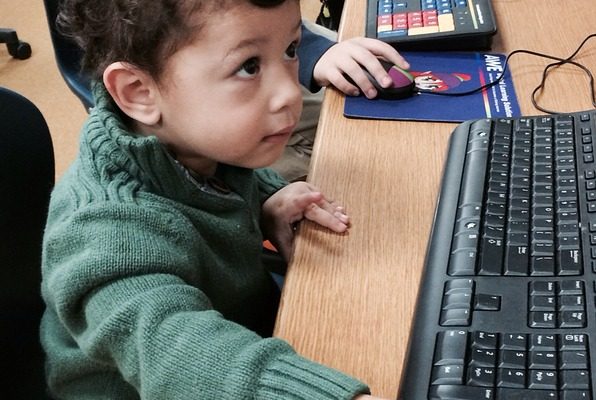
Technology seems to be the most conventional method in which personalized learning is being achieved. Students will spend more time interacting with technology in this kind of situation, which will be a great avenue to open up one-on-one instruction time. However, research has indicated a concern with the lack of student-to-student interaction that will be lost during this one-on-one time being increased. Collaboration has proven to be a cornerstone of education in many countries that have successful students so it cannot be ignored or replaced without first being considered for its value.

As far as technology goes, some programs have proven to stand out among others in the arena of available tools for personalized learning. For example, some math programs are integrative and adaptive to the needs of each child using the program. These programs promote learning engagement and student motivation in ways that other models have failed to do so in previous years.

Some studies have spent lots of time focusing on research for these various types of technology and techniques regarding personalized learning. Schools that participated in the study have experienced positive effects as a result of using these technologies and techniques. Math, science, and reading scores have improved over the two years these schools took place in the study, too. Most of these scores are at or above national averages as well.

Unfortunately, there is not yet enough research to completely stand behind personalized learning. More research needs to be done to see if the funding costs will be worth the price for students to reap the benefits of personalized learning in a holistic way. Some of the concerns with this research being done are that it follows the standard model of research and development for typical classroom techniques to be investigated. The problem is that the processes being used in personalized learning follow modules and techniques that are not standard, so the research methods being used might not be the best ones to test what is happening in schools that are piloting many of these programs. In short, an improvement on test scores can only tell researchers so much information.

There are many upsides to personalized learning, though. Students are engaged and motivated to learn more, as stated previously. This situation occurs because learning situations are tailored to what students enjoy the most. Teachers can be more involved in making this process a reality, so long as too much technology is not involved. Projects can be made to pique student interest, making collaborative learning efforts all the more enhanced.

Another reason why personalized learning techniques might work over traditional teaching methods is the fact that the teacher-student role is somewhat reversed. Historically, teachers have been seen as leaders in the classroom, and students are meant to follow that lead completely. However, there is more autonomy given to students in a classroom that focus on personalized learning. Students no longer become a passive recipient of information because they are actively engaged and motivated, as stated previously, in the process all the more.

Though more research needs to be completed on the topic of personalized learning, it does not seem to be vanishing in the forefront of educational techniques any time soon. It should be considered as a viable method to be included in every classroom right alongside collaborative and other traditional learning methods.


TagsEdtechedtechchatelearningSTEAMSTEM
Previous Article

7 Ways That Digital Technology is Changing ...

Next Article

Virtual Reality Could Change the Way Students ...

Matthew Lynch

Related articles More from author

  • Social Media & Education

    10 Ways to Use Facebook in the Classroom

    October 2, 2017
    By Matthew Lynch
  • Early Childhood & K-12 EdTech

    Teachers figure out when to turn technology on, and when to turn it off

    October 27, 2016
    By Matthew Lynch
  • Uncategorized

    Ask an Expert: Technology and child development

    June 8, 2017
    By Matthew Lynch
  • Early Childhood & K-12 EdTechHigher EducationThe Hechinger Report

    Do classroom clickers improve learning? It depends.

    June 8, 2017
    By Matthew Lynch
  • Early Childhood & K-12 EdTechPersonalized Learning

    Top 9 Must Have Personalized Learning Apps, Tools, and Resources

    August 7, 2017
    By Matthew Lynch
  • EdTech NewsOnline Learning & eLearning

    The world learns a lesson that technology in schools doesn’t improve education

    June 27, 2016
    By Matthew Lynch

Search

Login & Registration

  • Log in
  • Entries feed
  • Comments feed
  • WordPress.org

Newsletter

Signup for The Tech Edvocate Newsletter and have the latest in EdTech news and opinion delivered to your email address!

About Us

Since technology is not going anywhere and does more good than harm, adapting is the best course of action. That is where The Tech Edvocate comes in. We plan to cover the PreK-12 and Higher Education EdTech sectors and provide our readers with the latest news and opinion on the subject. From time to time, I will invite other voices to weigh in on important issues in EdTech. We hope to provide a well-rounded, multi-faceted look at the past, present, the future of EdTech in the US and internationally.

We started this journey back in June 2016, and we plan to continue it for many more years to come. I hope that you will join us in this discussion of the past, present and future of EdTech and lend your own insight to the issues that are discussed.

Newsletter

Signup for The Tech Edvocate Newsletter and have the latest in EdTech news and opinion delivered to your email address!

Contact Us

The Tech Edvocate
910 Goddin Street
Richmond, VA 23231
(601) 630-5238
[email protected]

Copyright © 2026 Matthew Lynch. All rights reserved.