The Tech Edvocate

Top Menu

  • Advertisement
  • Apps
  • Home Page
  • Home Page Five (No Sidebar)
  • Home Page Four
  • Home Page Three
  • Home Page Two
  • Home Tech2
  • Icons [No Sidebar]
  • Left Sidbear Page
  • Lynch Educational Consulting
  • My Account
  • My Speaking Page
  • Newsletter Sign Up Confirmation
  • Newsletter Unsubscription
  • Our Brands
  • Page Example
  • Privacy Policy
  • Protected Content
  • Register
  • Request a Product Review
  • Shop
  • Shortcodes Examples
  • Signup
  • Start Here
    • Governance
    • Careers
    • Contact Us
  • Terms and Conditions
  • The Edvocate
  • The Tech Edvocate Product Guide
  • Topics
  • Write For Us
  • Advertise

Main Menu

  • Start Here
    • Our Brands
    • Governance
      • Lynch Educational Consulting, LLC.
      • Dr. Lynch’s Personal Website
      • Careers
    • Write For Us
    • The Tech Edvocate Product Guide
    • Contact Us
    • Books
    • Edupedia
    • Post a Job
    • The Edvocate Podcast
    • Terms and Conditions
    • Privacy Policy
  • Topics
    • Assistive Technology
    • Child Development Tech
    • Early Childhood & K-12 EdTech
    • EdTech Futures
    • EdTech News
    • EdTech Policy & Reform
    • EdTech Startups & Businesses
    • Higher Education EdTech
    • Online Learning & eLearning
    • Parent & Family Tech
    • Personalized Learning
    • Product Reviews
  • Advertise
  • Tech Edvocate Awards
  • The Edvocate
  • Pedagogue
  • School Ratings

logo

The Tech Edvocate

  • Start Here
    • Our Brands
    • Governance
      • Lynch Educational Consulting, LLC.
      • Dr. Lynch’s Personal Website
        • My Speaking Page
      • Careers
    • Write For Us
    • The Tech Edvocate Product Guide
    • Contact Us
    • Books
    • Edupedia
    • Post a Job
    • The Edvocate Podcast
    • Terms and Conditions
    • Privacy Policy
  • Topics
    • Assistive Technology
    • Child Development Tech
    • Early Childhood & K-12 EdTech
    • EdTech Futures
    • EdTech News
    • EdTech Policy & Reform
    • EdTech Startups & Businesses
    • Higher Education EdTech
    • Online Learning & eLearning
    • Parent & Family Tech
    • Personalized Learning
    • Product Reviews
  • Advertise
  • Tech Edvocate Awards
  • The Edvocate
  • Pedagogue
  • School Ratings
  • Medicube PDRN Pink Collagen Cream: Is It Safe to Use Now?

  • Tarte’s ‘Snatch Sticks’ Spark Unprecedented Backlash — Here’s Why Everyone’s Talking

  • This AI-Designed Drug Just Entered Phase III Trials — And It Might Reverse Your Biological Age

  • Unbelievable: Top AI Startups Caught Faking Revenue, Rocking Silicon Valley

  • Xbox Cloud Gaming’s Urgent Problem: Microsoft’s Brutal Truth Revealed

  • The Hypocrisy That’s Quietly Reshaping Gaming Journalism

  • Anthropic Insider: Why AI Could End Humanity by 2036

  • Unbelievable: OpenAI Claims AI Solved Million-Dollar Math Problem – But the Credit Battle Just Began

  • Heartbreaking: 93 Million Kids’ Futures Stolen by Surging Attacks on Education

  • Unsettling: The Cat in the Hat Trend That’s Causing Mass Panic in Schools

Assistive Technology
Home›Assistive Technology›Parallel ATA (PATA)

Parallel ATA (PATA)

By Matthew Lynch
June 6, 2023
0
Spread the love

Parallel ATA (PATA) is a technology that was used widely in computers for connecting storage devices like hard disk drives (HDDs), optical disc drives (ODDs) and solid-state drives. It was introduced in 1986 by Western Digital and was also known as Integrated Drive Electronics (IDE) or AT Attachment (ATA). PATA was the predecessor of the faster Serial ATA (SATA) technology that was introduced in 2003.

The PATA interface uses a parallel bus to transfer data between the storage device and the motherboard of a computer. This means that data is transferred in multiple streams or “parallel” communication lines simultaneously. PATA has 40 or 80 wires in its cable, depending on the type of drive it is connecting. The 40-wire cable was used for connecting drives with a maximum data transfer rate of 33MB/s while the 80-wire cable supported drives with a maximum data transfer rate of 133MB/s.

The PATA interface has some advantages and disadvantages compared to SATA. One of the advantages of PATA is that it allows for multiple devices to be connected to a single cable. This means that two devices, such as a hard drive and a CD/DVD drive, can be connected to a single cable. This can reduce the clutter of cables inside a computer case.

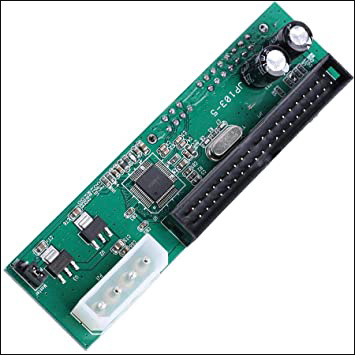
Another advantage of PATA is that it is backward compatible. This means that PATA devices can be connected to newer SATA motherboards using an adapter. However, SATA devices cannot be connected to PATA motherboards without an adapter.

On the other hand, PATA has some limitations when it comes to data transfer rates. The maximum data transfer rate for PATA is 133MB/s, while SATA has a maximum data transfer rate of 6GB/s. This means that PATA is slower compared to SATA, which can affect the performance of a computer.

In conclusion, PATA was a widely used technology in computers that allowed for fast data transfer rates at the time of its introduction. However, with the introduction of SATA, PATA became outdated and is no longer used in modern computers. Nevertheless, PATA played a significant role in the history of computer storage technology and paved the way for future advancements.

Previous Article

How Long Does a Laptop Battery Last?

Next Article

How to Turn a PDF into a ...

Matthew Lynch

Related articles More from author

  • Assistive Technology

    Is Your Apple Pencil Glitching in Procreate? Here Are 12 Tips to Fix It

    June 6, 2023
    By Matthew Lynch
  • Assistive Technology

    How to Create a Direct Link for Your Google Drive Files

    June 15, 2023
    By Matthew Lynch
  • Assistive Technology

    How to Get Log Stakes in Animal Crossing

    June 6, 2023
    By Matthew Lynch
  • Assistive Technology

    How to Find New Music You’ll Love With Spotify Enhance

    June 10, 2023
    By Matthew Lynch
  • Assistive Technology

    How to Block Someone on a MacBook

    June 8, 2023
    By Matthew Lynch
  • Assistive Technology

    Can You Get Malware on an iPhone? Here’s How to Check

    June 6, 2023
    By Matthew Lynch

Search

Login & Registration

  • Log in
  • Entries feed
  • Comments feed
  • WordPress.org

Newsletter

Signup for The Tech Edvocate Newsletter and have the latest in EdTech news and opinion delivered to your email address!

About Us

Since technology is not going anywhere and does more good than harm, adapting is the best course of action. That is where The Tech Edvocate comes in. We plan to cover the PreK-12 and Higher Education EdTech sectors and provide our readers with the latest news and opinion on the subject. From time to time, I will invite other voices to weigh in on important issues in EdTech. We hope to provide a well-rounded, multi-faceted look at the past, present, the future of EdTech in the US and internationally.

We started this journey back in June 2016, and we plan to continue it for many more years to come. I hope that you will join us in this discussion of the past, present and future of EdTech and lend your own insight to the issues that are discussed.

Newsletter

Signup for The Tech Edvocate Newsletter and have the latest in EdTech news and opinion delivered to your email address!

Contact Us

The Tech Edvocate
910 Goddin Street
Richmond, VA 23231
(601) 630-5238
[email protected]

Copyright © 2026 Matthew Lynch. All rights reserved.