The Tech Edvocate

Top Menu

  • Advertisement
  • Apps
  • Home Page
  • Home Page Five (No Sidebar)
  • Home Page Four
  • Home Page Three
  • Home Page Two
  • Home Tech2
  • Icons [No Sidebar]
  • Left Sidbear Page
  • Lynch Educational Consulting
  • My Account
  • My Speaking Page
  • Newsletter Sign Up Confirmation
  • Newsletter Unsubscription
  • Our Brands
  • Page Example
  • Privacy Policy
  • Protected Content
  • Register
  • Request a Product Review
  • Shop
  • Shortcodes Examples
  • Signup
  • Start Here
    • Governance
    • Careers
    • Contact Us
  • Terms and Conditions
  • The Edvocate
  • The Tech Edvocate Product Guide
  • Topics
  • Write For Us
  • Advertise

Main Menu

  • Start Here
    • Our Brands
    • Governance
      • Lynch Educational Consulting, LLC.
      • Dr. Lynch’s Personal Website
      • Careers
    • Write For Us
    • The Tech Edvocate Product Guide
    • Contact Us
    • Books
    • Edupedia
    • Post a Job
    • The Edvocate Podcast
    • Terms and Conditions
    • Privacy Policy
  • Topics
    • Assistive Technology
    • Child Development Tech
    • Early Childhood & K-12 EdTech
    • EdTech Futures
    • EdTech News
    • EdTech Policy & Reform
    • EdTech Startups & Businesses
    • Higher Education EdTech
    • Online Learning & eLearning
    • Parent & Family Tech
    • Personalized Learning
    • Product Reviews
  • Advertise
  • Tech Edvocate Awards
  • The Edvocate
  • Pedagogue
  • School Ratings

logo

The Tech Edvocate

  • Start Here
    • Our Brands
    • Governance
      • Lynch Educational Consulting, LLC.
      • Dr. Lynch’s Personal Website
        • My Speaking Page
      • Careers
    • Write For Us
    • The Tech Edvocate Product Guide
    • Contact Us
    • Books
    • Edupedia
    • Post a Job
    • The Edvocate Podcast
    • Terms and Conditions
    • Privacy Policy
  • Topics
    • Assistive Technology
    • Child Development Tech
    • Early Childhood & K-12 EdTech
    • EdTech Futures
    • EdTech News
    • EdTech Policy & Reform
    • EdTech Startups & Businesses
    • Higher Education EdTech
    • Online Learning & eLearning
    • Parent & Family Tech
    • Personalized Learning
    • Product Reviews
  • Advertise
  • Tech Edvocate Awards
  • The Edvocate
  • Pedagogue
  • School Ratings
  • JisuLife Ultra2 Portable Fan: A Powerful Multi-Function Cooling Solution

  • A Visitors Guide to Viña del Mar, Chile

  • A Visitors Guide to Århus, Denmark

  • A Visitors Guide to Bakersfield (CA), United States

  • A Visitors Guide to Aurora (CO), United States

  • A Visitor’s Guide to Toledo (OH), United States

  • A Visitors Guide to Cincinnati (OH), United States

  • The MagicEagle Cam 5: Revolutionizing Wildlife Monitoring with Smart 4G Technology

  • A Visitors Guide to Pittsburgh (PA), United States

  • A Visitors Guide to Colorado Springs (CO), United States

Digital & Mobile Technology
Home›Digital & Mobile Technology›OTF vs. TTF Fonts: Which Is Better? What’s the Difference?

OTF vs. TTF Fonts: Which Is Better? What’s the Difference?
By Matthew Lynch
June 9, 2023
0
Spread the love

Fonts play a significant role in the aesthetics of digital platforms, and finding the right font for your project is essential. When it comes to fonts, there are two main types: OTF and TTF. Both formats have their strengths and weaknesses, and the choice between them depends on the specific requirements of your project. In this article, we will discuss the differences between OTF and TTF fonts and which one is better.

OTF (OpenType Font)

OTF, also known as OpenType, is a more advanced version of TrueType fonts. While compromising on compatibility with older platforms and systems, OTF fonts are more sophisticated and offer additional capabilities. OTF fonts have a larger character set, including ligatures, fractions, alternate characters, and more. This means that designers have more flexibility in their designs and can incorporate more complex typographic elements without having to switch between different font styles.

One of the main benefits of using OTF fonts is automatic ligatures. This means that if your design includes letter combinations such as fi, fl, ti, and tt, the font will automatically adjust the letters to create a smoother and more cohesive appearance. Additionally, OTF fonts support advanced typographic features such as small caps, swashes, and more.

Another advantage of OTF fonts is their cross-platform compatibility, which makes them an ideal choice for graphic designers and web developers. This means that the same file can be used on both Windows and MacOS without any issues.

TTF (TrueType Font)

TTF, also known as TrueType, was introduced by Apple in the late 1980s. It quickly gained popularity because of its simplicity, compatibility, and ease of use. TTF fonts have a smaller file size compared to OTF fonts, making them faster to load and easy to share across different platforms.

One of the benefits of TTF fonts is their wider compatibility with different systems and applications. This makes them an ideal choice for web developers, as they can be used across various browsers and devices. TTF fonts also offer a simpler structure, making them easier to modify and customize.

Which one is better?

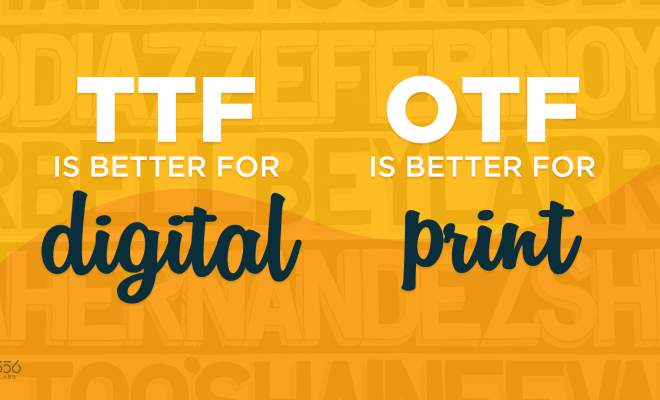
Now that we understand the differences between OTF and TTF fonts, the question arises: Which one is better? Like many things in life, there is no one-size-fits-all answer. Each font format has its own strengths and weaknesses, and the choice between them depends on the specific requirements of your project.

If you are creating a design that requires complex typography and advanced features, then OTF fonts would be the better choice. On the other hand, if you need a simple and lightweight font that is compatible with a wide range of operating systems and applications, then TTF fonts are a better option.

Previous Article

How to Screenshot an Instagram Story Without ...

Next Article

Fixes When Your Fitbit Won’t Sync

Matthew Lynch

Related articles More from author

  • Digital & Mobile Technology

    Bluetooth vs. Wi-Fi: What’s the Difference?

    June 10, 2023
    By Matthew Lynch
  • Digital & Mobile Technology

    How to Set a Custom Ringtone on iPhone

    June 1, 2023
    By Matthew Lynch
  • Digital & Mobile Technology

    The Easiest Way to Transfer Files on Steam Deck: KDE Connect

    June 22, 2023
    By Matthew Lynch
  • Digital & Mobile Technology

    Smart TVs: What You Need to Know

    June 2, 2023
    By Matthew Lynch
  • Digital & Mobile Technology

    What is Storage Spaces?

    May 12, 2023
    By Matthew Lynch
  • Digital & Mobile Technology

    What is Wireless Modem?

    May 15, 2023
    By Matthew Lynch

Search

Login & Registration

  • Register
  • Log in
  • Entries feed
  • Comments feed
  • WordPress.org

Newsletter

Signup for The Tech Edvocate Newsletter and have the latest in EdTech news and opinion delivered to your email address!

About Us

Since technology is not going anywhere and does more good than harm, adapting is the best course of action. That is where The Tech Edvocate comes in. We plan to cover the PreK-12 and Higher Education EdTech sectors and provide our readers with the latest news and opinion on the subject. From time to time, I will invite other voices to weigh in on important issues in EdTech. We hope to provide a well-rounded, multi-faceted look at the past, present, the future of EdTech in the US and internationally.

We started this journey back in June 2016, and we plan to continue it for many more years to come. I hope that you will join us in this discussion of the past, present and future of EdTech and lend your own insight to the issues that are discussed.

Newsletter

Signup for The Tech Edvocate Newsletter and have the latest in EdTech news and opinion delivered to your email address!

Contact Us

The Tech Edvocate
910 Goddin Street
Richmond, VA 23231
(601) 630-5238
[email protected]

Copyright © 2025 Matthew Lynch. All rights reserved.