One Startup’s Bold Gamble: Is This AI Virus a Cure, or a Catastrophe Waiting to Happen?
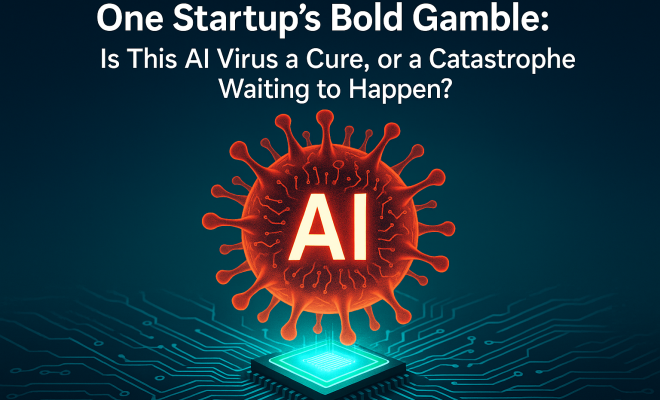
Imagine a future where a virus isn’t something you dread, but a meticulously designed, intelligent agent programmed to heal. Sounds like science fiction, right? Well, for one ambitious startup, that future might already be here. In a move that has sent ripples of both excitement and apprehension through the biotech world, this company reportedly deployed an AI-engineered virus into a human patient. Yes, you read that correctly – a human being is now carrying a virus designed by artificial intelligence. This truly unprecedented development, first reported on October 21, 2026, isn’t just a fascinating anecdote; it’s a seismic event that forces us to confront the profound ethical implications of AI-engineered viruses and the very future of medicine.
On one hand, the potential is breathtaking. If this novel approach proves successful, it could unlock personalized treatments for diseases that have long defied conventional therapies, offering hope where none existed. Think about it: a pathogen tailored precisely to your unique biology, targeting only the bad cells while leaving healthy ones untouched. That’s the dream. But on the other hand, the risks are equally staggering. We’re talking about unleashing a self-replicating biological entity designed by an algorithm into a human body. The unknowns are immense, the safeguards are still evolving, and the line between groundbreaking innovation and reckless experimentation has never felt thinner. This isn’t just about a single patient; it’s about setting a precedent for how we integrate powerful AI with the delicate dance of human biology, and the ethical tightrope we’re all walking.
The Dawn of AI-Engineered Biologics: A New Frontier
For decades, medical science has relied on human ingenuity, often through painstaking trial and error, to develop new drugs and treatments. From penicillin to CRISPR, every breakthrough has been the culmination of dedicated research teams, brilliant insights, and often, a touch of serendipity. But AI is fundamentally changing that paradigm. We’re no longer just using computers to analyze data or run simulations; we’re empowering them to become designers, creators, and even engineers of biological agents.
The concept of an AI-engineered virus isn’t about teaching a computer to *find* a new virus; it’s about teaching it to *build* one from the ground up, with specific therapeutic goals in mind. This involves complex algorithms sifting through vast genomic databases, predicting protein interactions, and modeling viral replication cycles with a precision that would be impossible for human researchers alone. The promise here is speed and specificity. Imagine condensing years of traditional drug discovery into months, or even weeks. Envision therapies so precise they could differentiate between a cancerous cell and a healthy one with near-perfect accuracy, minimizing side effects and maximizing efficacy. This is the vision driving companies willing to push the boundaries, and it’s why the news of an AI-engineered virus in a human patient is such a monumental moment.
Understanding the ‘Why’: The Allure of Personalized Medicine
Why are researchers and startups so eager to venture into this uncharted territory? The answer lies in the persistent limitations of conventional medicine, particularly in areas like oncology, autoimmune disorders, and rare genetic conditions. These diseases often present with immense variability from patient to patient, making one-size-fits-all treatments woefully inadequate. This is where personalized medicine steps in, promising therapies tailored to an individual’s unique genetic makeup, lifestyle, and disease presentation.
AI-engineered viruses could be the ultimate expression of personalized medicine. By analyzing a patient’s specific tumor genetics, for instance, an AI could design an oncolytic virus programmed to recognize and destroy only those cancerous cells, leaving healthy tissue untouched. This isn’t just an improvement; it’s a paradigm shift from broad-spectrum treatments with harsh side effects to highly targeted interventions. The potential to reduce suffering, improve outcomes, and redefine what’s possible in medicine is the powerful magnet pulling these innovators forward, despite the significant ethical hurdles and safety concerns. If a technology offers a genuine chance to cure previously untreatable diseases, the pressure to explore it becomes immense.
The Clinical Trial Conundrum: Speed vs. Safety
The traditional process for bringing a new drug or therapy to market is notoriously slow, expensive, and rigorous. Clinical trials are designed to systematically test safety and efficacy through multiple phases, often spanning a decade or more. This deliberate pace, while frustrating for patients desperately awaiting new treatments, is a crucial safeguard against unforeseen risks and catastrophic errors. However, the advent of AI-engineered biologics throws a wrench into this established framework.
When you’re dealing with an entirely novel, AI-designed biological agent, how do you adequately predict its behavior in a complex human system? Standard toxicology models might not capture the full scope of potential interactions or long-term effects. The very nature of a self-replicating virus means that any unintended consequence could amplify and spread, making containment a terrifying prospect. This creates a profound ethical dilemma: do we accelerate trials to bring potentially life-saving treatments to patients faster, or do we insist on an even more stringent, cautious approach given the unprecedented nature of the technology? The startup’s reported deployment on a human patient suggests a willingness to push the envelope, raising serious questions about the speed and thoroughness of their preclinical work and the oversight mechanisms in place. It’s a high-stakes gamble with human lives, and the world is watching.
Unpacking the Ethical Implications of AI-Engineered Viruses
This single event opens a Pandora’s Box of ethical considerations, forcing us to grapple with questions that transcend traditional medical ethics. The core issue revolves around responsibility, predictability, and the very definition of ‘informed consent’ when the agent in question is designed by an autonomous intelligence.
Unforeseen Consequences and Control
Perhaps the most immediate concern is the potential for unforeseen consequences. While AI can design with incredible precision, biological systems are inherently complex and chaotic. A virus, even one engineered for therapeutic purposes, could mutate, jump to unintended targets, or trigger unpredictable immune responses. Who is accountable if such an event occurs? Is it the AI that designed it, the scientists who deployed it, or the company that funded it? Furthermore, how do you ‘recall’ a self-replicating biological agent once it’s inside a patient, let alone if it were to somehow spread beyond that individual? The very idea is chilling and underscores the need for robust ‘kill switches’ or deactivation protocols, which are incredibly difficult to design for living entities. (See: AI tool accelerates drug discovery.)
The ‘Black Box’ Problem of AI
Many advanced AI systems, particularly deep learning models, operate as ‘black boxes.’ Even their creators can’t always fully explain *why* an AI made a particular design choice. This lack of interpretability is deeply problematic when designing something as critical as a medical intervention. If we can’t fully understand the AI’s reasoning, how can we be confident in its safety? How can we trace back an adverse event to a specific design flaw if the AI’s decision-making process remains opaque? This ‘black box’ problem introduces an unprecedented level of uncertainty into medical development, challenging the very principles of scientific transparency and accountability. For more context, see AI Drug Discovery.
Informed Consent in a New Era
What does ‘informed consent’ truly mean when a patient agrees to receive a therapy designed by an AI? Can a patient genuinely understand the risks and benefits of an agent whose full behavior even its human creators might not completely grasp? This isn’t just about explaining potential side effects; it’s about conveying the inherent uncertainty of deploying a wholly novel, intelligently designed biological entity. It raises the bar for patient education and requires an extraordinary level of trust, which must be earned through meticulous research, transparent communication, and robust ethical oversight.
The Regulator’s Nightmare: Keeping Pace with Innovation
Regulatory bodies like the FDA in the US, the EMA in Europe, and similar agencies worldwide exist to ensure the safety and efficacy of medical products. Their frameworks are built on decades of experience with traditional pharmaceuticals, biologics, and medical devices. But AI-engineered viruses represent a category unto themselves, blurring the lines between these established classifications. How do you regulate something that is both a drug and a living organism, designed by an algorithm?
Regulators are already struggling to keep pace with the rapid advancements in gene therapy and personalized medicine. The emergence of AI-designed biologics adds another layer of complexity. Do existing guidelines for viral vectors apply? What kind of preclinical data is sufficient? How do you monitor long-term effects for something so fundamentally new? The danger here is twofold: overly cautious regulation could stifle innovation and delay life-saving treatments, while overly permissive regulation could lead to disastrous public health consequences. Striking this balance is a monumental challenge that will require unprecedented collaboration between scientists, ethicists, policymakers, and the AI developers themselves. The traditional regulatory approval pipeline was simply not built for this kind of technology, and it’s scrambling to adapt.
Safeguards and Solutions: Charting a Responsible Course
Given the immense potential and equally immense risks, what safeguards can we implement to ensure the responsible development and deployment of AI-engineered viruses? This isn’t a call to halt progress, but rather to ensure that progress is guided by a strong ethical compass and robust safety protocols.
Independent Ethical Review Boards (ERBs)
Beyond standard institutional review boards, there’s a compelling need for specialized, independent ethical review boards focused specifically on AI-designed biologics. These boards would comprise not just medical ethicists, but also AI ethicists, virologists, molecular biologists, and even legal scholars. Their mandate would be to scrutinize every aspect of the research, from AI design principles to preclinical testing, patient selection, and post-treatment monitoring. They would serve as a critical check against unchecked enthusiasm and potential blind spots within the research teams themselves.
Explainable AI (XAI) for Biologics
The ‘black box’ problem isn’t insurmountable. The field of Explainable AI (XAI) is dedicated to developing AI models whose decisions can be understood and interpreted by humans. For AI-engineered viruses, XAI is not just a nice-to-have; it’s an absolute necessity. Researchers must demand that AI systems used for designing therapeutic agents provide clear, verifiable explanations for their design choices. This would allow human experts to identify potential flaws, understand the mechanism of action, and build trust in the AI’s output, moving beyond simply accepting what the algorithm spits out.
Robust Preclinical Testing and Long-Term Monitoring
The standard for preclinical testing for AI-engineered viruses must be exceptionally high. This means extensive in vitro studies, sophisticated organ-on-a-chip models, and multiple animal models to predict potential off-target effects, immunogenicity, and long-term biodistribution. Furthermore, for any human trials, incredibly stringent long-term monitoring protocols are essential. We’re not just talking about a few months; we need to track these patients for years, if not decades, to fully understand the long-term impacts of introducing an AI-designed biological agent into their bodies. Registry data, tissue banking, and mandatory follow-up studies will be crucial.
The ‘If it Works, That’s Incredible’ Sentiment: Hope and Hype
The phrase, “if it works, that’s incredible,” perfectly encapsulates the high-stakes, emotionally charged atmosphere surrounding this development. On one hand, it speaks to the boundless optimism for breakthrough cures, particularly for devastating diseases that currently have no effective treatments. For patients and their families, the prospect of a truly revolutionary therapy can overshadow concerns about novelty or risk. This hope is a powerful driver for innovation, pushing scientists and entrepreneurs to tackle seemingly impossible challenges.
However, this sentiment also carries the risk of hype overshadowing reality. The allure of ‘incredible’ breakthroughs can lead to premature deployments, insufficient safety checks, and an underestimation of the inherent complexities of biological systems. It creates an environment where the pressure to deliver a cure can sometimes overshadow the imperative to proceed with extreme caution. As experienced journalists, we’ve seen this cycle before: immense promise, followed by a rush to market, and sometimes, unfortunate consequences. Balancing genuine hope with a healthy dose of scientific skepticism and ethical rigor is absolutely paramount here. (See: CDC on health literacy and innovation.)
Beyond the Patient: Broader Societal and Existential Concerns
While the immediate focus is on patient safety and clinical ethics, the ethical implications of AI-engineered viruses extend far beyond individual treatments. We must also consider the broader societal and even existential risks.
The Dual-Use Dilemma
Any powerful technology carries a dual-use dilemma: it can be used for good or for harm. An AI capable of designing highly specific, potent viruses for therapeutic purposes could, in the wrong hands, be repurposed to design bioweapons. The thought of autonomous AI systems creating novel pathogens designed for malicious intent is chilling and demands international treaties, stringent oversight of AI development in this domain, and robust cybersecurity measures to protect these powerful algorithms and their blueprints. This isn’t merely theoretical; it’s a very real concern that must be addressed proactively, not reactively. For more context, see AI Healthcare Startup.
Equity and Access
If AI-engineered personalized therapies prove to be incredibly effective, who will have access to them? Will they become prohibitively expensive, available only to the wealthiest few? This could exacerbate existing health inequalities, creating a two-tiered medical system where cutting-edge, AI-driven cures are a luxury rather than a universal right. We need to start thinking now about how to ensure equitable access to these transformative technologies, lest we create a future where health outcomes are even more tied to socioeconomic status.
The Road Ahead: Navigating a New Era of Biotech
The news of an AI-engineered virus being deployed in a human patient is a watershed moment. It signifies not just a technological leap, but a profound shift in our relationship with both artificial intelligence and biological engineering. We are standing at the precipice of a new era in medicine, one filled with extraordinary promise and equally daunting challenges.
The path forward demands a multi-faceted approach. We need open dialogue among scientists, ethicists, policymakers, and the public. We need robust, adaptable regulatory frameworks that can keep pace with rapid innovation without compromising safety. We need to invest in explainable AI and stringent preclinical testing. And perhaps most importantly, we need to foster a culture of profound ethical responsibility within the biotech and AI communities. The ‘if it works, that’s incredible’ sentiment is understandable, but it must be tempered by rigorous inquiry, transparent processes, and an unwavering commitment to human safety and well-being. The future of medicine, and perhaps humanity itself, hinges on how wisely we navigate these uncharted waters.
Lessons from History: Precedent and Public Trust
While AI-engineered viruses feel entirely new, history offers valuable lessons about revolutionary medical technologies and the public’s reaction. Think about the early days of organ transplantation, in vitro fertilization, or even gene therapy. Each of these breakthroughs faced immense ethical debates and public skepticism. Initial successes were often met with both awe and fear, and missteps could severely erode public trust, setting back research for years. The key to successful integration has always been transparency, careful regulation, and a clear, honest communication of both the potential benefits and inherent risks. For AI-engineered viruses, this historical context means recognizing that public perception will be heavily influenced by how responsibly these initial applications are managed. Any perceived secrecy or reckless pursuit of profit over safety could lead to widespread public rejection, regardless of the therapeutic potential. Building and maintaining public trust isn’t a secondary concern; it’s fundamental to the long-term success and ethical acceptance of this technology.
The Role of International Collaboration and Governance
The development of AI-engineered viruses isn’t happening in a vacuum or within the borders of a single nation. Scientific advancements are global, and the implications of this technology, particularly the dual-use potential, necessitate international collaboration. Without a unified approach to governance, we risk a fragmented regulatory landscape where some countries might adopt lax standards to gain a competitive edge, creating ‘ethics havens’ for risky research. International bodies like the World Health Organization (WHO) and the United Nations could play a crucial role in fostering dialogue, establishing shared ethical guidelines, and potentially even setting up global registries for AI-designed biologics. This collective effort could help prevent the misuse of the technology and ensure that its benefits are realized responsibly across the globe, rather than becoming a source of geopolitical tension or harm. It’s about building a global ethical framework before a global crisis forces our hand.
Expert Perspectives: Voices from the Frontier
To truly grasp the complexity of AI-engineered viruses, it helps to consider the perspectives of those at the forefront. Bioethicists often emphasize the principle of “primum non nocere” (first, do no harm), advocating for extreme caution given the self-replicating nature of viruses. They stress that even a small error in design could have cascading effects, making containment impossible. Meanwhile, leading AI researchers in the field of drug discovery highlight the immense potential for speed and precision, arguing that AI can identify optimal viral designs far more efficiently than human scientists, potentially unlocking cures for previously intractable diseases. From a regulatory standpoint, officials are scrambling, openly admitting that current frameworks are ill-equipped to handle an entity that is both an algorithm-designed drug and a living organism. This divergence of views underscores the tightrope walk involved. It’s not a simple good-versus-evil scenario, but a complex interplay of hope, risk, and the urgent need for new ethical and regulatory paradigms.
Frequently Asked Questions About AI-Engineered Viruses
Given the groundbreaking nature of this topic, many questions naturally arise. Here are some common ones: For more context, see Revolutionize Cancer Treatment. (See: Ethical implications of AI in medicine.)
Q: What exactly is an AI-engineered virus?
A: It’s a virus whose genetic code and structural components are designed or optimized by an artificial intelligence algorithm, rather than being discovered in nature or modified solely by human scientists. The AI uses vast datasets to predict how different viral elements will interact to achieve specific therapeutic goals, like targeting cancer cells.
Q: How is this different from traditional gene therapy or viral vectors?
A: Traditional gene therapy uses modified viruses (vectors) to deliver healthy genes into cells. While these vectors are engineered, the core design decisions are made by humans. AI-engineered viruses take this a step further, with AI autonomously making critical design choices, sometimes even generating entirely novel viral structures or functions that humans might not conceive of. It’s about AI as the designer, not just the tool.
Q: What are the main potential benefits of AI-engineered viruses?
A: The primary benefits include highly personalized treatments, greater specificity in targeting diseased cells (reducing side effects), accelerated drug discovery timelines, and the potential to treat diseases that currently lack effective therapies, such as aggressive cancers, autoimmune disorders, and some genetic conditions.
Q: What are the biggest risks?
A: The biggest risks involve unforeseen consequences (mutation, unintended immune responses, off-target effects), the ‘black box’ problem of not fully understanding the AI’s design rationale, the difficulty of containing a self-replicating agent if something goes wrong, and the potential for dual-use (weaponization) if the technology falls into the wrong hands.
Q: How can we ensure the ethical development of this technology?
A: Key measures include establishing specialized, independent ethical review boards, demanding explainable AI (XAI) for biological design, implementing exceptionally robust preclinical testing, ensuring stringent long-term patient monitoring, fostering international collaboration for governance, and maintaining transparent communication with the public about risks and benefits.
Q: Will AI-engineered viruses be safe?
A: Safety is the paramount concern. While the goal is to design them to be safe and effective, the novelty and complexity mean there are significant unknowns. Extensive testing and cautious deployment with rigorous oversight are essential to minimize risks. The current deployment in a human patient is highly controversial precisely because these safety questions are still being addressed.
Q: Who is responsible if something goes wrong with an AI-engineered virus?
A: This is a complex legal and ethical question. Accountability could fall on the AI developer, the scientists who deployed it, the company funding the research, or the regulatory bodies that approved it. Establishing clear lines of responsibility is one of the major challenges regulators and legal experts are grappling with.
Trending Now
Frequently Asked Questions
What is an AI-engineered virus?
An AI-engineered virus is a biologically designed pathogen created using artificial intelligence algorithms. This virus can be tailored to target specific cells in the human body, potentially offering personalized treatments for various diseases while minimizing harm to healthy cells.
How does an AI-engineered virus work?
An AI-engineered virus operates by using advanced algorithms to analyze a patient's unique biological makeup. It is programmed to replicate and target only the harmful cells, potentially providing a more precise treatment option compared to traditional therapies.
What are the risks of using AI-engineered viruses in medicine?
The risks include unknown biological responses, potential for unintended consequences, and ethical concerns regarding the manipulation of living organisms. The deployment of such viruses raises questions about safety, efficacy, and the long-term impact on human health.
What ethical implications arise from AI-engineered viruses?
The ethical implications include concerns about consent, the potential for misuse of technology, and the responsibility of researchers to ensure safety. As AI increasingly integrates with medicine, it challenges our understanding of acceptable experimentation on human subjects.
Could AI-engineered viruses revolutionize medicine?
Yes, if successful, AI-engineered viruses could revolutionize medicine by providing highly personalized treatments for diseases that currently lack effective therapies. This innovation could pave the way for breakthroughs in treating various conditions, enhancing patient outcomes.
What did we miss? Let us know in the comments and join the conversation.