The Tech Edvocate

Top Menu

  • Advertisement
  • Apps
  • Home Page
  • Home Page Five (No Sidebar)
  • Home Page Four
  • Home Page Three
  • Home Page Two
  • Home Tech2
  • Icons [No Sidebar]
  • Left Sidbear Page
  • Lynch Educational Consulting
  • My Account
  • My Speaking Page
  • Newsletter Sign Up Confirmation
  • Newsletter Unsubscription
  • Our Brands
  • Page Example
  • Privacy Policy
  • Protected Content
  • Register
  • Request a Product Review
  • Shop
  • Shortcodes Examples
  • Signup
  • Start Here
    • Governance
    • Careers
    • Contact Us
  • Terms and Conditions
  • The Edvocate
  • The Tech Edvocate Product Guide
  • Topics
  • Write For Us
  • Advertise

Main Menu

  • Start Here
    • Our Brands
    • Governance
      • Lynch Educational Consulting, LLC.
      • Dr. Lynch’s Personal Website
      • Careers
    • Write For Us
    • The Tech Edvocate Product Guide
    • Contact Us
    • Books
    • Edupedia
    • Post a Job
    • The Edvocate Podcast
    • Terms and Conditions
    • Privacy Policy
  • Topics
    • Assistive Technology
    • Child Development Tech
    • Early Childhood & K-12 EdTech
    • EdTech Futures
    • EdTech News
    • EdTech Policy & Reform
    • EdTech Startups & Businesses
    • Higher Education EdTech
    • Online Learning & eLearning
    • Parent & Family Tech
    • Personalized Learning
    • Product Reviews
  • Advertise
  • Tech Edvocate Awards
  • The Edvocate
  • Pedagogue
  • School Ratings

logo

The Tech Edvocate

  • Start Here
    • Our Brands
    • Governance
      • Lynch Educational Consulting, LLC.
      • Dr. Lynch’s Personal Website
        • My Speaking Page
      • Careers
    • Write For Us
    • The Tech Edvocate Product Guide
    • Contact Us
    • Books
    • Edupedia
    • Post a Job
    • The Edvocate Podcast
    • Terms and Conditions
    • Privacy Policy
  • Topics
    • Assistive Technology
    • Child Development Tech
    • Early Childhood & K-12 EdTech
    • EdTech Futures
    • EdTech News
    • EdTech Policy & Reform
    • EdTech Startups & Businesses
    • Higher Education EdTech
    • Online Learning & eLearning
    • Parent & Family Tech
    • Personalized Learning
    • Product Reviews
  • Advertise
  • Tech Edvocate Awards
  • The Edvocate
  • Pedagogue
  • School Ratings
  • A Visitors Guide to Santa Maria, Brazil

  • Uncovering the Truth: This Salmonella Outbreak Sprouts Warning You Can’t Ignore

  • This One Flaw Just Melted an RTX 5090 — What Happens Next?

  • This Startup Just Raised $40 Million to Revolutionize Women’s Health

  • This AI Coding Startup Just Tripled Its Value to $5 Billion Overnight

  • The Blood Of Dawnwalker: 10 Burning Questions After Its Console Demo Scandal

  • Gamers vs. Critics: Why Wolverine Game Reviews Are Sparking a Culture War

  • AI-Generated Content Is Flooding Social Media, Research Shows

  • Florida’s Latest Education Scandal: The Climate Change Curriculum You Won’t Believe

  • Millions Face a Brutal Student Loan Payment Hike — What You MUST Do Now

Digital & Mobile Technology
Home›Digital & Mobile Technology›Nvidia DLSS vs. AMD FidelityFX: What’s the Difference & What Looks Better?

Nvidia DLSS vs. AMD FidelityFX: What’s the Difference & What Looks Better?
By Matthew Lynch
June 12, 2023
0
Spread the love

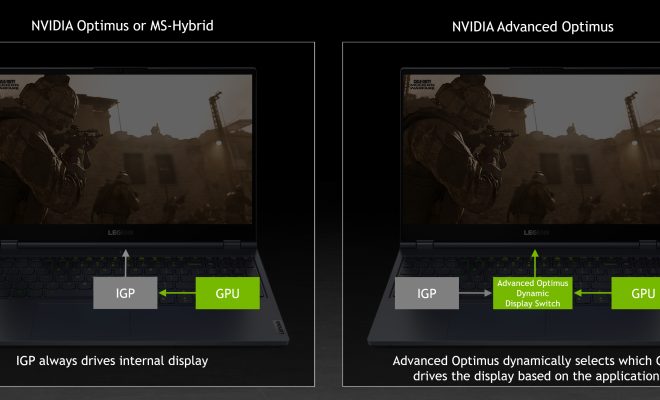
In the world of gaming, clarity and performance are critical factors that determine the overall gaming experience. This has led to the development of technologies that improve the quality of images and the speed at which they are delivered to gamers, such as Nvidia DLSS and AMD FidelityFX.

Nvidia DLSS (Deep Learning Super Sampling) and AMD FidelityFX are technologies developed by the two leading graphics card manufacturers in the world. These technologies use different techniques to improve the visual quality of images in games.

DLSS was introduced by Nvidia in 2018 and uses artificial intelligence to upscale the resolution of the game to higher levels. It does this by rendering the game at a lower resolution and then using AI algorithms to upscale the image to a higher resolution. The result is that the game runs faster and smoother, while the image quality is improved significantly.

On the other hand, AMD FidelityFX is a set of tools for game developers that improves the image quality of games. FidelityFX uses image sharpening, contrast adaptive sharpening, and other techniques to improve the detail and clarity of the image, making it look more realistic and immersive.

While both technologies aim to improve the visual quality of games, there are some differences between them. One of the main differences is that DLSS uses AI to upscale the image, while FidelityFX relies on traditional techniques such as image sharpening. This results in DLSS producing more detailed images, especially in areas such as textures and lighting.

DLSS also has the advantage of being more efficient in terms of performance. The lower resolution rendering means that the game runs faster without sacrificing visual quality. This is particularly useful in demanding games where a high frame rate is essential.

However, FidelityFX has its advantages too. As it does not require specialized hardware, it can be used on a wide range of graphics cards, including those not made by AMD. It also has the advantage of being an open-source tool, making it more accessible to developers and users.

In terms of which technology looks better, it ultimately depends on the specific game and the user’s preferences. DLSS often produces sharper and more detailed images, while FidelityFX can provide more realistic and natural-looking visuals. The choice of which technology to use also depends on the hardware available, as DLSS requires an Nvidia graphics card to use, while FidelityFX can be used on any GPU.

In conclusion, both Nvidia DLSS and AMD FidelityFX offer significant improvements to the visual quality of games. While DLSS focuses on using AI to produce more detailed images, FidelityFX uses traditional techniques to provide a more natural and realistic look. Ultimately, the choice of which technology to use comes down to personal preference and the specific requirements of the game.


Previous Article

What Is a SIM Card and What ...

Next Article

How to Export Emails From Outlook

Matthew Lynch

Related articles More from author

  • Digital & Mobile Technology

    How to Change Your Birthday on Facebook

    May 21, 2023
    By Matthew Lynch
  • Digital & Mobile Technology

    How to Enable God Mode on Windows 11

    August 5, 2023
    By Matthew Lynch
  • Digital & Mobile Technology

    How to Fix Rgss102e.dll Not Found or Missing Errors

    July 24, 2023
    By Matthew Lynch
  • Digital & Mobile Technology

    Best Free Browser-Based Adobe Illustrator Alternatives

    September 8, 2023
    By Matthew Lynch
  • Digital & Mobile Technology

    How to Get a Google Phone Number

    May 30, 2023
    By Matthew Lynch
  • Digital & Mobile Technology

    How to Quickly Find Your Steam ID

    September 8, 2023
    By Matthew Lynch

Search

Login & Registration

  • Log in
  • Entries feed
  • Comments feed
  • WordPress.org

Newsletter

Signup for The Tech Edvocate Newsletter and have the latest in EdTech news and opinion delivered to your email address!

About Us

Since technology is not going anywhere and does more good than harm, adapting is the best course of action. That is where The Tech Edvocate comes in. We plan to cover the PreK-12 and Higher Education EdTech sectors and provide our readers with the latest news and opinion on the subject. From time to time, I will invite other voices to weigh in on important issues in EdTech. We hope to provide a well-rounded, multi-faceted look at the past, present, the future of EdTech in the US and internationally.

We started this journey back in June 2016, and we plan to continue it for many more years to come. I hope that you will join us in this discussion of the past, present and future of EdTech and lend your own insight to the issues that are discussed.

Newsletter

Signup for The Tech Edvocate Newsletter and have the latest in EdTech news and opinion delivered to your email address!

Contact Us

The Tech Edvocate
910 Goddin Street
Richmond, VA 23231
(601) 630-5238
[email protected]

Copyright © 2026 Matthew Lynch. All rights reserved.