Navigating the Future: How College Students are Adapting to an AI-Driven Job Market
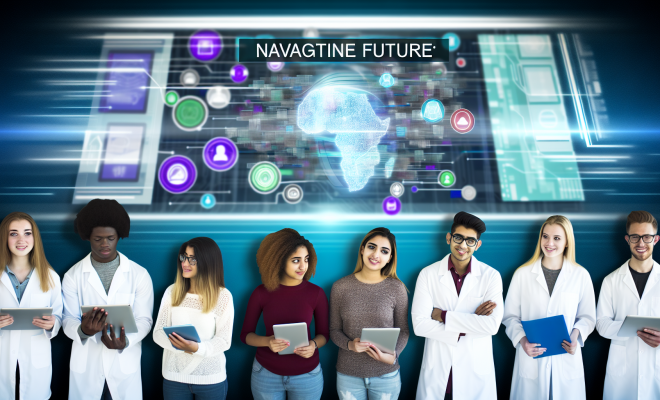
The rapid advancement of artificial intelligence (AI) technology is reshaping the landscape of employment, prompting a significant shift in the academic choices of college students across the United States. As automation and AI tools become increasingly integrated into various industries, students are increasingly concerned about their future job prospects. In response, many are reassessing their educational paths and seeking out what has been dubbed ‘AI-proof’ majors—fields perceived as less vulnerable to the encroachment of machines and algorithms.
The Landscape of Student Concerns
A recent poll conducted by the Institute of Politics at Harvard Kennedy School indicates that a staggering 70% of college students view artificial intelligence as a potential threat to their job prospects. This statistic underscores a growing unease among young adults who are just beginning to enter the workforce. Coupled with findings from a Gallup poll revealing that 48% of Gen Z workers believe the risks associated with AI outweigh its benefits, it is clear that fear and skepticism about AI’s role in the job market are pervasive.
Understanding the Generational Divide
While half of Gen Z reports using AI tools on a weekly basis, such as chatbots and other productivity-enhancing applications, there remains a significant undercurrent of apprehension about the long-term implications of these technologies. Many students express concerns that the reliance on AI could erode essential cognitive skills and lead to job displacement across numerous sectors.
Shifting Educational Priorities
This atmosphere of uncertainty has driven students to pivot towards majors that are perceived as more secure. Fields such as healthcare, education, and creative industries are gaining traction among those wary of the automation trend. For instance, students are gravitating towards degrees in nursing, teaching, and arts—areas that require human empathy, creativity, and critical thinking, which are skills that are currently difficult for AI to replicate.
Healthcare: A Growing Safe Haven
- Nursing: The demand for nurses continues to rise, fueled by an aging population and an increasing emphasis on healthcare accessibility.
- Health Administration: This field combines business acumen with healthcare knowledge, making it resistant to automation.
- Therapeutic Disciplines: Careers in physical therapy and mental health require human interaction and emotional intelligence.
Education: The Human Element
- Teaching: Educators play a critical role in shaping future generations, a task that AI is unlikely to fully replace.
- Special Education: This area requires personalized attention and understanding of diverse learning needs.
- Curriculum Development: Creating educational materials and strategies that resonate with students remains a human-centric endeavor.
Creative Industries: A Realm of Human Ingenuity
- Arts and Design: Fields such as graphic design, fine arts, and performing arts emphasize creativity and personal expression.
- Marketing: Understanding consumer behavior and crafting compelling narratives remains a distinctly human skill.
- Media Production: Content creation requires a unique blend of creativity, storytelling, and emotional intelligence.
The Role of Universities in Mitigating Fears
As students begin to shift their focus towards these ‘AI-proof’ fields, universities are also taking note. Academic institutions are working to address these concerns by enhancing their curricula to include AI literacy, equipping students with the skills to work alongside technology rather than be replaced by it. The introduction of interdisciplinary programs that integrate AI understanding with traditional disciplines is becoming increasingly common.
Preparing for a Hybrid Workforce
In response to the demand for AI literacy, some universities are now offering courses that explore the ethical implications of AI, data analysis, and machine learning. By providing students with a foundational understanding of AI, higher education institutions aim to empower graduates to adapt and thrive in evolving job markets.
The Emotional Impact of AI on Students
Beyond the practical implications of AI on job prospects, there is also an emotional toll that accompanies these shifts. The constant barrage of news about job automation and the rise of AI can lead to feelings of anxiety and helplessness among students. Many are grappling with the notion that their hard-earned degrees may not guarantee employment in an increasingly automated future.
Building Resilience and Adaptability
To combat these feelings, it is essential for students to cultivate resilience and adaptability. Engaging in internships, networking, and developing a diverse skill set can enhance employability and open up new opportunities. Additionally, universities are encouraged to offer mental health resources to help students cope with the stress associated with these uncertainties.
The Future of Work: Embracing Change
As AI continues to transform industries, the future of work will inevitably evolve. The challenge lies not only in the adaptation of educational paths but also in reimagining the workforce itself. While some jobs may become obsolete due to automation, others will emerge, requiring a new set of skills and competencies.
Emphasizing Lifelong Learning
Students should embrace the concept of lifelong learning, recognizing that the skills they acquire in college may need continual updating throughout their careers. This mindset will be crucial for navigating an AI-infused job market where adaptability and continuous improvement are key.
Conclusion: Finding Balance in an AI World
The rise of artificial intelligence presents both challenges and opportunities for the next generation of workers. As college students navigate their educational paths, the emphasis on ‘AI-proof’ majors reflects a broader concern about the future of work. By focusing on human-centric fields, enhancing AI literacy, and fostering adaptability, students can position themselves for success in a world increasingly defined by technological advancement.
In the end, the balance between embracing AI and ensuring job security will depend on the proactive choices students make today. Through informed decision-making, engagement with emerging technologies, and a commitment to lifelong learning, they can carve out a future that harmoniously integrates human skills with AI innovations.