The Tech Edvocate

Top Menu

  • Advertisement
  • Apps
  • Home Page
  • Home Page Five (No Sidebar)
  • Home Page Four
  • Home Page Three
  • Home Page Two
  • Home Tech2
  • Icons [No Sidebar]
  • Left Sidbear Page
  • Lynch Educational Consulting
  • My Account
  • My Speaking Page
  • Newsletter Sign Up Confirmation
  • Newsletter Unsubscription
  • Our Brands
  • Page Example
  • Privacy Policy
  • Protected Content
  • Register
  • Request a Product Review
  • Shop
  • Shortcodes Examples
  • Signup
  • Start Here
    • Governance
    • Careers
    • Contact Us
  • Terms and Conditions
  • The Edvocate
  • The Tech Edvocate Product Guide
  • Topics
  • Write For Us
  • Advertise

Main Menu

  • Start Here
    • Our Brands
    • Governance
      • Lynch Educational Consulting, LLC.
      • Dr. Lynch’s Personal Website
      • Careers
    • Write For Us
    • The Tech Edvocate Product Guide
    • Contact Us
    • Books
    • Edupedia
    • Post a Job
    • The Edvocate Podcast
    • Terms and Conditions
    • Privacy Policy
  • Topics
    • Assistive Technology
    • Child Development Tech
    • Early Childhood & K-12 EdTech
    • EdTech Futures
    • EdTech News
    • EdTech Policy & Reform
    • EdTech Startups & Businesses
    • Higher Education EdTech
    • Online Learning & eLearning
    • Parent & Family Tech
    • Personalized Learning
    • Product Reviews
  • Advertise
  • Tech Edvocate Awards
  • The Edvocate
  • Pedagogue
  • School Ratings

logo

The Tech Edvocate

  • Start Here
    • Our Brands
    • Governance
      • Lynch Educational Consulting, LLC.
      • Dr. Lynch’s Personal Website
        • My Speaking Page
      • Careers
    • Write For Us
    • The Tech Edvocate Product Guide
    • Contact Us
    • Books
    • Edupedia
    • Post a Job
    • The Edvocate Podcast
    • Terms and Conditions
    • Privacy Policy
  • Topics
    • Assistive Technology
    • Child Development Tech
    • Early Childhood & K-12 EdTech
    • EdTech Futures
    • EdTech News
    • EdTech Policy & Reform
    • EdTech Startups & Businesses
    • Higher Education EdTech
    • Online Learning & eLearning
    • Parent & Family Tech
    • Personalized Learning
    • Product Reviews
  • Advertise
  • Tech Edvocate Awards
  • The Edvocate
  • Pedagogue
  • School Ratings
  • The Lobby Before the Lights: How Digital Casino Design Sets an Evening in Motion

  • The Lobby Before the Lights: How Small Interface Choices Shape Casino Discovery

  • The Reckless Rise of AI Finance: Why You Could Lose Everything

  • Baffling: Fintech Founder’s $6.7 Million Lie — And How to Spot the Red Flags

  • Dramatic: Teddy AI Funding Ignites Legal Tech’s $60M Consolidation Battle

  • Florida’s Gambling War: Seminole Tribe’s Bold Move Against DraftKings Could Reshape Betting Forever

  • California’s Bold AI Move: Nearly 30 New Laws Reshape Tech’s Future

  • The AI Skills Gap: Why 71% of Companies Are Dramatically Behind — And What It Means For Your Career

  • Unbelievable: AI Deepfake Phishing Attacks Just Got a Whole Lot Scarier

  • This One Reckless Data Breach Just Exposed 50 Million Bank Customers

Digital & Mobile Technology
Home›Digital & Mobile Technology›Memory Sizes Explained: Gigabytes, Terabytes, and Petabytes in Context

Memory Sizes Explained: Gigabytes, Terabytes, and Petabytes in Context
By Matthew Lynch
June 7, 2023
0
Spread the love

Memory sizes have become a vital aspect of our daily lives. We rely on memory sizes to store and access vital information, such as music, movies, documents, and photos. But when it comes to memory sizes, it is essential to understand the context behind the different units used to define the memory’s capacity. In this article, we will explain gigabytes, terabytes, and petabytes in context to help you understand what each memory unit means.

Gigabyte (GB)

The gigabyte is the most common measurement unit concerning memory size. It describes the amount of storage space available in a device or system. A gigabyte is equivalent to 1,000 megabytes, and it can hold a considerable amount of information. For example, a single gigabyte can store about 200 songs or over 500 photos.

The Gigabyte is essential when it comes to consumer technologies such as computers, smartphones, and tablets. It is crucial for storing documents, music, videos, and photos.

Terabyte (TB)

Terabyte is a larger unit of measurement concerning memory size. A terabyte is equivalent to 1,000 gigabytes, which is a considerable amount of storage. It is usually required in specialized industries that require more extensive storage, such as video production and online gaming.

Terabyte-sized memory is also essential for consumers who need to store massive files, such as high-quality videos, photos, and high-resolution games. Additionally, terabytes are also important for those who have multiple devices to store data on – such as a home media server – that require more extensive storage than consumer devices.

Petabyte (PB)

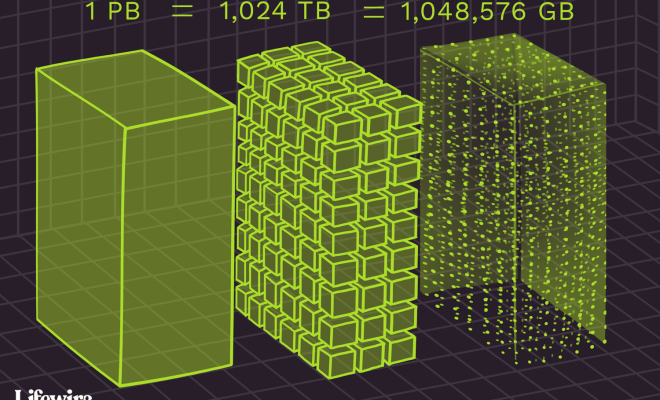
The petabyte is the largest memory size unit. It is equivalent to 1,000 terabytes, which equals around 1,000,000 gigabytes. Petabytes of data are required in specialized industries such as scientific research, healthcare, and national security.

For example, NASA’s Hubble Space Telescope collects 10 to 20 terabytes of data each year. Simultaneously, large data centers like Microsoft and Google store petabytes of data to provide cloud services to their customers.

Wrapping up

Understanding memory sizes is crucial to help us pick the right device or system for our needs. The gigabyte is perfect for consumer technologies that require standard storage. Meanwhile, terabyte-sized memories are required for larger homes or niche industries that require vast storage space for sizable file storage.


Previous Article

The History of ColecoVision Game System

Next Article

Best Websites to Play Free Jigsaw Puzzles ...

Matthew Lynch

Related articles More from author

  • Digital & Mobile Technology

    Error 0x8007045d: What It Is and How to Fix It

    June 1, 2023
    By Matthew Lynch
  • Digital & Mobile Technology

    Best Free Invoice Apps for Freelancers and Small Business Owners

    August 3, 2023
    By Matthew Lynch
  • Digital & Mobile Technology

    What Is the Fastest Way to Remove the Background From a Photo?

    August 5, 2023
    By Matthew Lynch
  • Digital & Mobile Technology

    What is Technical Support (Tech Support)?

    May 12, 2023
    By Matthew Lynch
  • Digital & Mobile Technology

    What Is a BMS and How Do Battery Management Systems Work?

    June 12, 2023
    By Matthew Lynch
  • Digital & Mobile Technology

    How to Splice an RCA Cable

    May 9, 2023
    By Matthew Lynch

Search

Login & Registration

  • Log in
  • Entries feed
  • Comments feed
  • WordPress.org

Newsletter

Signup for The Tech Edvocate Newsletter and have the latest in EdTech news and opinion delivered to your email address!

About Us

Since technology is not going anywhere and does more good than harm, adapting is the best course of action. That is where The Tech Edvocate comes in. We plan to cover the PreK-12 and Higher Education EdTech sectors and provide our readers with the latest news and opinion on the subject. From time to time, I will invite other voices to weigh in on important issues in EdTech. We hope to provide a well-rounded, multi-faceted look at the past, present, the future of EdTech in the US and internationally.

We started this journey back in June 2016, and we plan to continue it for many more years to come. I hope that you will join us in this discussion of the past, present and future of EdTech and lend your own insight to the issues that are discussed.

Newsletter

Signup for The Tech Edvocate Newsletter and have the latest in EdTech news and opinion delivered to your email address!

Contact Us

The Tech Edvocate
910 Goddin Street
Richmond, VA 23231
(601) 630-5238
[email protected]

Copyright © 2026 Matthew Lynch. All rights reserved.