The Tech Edvocate

Top Menu

  • Advertisement
  • Apps
  • Home Page
  • Home Page Five (No Sidebar)
  • Home Page Four
  • Home Page Three
  • Home Page Two
  • Home Tech2
  • Icons [No Sidebar]
  • Left Sidbear Page
  • Lynch Educational Consulting
  • My Account
  • My Speaking Page
  • Newsletter Sign Up Confirmation
  • Newsletter Unsubscription
  • Our Brands
  • Page Example
  • Privacy Policy
  • Protected Content
  • Register
  • Request a Product Review
  • Shop
  • Shortcodes Examples
  • Signup
  • Start Here
    • Governance
    • Careers
    • Contact Us
  • Terms and Conditions
  • The Edvocate
  • The Tech Edvocate Product Guide
  • Topics
  • Write For Us
  • Advertise

Main Menu

  • Start Here
    • Our Brands
    • Governance
      • Lynch Educational Consulting, LLC.
      • Dr. Lynch’s Personal Website
      • Careers
    • Write For Us
    • The Tech Edvocate Product Guide
    • Contact Us
    • Books
    • Edupedia
    • Post a Job
    • The Edvocate Podcast
    • Terms and Conditions
    • Privacy Policy
  • Topics
    • Assistive Technology
    • Child Development Tech
    • Early Childhood & K-12 EdTech
    • EdTech Futures
    • EdTech News
    • EdTech Policy & Reform
    • EdTech Startups & Businesses
    • Higher Education EdTech
    • Online Learning & eLearning
    • Parent & Family Tech
    • Personalized Learning
    • Product Reviews
  • Advertise
  • Tech Edvocate Awards
  • The Edvocate
  • Pedagogue
  • School Ratings

logo

The Tech Edvocate

  • Start Here
    • Our Brands
    • Governance
      • Lynch Educational Consulting, LLC.
      • Dr. Lynch’s Personal Website
        • My Speaking Page
      • Careers
    • Write For Us
    • The Tech Edvocate Product Guide
    • Contact Us
    • Books
    • Edupedia
    • Post a Job
    • The Edvocate Podcast
    • Terms and Conditions
    • Privacy Policy
  • Topics
    • Assistive Technology
    • Child Development Tech
    • Early Childhood & K-12 EdTech
    • EdTech Futures
    • EdTech News
    • EdTech Policy & Reform
    • EdTech Startups & Businesses
    • Higher Education EdTech
    • Online Learning & eLearning
    • Parent & Family Tech
    • Personalized Learning
    • Product Reviews
  • Advertise
  • Tech Edvocate Awards
  • The Edvocate
  • Pedagogue
  • School Ratings
  • Cybersecurity vs. Green Energy: Which Path Will Make You Richer in 2026?

  • Why These 10 Renewable Energy Certifications Are Quietly Reshaping Careers by 2026

  • Why Millions Are Rushing to Online Renewable Energy Certifications Right Now

  • August AI vs. USMLE: The Unsettling Future of Medical Licensing

  • One AI’s Perfect USMLE Score Just Blew Up Medical Education As We Know It

  • This AI Just Aced the USMLE: Why Your Medical Career Might Never Be the Same

  • The Quiet Exodus: Why Senior FinTech Developers Are Abandoning Corporate Life

  • The Quiet Revolution: Where Elite FinTech Developers Are Fleeing in 2026

  • The Quiet Exodus: Why Senior FinTech Developers Are Ditching Corporate Life

  • AI Governance Software: Pricing and Features Comparison

Higher Education EdTech
Home›Higher Education EdTech›Managing Dyslexia with Gamification

Managing Dyslexia with Gamification

By Matthew Lynch
February 25, 2017
0
Spread the love

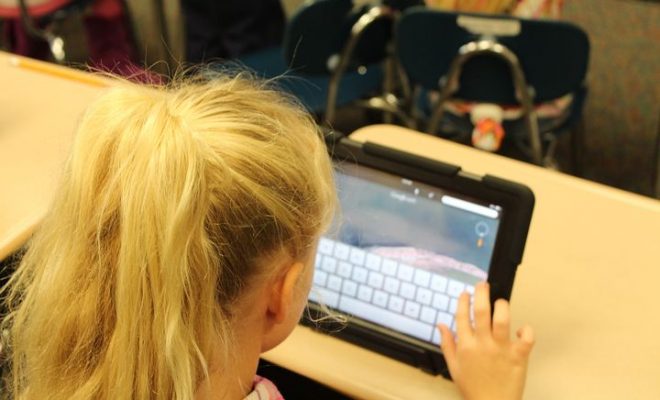
Gamification is a trend on a constant rise in education, owing this primarily to its positive influence on students’ engagement and motivation. What if gamified learning was used to tackle the many challenges facing efforts to provide affordable support to students with learning disabilities?

One of the most common forms of learning difficulty is dyslexia, with a prevalence of at least 10% of any given population. The condition is often hereditary and primarily associated with impaired ability to read, write, and spell. Termed a hundred years earlier as ‘word blindness,’ it was not until recently that the role of language processing and difficulty in processing the sounds in words were recognized as the primary features of dyslexia. Functional magnetic resonance imaging findings have shown that the brains of people with dyslexia develop and function in a different way, suggesting a neurological feature of the condition.

Individuals with dyslexia are often described as highly creative with strong problem-solving abilities. However, in a world where norms are set by the majority of society, dyslexia affects not only academic success but also self-esteem and social-emotional development. Therefore, although our understanding of dyslexia may evolve with new research, this learning condition clearly impacts a significant amount of the world population with far-reaching consequences across life domains.

Interventions provided by teachers trained in dyslexia are only effective when applied early and over an extended period. However, students with dyslexia remain too often undiagnosed throughout their school years.

Indeed, public schools are often limited in terms of providing adequate schooling to children with dyslexia owing to several factors: (1) limited knowledge about dyslexia, (2) limited systematic teacher training, (3) lack of awareness of cost-effective, modern solutions, and (4) lack of available teachers in general.

In many cases, capable families are obliged to change their environment or life to provide their affected child with the required effective interventions, which are often offered exclusively at expensive private schools.

To upgrade the school support of children with dyslexia from luxury to basic, new, simple, cost-effective, and fruitful methods need to be developed.

It is worth noting that children with dyslexia are capable of playing video games despite their learning disability. This is suggestive of the plausibility of a successful outcome from experimenting with gamified education in students with dyslexia.

Recently, ClassDojo, a gamification platform, was used successfully by students with dyslexia transitioning from primary to secondary school, with the goal being to improve their engagement and motivation.The study further highlighted the importance of well-trained teachers who are capable of adapting gamified educational platforms to students depending on the tape and severity of the condition.

The effect of gamification on students with dyslexia may not be limited to motivation. To support this notion, a recent study has proposed action video games as means to help children with dyslexia to read faster and more efficiently. The senior author of the study, of the University of Padua and the Scientific Institute Medea of Bosisio Parini in Italy, has stated that “Action video games enhance many aspects of visual attention, mainly improving the extraction of information from the environment,” concluding from the study’s findings that children with dyslexia “learned to orient and focus their attention more efficiently to extract the relevant information of a written word more rapidly.”

Without purely promoting video games as the gold standard tool to manage dyslexia, these findings may be the first scientifically based initiative toward developing new educational programs that can mitigate symptoms of dyslexia, or even prevent dyslexia if applied to children at risk very early on.

One of the added advantages of gamified education is the fact that it allows students to receive their feedback through a computer; this apparently spares them the unwelcome embarrassment that is often encountered in the classroom. Moreover, in one way or another, digital educational methods bring students closer to the educational process, at an almost constant rate, while requiring little commitments at a time. This translates into a lower overall cost for therapy, thus resulting in availability to a wider number of people with varying economic circumstances.

While gamified education may be beneficial to students with learning disabilities like dyslexia, it has been reported not to have any negative effects on the education of students with optimal educational abilities. On the contrary, it may even have overall beneficial effects on the outcome of students overall, regardless of their learning capacities.

This said, it ay be worthwhile to explore the benefits of gamified education in the context of learning disabilities, particularly in dyslexias.

TagsEdtechedtechchatelearningSTEAMSTEM
Previous Article

Why Is It So Hard for EdTech ...

Next Article

The Slow Gamification of K-12 Classrooms

Matthew Lynch

Related articles More from author

  • Best of the Best ListsEarly Childhood & K-12 EdTechHigher Education EdTech

    The Tech Edvocate’s List of 50 Must-Read K-12 EdTech Blogs

    January 17, 2017
    By Matthew Lynch
  • Early Childhood & K-12 EdTechOnline Learning & eLearning

    9 Must Have Blended Learning Apps, Tools, and Resources

    September 6, 2017
    By Matthew Lynch
  • EdTech News

    We asked five Colorado teachers how they use technology in the classroom. This is what they said.

    June 8, 2017
    By Matthew Lynch
  • Early Childhood & K-12 EdTechHigher Education EdTech

    The Brains of K-12 Students Come Prewired for EdTech

    December 25, 2016
    By Matthew Lynch
  • EdTech NewsHigher Education EdTech

    Do mobile devices in the classroom really improve learning outcomes?

    July 19, 2016
    By Matthew Lynch
  • Uncategorized

    How mobile technology boosts international learning

    June 28, 2016
    By Matthew Lynch

Search

Login & Registration

  • Log in
  • Entries feed
  • Comments feed
  • WordPress.org

Newsletter

Signup for The Tech Edvocate Newsletter and have the latest in EdTech news and opinion delivered to your email address!

About Us

Since technology is not going anywhere and does more good than harm, adapting is the best course of action. That is where The Tech Edvocate comes in. We plan to cover the PreK-12 and Higher Education EdTech sectors and provide our readers with the latest news and opinion on the subject. From time to time, I will invite other voices to weigh in on important issues in EdTech. We hope to provide a well-rounded, multi-faceted look at the past, present, the future of EdTech in the US and internationally.

We started this journey back in June 2016, and we plan to continue it for many more years to come. I hope that you will join us in this discussion of the past, present and future of EdTech and lend your own insight to the issues that are discussed.

Newsletter

Signup for The Tech Edvocate Newsletter and have the latest in EdTech news and opinion delivered to your email address!

Contact Us

The Tech Edvocate
910 Goddin Street
Richmond, VA 23231
(601) 630-5238
[email protected]

Copyright © 2026 Matthew Lynch. All rights reserved.