The Tech Edvocate

Top Menu

  • Advertisement
  • Apps
  • Home Page
  • Home Page Five (No Sidebar)
  • Home Page Four
  • Home Page Three
  • Home Page Two
  • Home Tech2
  • Icons [No Sidebar]
  • Left Sidbear Page
  • Lynch Educational Consulting
  • My Account
  • My Speaking Page
  • Newsletter Sign Up Confirmation
  • Newsletter Unsubscription
  • Our Brands
  • Page Example
  • Privacy Policy
  • Protected Content
  • Register
  • Request a Product Review
  • Shop
  • Shortcodes Examples
  • Signup
  • Start Here
    • Governance
    • Careers
    • Contact Us
  • Terms and Conditions
  • The Edvocate
  • The Tech Edvocate Product Guide
  • Topics
  • Write For Us
  • Advertise

Main Menu

  • Start Here
    • Our Brands
    • Governance
      • Lynch Educational Consulting, LLC.
      • Dr. Lynch’s Personal Website
      • Careers
    • Write For Us
    • The Tech Edvocate Product Guide
    • Contact Us
    • Books
    • Edupedia
    • Post a Job
    • The Edvocate Podcast
    • Terms and Conditions
    • Privacy Policy
  • Topics
    • Assistive Technology
    • Child Development Tech
    • Early Childhood & K-12 EdTech
    • EdTech Futures
    • EdTech News
    • EdTech Policy & Reform
    • EdTech Startups & Businesses
    • Higher Education EdTech
    • Online Learning & eLearning
    • Parent & Family Tech
    • Personalized Learning
    • Product Reviews
  • Advertise
  • Tech Edvocate Awards
  • The Edvocate
  • Pedagogue
  • School Ratings

logo

The Tech Edvocate

  • Start Here
    • Our Brands
    • Governance
      • Lynch Educational Consulting, LLC.
      • Dr. Lynch’s Personal Website
        • My Speaking Page
      • Careers
    • Write For Us
    • The Tech Edvocate Product Guide
    • Contact Us
    • Books
    • Edupedia
    • Post a Job
    • The Edvocate Podcast
    • Terms and Conditions
    • Privacy Policy
  • Topics
    • Assistive Technology
    • Child Development Tech
    • Early Childhood & K-12 EdTech
    • EdTech Futures
    • EdTech News
    • EdTech Policy & Reform
    • EdTech Startups & Businesses
    • Higher Education EdTech
    • Online Learning & eLearning
    • Parent & Family Tech
    • Personalized Learning
    • Product Reviews
  • Advertise
  • Tech Edvocate Awards
  • The Edvocate
  • Pedagogue
  • School Ratings
  • The Hidden Cost of EVs: Why Your Battery Could Cost More Than Your Car in 2026

  • Jensen Huang’s Shock Exit: This Unbelievable Scandal Just Rocked Nvidia and the AI World

  • Big Walk developer House House Confirms ‘Sparing’ Use of Gen AI – Press Start

  • Baffling: How a Cyber Breach at South Korea’s Top Security Watchdog Exposed Millions

  • Wenn Ordnung den Bildschirm beruhigt: Warum klare Abläufe Casino-Unterhaltung einladender machen

  • Reddit AI Reviews: The Quiet Reshaping of Online Opinion

  • The Chilling Truth: Iran Cyberattacks Europe’s Food and Blood Supplies

  • Anthropic’s $3.4 Billion Bet on Gas: The Unseen Cost of AI’s Future

  • Tribit FlyBuds C3 Earbuds: Premium Features at a Budget-Friendly Price

  • Is AuraCam Pro’s Emotional AI a Privacy Nightmare or Security Breakthrough?

Digital & Mobile Technology
Home›Digital & Mobile Technology›Intel CPUs Explained: What Are E-Cores and P-Cores?

Intel CPUs Explained: What Are E-Cores and P-Cores?
By Matthew Lynch
June 22, 2023
0
Spread the love

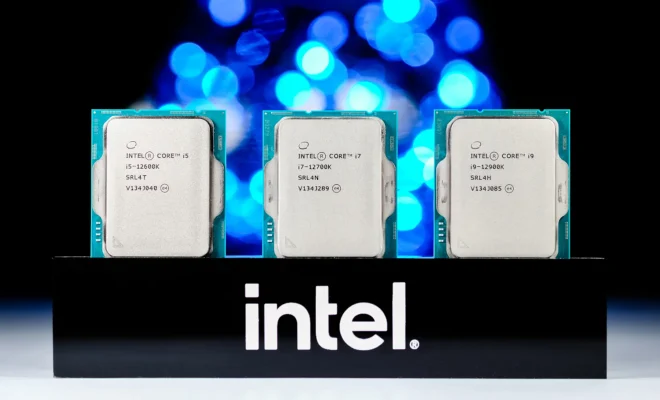
Intel is one of the leading manufacturers of computer processors in the world. Their CPUs are widely used in computers, servers, gaming consoles, and many other digital devices. Intel CPUs are known for their power and performance, but they also come with a range of features that help optimize the processing capability of these devices. Among the features, the E-Core and P-Core are two of the most relevant for optimizing performance. This article offers an explanation of what E-Cores and P-Cores are.

First, let us start by understanding what a CPU is. A Central Processing Unit or CPU is the central processing unit of any computer. It is responsible for performing computations and executing instructions that carry out various software programs on the computer. The CPU is composed of cores that work together to execute instructions more quickly and efficiently.

Now, let’s take a look at E-Cores and P-Cores. The term “core” refers to a processing unit within the CPU. Each core has the ability to perform calculations and execute instructions independently. With E-Cores and P-Cores, Intel started to add features to better optimize the processing capability of these units.

E-Cores (Efficient Cores) are designed to perform tasks that are not as computationally intensive as others. These tasks are usually related to power-efficient operations. For example, some E-Cores may handle tasks related to the processing of audio or video, while others may manage system processes that are not as intensive. E-Cores are designed to use less power than other cores, thus enabling the device to operate at a lower power consumption rate when not performing high computational tasks.

P-Cores (Performance Cores), on the other hand, are designed to perform tasks that are more computationally intensive. These tasks might include running multiple applications simultaneously, processing data in real-time or rendering high-quality multimedia content. P-Cores are usually faster and require more power than other cores because they are designed to perform these high-demand tasks.

Previous Article

Best Websites to Download Audiobooks for Free

Next Article

How to Merge Objects in Blender

Matthew Lynch

Related articles More from author

  • Digital & Mobile Technology

    Top Ways to Fix DisplayPort Not Working on Windows

    April 13, 2023
    By Matthew Lynch
  • Digital & Mobile Technology

    More Than 60 Funny and Silly Things to Say to Siri

    June 30, 2023
    By Matthew Lynch
  • Digital & Mobile Technology

    How to Tell If a Website Is Down for Everyone or Just You

    June 3, 2023
    By Matthew Lynch
  • Digital & Mobile Technology

    How The Conqueror Challenges for Android and iOS Makes Getting Fit More Fun

    June 22, 2023
    By Matthew Lynch
  • Digital & Mobile Technology

    Cat Games for Your iPad or Android Tablet

    June 12, 2023
    By Matthew Lynch
  • Digital & Mobile Technology

    How to Extract a Page from a PDF Document on Your Mac

    May 28, 2023
    By Matthew Lynch

Search

Login & Registration

  • Log in
  • Entries feed
  • Comments feed
  • WordPress.org

Newsletter

Signup for The Tech Edvocate Newsletter and have the latest in EdTech news and opinion delivered to your email address!

About Us

Since technology is not going anywhere and does more good than harm, adapting is the best course of action. That is where The Tech Edvocate comes in. We plan to cover the PreK-12 and Higher Education EdTech sectors and provide our readers with the latest news and opinion on the subject. From time to time, I will invite other voices to weigh in on important issues in EdTech. We hope to provide a well-rounded, multi-faceted look at the past, present, the future of EdTech in the US and internationally.

We started this journey back in June 2016, and we plan to continue it for many more years to come. I hope that you will join us in this discussion of the past, present and future of EdTech and lend your own insight to the issues that are discussed.

Newsletter

Signup for The Tech Edvocate Newsletter and have the latest in EdTech news and opinion delivered to your email address!

Contact Us

The Tech Edvocate
910 Goddin Street
Richmond, VA 23231
(601) 630-5238
[email protected]

Copyright © 2026 Matthew Lynch. All rights reserved.