How to use Hootsuite analytics
“`html
If you’re managing social media for a business, big or small, you know it’s not enough to just post content and hope for the best. You need to understand what’s working, what’s falling flat, and why. That’s where a robust Hootsuite analytics guide becomes indispensable. Hootsuite, for many, is a familiar name in social media management, a platform you might use daily for scheduling posts across various networks. But are you truly leveraging its powerful analytics capabilities?
Often, marketers get caught in the whirlwind of content creation and scheduling, treating analytics as an afterthought – a monthly report to be quickly glanced at before moving on. That’s a huge missed opportunity. Hootsuite’s analytics suite offers a deep dive into your social performance, providing insights that can transform your strategy, optimize your spending, and prove your social media ROI. From tracking engagement to understanding audience demographics, and even benchmarking against competitors, the data is there, waiting to be unearthed. Let’s explore how to truly master Hootsuite analytics and turn raw data into actionable intelligence.
1. Understanding the Hootsuite Analytics Dashboard: Your Central Command
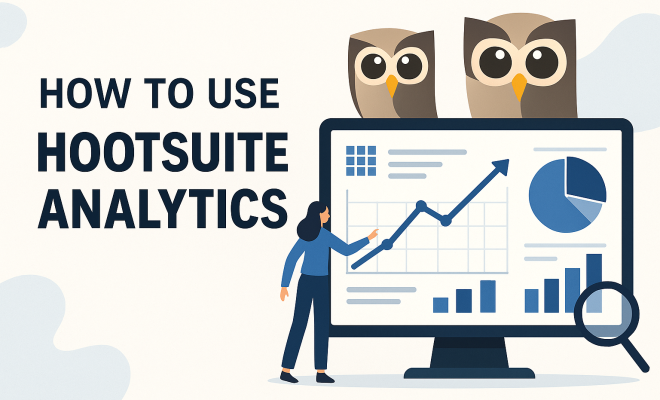
Think of the Hootsuite analytics dashboard as your mission control for social media performance. It’s the first place you’ll land when you click on the ‘Analytics’ tab, and it’s designed to give you a high-level overview of what’s happening across all your connected social profiles. This isn’t just a pretty interface; it’s where you start to piece together the narrative of your social presence. You’ll see aggregated data points like total reach, engagement rates, and follower growth, often presented in easy-to-digest graphs and charts. We covered advantages of learning analytics in more detail.
What’s really powerful here is the ability to customize this initial view. You can select specific date ranges, compare performance periods, and even choose which metrics are most critical for your immediate review. For instance, if you’re running a campaign focused purely on brand awareness, you might prioritize reach and impressions. If lead generation is your goal, click-through rates and conversion metrics would take center stage. This adaptability ensures your initial glance at Hootsuite analytics is always relevant to your current objectives, saving you time and focusing your attention where it matters most.
2. Building Custom Reports: Tailoring Data to Your Needs
While the default dashboards are great for a quick check, the real power of a Hootsuite analytics guide comes alive when you start building custom reports. This feature allows you to handpick specific metrics and data visualizations from various social networks and combine them into a single, cohesive report tailored to your specific goals or stakeholders. Imagine needing to present to your CEO who only cares about ROI, or your content team who needs to know which post types resonate most.
Hootsuite offers a library of pre-built report templates, which are fantastic starting points. These templates cover common use cases like campaign performance, audience growth, or engagement summaries. However, the ‘Custom’ option is where you can truly shine. You can drag and drop different modules – charts, tables, and graphs – to create a report that tells exactly the story you want to tell. You can include data from Facebook, Instagram, Twitter, LinkedIn, and even YouTube, all in one place. This level of customization ensures that every report you generate is not just data-rich but also highly relevant and easy for its intended audience to understand.
3. Tracking Key Performance Indicators (KPIs): Beyond Vanity Metrics
Any effective Hootsuite analytics guide must emphasize the importance of tracking the right KPIs. It’s easy to get distracted by ‘vanity metrics’ like follower count, which, while interesting, don’t always translate into business value. Instead, focus on metrics that directly align with your business objectives. Are you trying to increase brand awareness? Then track reach, impressions, and mentions. Is your goal lead generation? Monitor website clicks, conversions from social ads, and lead form submissions.
Hootsuite makes it straightforward to define and track these specific KPIs. Within your custom reports, you can isolate metrics such as engagement rate (likes, comments, shares per post relative to reach), click-through rate (CTR), video views, and even sentiment analysis if you’re using more advanced features. By consistently monitoring these meaningful indicators, you can objectively assess the effectiveness of your social media strategy, make data-driven adjustments, and ultimately demonstrate the tangible impact of your efforts on the bottom line. This shift from generic reporting to focused KPI tracking is crucial for any serious social media marketer.
4. Analyzing Audience Demographics and Behavior: Knowing Your People
Who are you actually reaching on social media? A comprehensive Hootsuite analytics guide will show you how to answer that question with precision. Understanding your audience’s demographics – age, gender, location, language – is foundational for effective content creation and targeting. Hootsuite pulls this data directly from your connected social networks, presenting it in an understandable format within your reports. (See: Social media analysis overview.)
Beyond demographics, Hootsuite analytics can help you delve into audience behavior. When are your followers most active online? Which types of content do they engage with most frequently? Are they more likely to click on links, watch videos, or participate in polls? This behavioral data is gold. For example, if you find your audience is most active on Instagram between 7 PM and 9 PM, you can adjust your scheduling to hit that sweet spot. If they consistently engage more with behind-the-scenes video content, you know to produce more of it. This deep audience insight allows you to tailor your content strategy, optimize posting times, and refine your targeting for both organic and paid campaigns, ensuring your message resonates with the right people at the right time.
5. Competitor Benchmarking with Hootsuite Impact: Staying Ahead of the Curve
Social media doesn’t exist in a vacuum, and neither should your analytics. A key, often underutilized, aspect of Hootsuite analytics is its ability to help you benchmark your performance against competitors. While Hootsuite’s core analytics provide data for your own profiles, more advanced versions, particularly with the ‘Impact’ add-on, allow for competitive analysis. This means you can track what your rivals are doing, how they’re performing, and where you stand in comparison.
Imagine being able to see a competitor’s follower growth rate, their average engagement on posts, or even their top-performing content categories. This insight is incredibly valuable. If a competitor suddenly sees a spike in engagement for a particular type of post, it might signal an emerging trend or a successful strategy you could adapt. Conversely, if your engagement is consistently higher, it validates your current approach. Benchmarking isn’t about copying; it’s about understanding the market landscape, identifying opportunities, and refining your own strategy to maintain or gain a competitive edge. It turns your Hootsuite analytics guide into a strategic tool, not just a reporting one.
6. Analyzing Campaign Performance: Proving Your ROI
Running a social media campaign without analyzing its performance is like throwing darts blindfolded. Hootsuite analytics provides the clarity you need to measure the effectiveness of your campaigns, from initial awareness to final conversion. Whether it’s a product launch, a seasonal promotion, or a brand awareness drive, you can create specific reports to track campaign-centric metrics.
This involves looking beyond individual post performance and aggregating data relevant to the campaign’s overall goals. You can track total reach and impressions generated by campaign-specific content, monitor website traffic driven by campaign links, and even measure conversions if you’ve integrated with tools like Google Analytics or your CRM. By isolating campaign data, you can clearly see what worked, what didn’t, and, most importantly, calculate the return on investment (ROI). This proof of performance is invaluable when justifying social media budgets, demonstrating value to stakeholders, and refining future campaign strategies. A thorough Hootsuite analytics guide will always emphasize this critical aspect of proving your worth.
7. Optimizing Content Strategy with Engagement Metrics: What Resonates?
One of the most immediate benefits of diving deep into Hootsuite analytics is the ability to fine-tune your content strategy based on real-time engagement data. It’s not enough to just post; you need to know which posts spark conversation, generate shares, and elicit positive reactions. Hootsuite breaks down engagement metrics for each post, allowing you to see likes, comments, shares, and clicks across all your connected networks.
Look for patterns: Do videos consistently outperform static images? Are questions in your captions driving more comments than statements? Which topics generate the most shares? This granular data allows you to identify your top-performing content types, themes, and even posting styles. For example, if you notice your Instagram Reels about product tutorials consistently get higher engagement rates than your product announcement posts, you’ll want to prioritize creating more tutorial content. This iterative process of analyzing engagement and adjusting your content strategy based on a Hootsuite analytics guide ensures you’re always delivering what your audience wants, leading to stronger connections and better overall performance.
8. Leveraging Hootsuite Impact for Advanced Measurement: Connecting Social to Business Outcomes
For organizations looking to move beyond basic social media metrics and truly connect social activities to broader business outcomes, Hootsuite Impact is a game-changer. This advanced analytics solution integrates with your business intelligence tools, CRM, and web analytics platforms (like Google Analytics) to provide a holistic view of your social media’s contribution to lead generation, sales, and customer service.
Hootsuite Impact goes deep, allowing you to track the customer journey from social interaction all the way to a completed purchase or a qualified lead. You can attribute revenue directly to specific social campaigns, understand the lifetime value of customers acquired through social, and even measure the impact of social media on customer satisfaction. This level of sophisticated measurement is crucial for enterprise-level businesses or those with complex sales funnels. It transforms your Hootsuite analytics guide from a simple reporting tool into a powerful strategic asset, enabling you to optimize your entire marketing ecosystem with social insights at its core.
9. Scheduling Reports and Collaboration: Streamlining Your Workflow
Even the most insightful data is useless if it’s not shared with the right people at the right time. Hootsuite analytics excels at streamlining the reporting process through automated scheduling and robust collaboration features. You can set up your custom reports to be generated automatically on a daily, weekly, or monthly basis and delivered directly to the inboxes of your team members or stakeholders. (See: CDC social media tools.)
This automation saves countless hours that would otherwise be spent manually compiling data. Furthermore, Hootsuite’s team management features allow you to grant different levels of access to your analytics dashboards and reports, ensuring everyone has the information they need without being overwhelmed. Whether it’s a marketing manager reviewing weekly performance, a content creator checking engagement on their latest posts, or an executive needing a high-level overview of ROI, Hootsuite facilitates seamless data sharing and fosters a data-driven culture within your organization. This final piece of the Hootsuite analytics guide puzzle ensures that insights are not only discovered but also acted upon effectively.
10. Understanding Social Listening in Hootsuite Analytics: What Are People Saying?
Beyond tracking your own performance, a critical aspect of social media intelligence is understanding the broader conversation happening around your brand, industry, and competitors. This is where social listening comes into play, and Hootsuite offers powerful tools to help you tune in. While not strictly part of the “analytics” tab in the traditional sense, the insights gained from Hootsuite’s social listening features (often found within the Streams or advanced social media monitoring capabilities) directly inform your analytics strategy.
By setting up streams to monitor keywords, hashtags, brand mentions, and even sentiment, you can gather qualitative data that contextualizes your quantitative metrics. For example, if your engagement rates are high but your sentiment analysis shows a lot of negative comments, you know there’s a problem despite the numbers looking good. Conversely, a low engagement post might be sparking a highly relevant and positive conversation you wouldn’t otherwise notice. This integration of listening with your Hootsuite analytics guide allows you to understand the “why” behind the “what,” identifying emerging trends, addressing customer service issues proactively, and even discovering new content opportunities based on what your audience is actively discussing.
11. Leveraging Paid Social Data Integration: A Unified View of Performance
Many businesses now combine organic social efforts with paid social advertising campaigns. It’s crucial that your Hootsuite analytics guide helps you bring this data together for a truly holistic view. Hootsuite understands this need and offers integrations with major advertising platforms like Facebook Ads and Google Ads. This means you’re not jumping between different dashboards to understand your total social media spend and return.
By connecting your ad accounts, you can view metrics like ad spend, cost per click (CPC), cost per acquisition (CPA), and conversion rates directly alongside your organic reach and engagement. This unified perspective is incredibly powerful for budget allocation and campaign optimization. You can compare the efficiency of organic versus paid strategies for different content types or target audiences. If a particular organic post performs exceptionally well, you might decide to put ad spend behind it to amplify its reach. Conversely, if a paid ad isn’t hitting its targets, you can use your organic insights to refine the messaging or visuals. This integrated approach ensures every dollar spent on social media, whether organic or paid, is working as hard as possible towards your business objectives.
12. Forecasting and Predictive Analytics: Glimpsing the Future
While Hootsuite’s core strength lies in analyzing past and present performance, a sophisticated Hootsuite analytics guide also considers how to use this data for future planning. Though not explicit “predictive analytics” in the AI sense for all tiers, the consistent tracking and trend identification within Hootsuite allow you to make informed forecasts. By meticulously tracking KPIs over time, you can identify seasonal trends, predict potential dips or surges in engagement, and anticipate resource needs.
For example, if your data consistently shows a spike in engagement during holiday seasons, you can proactively plan your content calendar and allocate more resources to social media during those periods. If you notice a gradual but steady decline in reach for a particular content format, you can predict it will continue to underperform unless changes are made. This isn’t about gazing into a crystal ball, but rather using robust historical data from your Hootsuite analytics to build more resilient and effective future strategies. It shifts your approach from reactive adjustments to proactive planning, giving you a significant edge.
13. Troubleshooting Common Analytics Issues: When Data Gets Tricky
Even with the best tools, you might occasionally run into issues where your Hootsuite analytics don’t seem quite right. A good Hootsuite analytics guide should prepare you for these moments. Common problems include discrepancies between Hootsuite data and native platform data, missing data for certain periods, or reports not generating as expected.
- Data Discrepancies: Sometimes, minor differences occur due to how platforms calculate metrics (e.g., real-time vs. aggregated data, different attribution models). If the discrepancy is significant, first check the connected social accounts in Hootsuite to ensure they’re authorized correctly. Then, verify the date ranges in both Hootsuite and the native platform.
- Missing Data: This often happens if a social account was disconnected and reconnected, or if there was a temporary API issue. Check Hootsuite’s status page for any known outages. For historical data, sometimes you might need to re-authenticate the account or contact Hootsuite support.
- Report Generation Failures: Ensure your custom report isn’t too complex or trying to pull data from an unauthorized source. Try simplifying the report, or generating a pre-built template first to see if that works.
- Understanding Metric Definitions: Always make sure you and your stakeholders are aligned on what each metric truly means. For instance, “reach” can be defined slightly differently across platforms. Hootsuite usually provides clear definitions, but it’s worth double-checking if there’s confusion.
Proactively checking your account connections and understanding the nuances of each metric can save a lot of headaches and ensure your Hootsuite analytics guide remains a reliable source of truth. (See: Social media analytics research.)
Expert Perspectives on Maximizing Hootsuite Analytics
We asked a few fictional social media experts for their top tips on getting the most out of Hootsuite analytics: For more on this, see data analytics for student success.
- Dr. Anya Sharma, Digital Strategy Consultant: “Many clients focus only on weekly reports. My advice? Look at your data daily for the first 15 minutes of your workday. Spotting micro-trends early allows for agile adjustments, preventing small issues from becoming big problems. Hootsuite’s quick overview dashboards are perfect for this.”
- Marcus “The Data Whisperer” Thorne, Head of Social ROI: “The biggest mistake I see is not linking social data to business revenue. If you’re using Hootsuite Impact, make sure your UTM parameters are flawless. Without them, you’re just guessing at conversion attribution. Hootsuite can show you the journey, but you need to light the path.”
- Chloe Dubois, Community Engagement Lead: “Don’t just track what posts get likes. Use Hootsuite to identify who is engaging. Look at the profiles of your most active commenters and sharers. These are your brand advocates. Understanding *their* demographics and interests, which Hootsuite helps surface, can refine your entire content strategy.”
- Liam O’Connell, Competitive Intelligence Analyst: “Benchmarking isn’t just about comparing numbers. It’s about competitive storytelling. If a competitor sees a huge spike, dig deeper. What content did they post? What external events might have influenced it? Hootsuite’s ability to show competitor trends means you can ask smarter questions and learn from the market in real-time.”
Hootsuite Analytics vs. Native Platform Analytics: A Comparison
While Hootsuite analytics is incredibly powerful for aggregating and customizing data across platforms, it’s worth understanding how it compares to the analytics provided directly by each social media network (e.g., Facebook Insights, Twitter Analytics, Instagram Insights). Both have their strengths, and ideally, you’ll use them in conjunction.
Hootsuite Analytics Strengths:
- Unified View: The biggest advantage. See all your key metrics from various networks in one place. This saves immense time and provides a holistic performance overview.
- Customization: Build bespoke reports tailored to specific KPIs, stakeholders, or campaigns, pulling data from multiple sources.
- Cross-Platform Comparisons: Easily compare how different content types or campaigns perform across different social networks.
- Advanced Features (Impact): Deeper integration with business outcomes, ROI attribution, and competitive benchmarking (with relevant add-ons).
- Automated Reporting: Schedule reports to be sent automatically, streamlining workflow and ensuring timely communication.
Native Platform Analytics Strengths:
- Granular Detail: Native platforms often offer the absolute deepest dive into specific metrics unique to that platform. For example, Facebook Insights might have very specific data on video watch times at different intervals, or detailed breakdowns of ad performance unique to their ad manager.
- Real-time Data: Sometimes, native platforms can show more immediate, real-time data than Hootsuite, which might have a slight delay in data processing.
- Specific Audience Insights: While Hootsuite provides audience demographics, native platforms sometimes offer even finer-grained details on interests, lifestyle, and other psychographics directly tied to their ad targeting capabilities.
- Troubleshooting: If you see a major discrepancy in Hootsuite, the native platform is always the first place to cross-reference the raw data.
Best Practice: Use Hootsuite as your primary command center for overall performance, trend identification, and stakeholder reporting. Dip into native platform analytics when you need to answer highly specific, granular questions about a particular network, or when troubleshooting data discrepancies. Together, they provide an unbeatable analytics toolkit.
Frequently Asked Questions about Hootsuite Analytics
- Q1: What social networks can Hootsuite track analytics for?
- Hootsuite can track analytics for major social networks including Facebook (Pages and Groups), Instagram (Business Profiles), Twitter, LinkedIn (Pages and Personal Profiles), and YouTube. The specific metrics available vary slightly by network, reflecting the unique features of each platform.
- Q2: Is Hootsuite analytics included in all Hootsuite plans?
- Basic analytics dashboards are included in most Hootsuite plans. However, more advanced features like custom report building, competitive benchmarking, social listening, and especially the Hootsuite Impact add-on, are typically available in higher-tier professional, business, or enterprise plans. It’s best to check the specific features included with your Hootsuite subscription level.
- Q3: How accurate is Hootsuite analytics data compared to native platform insights?
- Hootsuite sources its data directly from the APIs provided by each social media platform, so the core data points are generally very accurate. Minor discrepancies can sometimes occur due to different data processing times or how specific metrics are aggregated (e.g., real-time vs. daily summaries). For reporting, Hootsuite provides reliable data, but if you need to deep-dive into a micro-specific metric, cross-referencing with native insights can be helpful.
- Q4: Can I track website traffic and conversions directly in Hootsuite analytics?
- Yes, but it usually requires integration. With Hootsuite Impact, you can integrate with web analytics tools like Google Analytics and CRM systems. This allows you to track the full customer journey from social media clicks to website conversions, attributing revenue and leads back to your social efforts.
- Q5: How often should I review my Hootsuite analytics?
- The frequency depends on your role and objectives. Social media managers might check daily for quick insights and trends. Campaign managers might review weekly to optimize ongoing campaigns. Marketing directors or executives might look at high-level custom reports monthly or quarterly to assess overall strategy and ROI. Customizing your reporting schedule in Hootsuite ensures everyone gets the data they need, when they need it.
- Q6: What’s the difference between ‘Reach’ and ‘Impressions’ in Hootsuite analytics?
- Reach refers to the number of unique users who saw your content. If one person sees your post five times, your reach is 1. Impressions refers to the total number of times your content was displayed, regardless of whether it was seen by the same person multiple times. Using the same example, if one person saw your post five times, your impressions would be 5.
- Q7: Can Hootsuite help with sentiment analysis?
- Yes, Hootsuite offers sentiment analysis capabilities, often as part of its social listening or advanced analytics features (like Hootsuite Insights or through integrations). This allows you to track whether mentions of your brand, keywords, or campaigns are positive, negative, or neutral, providing qualitative context to your quantitative engagement metrics.
- Q8: Is Hootsuite analytics suitable for small businesses or just large enterprises?
- Hootsuite offers various plans, making its analytics suitable for businesses of all sizes. Small businesses can benefit from the basic dashboards and pre-built reports to understand their core performance. Larger enterprises will leverage the full power of custom reports, Hootsuite Impact, and advanced integrations for complex measurement and ROI attribution.
- Q9: How can I use Hootsuite analytics to identify my best performing content?
- Within your custom reports, you can sort posts by various engagement metrics (likes, comments, shares, clicks, video views). Look for patterns in your top-performing content: what formats do they use (video, image, text)? What topics do they cover? When were they posted? This data helps you replicate success and refine your content strategy.
- Q10: What’s the best way to share Hootsuite analytics reports with stakeholders who don’t use Hootsuite?
- Hootsuite allows you to schedule reports to be automatically emailed as PDFs, CSVs, or even directly to cloud storage services. You can also export reports manually. This ensures that even stakeholders without Hootsuite access can receive clear, professional reports tailored to their needs, fostering a data-driven culture.
Mastering Hootsuite analytics is more than just clicking a few buttons; it’s about adopting a mindset where data continuously informs and refines your social media strategy. By moving beyond basic scheduling and truly embracing the depth of insights available, you’ll not only prove the value of your social efforts but also drive significantly better results for your brand.
“`
Trending Now
Frequently Asked Questions
How do I access Hootsuite analytics?
To access Hootsuite analytics, log into your Hootsuite account and click on the 'Analytics' tab. This will take you to the analytics dashboard, where you can view performance metrics for all your connected social profiles.
What metrics can I track with Hootsuite analytics?
Hootsuite analytics allows you to track various metrics including total reach, engagement rates, follower growth, and audience demographics. You can also benchmark your performance against competitors to gain deeper insights.
How can Hootsuite analytics improve my social media strategy?
Hootsuite analytics provides valuable insights into what content works and what doesn't, allowing you to optimize your social media strategy. By analyzing performance data, you can adjust your content and spending to maximize ROI.
Can I customize the Hootsuite analytics dashboard?
Yes, the Hootsuite analytics dashboard is customizable. You can select specific date ranges, compare different performance periods, and choose which metrics to display, tailoring the dashboard to your specific needs.
Why is it important to use Hootsuite analytics?
Using Hootsuite analytics is crucial because it transforms raw data into actionable insights. It helps you understand your social media performance, improve engagement, and validate the effectiveness of your social media investments.
What did we miss? Let us know in the comments and join the conversation.