The Tech Edvocate

Top Menu

  • Advertisement
  • Apps
  • Home Page
  • Home Page Five (No Sidebar)
  • Home Page Four
  • Home Page Three
  • Home Page Two
  • Home Tech2
  • Icons [No Sidebar]
  • Left Sidbear Page
  • Lynch Educational Consulting
  • My Account
  • My Speaking Page
  • Newsletter Sign Up Confirmation
  • Newsletter Unsubscription
  • Our Brands
  • Page Example
  • Privacy Policy
  • Protected Content
  • Register
  • Request a Product Review
  • Shop
  • Shortcodes Examples
  • Signup
  • Start Here
    • Governance
    • Careers
    • Contact Us
  • Terms and Conditions
  • The Edvocate
  • The Tech Edvocate Product Guide
  • Topics
  • Write For Us
  • Advertise

Main Menu

  • Start Here
    • Our Brands
    • Governance
      • Lynch Educational Consulting, LLC.
      • Dr. Lynch’s Personal Website
      • Careers
    • Write For Us
    • The Tech Edvocate Product Guide
    • Contact Us
    • Books
    • Edupedia
    • Post a Job
    • The Edvocate Podcast
    • Terms and Conditions
    • Privacy Policy
  • Topics
    • Assistive Technology
    • Child Development Tech
    • Early Childhood & K-12 EdTech
    • EdTech Futures
    • EdTech News
    • EdTech Policy & Reform
    • EdTech Startups & Businesses
    • Higher Education EdTech
    • Online Learning & eLearning
    • Parent & Family Tech
    • Personalized Learning
    • Product Reviews
  • Advertise
  • Tech Edvocate Awards
  • The Edvocate
  • Pedagogue
  • School Ratings

logo

The Tech Edvocate

  • Start Here
    • Our Brands
    • Governance
      • Lynch Educational Consulting, LLC.
      • Dr. Lynch’s Personal Website
        • My Speaking Page
      • Careers
    • Write For Us
    • The Tech Edvocate Product Guide
    • Contact Us
    • Books
    • Edupedia
    • Post a Job
    • The Edvocate Podcast
    • Terms and Conditions
    • Privacy Policy
  • Topics
    • Assistive Technology
    • Child Development Tech
    • Early Childhood & K-12 EdTech
    • EdTech Futures
    • EdTech News
    • EdTech Policy & Reform
    • EdTech Startups & Businesses
    • Higher Education EdTech
    • Online Learning & eLearning
    • Parent & Family Tech
    • Personalized Learning
    • Product Reviews
  • Advertise
  • Tech Edvocate Awards
  • The Edvocate
  • Pedagogue
  • School Ratings
  • This One Flaw Just Blew Up the Guardian Smart Baby Monitor

  • The AI Race: Why Doomsday Warnings Can’t Stop the Train

  • XBOX: Activision takes over Halo, Obsidian joins Bethesda, and Ninja Theory is going

  • White House Arcade: 2nd Japan Protest, Nintendo Feud [2026]

  • One-Fifth of White-Collar Jobs Could Vanish by 2030, New Report Claims

  • Is a ‘Pacing’ AI Slowdown Really Possible? This Week’s AI News Roundup Reveals the Truth

  • California’s Bold Move: AB 1709 Social Media Restrictions Could Banish Teen Addiction

  • This One AI in Education Concern Is Completely Missing the Point

  • ShinyHunters Claims FBI Data Breach: Hacker Group Says It Stole Records of All Employees and Applicants

  • One Hacker, 100 Companies: The AI Cybersecurity Attack That Changed Everything

Digital & Mobile Technology
Home›Digital & Mobile Technology›How to Upgrade a Laptop Graphics Card

How to Upgrade a Laptop Graphics Card
By Matthew Lynch
June 6, 2023
0
Spread the love

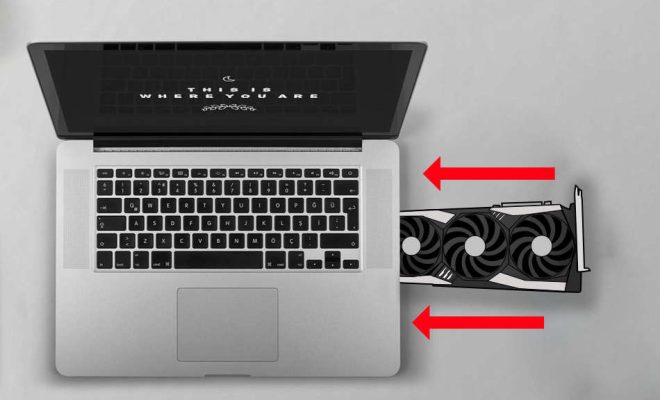
Laptops, unlike desktops, are not as easily upgradable. However, you can upgrade some of their components, including the graphics card. The graphics card is responsible for rendering images and videos on your laptop’s screen. If you’re into gaming or work that involves 3D modeling, animation, or video editing, chances are, you will need to upgrade your laptop’s graphics card to improve the performance.

Here is how to upgrade your laptop graphics card.

1. Find out whether your laptop has an upgradeable graphics card

Not all laptops have upgradeable graphics cards. Laptops with integrated graphics cards share the memory of the CPU, while the ones with dedicated graphics cards have a separate memory for processing graphics. To find out if your laptop has an upgradeable graphics card, search for your laptop model number and check if it has a dedicated graphics card.

2. Choose a compatible graphics card

Once you’ve confirmed your laptop has an upgradeable graphics card, determine which graphics card is compatible with your laptop. The compatibility is based on the type and size of the graphics card slot. Most laptop graphics cards use MXM (Mobile PCI Express Module) slots. Check your laptop specifications to know the type of MXM slot available.

3. Buy a new graphics card

After confirming compatibility, buy the graphics card from a reputable seller. You can consider graphics cards from brands like Nvidia and AMD. Ensure you read reviews and compare prices before buying.

4. Install the graphics card

The installation process varies depending on the laptop model. In some laptops, the graphics card is integrated into the motherboard, requiring professional installation. In other laptops, the graphics card is placed behind a removable panel. Carefully follow the instruction manual to install the card, ensuring it’s securely in place.

5. Install the graphics card drivers

After installing the graphics card, download and install the drivers from the graphics card manufacturer website. The drivers enable the graphics card to function correctly.

Upgrading a laptop graphics card is a complex process and requires technical skills. If you are not confident, seek help from a professional to avoid causing damage to your laptop. Moreover, upgrading a graphics card might void your laptop warranty, so ensure you understand the warranty terms and conditions before upgrading.

In conclusion, upgrading a laptop graphics card can significantly boost the performance of your laptop, especially when it comes to intensive tasks. However, ensure you follow the above steps carefully and cautiously to avoid any damage or issues with your laptop.


Previous Article

How to Plan an Alternate Route With ...

Next Article

What to Do When Your iPhone Email ...

Matthew Lynch

Related articles More from author

  • Digital & Mobile Technology

    How to Unlock Your Phone Using Free Unlock Phone Codes

    August 5, 2023
    By Matthew Lynch
  • Digital & Mobile Technology

    Signs That Your Google Account Has Been Hacked

    June 12, 2023
    By Matthew Lynch
  • Digital & Mobile Technology

    How to Use Excel to Calculate APR

    May 30, 2023
    By Matthew Lynch
  • Digital & Mobile Technology

    How to Run Command Prompt Commands With a Desktop Shortcut

    June 21, 2023
    By Matthew Lynch
  • Digital & Mobile Technology

    What is Finite Element Analysis (FEA)?

    May 7, 2023
    By Matthew Lynch
  • Digital & Mobile Technology

    Five Free Backup Applications for Mac

    April 13, 2023
    By Matthew Lynch

Search

Login & Registration

  • Log in
  • Entries feed
  • Comments feed
  • WordPress.org

Newsletter

Signup for The Tech Edvocate Newsletter and have the latest in EdTech news and opinion delivered to your email address!

About Us

Since technology is not going anywhere and does more good than harm, adapting is the best course of action. That is where The Tech Edvocate comes in. We plan to cover the PreK-12 and Higher Education EdTech sectors and provide our readers with the latest news and opinion on the subject. From time to time, I will invite other voices to weigh in on important issues in EdTech. We hope to provide a well-rounded, multi-faceted look at the past, present, the future of EdTech in the US and internationally.

We started this journey back in June 2016, and we plan to continue it for many more years to come. I hope that you will join us in this discussion of the past, present and future of EdTech and lend your own insight to the issues that are discussed.

Newsletter

Signup for The Tech Edvocate Newsletter and have the latest in EdTech news and opinion delivered to your email address!

Contact Us

The Tech Edvocate
910 Goddin Street
Richmond, VA 23231
(601) 630-5238
[email protected]

Copyright © 2026 Matthew Lynch. All rights reserved.