Teach Kids Nonverbal Cues: Facial Expressions & Body Language
“`html
Understanding nonverbal communication is crucial for children’s social development. From interpreting facial expressions to reading body language, these skills help kids navigate their interactions with peers and adults effectively. As they grow, the ability to interpret nonverbal cues can significantly impact their personal and professional relationships. In this article, we’ll explore nine essential tips for teaching children how to interpret nonverbal communication in social situations.
1. Introduce the Basics of Nonverbal Communication
Before diving into the nuances of nonverbal communication for children, start by introducing the fundamental concepts. Explain that nonverbal communication includes a range of signals such as facial expressions, gestures, posture, and eye contact. According to studies, about 93% of communication is nonverbal, with 55% attributed to body language and 38% to tone of voice. This statistic underscores the importance of helping children recognize and respond to these signals.
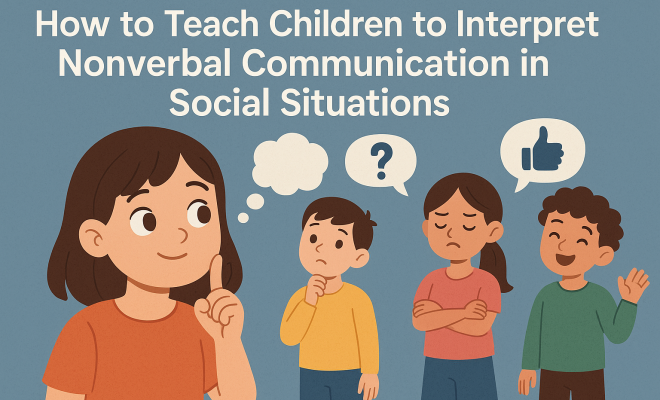
Consider using age-appropriate examples to illustrate these concepts. For instance, a happy face with a big smile indicates joy, while crossed arms might suggest someone is feeling defensive or closed off. Use visuals, stories, or even media clips to show these behaviors in action. Engaging children with relatable scenarios can help them grasp these essential skills.
2. Use Role-Playing Activities
One effective way to teach nonverbal communication for children is through role-playing activities. These exercises allow children to step into different social scenarios and practice interpreting body language and facial expressions. For instance, set up a scenario where one child pretends to be nervous at a birthday party, while another interprets their nonverbal cues. Role-playing fosters empathy by encouraging kids to consider how others might feel in various situations.
Additionally, this hands-on approach helps reinforce the learning process. After each role-play, discuss what was observed. Ask questions such as: “What did you notice about their body language?” or “How did that make you feel?” This reflective practice solidifies their understanding and encourages critical thinking regarding social interactions.
3. Teach the Importance of Eye Contact
Eye contact plays a pivotal role in nonverbal communication. Teaching children to maintain appropriate eye contact can enhance their ability to connect with others and interpret feelings accurately. Explain that eye contact can indicate confidence and interest. Conversely, avoiding eye contact may signal discomfort or disinterest. Engage them in games where maintaining eye contact is emphasized. For instance, a simple staring contest can illustrate how eye contact works in a fun and interactive way.
Moreover, help children understand cultural differences regarding eye contact. In some cultures, direct eye contact is seen as respectful, while in others, it may be considered rude. Discussing these variances can broaden their understanding of social cues across different contexts, ultimately making them more adaptable in diverse environments.
4. Encourage Observational Skills
Encouraging children to become keen observers of their surroundings can significantly improve their nonverbal communication skills. Teach them to notice how people express themselves through their body language, facial expressions, and gestures. Create activities such as “people watching” where children can observe interactions in public spaces like parks or cafes. Encourage them to discuss what they see afterward, focusing on what nonverbal signals were visible.
This practice not only builds their observational skills but also encourages empathy and understanding. By analyzing others’ emotions based on nonverbal cues, children learn to respond more appropriately in their interactions. This skill can be vital during challenging social situations, such as resolving conflicts or comforting a friend in distress.
5. Integrate Stories and Literature
Stories and literature can be powerful tools for teaching nonverbal communication. Many children’s books contain rich illustrations that depict characters’ emotions through facial expressions and body language. As you read together, pause to discuss the characters’ feelings based on their nonverbal cues. Ask questions like, “How do you think this character feels? What makes you think that?” This can help them connect text to real-life emotions. (See: children's social development resources.)
Additionally, consider using books that showcase diverse cultures and their unique nonverbal communication styles. This approach not only teaches empathy and understanding but also broadens their perspective on how different people express emotions and intentions. Engaging children with literature can create a safe space for discussing feelings and social interactions.
6. Model Appropriate Nonverbal Communication
Children often learn by observing adults. Therefore, modeling appropriate nonverbal communication is essential. Be conscious of your body language, facial expressions, and tone of voice when interacting with your child and others. Show them how to express emotions genuinely. For instance, when you’re excited, let your enthusiasm show through your gestures and facial expressions. This helps reinforce their learning by providing a real-life example of healthy communication.
Furthermore, during conversations, acknowledge your child’s nonverbal cues. If they look anxious or uncertain, address it directly, saying something like, “I see you seem a bit nervous. It’s okay to talk about it!” This type of validation not only encourages them to express emotions but also reinforces the importance of being aware of their own nonverbal signals.
7. Discuss Personal Space and Boundaries
Understanding personal space and boundaries is a vital aspect of nonverbal communication. Teach children that everyone has different comfort levels regarding personal space, and it’s important to respect those boundaries. Use practical examples, such as standing too close vs. standing further away when talking to someone. You could create games that help illustrate the concept of personal space, reinforcing how varying distances can affect comfort levels.
Additionally, educate children about nonverbal signals that indicate when someone needs more space, like stepping back or avoiding eye contact. Discussing these signals will help them become more sensitive to others’ needs, making them more considerate friends and peers.
8. Utilize Technology and Apps
Incorporating technology can provide innovative ways to teach nonverbal communication for children. Numerous educational apps focus on social skills, including interpreting nonverbal cues. These platforms often present scenarios and ask children to identify emotions based on characters’ expressions and actions. Tools like these can make learning fun and interactive, capturing children’s attention while offering valuable lessons.
Consider using video games that require teamwork and communication. Many multiplayer games involve nonverbal signals, where players must strategize without verbal communication. These experiences can enhance children’s ability to interpret and respond to nonverbal cues in a playful, engaging manner.
9. Encourage Reflection and Open Discussions
Finally, encourage children to reflect on their social interactions and discuss them openly. Create a safe space for them to share their experiences, focusing on what they observed and how they felt. Ask guiding questions like, “What did you notice about how your friend reacted?” or “How did you feel when someone smiled at you?” This reflective practice fosters deeper understanding and allows children to connect their feelings with the nonverbal signals they experienced. Related reading: bullying prevention and body image.
Regular discussions about emotions and body language can strengthen their skills over time. Use everyday situations as teachable moments. Whether it’s a family gathering or a school event, these reflections help children identify and articulate their observations, making them more adept at interpreting nonverbal communication.
10. The Impact of Nonverbal Communication on Relationships
Understanding nonverbal communication can significantly impact children’s ability to form and maintain relationships. According to research, nonverbal cues can influence the way friendships are formed. For example, children who can read emotional expressions are more likely to develop strong bonds with peers, as they can respond to feelings and create a supportive environment. In one study, children with higher nonverbal communication skills were found to have more friends and experience less bullying.
This skill becomes increasingly important as children transition into adolescence, where social dynamics shift. Teens are often engaged in complex social hierarchies, and the ability to decode nonverbal signals can help them navigate friendships, romantic interests, and conflicts. Teaching children about these cues can lay a strong foundation for their social interactions throughout life.
11. Nonverbal Communication in Different Cultures
As you teach children about nonverbal communication, it’s essential to highlight its cultural variability. Different cultures employ distinct nonverbal signals, which can lead to misunderstandings if not recognized. For instance, while thumbs-up is a positive gesture in many Western cultures, it can be offensive in others. Similarly, the way personal space is perceived can vary dramatically. In some cultures, close physical proximity is a sign of warmth and friendship, while in others, it might be construed as intrusive. (See: mental health and communication.)
Encouraging children to learn about diverse cultural practices can enhance their global awareness and sensitivity. You can incorporate activities that explore different cultural customs, such as discussing how greetings differ around the world. This not only broadens their understanding but also prepares them to engage with friends from various backgrounds more effectively.
12. Statistics on Nonverbal Communication Skills
Statistics show that nonverbal communication skills are linked to various positive outcomes in children’s lives. According to a study published in the Journal of Nonverbal Behavior, children who are trained to improve their nonverbal communication skills demonstrate a 30% increase in their ability to express emotions accurately. Additionally, research indicates that children with strong nonverbal communication skills often excel academically and socially, leading to better long-term outcomes in both personal and professional settings.
These statistics underscore the importance of investing time in teaching children these skills. The earlier they begin to understand and practice nonverbal communication, the more equipped they’ll be to form meaningful relationships and navigate the complexities of social interactions throughout their lives.
13. Practical Tips for Parents and Educators
As a parent or educator, there are several practical tips you can implement to reinforce nonverbal communication skills in children:
- Be Observant: Model keen observation by discussing what you notice in social interactions around you, whether in person or in films.
- Use Media Wisely: Select movies or TV shows that showcase varied emotional expressions. Pause and discuss the characters’ nonverbal cues as they arise.
- Hold Family Meetings: Create spaces where family members can discuss their feelings. This practice can reinforce understanding of nonverbal communication in a familiar context.
- Encourage Journaling: Ask children to write or draw about their daily interactions, focusing on how they perceived others’ nonverbal signals.
14. FAQ on Nonverbal Communication for Children
What is nonverbal communication?
Nonverbal communication refers to the ways in which people convey messages without using words. This includes body language, facial expressions, tone of voice, and gestures.
Why is nonverbal communication important for children?
Nonverbal communication is vital for children as it helps them understand emotions, build relationships, and navigate social environments effectively. It enhances their ability to connect with peers and adults.
At what age should children start learning about nonverbal communication?
Children can begin learning about nonverbal communication as early as preschool age. Simple concepts can be introduced through play and storytelling, and more complex ideas can be explored as they grow.
How can I practice nonverbal communication with my child?
You can practice nonverbal communication with your child by engaging in role-playing scenarios, observing interactions together, and discussing nonverbal cues in everyday situations.
What if my child struggles with nonverbal communication?
If your child struggles with nonverbal communication, consider seeking support from a counselor or therapist who specializes in social skills. Additionally, ongoing practice and encouragement at home can significantly help.
How can technology help in learning nonverbal communication?
Technology can provide interactive learning experiences through educational apps and games that focus on interpreting nonverbal cues. These tools can make learning fun and engaging for children.
15. Common Challenges Children Face in Nonverbal Communication
As children develop their nonverbal communication skills, they may encounter several challenges. For example, some children may have difficulty reading facial expressions or body language accurately. This can lead to misunderstandings or misinterpretations in social situations. It’s essential to recognize these challenges and approach them with patience and support.
Children with social communication difficulties, such as those on the autism spectrum, may struggle more significantly with nonverbal cues. Techniques such as using visual aids, modeling behaviors, or engaging in social skills groups can help these children build their skills over time. It’s about finding the right strategies that work for them while celebrating their progress, no matter how small.
16. How Nonverbal Communication Affects Learning
Nonverbal communication plays a significant role in the learning environment. Teachers often rely on nonverbal cues to gauge students’ understanding or engagement in the classroom. For instance, a teacher may notice a student’s furrowed brow or distracted posture and can adapt their teaching accordingly. Teaching children how to interpret these cues, both from themselves and others, can enhance their learning experiences.
For example, if a child notices that a peer seems confused during a group project, they can adjust their approach, perhaps by explaining things more clearly or offering help. Thus, these skills not only foster better interpersonal relationships but also create a more supportive learning environment.
17. Creating Nonverbal Communication Games
Games can be an effective way to teach nonverbal communication skills in a fun, engaging manner. Consider creating charades-style games where children act out emotions or scenarios without speaking. This encourages them to think creatively about how to express feelings through body language and facial expressions alone.
You might also develop a “guess the emotion” game using pictures of various facial expressions. Children can take turns trying to identify the emotion displayed based on body language and facial cues. This activity not only reinforces their understanding but also sparks discussions about why certain expressions are linked to specific feelings.
By integrating these strategies and insights, you can effectively teach children the art of nonverbal communication. This skill not only enhances their social interactions but also equips them with essential tools for navigating complex emotional landscapes throughout their lives. Remember, the journey of understanding nonverbal communication is ongoing — the more you practice, the more adept they will become. Educating children about these skills can foster empathy, understanding, and ultimately, stronger relationships. See also impact of violence on mental health.
“`
Trending Now
Frequently Asked Questions
What is nonverbal communication for kids?
Nonverbal communication for kids refers to the ways children express themselves without using words. This includes understanding facial expressions, gestures, posture, and eye contact. Teaching kids these skills is essential for their social development and helps them navigate interactions effectively.
How can I teach my child to read body language?
You can teach your child to read body language by introducing the basics of nonverbal communication and using age-appropriate examples. Role-playing activities can also be effective, allowing kids to practice interpreting different social scenarios and understanding how body language conveys emotions.
Why is nonverbal communication important for children?
Nonverbal communication is crucial for children as it makes up about 93% of communication. Understanding nonverbal cues helps kids build relationships, navigate social situations, and develop empathy, which are vital skills for both personal and professional interactions as they grow.
What activities can help children learn nonverbal cues?
Activities like role-playing are excellent for helping children learn nonverbal cues. By acting out different scenarios, kids can practice interpreting facial expressions and body language, which enhances their ability to understand how others feel in various social contexts.
How do you explain nonverbal communication to a child?
To explain nonverbal communication to a child, start with simple concepts and relatable examples. Use visuals and stories to illustrate how facial expressions and gestures convey emotions. Engaging them in discussions about real-life situations can also help solidify their understanding.
What's your take on this? Share your thoughts in the comments below — we read every one.