
The Tech Edvocate

Top Menu

  • Advertisement
  • Apps
  • Home Page
  • Home Page Five (No Sidebar)
  • Home Page Four
  • Home Page Three
  • Home Page Two
  • Home Tech2
  • Icons [No Sidebar]
  • Left Sidbear Page
  • Lynch Educational Consulting
  • My Account
  • My Speaking Page
  • Newsletter Sign Up Confirmation
  • Newsletter Unsubscription
  • Our Brands
  • Page Example
  • Privacy Policy
  • Protected Content
  • Register
  • Request a Product Review
  • Shop
  • Shortcodes Examples
  • Signup
  • Start Here
    • Governance
    • Careers
    • Contact Us
  • Terms and Conditions
  • The Edvocate
  • The Tech Edvocate Product Guide
  • Topics
  • Write For Us
  • Advertise

Main Menu

  • Start Here
    • Our Brands
    • Governance
      • Lynch Educational Consulting, LLC.
      • Dr. Lynch’s Personal Website
      • Careers
    • Write For Us
    • The Tech Edvocate Product Guide
    • Contact Us
    • Books
    • Edupedia
    • Post a Job
    • The Edvocate Podcast
    • Terms and Conditions
    • Privacy Policy
  • Topics
    • Assistive Technology
    • Child Development Tech
    • Early Childhood & K-12 EdTech
    • EdTech Futures
    • EdTech News
    • EdTech Policy & Reform
    • EdTech Startups & Businesses
    • Higher Education EdTech
    • Online Learning & eLearning
    • Parent & Family Tech
    • Personalized Learning
    • Product Reviews
  • Advertise
  • Tech Edvocate Awards
  • The Edvocate
  • Pedagogue
  • School Ratings

logo

The Tech Edvocate

  • Start Here
    • Our Brands
    • Governance
      • Lynch Educational Consulting, LLC.
      • Dr. Lynch’s Personal Website
        • My Speaking Page
      • Careers
    • Write For Us
    • The Tech Edvocate Product Guide
    • Contact Us
    • Books
    • Edupedia
    • Post a Job
    • The Edvocate Podcast
    • Terms and Conditions
    • Privacy Policy
  • Topics
    • Assistive Technology
    • Child Development Tech
    • Early Childhood & K-12 EdTech
    • EdTech Futures
    • EdTech News
    • EdTech Policy & Reform
    • EdTech Startups & Businesses
    • Higher Education EdTech
    • Online Learning & eLearning
    • Parent & Family Tech
    • Personalized Learning
    • Product Reviews
  • Advertise
  • Tech Edvocate Awards
  • The Edvocate
  • Pedagogue
  • School Ratings
  • BOMBSHELL: Your ‘Natural’ Weight Loss Pills Are Hiding THIS Deadly Secret

  • Critical: Your Smart Home is a Goldmine for Data Thieves – And You’re Helping Them

  • Revealed: The $8 Billion Secret Behind Controversial Flock Traffic Cameras

  • This One Thing Is Killing PlayStation Plus in September 2026

  • This Crucial AI Debate Just Got an Unprecedented Endorsement

  • The Brutal Truth: Why Public Service Loan Forgiveness Fails Most Applicants

  • Catastrophic: Why English-Only Head Start Could Devastate Young Minds

  • This Crucial AI Cybersecurity Flaw Just Got Exposed by Its Own Kind

  • This One Tax Could Fundamentally Reshape Our Future with Self-Driving Cars

  • Unprecedented Showdown: Tesla’s Cybercab Faces Make-or-Break Deadline for NHTSA Approval

How To
Home›How To›How to Spot a Fake Check: 14 Steps

How to Spot a Fake Check: 14 Steps
By Matthew Lynch
March 21, 2024
0
Spread the love

Introduction:

Fake checks are a common scam that people encounter in various situations, such as job offers or online transactions. Learning how to differentiate between a genuine and a counterfeit check can save you from potential financial losses and legal troubles. In this article, we will provide a step-by-step guide on how to spot a fake check.

Step 1: Examine the paper

Legitimate checks are usually printed on high-quality paper with particular texture or markings. A fake check may feel flimsy or have inconsistent thickness.

Step 2: Check the routing number

Every genuine check has a unique nine-digit routing number. You can cross-verify this number with the issuing bank’s information available online.

Step 3: Inspect the check number

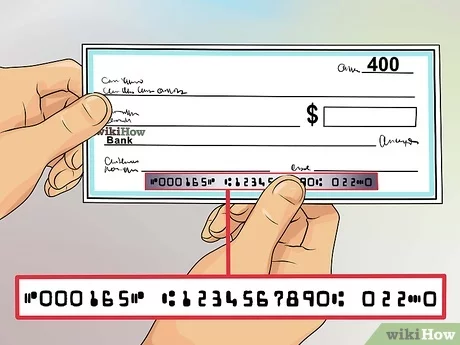
The upper right corner of the check features the check number, which should be consistent with the last few digits of the account number in the MICR line (the numbers at the bottom).

Step 4: Look closely at the MICR line

The MICR line, a series of numbers and symbols at the bottom of a check, should be clear and printed using magnetic ink. A fake check may have blurry, smudged, or non-magnetic printing.

Step 5: Verify security features

Authentic checks often feature security features like watermarks, micro-printing, or heat-sensitive ink. Counterfeit checks usually lack these elements.

Step 6: Confirm payee information

Ensure that the payee’s name and address match their identification provided during any transaction.

Step 7: Assess fonts and printing quality

Fake checks often exhibit low-quality fonts or printing errors into comparison to genuine checks.

Step 8: Evaluate signatures

Compare the signature on the check with authorized signatures on file for any discrepancies.

Step 9: Consider amount and wording

Any unusual typos or irregular amounts requested could indicate a fake check.

Step 10: Verify the issuing bank

Cross-check the information of the issuing bank (name, address, phone number) with public records or reliable online sources.

Step 11: Analyze transaction details

Be wary of transactions that involve requesting immediate funds transfers or instructions to wire money under unusual circumstances.

Step 12: Question urgency

If a party pressures you to deposit a check immediately or seems highly insistent on quick action, be cautious as it could be a scam.

Step 13: Trust your instincts

If something feels off about the check or any related transaction, consider it a red flag and research further before proceeding.

Step 14: Contact the issuing bank

When in doubt, call the issuing bank using publicly available contact information to verify if the account is genuine and the check is authentic.

Conclusion:

By following these 14 steps, you can equip yourself with essential knowledge to identify fake checks and protect your financial well-being. Always exercise caution and verify any suspicious checks before depositing them into your bank account.


Previous Article

3 Ways to Chant

Next Article

3 Effective Ways to Report Email Blackmail

Matthew Lynch

Related articles More from author

  • How To

    3 Ways to Prune Oregano

    November 9, 2023
    By Matthew Lynch
  • How To

    4 Ways to Save Battery Power on an iPhone

    December 4, 2023
    By Matthew Lynch
  • How To

    3 Simple Ways to Add Apps to iPhone Home Screen

    February 27, 2024
    By Matthew Lynch
  • How To

    4 Ways to Make a Cell Phone Case

    October 20, 2023
    By Matthew Lynch
  • How To

    3 Ways to Make a Lip Mask

    January 29, 2024
    By Matthew Lynch
  • How To

    4 Ways to Exercise in Bed

    December 14, 2023
    By Matthew Lynch

Search

Login & Registration

  • Log in
  • Entries feed
  • Comments feed
  • WordPress.org

Newsletter

Signup for The Tech Edvocate Newsletter and have the latest in EdTech news and opinion delivered to your email address!

About Us

Since technology is not going anywhere and does more good than harm, adapting is the best course of action. That is where The Tech Edvocate comes in. We plan to cover the PreK-12 and Higher Education EdTech sectors and provide our readers with the latest news and opinion on the subject. From time to time, I will invite other voices to weigh in on important issues in EdTech. We hope to provide a well-rounded, multi-faceted look at the past, present, the future of EdTech in the US and internationally.

We started this journey back in June 2016, and we plan to continue it for many more years to come. I hope that you will join us in this discussion of the past, present and future of EdTech and lend your own insight to the issues that are discussed.

Newsletter

Signup for The Tech Edvocate Newsletter and have the latest in EdTech news and opinion delivered to your email address!

Contact Us

The Tech Edvocate
910 Goddin Street
Richmond, VA 23231
(601) 630-5238
[email protected]

Copyright © 2026 Matthew Lynch. All rights reserved.