The Tech Edvocate

Top Menu

  • Advertisement
  • Apps
  • Home Page
  • Home Page Five (No Sidebar)
  • Home Page Four
  • Home Page Three
  • Home Page Two
  • Home Tech2
  • Icons [No Sidebar]
  • Left Sidbear Page
  • Lynch Educational Consulting
  • My Account
  • My Speaking Page
  • Newsletter Sign Up Confirmation
  • Newsletter Unsubscription
  • Our Brands
  • Page Example
  • Privacy Policy
  • Protected Content
  • Register
  • Request a Product Review
  • Shop
  • Shortcodes Examples
  • Signup
  • Start Here
    • Governance
    • Careers
    • Contact Us
  • Terms and Conditions
  • The Edvocate
  • The Tech Edvocate Product Guide
  • Topics
  • Write For Us
  • Advertise

Main Menu

  • Start Here
    • Our Brands
    • Governance
      • Lynch Educational Consulting, LLC.
      • Dr. Lynch’s Personal Website
      • Careers
    • Write For Us
    • The Tech Edvocate Product Guide
    • Contact Us
    • Books
    • Edupedia
    • Post a Job
    • The Edvocate Podcast
    • Terms and Conditions
    • Privacy Policy
  • Topics
    • Assistive Technology
    • Child Development Tech
    • Early Childhood & K-12 EdTech
    • EdTech Futures
    • EdTech News
    • EdTech Policy & Reform
    • EdTech Startups & Businesses
    • Higher Education EdTech
    • Online Learning & eLearning
    • Parent & Family Tech
    • Personalized Learning
    • Product Reviews
  • Advertise
  • Tech Edvocate Awards
  • The Edvocate
  • Pedagogue
  • School Ratings

logo

The Tech Edvocate

  • Start Here
    • Our Brands
    • Governance
      • Lynch Educational Consulting, LLC.
      • Dr. Lynch’s Personal Website
        • My Speaking Page
      • Careers
    • Write For Us
    • The Tech Edvocate Product Guide
    • Contact Us
    • Books
    • Edupedia
    • Post a Job
    • The Edvocate Podcast
    • Terms and Conditions
    • Privacy Policy
  • Topics
    • Assistive Technology
    • Child Development Tech
    • Early Childhood & K-12 EdTech
    • EdTech Futures
    • EdTech News
    • EdTech Policy & Reform
    • EdTech Startups & Businesses
    • Higher Education EdTech
    • Online Learning & eLearning
    • Parent & Family Tech
    • Personalized Learning
    • Product Reviews
  • Advertise
  • Tech Edvocate Awards
  • The Edvocate
  • Pedagogue
  • School Ratings
  • A Visitors Guide to Long Beach (CA), United States

  • A Visitor’s Guide to Fresno (CA), United States

  • A Visitors Guide to New Orleans (LA), United States

  • A Visitors Guide to Sacramento (CA), United States

  • A Visitors Guide to Lyon, France

  • JisuLife Ultra2 Portable Fan: A Powerful Multi-Function Cooling Solution

  • A Visitors Guide to Viña del Mar, Chile

  • A Visitors Guide to Århus, Denmark

  • A Visitors Guide to Bakersfield (CA), United States

  • A Visitors Guide to Aurora (CO), United States

Assistive Technology
Home›Assistive Technology›How to Enable Your Wireless Router’s Built-In Firewall

How to Enable Your Wireless Router’s Built-In Firewall
By Matthew Lynch
June 11, 2023
0
Spread the love

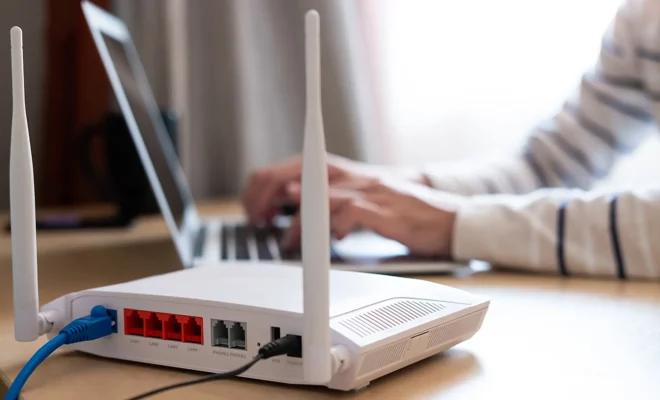
Enabling your wireless router’s built-in firewall is an essential step towards protecting your network from cyber-attacks and other security threats. A firewall is a barrier that monitors and controls the incoming and outgoing network traffic based on predetermined security rules. In this article, we will guide you on how to enable your wireless router’s built-in firewall.

Step 1: Check if the Router’s Firewall is Already Enabled

Before you start making changes to your router’s settings, it is essential to check if the firewall is already enabled. To do this, log in to your router’s web interface using an internet browser. Look for the security or firewall settings section and check if the firewall is enabled. Many routers have a firewall enabled as the default setting.

Step 2: Access the Router’s Web Interface

To access your router’s web interface, you need to know your router’s IP address. To find your IP address, open the command prompt on your computer and type “ipconfig” and press enter. Look for the IPv4 address, which is your router’s IP address.

Next, open an internet browser and type in your router’s IP address in the address bar and press enter. This will take you to the login page of your router’s web interface. Enter your username and password to log in. If you do not know your login credentials, check the manual or contact your internet service provider.

Step 3: Enable the Firewall

Once you have logged in to your router’s web interface, look for the security or firewall settings section. Depending on the router’s brand and model, this may be located under a different section, such as “advanced settings” or “network settings.”

Look for the “firewall” option and click on it. You may see a button to enable or disable the firewall, or you may have to configure the firewall settings manually. If you have the option to configure settings manually, create rules for both inbound and outbound traffic.

Inbound traffic refers to incoming traffic from the internet, while outbound traffic refers to traffic going out of your network to the internet. Make sure to deny or block traffic from any suspicious IP addresses or port numbers. This will prevent malicious traffic from entering your network and stealing your data.

Step 4: Test the Firewall

After enabling the firewall and configuring the settings, it is essential to test the firewall to make sure it is functioning correctly. You can test this by running a firewall test online or using a firewall test tool.

Final Words

Enabling your wireless router’s built-in firewall is an essential step to secure your network from online threats. It is also important to keep your router’s firmware up to date, use strong passwords, and lock down any unused ports to minimize security risks. By following these steps, you can ensure the safety and security of your network.


Previous Article

The 14 Best Free Online Christmas Games

Next Article

How to Fix It When Apps Keep ...

Matthew Lynch

Related articles More from author

  • Assistive Technology

    How to Automatically Bypass the FRP Lock on Your Samsung Phone

    June 6, 2023
    By Matthew Lynch
  • Assistive Technology

    How to Return Games on Meta (Oculus) Quest and Quest 2

    June 6, 2023
    By Matthew Lynch
  • Assistive Technology

    How to Fix Mozilla Thunderbird Not Starting

    June 23, 2023
    By Matthew Lynch
  • Assistive Technology

    How to Cancel Your Hulu Subscription

    June 12, 2023
    By Matthew Lynch
  • Assistive Technology

    How to Reset the Mouse and Keyboard Settings to Their Defaults on Windows

    June 22, 2023
    By Matthew Lynch
  • Assistive Technology

    Speed up or Slow Down Video Clips With Adobe Premiere Pro CS6

    June 10, 2023
    By Matthew Lynch

Search

Login & Registration

  • Register
  • Log in
  • Entries feed
  • Comments feed
  • WordPress.org

Newsletter

Signup for The Tech Edvocate Newsletter and have the latest in EdTech news and opinion delivered to your email address!

About Us

Since technology is not going anywhere and does more good than harm, adapting is the best course of action. That is where The Tech Edvocate comes in. We plan to cover the PreK-12 and Higher Education EdTech sectors and provide our readers with the latest news and opinion on the subject. From time to time, I will invite other voices to weigh in on important issues in EdTech. We hope to provide a well-rounded, multi-faceted look at the past, present, the future of EdTech in the US and internationally.

We started this journey back in June 2016, and we plan to continue it for many more years to come. I hope that you will join us in this discussion of the past, present and future of EdTech and lend your own insight to the issues that are discussed.

Newsletter

Signup for The Tech Edvocate Newsletter and have the latest in EdTech news and opinion delivered to your email address!

Contact Us

The Tech Edvocate
910 Goddin Street
Richmond, VA 23231
(601) 630-5238
[email protected]

Copyright © 2025 Matthew Lynch. All rights reserved.