The Tech Edvocate

Top Menu

  • Advertisement
  • Apps
  • Home Page
  • Home Page Five (No Sidebar)
  • Home Page Four
  • Home Page Three
  • Home Page Two
  • Home Tech2
  • Icons [No Sidebar]
  • Left Sidbear Page
  • Lynch Educational Consulting
  • My Account
  • My Speaking Page
  • Newsletter Sign Up Confirmation
  • Newsletter Unsubscription
  • Our Brands
  • Page Example
  • Privacy Policy
  • Protected Content
  • Register
  • Request a Product Review
  • Shop
  • Shortcodes Examples
  • Signup
  • Start Here
    • Governance
    • Careers
    • Contact Us
  • Terms and Conditions
  • The Edvocate
  • The Tech Edvocate Product Guide
  • Topics
  • Write For Us
  • Advertise

Main Menu

  • Start Here
    • Our Brands
    • Governance
      • Lynch Educational Consulting, LLC.
      • Dr. Lynch’s Personal Website
      • Careers
    • Write For Us
    • The Tech Edvocate Product Guide
    • Contact Us
    • Books
    • Edupedia
    • Post a Job
    • The Edvocate Podcast
    • Terms and Conditions
    • Privacy Policy
  • Topics
    • Assistive Technology
    • Child Development Tech
    • Early Childhood & K-12 EdTech
    • EdTech Futures
    • EdTech News
    • EdTech Policy & Reform
    • EdTech Startups & Businesses
    • Higher Education EdTech
    • Online Learning & eLearning
    • Parent & Family Tech
    • Personalized Learning
    • Product Reviews
  • Advertise
  • Tech Edvocate Awards
  • The Edvocate
  • Pedagogue
  • School Ratings

logo

The Tech Edvocate

  • Start Here
    • Our Brands
    • Governance
      • Lynch Educational Consulting, LLC.
      • Dr. Lynch’s Personal Website
        • My Speaking Page
      • Careers
    • Write For Us
    • The Tech Edvocate Product Guide
    • Contact Us
    • Books
    • Edupedia
    • Post a Job
    • The Edvocate Podcast
    • Terms and Conditions
    • Privacy Policy
  • Topics
    • Assistive Technology
    • Child Development Tech
    • Early Childhood & K-12 EdTech
    • EdTech Futures
    • EdTech News
    • EdTech Policy & Reform
    • EdTech Startups & Businesses
    • Higher Education EdTech
    • Online Learning & eLearning
    • Parent & Family Tech
    • Personalized Learning
    • Product Reviews
  • Advertise
  • Tech Edvocate Awards
  • The Edvocate
  • Pedagogue
  • School Ratings
  • How to use ClickUp goals feature

  • Trello for Business

  • Can Smartsheet do automation

  • How to use Microsoft Planner boards

  • How many transactions in Kashoo

  • Sage

  • Is Sage worth it for accountants

  • How to use Smartsheet templates

  • How many users in Zoho Books free plan

  • Can Wrike integrate with Adobe Creative Cloud

Early Childhood & K-12 EdTech
Home›Early Childhood & K-12 EdTech›How Technological Singularity will Change Schools

How Technological Singularity will Change Schools
By Matthew Lynch
April 11, 2019
0
Spread the love

John von Neumann was the first to see it coming: eventually, the capacity of machine intelligence would surpass that of the human race. His work with algorithms and quantum mechanics opened the door for exponential growth in computers. As people and computers raced toward super-intelligence, computers would eventually win out, leaving humans behind.

That is the moment of singularity.

Our collective body of knowledge is doubling at a rate of every twelve months; that number will narrow to every twelve hours before we reach technological singularity.

Because schools are in the knowledge business, there are some far-reaching implications for what and how schools teach.

Who matters most

Already it has become impossible to teach everything we know in twelve scant years.

Our instructional focus must be on who we want our children to become instead of what we want them to know. Students can look up the knowledge they need; we must teach them how to think and solve problems. To become tomorrow’s problem-solvers, our children must engage in process-based learning today.

 Change the approach

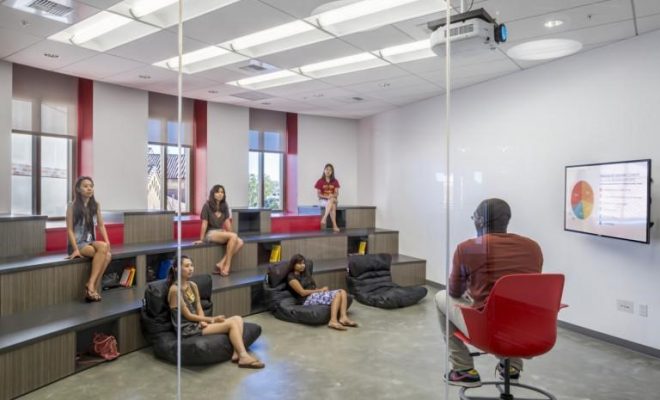
The factory model of education is no longer relevant. Arranging students in rows and disseminating information was efficient but hardly inspiring.

Learners today require a different approach and a more relevant curriculum. Dr. Peter Diamandis suggests that elementary schools, in particular, revise what they teach to:

 ·      Building communication skills

·      Identifying passion

·      Encouraging curiosity

·      Developing perseverance

·      Mastering technology

·      Practicing empathy and ethics

Of course, students still must learn to read and write, solve mathematical problems, and learn how to build and code for technology. As we modify the content, we must also change the way we teach.

The race to singularity has brought educational technology that augments the teacher’s work, making it possible to provide every student with what he or she needs. The teacher no longer serves as the focus of the classroom. Instead, educators are process guides.

Embrace current technology

Schools that rely on outdated delivery systems are preventing their students from being ready for the singularity – or any other kind of productivity when they become adults.

Technology is an integral part of the workplace, a tool for reaching goals and completing a job. Similarly, schools must adopt technology as a tool. Edtech has personalized the learning experience for students and replaced some of the tedious paperwork teachers once did. Virtual reality experiences provide hands-on learning opportunities, and

Too many schools view technology as a novelty. They have not upgraded their infrastructure to accommodate new devices, nor have they budgeted to bring relevant tech tools and devices into the classroom. Adopting new technology isn’t about purchasing what’s cool; it’s about what devices will best prepare students for who they want to become.

Technological singularity will transform schools, but preparing for it can’t wait for a later date. The time to prepare students for technological singularity is now, with the students enrolled in our schools this year.

The race is on. Scientists predict that we will reach singularity by the year 2045 – only one generation away.


Previous Article

Surprising Edtech Goals of the Chinese

Next Article

Machine Learning Is about to Change Everything ...

Matthew Lynch

Related articles More from author

  • Best of the Best ListsEarly Childhood & K-12 EdTech

    7 Must Have Project-Based Learning Apps and Tools

    July 12, 2017
    By Matthew Lynch
  • Early Childhood & K-12 EdTech

    5 Examples of Artificial Intelligence in the Classroom

    August 22, 2017
    By Matthew Lynch
  • Early Childhood & K-12 EdTechHigher EducationHigher Education EdTechOnline Learning & eLearning

    Telepresence Robots Give Online Students a Better Way to Connect

    March 31, 2018
    By Matthew Lynch
  • Early Childhood & K-12 EdTechGamificationHigher Education EdTech

    How Personalized Gamification Can Increase Learner Engagement

    February 28, 2020
    By Matthew Lynch
  • Early Childhood & K-12 EdTechHigher Education EdTech

    Keeping K-12 Students Safe When Using EdTech

    August 29, 2017
    By Matthew Lynch
  • Early Childhood & K-12 EdTech

    Why Computer Science Should Be a High School Graduation Requirement

    June 5, 2019
    By Matthew Lynch

Search

Login & Registration

  • Log in
  • Entries feed
  • Comments feed
  • WordPress.org

Newsletter

Signup for The Tech Edvocate Newsletter and have the latest in EdTech news and opinion delivered to your email address!

About Us

Since technology is not going anywhere and does more good than harm, adapting is the best course of action. That is where The Tech Edvocate comes in. We plan to cover the PreK-12 and Higher Education EdTech sectors and provide our readers with the latest news and opinion on the subject. From time to time, I will invite other voices to weigh in on important issues in EdTech. We hope to provide a well-rounded, multi-faceted look at the past, present, the future of EdTech in the US and internationally.

We started this journey back in June 2016, and we plan to continue it for many more years to come. I hope that you will join us in this discussion of the past, present and future of EdTech and lend your own insight to the issues that are discussed.

Newsletter

Signup for The Tech Edvocate Newsletter and have the latest in EdTech news and opinion delivered to your email address!

Contact Us

The Tech Edvocate
910 Goddin Street
Richmond, VA 23231
(601) 630-5238
[email protected]

Copyright © 2026 Matthew Lynch. All rights reserved.