Taming Conformational Entropy: A Breakthrough for Organic Photovoltaics
“`html
The quest for more efficient and affordable solar energy solutions is a pressing concern in today’s world, where climate change looms large and energy demands continue to rise. A recent breakthrough by researchers led by Yongsheng Chen offers a promising avenue for enhancing the performance of organic photovoltaics (OPVs) through an innovative strategy: taming conformational entropy. This fascinating approach not only holds the potential to improve solar cell efficiency but also promises to reduce production costs significantly. In this article, we’ll explore the implications of this research, the science behind conformational entropy, and its potential impact on the future of solar energy.
The Rise of Organic Photovoltaics
Organic photovoltaics have garnered significant attention in recent years as a viable alternative to traditional silicon-based solar cells. Their lightweight, flexible nature allows for a wide range of applications, from building-integrated photovoltaics to portable power sources. With the global shift towards renewable energy, OPVs present a unique opportunity to harness solar energy in a cost-effective and environmentally friendly manner.
One of the most significant advantages of organic photovoltaics is their potential for low-cost production. Unlike silicon solar cells, which require high-energy manufacturing processes, OPVs can be fabricated using solution-based techniques that are less energy-intensive. However, while the promise is great, achieving high efficiency in OPVs has been a persistent challenge.
Understanding Conformational Entropy
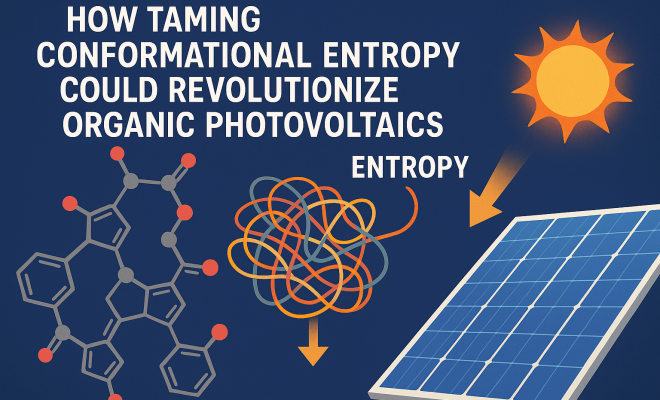
At the heart of Chen’s recent research lies the concept of conformational entropy. In materials science, this term refers to the disorder associated with the arrangement of molecules in a material. In the context of organic materials used in photovoltaics, conformational entropy can significantly influence their electronic properties.
When organic molecules are disordered, they can disrupt the movement of charge carriers—electrons and holes—within the material. This can lead to reduced efficiency in energy conversion. By “taming” this conformational entropy, researchers aim to create materials that maintain optimal arrangements, allowing for improved charge transport and ultimately, higher photovoltaic performance.
The Breakthrough: Taming Conformational Entropy
The research team led by Yongsheng Chen has developed a method to manipulate the conformational states of organic materials used in photovoltaics. This involves fine-tuning the molecular structure to reduce disorder, thus enhancing charge transport pathways. The findings, published in the *National Science Review*, offer a detailed examination of how this strategy can lead to significant improvements in organic solar cell performance.
Using computational simulations and experimental validations, the researchers demonstrated that by controlling conformational entropy, they could enhance the efficiency of OPVs considerably. This approach not only aligns with the principles of materials science but also challenges conventional strategies that often overlook the importance of molecular arrangement.
The Path to Lower-Cost Solar Power
The implications of this research extend far beyond just enhanced efficiency. By improving the performance of organic photovoltaics, the cost of solar energy production can be reduced. High-performance materials typically translate to less material usage in production processes, which is a significant cost-saving factor.
As the adoption of solar technology continues to rise globally, finding ways to make it more affordable is crucial. The confluence of enhanced performance and lower production costs could make organic photovoltaics a more attractive option for consumers and industries alike, potentially accelerating the transition away from fossil fuels.
Real-World Applications of Enhanced Organic Photovoltaics
Imagine a world where solar panels are not only more efficient but also cheaper to produce. This breakthrough opens the door to numerous applications. For instance, flexible solar panels made from organic materials could be integrated into everyday products, such as clothing or portable devices. This would not only make solar energy more accessible but also enhance its adoption in diverse settings. (See: advancements in solar energy technology.)
Moreover, enhanced OPVs could pave the way for solar windows, which could replace traditional glass in buildings. These windows would generate power while allowing natural light to penetrate the space, contributing to energy-efficient buildings. The possibilities are vast, and the advancements in taming conformational entropy could play a pivotal role in bringing these applications to life.
Challenges Ahead in Organic Photovoltaics
While the research led by Chen is promising, it’s essential to recognize the challenges that lie ahead. The longevity and stability of organic materials in varying environmental conditions remain a concern. Unlike traditional silicon cells that can last for decades, organic photovoltaics have historically faced issues with degradation over time.
However, with advancements in material science, researchers are continuously working to enhance the stability of organic photovoltaics. By incorporating protective coatings and exploring novel materials, the life span of these solar cells can be extended, making them a more viable option for long-term energy solutions.
The Future of Solar Energy: A Shift Towards Sustainability
The breakthrough in taming conformational entropy could signify a larger shift in how we perceive solar energy and its potential. As climate change becomes an increasingly urgent issue, the demand for sustainable energy sources is more pressing than ever. Innovations in organic photovoltaics could contribute significantly to this transition.
Additionally, the focus on reducing costs while enhancing efficiency aligns with global goals to make renewable energy sources accessible to all. The research highlights that through innovative material science, we can address both economic and environmental challenges simultaneously.
Expert Perspectives on the Breakthrough
Experts in the field have lauded Chen’s research for its innovative approach. Dr. Jane Simmons, a materials scientist at the University of California, noted, “This study provides crucial insights into the molecular behavior of organic materials and presents a comprehensive strategy to enhance their performance.” Such endorsements reflect the excitement surrounding the potential of this discovery.
Furthermore, industry professionals are keenly aware of how important this breakthrough could be for the future of solar technology. As businesses explore more sustainable options, improvements in organic photovoltaics could facilitate wider adoption, leading to a more significant impact on global energy consumption.
Comparative Analysis: Organic Photovoltaics vs. Traditional Solar Cells
When comparing organic photovoltaics to traditional silicon-based solar cells, several key differences emerge. Silicon solar cells have dominated the market for decades, primarily due to their proven efficiency and longevity. However, they come with higher production costs and environmental concerns related to mining and refining silicon.
On the other hand, OPVs offer a lightweight, flexible alternative that can be manufactured using less energy-intensive processes. A statistic worth noting is that while traditional silicon cells achieve efficiencies of around 20-25%, the best organic photovoltaics currently reach efficiencies of approximately 18%. This gap is closing, especially with advancements like those proposed by Chen’s research.
In terms of application, silicon panels are typically rigid and require specific mounting systems, while OPVs can be produced on flexible substrates, making them ideal for applications where weight and form factor are essential. This versatility is crucial for integrating solar technology into everyday items, from consumer electronics to building materials.
Statistics on the Growth of Organic Photovoltaics
The organic photovoltaics market is witnessing significant growth. According to a recent market analysis, the global organic solar cell market was valued at approximately $122 million in 2020 and is expected to reach over $1 billion by 2027, growing at a compound annual growth rate (CAGR) of around 34% during the forecast period. (See: research on organic photovoltaics.)
This growth is fueled by increasing investments in renewable energy and advancements in material science. Governments and private sectors are keenly aware of the environmental benefits associated with OPVs, and as research continues to enhance efficiency and reduce costs, adoption rates are expected to surge.
Frequently Asked Questions (FAQ) about Organic Photovoltaics
1. What are organic photovoltaics?
Organic photovoltaics (OPVs) are a type of solar cell that uses organic materials, typically carbon-based compounds, to convert sunlight into electricity. They are known for their lightweight and flexible attributes, allowing for various applications.
2. How do OPVs compare to traditional silicon solar cells?
While silicon solar cells offer higher efficiency and longevity, OPVs are more flexible and can be produced at a lower cost using less energy-intensive processes. Silicon cells generally have efficiencies ranging from 20-25%, while the best OPVs are approaching 18% efficiency.
3. What is conformational entropy and why is it important?
Conformational entropy refers to the disorder of molecular arrangements in a material. In OPVs, high conformational entropy can hinder charge transport, reducing efficiency. Taming this entropy helps create better-performing solar cells.
4. What are the current challenges facing organic photovoltaics?
Key challenges include the longevity and stability of organic materials, especially under varying environmental conditions. Research is ongoing to enhance their stability and lifespan, making them more viable for long-term use.
5. What potential applications exist for enhanced OPVs?
The applications for advanced organic photovoltaics are vast, including integration into flexible electronics, solar windows, and even clothing. Their lightweight and adaptable nature allows for innovative solutions across various industries.
6. How does the research by Yongsheng Chen impact the future of solar energy?
Chen’s research on taming conformational entropy presents a significant advancement in improving the efficiency of OPVs while reducing production costs, paving the way for broader adoption and a potential shift toward more sustainable energy solutions.
Emerging Trends in Organic Photovoltaics
As the research field of organic photovoltaics evolves, several emerging trends are becoming apparent. One of the most exciting developments is the integration of perovskite materials with OPVs. Perovskites have gained attention for their impressive efficiency rates and potential for low-cost production. Combining these materials with organic compounds could lead to a new class of hybrid solar cells that capitalize on the strengths of both technologies.
Another trend is the increasing focus on recycling and sustainability within the production processes of OPVs. Researchers are actively exploring biodegradable organic compounds, which would minimize the environmental impact of solar cells at the end of their lifecycle. This aligns perfectly with the global trend of enhancing sustainability across all sectors. (See: impact of organic photovoltaics.)
The Role of Policy and Government Support
Government policies play an essential role in driving the growth of organic photovoltaics. Many countries are implementing incentives and subsidies for renewable energy technologies. For instance, in the European Union, initiatives like the Green Deal aim to support research and development in solar technologies, including OPVs. Such policies are crucial not only in fostering innovation but also in ensuring that these technologies reach the market efficiently.
Additionally, public-private partnerships can enhance funding opportunities for research in organic photovoltaics. Collaborative efforts between universities and industries can lead to breakthroughs, as they combine academic knowledge with practical applications.
Battery and Storage Integration
As we strive for a more sustainable energy future, the integration of energy storage systems with organic photovoltaics becomes increasingly important. While OPVs can generate electricity during the day, efficient energy storage solutions are necessary to ensure that this energy is available for use at night or during cloudy days.
Recent advancements in solid-state batteries and flow batteries present promising options for storing energy generated by OPVs. These technologies can complement the flexible nature of organic solar cells, making them an ideal pairing for various applications, including electric vehicles and smart grids.
International Collaborations and Research Initiatives
International collaborations are crucial for accelerating research in organic photovoltaics. Many nations are recognizing the importance of sharing knowledge and resources to tackle global energy challenges. Programs such as Horizon Europe encourage transnational research partnerships, which enable researchers to pool expertise and access diverse funding sources.
Collaborative projects can also facilitate the exchange of best practices and technological advancements. For example, countries leading in solar technology, such as Germany and Japan, are often at the forefront of developing innovative solutions in OPVs, and their partnerships can help bring these advancements to a global audience.
Conclusion: A Bright Future for Organic Photovoltaics
The innovative approach of taming conformational entropy marks a significant step forward in the development of organic photovoltaics. By enhancing the performance and reducing the costs of solar energy production, researchers are opening new avenues for sustainable energy solutions. As this research is disseminated and further explored, it could indeed reshape the landscape of solar energy, making it a more accessible and efficient option for consumers and industries alike.
“`
Trending Now
Frequently Asked Questions
What is conformational entropy in organic photovoltaics?
Conformational entropy refers to the disorder in the arrangement of molecules within organic materials. In organic photovoltaics (OPVs), it significantly affects electronic properties and overall efficiency, making it a critical factor in the development of more effective solar cells.
How can taming conformational entropy improve solar cell efficiency?
By controlling conformational entropy, researchers can enhance the arrangement of molecules in organic photovoltaics, leading to improved electronic interactions and higher energy conversion efficiencies, ultimately resulting in more effective solar cells.
What are the advantages of organic photovoltaics over silicon-based solar cells?
Organic photovoltaics (OPVs) offer several advantages, including lightweight and flexible designs, lower production costs, and the ability to be fabricated using less energy-intensive solution-based techniques, making them a promising alternative to traditional silicon solar cells.
Why are organic photovoltaics considered environmentally friendly?
Organic photovoltaics are considered environmentally friendly due to their potential for low-cost and energy-efficient production methods. They can be manufactured using less energy compared to silicon solar cells, reducing the overall environmental impact associated with solar energy generation.
What recent breakthroughs have been made in organic photovoltaics?
Recent breakthroughs, such as those led by Yongsheng Chen, focus on taming conformational entropy to enhance the efficiency and reduce the production costs of organic photovoltaics, marking a significant advancement in the field of solar energy technology.
What did we miss? Let us know in the comments and join the conversation.